Table of Contents >> Show >> Hide
- Who Is Jack Doherty?
- How Jack Doherty Became Famous
- Jack Doherty Net Worth: Why the Estimates Are So Different
- Why Luxury Cars Became Part of the Conversation
- Controversy and the Cost of Attention
- How Much Could Jack Doherty Earn From YouTube?
- The Business Behind the “Kid With a Camera”
- Why Fans Are So Curious About Jack Doherty’s Wealth
- What Jack Doherty’s Story Says About Modern Fame
- Is Jack Doherty’s Net Worth Really Raising Eyebrows?
- Experience-Based Lessons From the Jack Doherty Story
- Conclusion
Jack Doherty’s story sounds almost too modern to be real: a Long Island kid grabs a camera, starts filming flips, pranks, mall stunts, and loud moments that parents everywhere would call “absolutely not,” then grows into one of the internet’s most watched young creators. Today, the phrase Jack Doherty net worth keeps popping up because his lifestyle, luxury cars, massive audience, and public controversies have turned him into a walking question mark with a ring light.
So, how much is Jack Doherty actually worth? That depends on who you ask. Public estimates often place his fortune around the low seven figures, while other online claims swing much higher. The smarter answer is this: Doherty has built a powerful creator business, but exact numbers are not publicly verified. His real financial picture likely includes YouTube ad revenue, short-form video reach, livestreaming income, sponsorships, merchandise, appearances, and the costs that come with living like every day is a thumbnail.
This article breaks down how Jack Doherty went from “kid with a camera” to a headline-making influencer, why his estimated net worth raises eyebrows, and what his rise says about the strange, profitable, and sometimes chaotic world of online fame.
Who Is Jack Doherty?
Jack Doherty is an American YouTuber and online personality best known for prank videos, stunt content, trick shots, public challenges, and livestreams. He was born on October 8, 2003, in Long Island, New York, and started building his online presence as a young teenager. His early videos were simple but effective: flipping markers, flipping bottles, jumping around, reacting loudly, and turning everyday places into content playgrounds.
That formula worked because it fit perfectly into the YouTube era of high-energy teen creators. Viewers did not need a complicated plot. They needed movement, suspense, a little chaos, and a reason to keep watching until the end. Doherty supplied all of it with the confidence of someone who seemed allergic to embarrassment.
How Jack Doherty Became Famous
From Flips to Full-Time Fame
Doherty launched his self-titled YouTube channel in 2016. His early content included marker flips, bottle flips, trampoline tricks, physical challenges, and pranks. The videos were not polished Hollywood productions, and that was part of the appeal. They looked like something a hyperactive friend might film after school, except this friend somehow understood the YouTube algorithm better than most adults understand their dishwasher.
One of his breakthrough themes was the flip-trick format. In the mid-2010s, bottle flipping and trick-shot clips were everywhere. Doherty caught that wave early, then pushed into louder stunt and prank content. As his audience grew, the videos became bigger, flashier, and more controversial. Malls, stores, neighborhoods, luxury cars, and livestreamed confrontations all became part of the brand.
The Power of Consistency
One reason Jack Doherty’s career grew so quickly is that he treated content like a daily sport. Successful creators usually do not win because one video goes viral. They win because they keep uploading until the internet has no choice but to notice. Doherty built a library of videos that fed YouTube’s recommendation engine, attracted young viewers, and gave fans a reason to return.
Over time, his main channel reached more than 15 million subscribers and billions of total views. Those numbers matter because they show scale. A creator with that kind of reach is not just making videos; he is running a media operation, even if the operation sometimes looks like it was planned five minutes before filming.
Jack Doherty Net Worth: Why the Estimates Are So Different
The biggest reason Jack Doherty’s net worth raises eyebrows is that public estimates vary wildly. Some sources estimate his net worth around $1 million. Others have claimed figures in the multi-million-dollar range. A few online pages make even larger claims, but those should be treated carefully because influencer wealth is difficult to verify from the outside.
Net worth is not the same thing as income. Net worth means assets minus liabilities. A creator can earn a lot of money and still have high expenses, debt, taxes, business costs, staff payments, legal bills, car payments, rent, or reinvestment costs. In other words, a Lamborghini in the driveway does not automatically mean a giant pile of cash in the bank. Sometimes it means a giant monthly payment wearing a very shiny outfit.
Possible Income Sources
Jack Doherty’s income likely comes from several creator-economy channels:
- YouTube ad revenue: Long-form videos and Shorts can generate advertising income, though rates vary by audience, topic, geography, and advertiser demand.
- Livestreaming: Platforms may pay creators through subscriptions, donations, gifts, or special deals.
- Sponsorships: Brands often pay influencers to promote apps, products, events, or services.
- Merchandise: Many creators sell clothing or branded items to fans.
- Cross-platform reach: TikTok, Instagram, YouTube Shorts, and livestream clips can all support brand value.
- Appearances and collaborations: Creators can earn money through events, guest appearances, and joint videos.
The key point is that Doherty’s wealth is not only about YouTube views. His business is built around attention. Every clip, controversy, luxury purchase, livestream moment, and viral headline can feed the machine. That is powerful, but it is also risky because attention can turn from applause to criticism faster than a comment section can type “bro.”
Why Luxury Cars Became Part of the Conversation
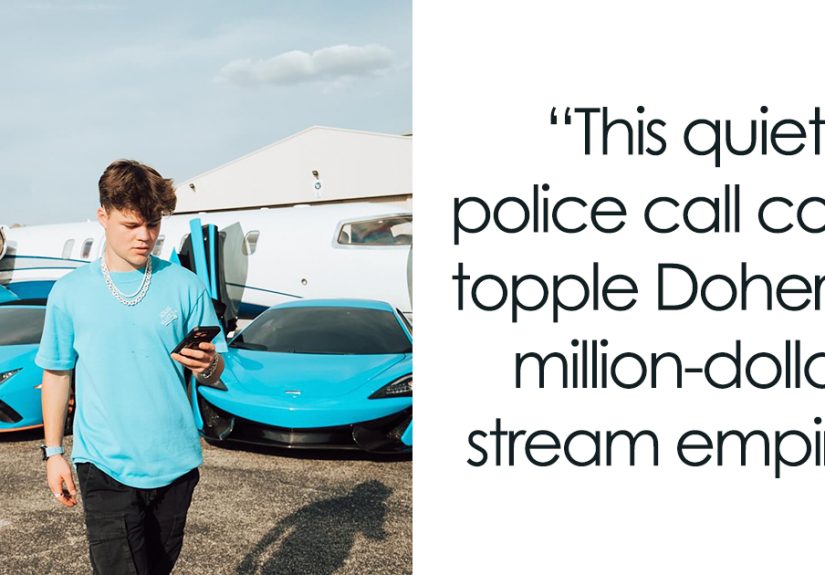
Part of the public fascination with Jack Doherty’s money comes from the way he presents success. Luxury cars, expensive homes, designer items, and flashy videos have become common pieces of influencer branding. For Doherty, cars have played an especially visible role.
His 2024 McLaren crash pushed that image into mainstream headlines. Reports described Doherty crashing a McLaren sports car during a livestream in rainy conditions while appearing to look at his phone. The incident drew major backlash, especially because footage showed the crash and its aftermath being filmed. The moment became a symbol of the darker side of livestream culture: when the camera keeps rolling even after real life has clearly entered “please stop filming” territory.
The McLaren story matters in a net-worth article because expensive public purchases create a perception of enormous wealth. But they also create financial questions. A luxury car can be an asset, a liability, a business prop, a tax-related business expense in some cases, or a costly mistake. When a creator’s brand depends on showing wealth, the audience naturally starts asking how much of that wealth is real, how much is financed, and how much is simply part of the show.
Controversy and the Cost of Attention
Jack Doherty’s career has not been built on quiet lifestyle vlogs and herbal tea reviews. His content often leans into confrontation, public reactions, and stunts. That style can generate clicks, but it also brings consequences.
He has faced criticism for disruptive prank content, livestream incidents, and public altercations involving people around him. In 2024, he was named in a lawsuit connected to an alleged assault involving his security guard at a Halloween party. In 2025, he was arrested in Miami Beach and faced charges including possession of a controlled substance, possession of cannabis, and resisting an officer without violence, according to public reports.
These incidents do not just affect public image. They can affect business. Brands often want attention, but they usually do not want legal headaches, safety concerns, or headlines that make the marketing department spill coffee. Controversy can boost views in the short term while damaging long-term sponsorship potential. That is the creator economy’s awkward math problem: outrage can pay, until it doesn’t.
How Much Could Jack Doherty Earn From YouTube?
YouTube income is complicated because creators are not paid a flat amount per view. Earnings depend on CPM, RPM, video length, ad suitability, audience location, watch time, advertiser demand, and whether the content is advertiser-friendly. A finance channel may earn more per thousand views than a prank channel. A family-friendly educational video may attract different ads than a risky public stunt.
Analytics platforms estimate Doherty’s YouTube earnings in different ways. Some estimates show modest monthly earnings, while others suggest much larger potential revenue depending on views and CPM assumptions. This is why net-worth discussions become confusing. A channel with billions of lifetime views clearly has major earning power, but lifetime views do not equal current cash. They are a signal of reach, not a direct bank statement.
The Business Behind the “Kid With a Camera”
The phrase “kid with a camera” makes the story sound accidental, but successful creator careers usually become businesses. There may be editors, managers, camera operators, security, travel costs, rented houses, equipment, insurance, platform teams, accountants, and lawyers. That means revenue can be impressive while expenses are also heavy.
For Jack Doherty, the brand is built around high-energy access: big reactions, expensive settings, unpredictable moments, and a sense that something wild might happen at any second. That brand can sell because it gives young viewers a fantasy of freedom. No school bell, no boring office, no beige cubicle. Just cameras, cars, friends, chaos, and money.
But the same formula can become a trap. Once an audience expects bigger stunts, bigger purchases, and bigger reactions, a creator may feel pressure to keep escalating. Yesterday’s shocking video becomes today’s normal upload. The algorithm is a hungry little raccoon, and it always wants another snack.
Why Fans Are So Curious About Jack Doherty’s Wealth
People search for Jack Doherty net worth because his lifestyle invites curiosity. When a young creator appears to have millions of followers, expensive cars, luxury travel, and a constant stream of content, viewers naturally wonder how the money works. Is he rich-rich? Internet rich? Sponsored rich? “My accountant is sweating” rich?
The fascination also comes from age. Doherty became famous young, which makes his success feel both inspiring and unbelievable. Many people in their early twenties are figuring out rent, student loans, or how to cook chicken without calling it “meal prep.” Doherty, by contrast, has been filmed around supercars and massive audiences. That contrast creates the eyebrow-raising effect.
What Jack Doherty’s Story Says About Modern Fame
Jack Doherty’s rise shows that fame has changed. A teenager no longer needs a TV network, record label, or movie studio to become famous. A phone, a camera, editing software, and relentless posting can build an audience bigger than many traditional media outlets.
But his story also shows the pressure of being watched constantly. Online fame rewards speed, spectacle, and emotional reactions. It can make a creator wealthy, but it can also turn mistakes into permanent search results. Every controversial clip becomes part of the public record. Every expensive purchase becomes evidence in the court of internet opinion. Every apology becomes content, and every comeback becomes another episode.
Is Jack Doherty’s Net Worth Really Raising Eyebrows?
Yes, but not only because of the dollar amount. The real eyebrow-raiser is how quickly a creator can move from a bedroom camera setup to a multi-platform entertainment business. Doherty’s estimated wealth is interesting, but the business model behind it is even more interesting.
He represents a generation of creators who learned how to turn attention into income before they were old enough to rent a car without extra fees. His career has included huge growth, big numbers, expensive visuals, public backlash, and legal trouble. That combination makes his net worth a popular search topic because people are not simply asking, “How much money does he have?” They are asking, “How does this world even work?”
Experience-Based Lessons From the Jack Doherty Story
Looking at Jack Doherty’s rise from a creator-economy perspective, one practical lesson stands out: starting simple is not a weakness. Many online creators wait for the perfect camera, perfect niche, perfect lighting, perfect logo, and perfect plan. Meanwhile, someone else posts a rough video, learns from the response, and improves in public. Doherty’s early content was not fancy. It was direct, energetic, and easy to understand. That is often enough to begin.
Another lesson is that personality can be the product. In traditional media, production quality used to carry the show. On social platforms, personality often carries everything. Viewers return because they know what emotional flavor they will get: chaos, humor, suspense, confidence, conflict, or surprise. Doherty built his audience by becoming instantly recognizable in style. Whether people loved him, criticized him, or watched out of curiosity, they knew what kind of experience his content promised.
However, the story also offers a warning for aspiring influencers. Attention is not the same as trust. A video can go viral for the wrong reason. A stunt can bring millions of views and still damage future opportunities. A creator may gain followers from controversy but lose brand deals, platform access, or public goodwill. The smartest creators understand that reputation is an asset. It grows slowly, but it can crash faster than a supercar in bad weather.
For anyone trying to build a YouTube channel, Jack Doherty’s career suggests a balanced approach: be bold, but not reckless; be entertaining, but not cruel; be consistent, but not desperate; be ambitious, but remember that real people exist outside the frame. The camera can make life look like a game, but consequences do not vanish when the livestream ends.
There is also a financial lesson. Big revenue does not automatically mean big net worth. Creators should think like business owners: save for taxes, track expenses, diversify income, avoid buying things only to impress strangers, and build something that can survive algorithm changes. A creator who earns $50,000 and keeps $20,000 may be healthier than a creator who earns $500,000 and burns through it trying to look unstoppable.
Finally, Doherty’s story shows why the internet loves transformation. Audiences enjoy watching someone go from ordinary to famous, from small room to big house, from basic camera to luxury lifestyle. That arc is powerful because it feels possible. But the healthiest version of that dream is not just “get rich and go viral.” It is “build skills, earn attention responsibly, and create a life that still makes sense when the camera turns off.”
Conclusion
Jack Doherty’s net worth raises eyebrows because it sits at the intersection of youth, fame, money, controversy, and modern internet culture. He started as a kid filming flips and stunts, then built a massive audience across YouTube and other platforms. Public estimates of his wealth vary, but his earning potential is clear: millions of followers, billions of views, and a personal brand that keeps people watching.
At the same time, Doherty’s career proves that attention is a powerful but unstable currency. It can buy cars, houses, headlines, and opportunities. It can also bring criticism, platform bans, legal problems, and public scrutiny. His story is not just about how much money a young YouTuber might have. It is about what happens when growing up, building a business, making mistakes, and performing for millions all happen at the same time.