Table of Contents >> Show >> Hide
- The Original Sweet Dee Was Sweeter Than the Dee We Know
- Kaitlin Olson Changed the Recipe
- Why the “Voice of Reason” Version Would Have Weakened the Show
- Sweet Dee and the Art of Female Comic Failure
- Kaitlin Olson’s Physical Comedy Made Dee Unforgettable
- The “Bird” Joke and Dee’s Outsider Status
- How Sweet Dee Helped Define the Show’s Legacy
- Why Sweet Dee’s Origin Still Matters
- Added Experience Section: Watching Sweet Dee’s Origin Through a Fan’s Eyes
- Conclusion
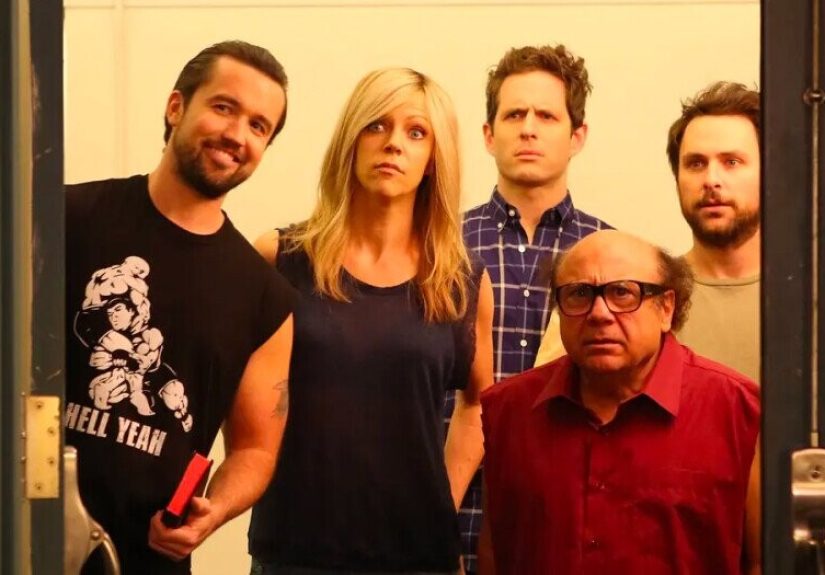
In a sitcom built on bad plans, worse morals, and the kind of bar hygiene that would make a health inspector reconsider their career choices, Deandra “Sweet Dee” Reynolds stands out for a strange reason: she was not originally supposed to be this funny. Today, Sweet Dee is one of the sharpest comic weapons in It’s Always Sunny in Philadelphia, a character whose vanity, insecurity, rage, and Olympic-level lack of self-awareness make her as chaotic as Mac, Dennis, Charlie, and Frank. But her origin story has a bitter aftertaste. Dee began as something closer to a traditional sitcom “female voice of reason,” a sensible contrast to the boys’ stupidity. Thankfully, Kaitlin Olson had other ideas.
The result was one of the most important character transformations in modern TV comedy. Sweet Dee did not become memorable because she softened the Gang. She became memorable because she was allowed to be just as petty, delusional, selfish, and ridiculous as everyone else at Paddy’s Pub. In other words, Dee Reynolds did not break the glass ceiling. She hurled a bar stool at it, blamed someone else, and then auditioned for a role she was wildly unqualified to play.
The Original Sweet Dee Was Sweeter Than the Dee We Know
Before It’s Always Sunny in Philadelphia became the long-running FXX comedy fans know today, the series began as a scrappy, low-budget idea from Rob McElhenney, Glenn Howerton, and Charlie Day. The earliest version of the show was not even centered on Paddy’s Pub. It was built around young, selfish people in Los Angeles, with a small homemade pilot that eventually evolved into the Philadelphia bar setting.
In that early stage, Sweet Dee was not the feral, desperate, bird-adjacent disaster fans celebrate. The character was first played by Jordan Reid in the unaired pilot. Reid later explained that “Sweet Dee” was connected to the character’s optimistic personality, which was designed to contrast with the men’s darker, more cynical energy. That version of Dee was sweeter in a literal sense: a lighter, more reasonable presence standing near the chaos instead of sprinting directly into it with a stolen microphone and a dream of fame.
That setup made sense by old sitcom logic. Many comedies used a woman character as the “normal one,” the person who rolled her eyes while the men behaved badly. The formula is familiar: guys cause trouble, the woman scolds them, the laugh track approves, and the episode resets. But Always Sunny was never built to be a comfortable sitcom. Its power came from refusing to hand the audience a stable moral anchor. Once that became clear, a normal Dee would have been like putting a seatbelt on a tornado.
Kaitlin Olson Changed the Recipe
When Kaitlin Olson came into the role, the character’s future changed dramatically. Olson has said in interviews that she did not want to play “the girl character” or simply serve as the voice of reason. She wanted Dee to be funny, active, unstable, and involved in the Gang’s worst ideas. That creative demand sounds simple, but it was a major shift. Instead of asking for Dee to be more likable, Olson pushed for Dee to be more ridiculous.
That choice helped save the character from a common comedy trap. Dee could have spent the series reacting to Mac’s delusions, Dennis’s narcissism, Charlie’s nonsense, and Frank’s gross schemes. Instead, she became a full participant. She lies. She schemes. She humiliates herself. She chases fame with the confidence of a person who has never watched her own audition tape. She is not the responsible adult in the room; she is one more reason the room should probably be evacuated.
Olson’s instincts also fit the show’s ensemble style. It’s Always Sunny in Philadelphia works because no one in the Gang is truly above the others. They take turns being foolish, cruel, insecure, or bizarrely confident. By making Dee equally damaged, the writers unlocked a richer dynamic. The men could still dismiss her, insult her, and underestimate her, but the joke was no longer “Dee is normal and the guys are crazy.” The joke became much sharper: Dee is just as awful as they are, but they still treat her like an outsider.
Why the “Voice of Reason” Version Would Have Weakened the Show
A traditional voice-of-reason character gives viewers someone to agree with. That can be useful in a network sitcom, but Always Sunny thrives on discomfort. The show’s humor comes from watching people misunderstand morality, friendship, business, family, politics, art, romance, and basic human conversation. If Dee had remained the sane one, the Gang would have had a built-in judge. Instead, the series is funnier because the entire group is trapped in the same moral basement.
Dee’s bitterness is essential because it mirrors the emotional engine of the show. She wants respect. She wants attention. She wants to be seen as talented, desirable, intelligent, and powerful. Unfortunately, she usually pursues those goals with the subtlety of a fire alarm in a library. Her failed acting career, disastrous performances, and endless need for validation turn her into one of the show’s most painfully human characters. She is exaggerated, yes, but the insecurity underneath is recognizable.
The “bitter-tasting origin” of Sweet Dee is therefore not only about recasting or rewriting. It is about the moment the character stopped being decorative and became dangerous. A sweeter Dee might have balanced the show. The bitter Dee made it funnier.
Sweet Dee and the Art of Female Comic Failure
One reason Sweet Dee Reynolds still feels refreshing is that she is allowed to fail loudly. Female characters in comedy have often been pressured to remain charming, attractive, sensible, or emotionally mature. Dee rejects all of that, often accidentally and always with commitment. She is vain without being glamorous, ambitious without being competent, and confident without evidence. That combination gives Olson endless room to play.
Dee’s failed stand-up attempts are a perfect example. She wants applause so badly that every silence becomes a personal attack. Her body language tightens, her voice cracks, and the desperation becomes the joke. The humor is not just that Dee is bad at comedy; it is that she cannot emotionally survive being bad at comedy. Olson turns embarrassment into a physical sport.
The same is true when Dee tries to act, sing, flirt, manipulate, or prove she is better than the Gang. She often begins with a fantasy of superiority and ends in public humiliation. Yet the character keeps coming back. That stubbornness is part of her strange charm. Dee is not inspirational in the usual way, unless your inspiration board includes “ignore all feedback” and “double down immediately.” But as comedy, her refusal to quit is gold.
Kaitlin Olson’s Physical Comedy Made Dee Unforgettable
Sweet Dee’s evolution is not only a writing achievement. It is also a performance achievement. Kaitlin Olson’s background in improv and sketch comedy helped shape Dee into a character who is funny even before she speaks. Olson uses posture, timing, facial reactions, and full-body panic to make Dee feel unpredictable. She can make a pause feel like a breakdown. She can make a smile look like a threat. She can turn a simple entrance into a warning sign.
That physical commitment matters because Always Sunny is not a polite comedy. Characters fall, scream, sweat, gag, dance badly, and collapse emotionally in public. Olson never plays Dee as someone protecting her dignity. Instead, she lets Dee chase dignity so aggressively that she destroys it. That is a harder performance than it looks. Bad physical comedy feels forced; Olson’s feels like Dee’s nervous system has personally declared war on her.
This is why calling Dee “the female member of the Gang” undersells the role. She is not a token presence. She is a specific comic instrument. Dennis has vanity with menace. Mac has insecurity wrapped in performance. Charlie has chaotic innocence. Frank has pure goblin energy. Dee has humiliation weaponized into ambition. Together, they create the show’s toxic little orchestra.
The “Bird” Joke and Dee’s Outsider Status
One of the longest-running jokes about Dee is the Gang calling her a bird. On the surface, it is childish and mean, which is exactly the Gang’s emotional reading level. But the joke also reinforces Dee’s outsider status. She is part of the group, yet constantly rejected by it. She works at Paddy’s, joins schemes, shares the same family trauma as Dennis, and often behaves just as badly as the men. Still, they treat her like an accessory they regret purchasing.
That tension gives Dee many of her best storylines. She wants approval from people who are completely unqualified to give it. She wants respect from people who do not respect themselves. She wants fame, but her audience is usually a bar full of people who would rather be anywhere else. Her bitterness grows from that impossible loop, and the comedy comes from watching her try to escape it by becoming even more like the people who insult her.
In a smarter, healthier world, Dee would leave Paddy’s Pub, get therapy, and find a supportive creative community. In Always Sunny, she stays, plots revenge, and makes everything worse. That is the contract. We do not watch the Gang because they learn. We watch because they almost learn, reject the lesson, and order another drink.
How Sweet Dee Helped Define the Show’s Legacy
It’s Always Sunny in Philadelphia has lasted because its characters are flexible without truly changing. They can enter new social debates, business schemes, relationship disasters, and genre parodies while remaining fundamentally themselves. Dee is crucial to that flexibility. She can be the victim of the Gang’s sexism, a perpetrator of her own selfish plans, a failed performer, a bitter sister, a fake humanitarian, or a delusional romantic lead in her own mind.
That range gives the show more angles. Dee can expose the men’s hypocrisy, but she can also expose her own. She can be mistreated without becoming morally pure. She can be sympathetic for one scene and completely indefensible in the next. That instability is part of the show’s DNA. No one at Paddy’s gets to be the hero for long.
In hindsight, Olson’s push to make Dee funnier and messier looks like one of the most important creative decisions in the show’s history. Without it, Dee might have been a supporting character in a male-led comedy. With it, she became a pillar of the ensemble and one of television’s great comic disasters.
Why Sweet Dee’s Origin Still Matters
Sweet Dee’s origin matters because it shows how a character can be transformed by an actor’s understanding of comedy. Olson recognized that equality in a show like Always Sunny did not mean making Dee more admirable. It meant letting her be equally foolish, equally selfish, and equally explosive. That is a strange kind of progress, but for this series, it was exactly right.
The bitterness in Dee’s origin is also the source of her flavor. She began as “Sweet Dee,” a name that suggested optimism and contrast. Over time, the nickname became ironic. Dee is not sweet in the traditional sense. She is sour, sharp, and occasionally combustible. But that is what makes her memorable. A sweet Dee might have been pleasant. Bitter Dee became iconic.
Added Experience Section: Watching Sweet Dee’s Origin Through a Fan’s Eyes
For viewers discovering It’s Always Sunny in Philadelphia for the first time, Sweet Dee’s development can feel like watching a sitcom character slowly escape the writers’ room and seize the wheel. In early episodes, it is easy to assume Dee will be the relatively normal one. She often looks at the guys with the exhausted expression of someone wondering whether she should update her resume. But then the show keeps going, and Dee starts revealing the same rot, vanity, and panic that define the rest of the Gang. The experience is oddly satisfying. You realize the show is not asking Dee to clean up the mess. It is handing her a mop, watching her misunderstand the assignment, and then letting her hit someone with it.
That viewing experience is part of why the character works so well in rewatches. Once fans know who Dee becomes, early Sweet Dee scenes play differently. Her attempts at reason do not look like proof that she is better than the others. They look like a thin social mask that is already peeling at the edges. The bitterness was always possible; Olson simply helped bring it to the surface. That makes the character feel less like a rewrite and more like an excavation.
Fans also tend to experience Dee as a strange mix of secondhand embarrassment and admiration. Her failures are painful because she wants success so badly. Anyone who has bombed a presentation, performed badly in public, tried too hard to impress someone, or insisted “I’m fine” while absolutely not being fine can recognize a tiny piece of Dee. The difference is that most people stop before making the situation legally questionable. Dee does not. Dee accelerates.
Another part of the experience is realizing how much Kaitlin Olson contributes even when Dee is not the center of the scene. Watch her reactions in group arguments. Dee is often calculating, offended, insecure, bored, or preparing to yell before the dialogue gives her a formal invitation. Olson fills the background with character. That makes Dee feel alive beyond the punchlines.
Sweet Dee’s bitter origin also offers a useful lesson for comedy writing: the “reasonable” character is not always the funniest choice. Sometimes the better move is to ask what the reasonable character secretly wants, fears, resents, and lies about. Dee wants to be special. She fears being invisible. She resents being dismissed. She lies about her talent, her confidence, and her ability to handle rejection. Those ingredients create a much richer comic recipe than simple sanity.
In the end, watching Sweet Dee is like watching someone fight a lifelong battle with humiliation while somehow choosing humiliation as her main strategy. It is uncomfortable, clever, mean, and weirdly human. That is why her origin still fascinates fans. Sweet Dee did not become great by becoming sweeter. She became great because the show allowed her to curdle.
Conclusion
Sweet Dee’s origin story is a reminder that great TV characters are not always born fully formed. Sometimes they are recast, challenged, rewritten, and sharpened until the original idea barely resembles the final product. Deandra Reynolds began as a sweeter contrast to the men of It’s Always Sunny in Philadelphia, but Kaitlin Olson helped turn her into something far more valuable: a bitter, brilliant, insecure, fearless comic disaster.
That transformation made Dee more than the woman at Paddy’s Pub. It made her essential to the show’s rhythm, cruelty, satire, and lasting appeal. The name “Sweet Dee” may have started with optimism, but the irony made it immortal. In a series where nobody learns, nobody grows, and nobody should be trusted with a business license, Dee’s bitterness is not a flaw in the recipe. It is the secret ingredient.