Table of Contents >> Show >> Hide
- Why Women’s Influence in Music History Matters
- Early Trailblazers Who Changed the Sound of America
- Jazz, Gospel, and Classical Voices That Broke Barriers
- Women Who Redefined Country and Folk Music
- Queens of Soul, Rock, and Pop Reinvention
- Hip-Hop, R&B, and Modern Global Powerhouses
- Common Threads Among Influential Women in Music History
- Experiences and Lessons Inspired by Influential Women in Music History
- Conclusion: The Legacy Keeps Singing
- SEO Tags
Music history is not a neat hallway of gold records and polite applause. It is a noisy, glittering, occasionally chaotic parade of visionaries who changed how the world sings, dances, protests, mourns, flirts, and survives Monday morning traffic. And at the front of that parade, often carrying more than their fair share of resistance, reinvention, and rhinestones, stand influential women in music history.
From gospel guitar pioneers and jazz vocal geniuses to country storytellers, rock rebels, pop architects, hip-hop innovators, and global superstars, women have not simply participated in music history. They have rewritten it. They opened doors, kicked some of them off the hinges, and occasionally redesigned the entire building while everyone else was still looking for the key.
Why Women’s Influence in Music History Matters
The story of women in music is also the story of artistic courage. For generations, female musicians had to fight for creative control, fair pay, radio play, stage space, respect, and the right to be complicated human beings instead of decorative microphones with hair. Their influence reaches far beyond chart positions. It lives in new genres, vocal techniques, production styles, performance standards, fashion, social movements, and the business models artists use today.
When we discuss influential women in music history, we are not just naming famous singers. We are recognizing cultural engineers. These women shaped American music and global sound by challenging what a voice could do, what a song could say, and what an artist could own.
Early Trailblazers Who Changed the Sound of America
Ma Rainey and Bessie Smith: The Blues Before the Blueprint
Before modern pop stars had stadium tours and carefully scheduled “surprise” album drops, Ma Rainey and Bessie Smith were building the emotional vocabulary of American popular music. Known as the “Mother of the Blues,” Ma Rainey brought raw humor, pain, confidence, and theatrical force to early recorded blues. Her songs gave women’s experiences a public voice at a time when public space was rarely generous to women, especially Black women.
Bessie Smith, often called the “Empress of the Blues,” took that foundation and turned it into a national phenomenon. Her powerful voice could sound wounded, proud, flirtatious, furious, and regalsometimes all before the horn section had finished warming up. Blues singers like Rainey and Smith influenced jazz, R&B, rock, soul, and country. Their work proved that popular music could be both entertainment and emotional testimony.
Sister Rosetta Tharpe: The Guitar Hero Rock Forgot to Credit Properly
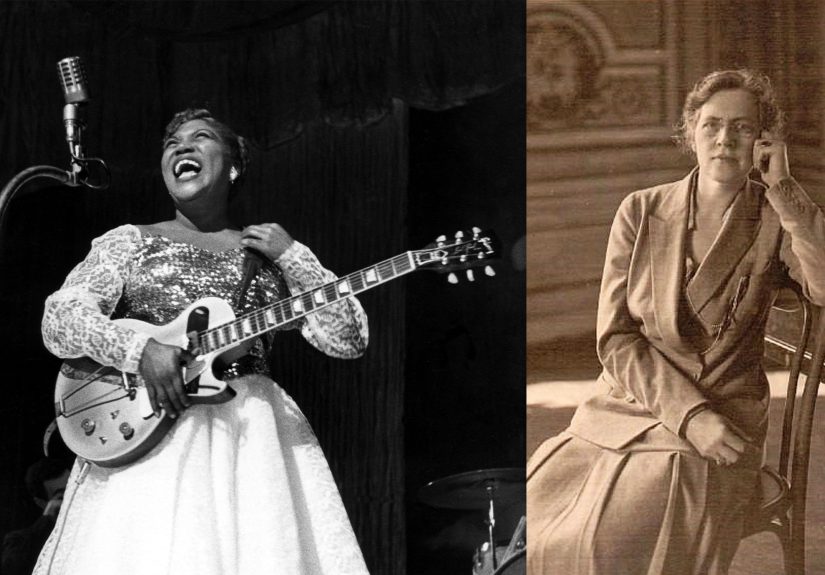
Sister Rosetta Tharpe is one of the clearest examples of why music history needs a better filing system. Long before rock and roll became a global brand, Tharpe fused gospel power with electric guitar fire. Her performance style, rhythmic attack, and bold guitar playing helped shape the sound that later artists would turn into rock and roll.
She sang with church-born conviction but played with enough electricity to make an amplifier feel spiritually concerned. Her influence can be heard in the DNA of rock guitar, gospel performance, R&B, and soul. Calling her merely “ahead of her time” feels too small. Sister Rosetta Tharpe was the time, and everyone else eventually checked their watches.
Jazz, Gospel, and Classical Voices That Broke Barriers
Billie Holiday: The Voice That Made Pain Unforgettable
Billie Holiday did not have the biggest voice in jazz, but she had one of the most unforgettable. Her phrasing bent time itself. She could take a familiar melody and make it sound as if it had just remembered a secret. Holiday’s influence lies in her ability to turn songs into intimate confessions, using timing, tone, and emotional restraint instead of vocal fireworks.
Her recording of “Strange Fruit” became one of the most important protest songs in American music history. It showed that a song could be art, witness, and moral confrontation all at once. Many later singers, from jazz vocalists to soul artists and pop interpreters, learned from Holiday that emotion is not always about singing louder. Sometimes it is about making the room go silent.
Ella Fitzgerald: Precision, Joy, and Vocal Genius
Ella Fitzgerald earned the nickname “First Lady of Song” for excellent reasons. Her voice had warmth, technical brilliance, and a sense of swing so natural it seemed like gravity had taken jazz lessons. Fitzgerald’s diction, range, and improvisational skill helped define jazz singing for the twentieth century.
Her scat singing remains legendary, but her influence was bigger than virtuosity. She made complexity sound effortless. She proved that technical mastery and emotional charm could live in the same phrase without fighting over the microphone. For singers today, Ella Fitzgerald remains a master class in control, taste, and musical intelligence.
Marian Anderson: A Concert That Became History
Marian Anderson’s voice carried classical grandeur, but her career also became a landmark in civil rights history. In 1939, after being denied the opportunity to perform at Constitution Hall, Anderson sang at the Lincoln Memorial before a massive integrated audience. The performance became an iconic moment in American cultural history.
Anderson later became the first African American singer to perform with the Metropolitan Opera. Her legacy reminds us that influence is not always measured in record sales. Sometimes it is measured in who gets to stand onstage, who gets to listen, and what a country is forced to hear about itself.
Mahalia Jackson: Gospel’s Majestic Ambassador
Mahalia Jackson brought gospel music to audiences far beyond the church walls where it first formed her. Her voice was rich, commanding, and deeply spiritual, helping gospel become a central force in American music. She influenced soul, R&B, blues, and rock while remaining rooted in faith-based music.
Jackson also sang in connection with the civil rights movement, lending her voice to moments of public hope and moral urgency. Her career showed that sacred music could be commercially powerful, artistically sophisticated, and socially meaningful. In short, she did not cross over by watering gospel down. She brought the world closer to it.
Women Who Redefined Country and Folk Music
Maybelle Carter: The Guitar Style That Built a Genre
Maybelle Carter’s influence on country music is almost impossible to overstate. As part of the Carter Family, she helped shape early country recording, and her distinctive guitar technique became a foundation for generations of players. The “Carter scratch” allowed melody and rhythm to work together on the guitar, giving the instrument a fuller role in country performance.
Carter’s legacy lives not only in songs but in the hands of musicians who learned that accompaniment could become identity. Long before the phrase “signature sound” became industry vocabulary, Maybelle Carter had one.
Patsy Cline: The Voice That Crossed Country Into Pop
Patsy Cline helped expand the possibilities for women in country music. Her voice blended country feeling with pop elegance, making songs like “Crazy” and “I Fall to Pieces” standards of emotional sophistication. She sang heartbreak without sounding helpless and vulnerability without losing dignity.
Cline’s career was tragically short, but her influence has lasted for decades. She became a model for country vocalists who wanted to reach wider audiences without abandoning emotional truth. Her sound helped open the door for crossover country-pop long before that door had a neon sign and a marketing department.
Loretta Lynn and Dolly Parton: Storytellers With Steel
Loretta Lynn and Dolly Parton changed country music by writing from women’s lives with honesty, wit, and nerve. Lynn’s songs addressed marriage, motherhood, class, desire, and frustration with a directness that still feels sharp. She sang as though she had no interest in politely pretending everything was fineand country music was better for it.
Dolly Parton built a songwriting catalog full of tenderness, humor, ambition, and emotional clarity. She also became one of music’s great business minds, proving that kindness and sharp strategy are not opposites. Her influence stretches from country and pop to philanthropy, publishing, film, and brand-building. Dolly Parton did not just become a star; she became an ecosystem with great hair.
Joni Mitchell: The Poet Who Changed the Chord Chart
Joni Mitchell transformed singer-songwriter music with unusual guitar tunings, painterly lyrics, and emotional complexity. Albums such as “Blue” and “Court and Spark” helped expand what popular songwriting could sound like. Her music did not settle for simple confession. It explored memory, freedom, intimacy, travel, loneliness, and self-invention with literary detail.
Mitchell influenced folk, rock, jazz, and alternative music. Generations of songwriters have borrowed courage from her willingness to be musically adventurous and emotionally precise. She made introspection feel expansive, which is no small trick.
Queens of Soul, Rock, and Pop Reinvention
Aretha Franklin: Respect, Power, and the Soul Standard
Aretha Franklin is one of the most influential women in music history because she transformed vocal power into cultural authority. Her gospel roots, piano skills, and emotional command helped define soul music. When she sang, the arrangement did not simply support her; it saluted.
Franklin’s version of “Respect” became more than a hit. It became an anthem of dignity, feminism, civil rights, and personal demand. She influenced singers across every genre, from R&B and gospel to rock, pop, and jazz. Aretha did not ask listeners to notice her greatness. She made it impossible not to.
Tina Turner: Survival, Stagecraft, and Rock Energy
Tina Turner’s influence is built on explosive performance, unmistakable vocals, and one of the greatest career reinventions in music history. She brought rock energy, soul intensity, and athletic stage presence into a style that felt completely her own.
Turner’s comeback in the 1980s became a landmark for women in popular music, especially women who were told their commercial prime had expired. Her success challenged ageism, sexism, and industry assumptions. She proved that a woman could return louder, stronger, and more iconic than before. Frankly, “comeback” seems too mild. Tina Turner staged a musical volcanic event.
Madonna: The Pop Star as Creative Director
Madonna changed pop music by treating image, controversy, dance, fashion, video, sexuality, and business strategy as parts of one artistic machine. She understood that pop was not only sound; it was spectacle, identity, and conversation.
Her influence can be seen in the way modern artists manage eras, visual branding, choreography, public persona, and reinvention. Madonna turned the music video into a cultural weapon and made transformation part of the job description for pop stars. Many artists reinvent themselves. Madonna made reinvention the main event.
Hip-Hop, R&B, and Modern Global Powerhouses
Missy Elliott: The Future Arrived Wearing a Trash-Bag Suit
Missy Elliott changed hip-hop and pop with futuristic production, playful flows, surreal visuals, and fearless creativity. As a rapper, songwriter, producer, and video innovator, she expanded what women in hip-hop could sound like and look like. Her work with Timbaland helped create a sound that felt rubbery, strange, danceable, and completely new.
Missy’s influence is especially powerful because she refused to fit the narrow image expectations placed on women in mainstream rap. She was funny, experimental, stylish, commanding, and weird in the best possible way. In an industry that often rewards sameness, Missy Elliott made originality feel like a party invitation.
Lauryn Hill: One Album, Endless Ripples
Lauryn Hill’s impact comes from her rare fusion of rap, soul, reggae, gospel, and emotional truth. “The Miseducation of Lauryn Hill” became a landmark album because it spoke with intelligence, vulnerability, and spiritual force. Hill moved between singing and rapping as if genre boundaries were merely suggestions written in pencil.
Her influence is heard in generations of artists who blend melody and lyricism, confession and critique, softness and strength. Lauryn Hill proved that a deeply personal album could also feel communal, political, and timeless.
Beyoncé: The Album as Event, Archive, and Empire
Beyoncé’s influence reaches across vocals, dance, visual albums, live performance, business, fashion, and cultural storytelling. She helped redefine what a modern superstar can be: not just a singer, but a director of worlds. Her projects often arrive with choreography, film language, historical references, and a level of detail that makes casual viewing feel like underachievement.
From Destiny’s Child to her solo career, Beyoncé has pushed R&B and pop toward bigger concepts and higher performance standards. Albums such as “Lemonade” and “Renaissance” show how popular music can explore heritage, identity, genre history, and liberation while still making people dance hard enough to reconsider their footwear.
Taylor Swift: Songwriting, Ownership, and Fan Culture
Taylor Swift’s influence is rooted in songwriting, narrative control, and a deep relationship with her audience. She moved from country to pop to indie-folk textures while keeping storytelling at the center. Her songs often work like diary entries with bridges engineered for mass emotional damage.
Swift also changed conversations about music ownership by rerecording her earlier albums, turning a business dispute into a public lesson about masters, rights, and artistic control. Her success demonstrates how modern artists can build community, use eras as creative architecture, and turn personal storytelling into global connection.
Common Threads Among Influential Women in Music History
They Expanded the Meaning of Genre
Many influential female musicians refused to stay inside one lane. Sister Rosetta Tharpe moved between gospel and rock energy. Joni Mitchell blended folk, jazz, and pop. Beyoncé explores R&B, house, country, and global dance traditions. Missy Elliott made hip-hop sound like it had been sent back from the future with excellent rhythm.
They Turned Personal Stories Into Public Language
From Billie Holiday’s emotional phrasing to Loretta Lynn’s domestic realism and Taylor Swift’s autobiographical songwriting, women have turned private experience into shared vocabulary. Their songs help listeners name feelings they may not have known how to explain. That is one reason their music lasts: it gives people emotional subtitles.
They Challenged Industry Power
Influence is not only artistic. It is also structural. Madonna fought for control over image and sexuality. Dolly Parton protected her publishing. Taylor Swift put music ownership into mainstream conversation. Beyoncé elevated the surprise album and visual album into high art and high commerce. These women changed how artists think about power, not just performance.
Experiences and Lessons Inspired by Influential Women in Music History
Spending time with the stories of influential women in music history can change the way we listen. At first, it is easy to hear only the hit songs. The chorus arrives, the melody works its magic, and the brain says, “Yes, excellent, please replay.” But when we learn what these women overcame, invented, protected, and risked, the listening experience becomes richer. A Billie Holiday recording no longer feels like just a beautiful jazz performance; it becomes a lesson in phrasing, courage, and emotional restraint. A Sister Rosetta Tharpe guitar riff no longer sounds like a fun vintage groove; it sounds like a spark from the engine room of rock and roll.
One powerful experience is realizing how often women had to be innovators and negotiators at the same time. They were not simply making music. They were navigating racism, sexism, class barriers, limited contracts, narrow radio formats, and public expectations that could shrink a woman’s artistry into a costume. Yet they still created work that expanded the world. That teaches an important lesson for artists, writers, students, and anyone trying to build something meaningful: originality often requires persistence before applause arrives.
Another lesson is that influence does not always look the same. Some women changed music with vocal technique. Ella Fitzgerald made precision joyful. Aretha Franklin made power feel sacred. Tina Turner made performance feel like controlled lightning. Others changed music through songwriting. Joni Mitchell, Dolly Parton, Loretta Lynn, Lauryn Hill, and Taylor Swift showed that details matter: a place name, a confession, a family memory, a sharp observation, or one perfectly placed line can make a song live for decades.
There is also something deeply motivating about how these artists handled reinvention. Madonna made transformation a pop art form. Beyoncé turned each era into a carefully built universe. Taylor Swift moved across genres without abandoning her central gift for narrative. Their careers remind us that growth does not mean betraying who you are. Sometimes it means finding a bigger room for all the versions of yourself.
For music lovers, the best way to honor these women is not only to admire them but to listen actively. Build a playlist that moves from Ma Rainey to Missy Elliott, from Mahalia Jackson to Beyoncé, from Patsy Cline to Taylor Swift. Notice how themes travel: faith, heartbreak, independence, protest, desire, reinvention, humor, survival. The technology changes, the production changes, the hairstyles definitely change, but the human pulse remains.
The biggest personal takeaway is simple: influential women in music history teach us that voice is power. Not just vocal power, although Aretha could certainly settle that argument in three notes. Voice means perspective, ownership, courage, and the refusal to disappear. Their stories encourage listeners to value creative honesty, support diverse artists, and recognize that the future of music is strongest when more voices are heard.
Conclusion: The Legacy Keeps Singing
Influential women in music history did more than create memorable songs. They built bridges between genres, communities, generations, and movements. They made music more honest, more daring, more emotional, more theatrical, more political, and more fun. From Ma Rainey’s blues and Marian Anderson’s historic concert to Aretha Franklin’s soul authority, Madonna’s pop reinvention, Missy Elliott’s futuristic hip-hop, Beyoncé’s cultural architecture, and Taylor Swift’s narrative empire, these artists changed what music could be.
Their influence continues every time a young singer studies phrasing, a songwriter protects her publishing, a guitarist plugs in with gospel fire, a rapper chooses weirdness over permission, or a pop star builds an era instead of simply releasing an album. Music history is still being written, and if the past has taught us anything, it is this: when women get the microphone, the whole world had better listen.