Table of Contents >> Show >> Hide
- Why a Water Bottle Gets Gross Faster Than You Think
- How Often Should You Clean a Water Bottle?
- What You Need to Clean a Water Bottle Properly
- Step-by-Step: How to Clean a Water Bottle by Hand
- How to Deep Clean a Water Bottle
- How to Clean Different Types of Water Bottles
- Can You Put a Water Bottle in the Dishwasher?
- How to Prevent Germs, Mold, and Mineral Buildup
- Signs Your Bottle Needs More Than a Quick Rinse
- Common Water Bottle Cleaning Mistakes
- Experience-Based Lessons: What Real Bottle Habits Teach You
- Final Thoughts
If your reusable water bottle could talk, it would probably say two things: “Thanks for keeping me busy,” and “Please, for the love of clean hydration, wash the lid.” Water bottles are everyday heroes. They travel to work, the gym, the car, school, hiking trails, and that mysterious corner of your desk where pens go to retire. But even if you only fill yours with plain water, a bottle can still collect saliva, hand germs, mineral residue, funky odors, and the kind of mysterious film that makes you stare into the opening like a detective at a crime scene.
The good news is that learning how to clean a water bottle properly is not hard. You do not need a laboratory, a hazmat suit, or a degree in bottle archaeology. You just need the right routine, a little consistency, and the willingness to take apart the parts you usually pretend do not exist. Here is how to keep your bottle fresh, safe, and gloriously free of mold, germs, and crusty buildup.
Why a Water Bottle Gets Gross Faster Than You Think
A reusable bottle looks innocent because water looks innocent. Crystal clear. Refreshing. Not exactly the stuff of horror movies. But each sip introduces bacteria from your mouth, and each touch can transfer oils and germs from your hands. Add moisture, a sealed environment, a dark bag, and a warm car cup holder, and suddenly your bottle has become a tiny studio apartment for microbes.
The dirtiest areas are usually not the big open chamber. They are the sneaky little places: the straw, mouthpiece, cap threads, silicone seals, flip tops, and rubber gaskets. Those tight crevices trap moisture and make it easier for mold, residue, and odors to settle in. If you ever notice a sour smell, black specks, a slippery interior, or yesterday’s lemon water still whispering from the lid, your bottle is overdue for a proper cleaning.
How Often Should You Clean a Water Bottle?
Here is the practical answer: rinse it after each use, wash it regularly, and deep clean it on a schedule instead of waiting for the bottle to become a science fair project.
Best everyday routine
- Give the bottle a quick rinse with warm water after each day of use.
- Wash it with hot, soapy water daily if you use it constantly, drink directly from it, or carry it everywhere.
- Deep clean it at least once a week by fully disassembling the lid, straw, gasket, and any removable pieces.
Clean it immediately if you used it for more than water
If your bottle held coffee, tea, sports drinks, juice, smoothie residue, protein shakes, or anything sweet, creamy, or acidic, do not let it sit overnight. Sugary and nutrient-rich drinks leave behind films and smells much faster than plain water. The same goes for bottles used when you were sick. In those cases, prompt washing is the smart move.
What You Need to Clean a Water Bottle Properly
You do not need a giant cleaning caddy. A few simple tools make the job much easier:
- Mild dish soap
- Warm or hot water
- A bottle brush
- A small straw brush for narrow parts
- A clean sponge or soft cloth
- White vinegar for deodorizing or mold-prone buildup
- Baking soda for stubborn odors
- Optional bottle-cleaning tablets, if you like convenience
One important rule: always check whether your specific bottle is dishwasher safe. Many popular brands allow dishwasher cleaning for at least some parts, but not every bottle, lid, straw, or finish has the same rules. When in doubt, let the manufacturer be the boss.
Step-by-Step: How to Clean a Water Bottle by Hand
1. Take the bottle apart completely
This is where many people fail with confidence. Unscrew the lid. Remove the straw. Pop out the gasket. Separate the mouthpiece, cap insert, and any rubber seal you can safely remove. If you leave those parts in place, you are mostly cleaning the easy part and ignoring the gross part.
2. Rinse away loose residue
Run warm water through the bottle and all removable pieces. This clears out leftover liquid and softens any film that has started to cling to the interior.
3. Wash with hot, soapy water
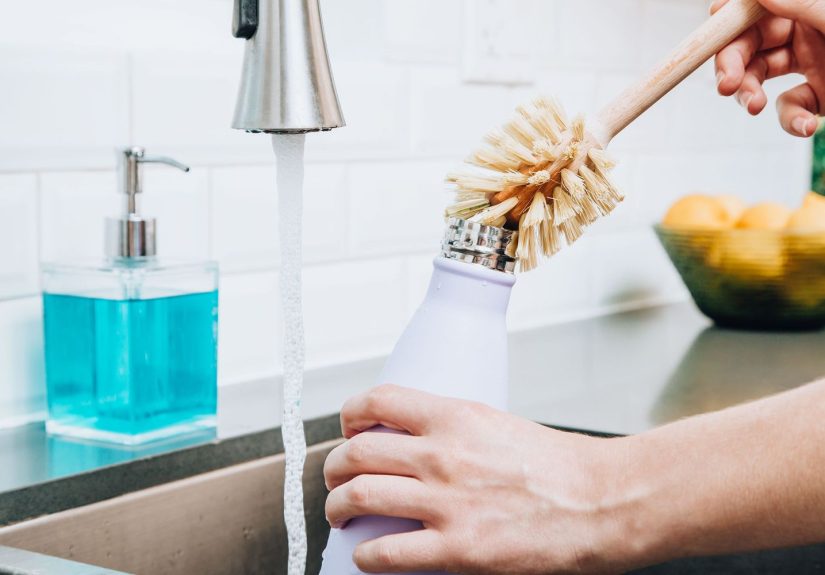
Add a few drops of dish soap to the bottle and scrub the inside with a bottle brush. Use a sponge or cloth on the outside. Scrub the threads around the neck, the underside of the cap, and the area around the spout. Use a straw brush for narrow tubes and sip channels. For lids with valves or hidden pockets, slow down and actually inspect them. This is not glamorous work, but neither is discovering mildew where your mouth goes.
4. Rinse thoroughly
Rinse every piece well with warm water until no soap remains. Soap film can trap flavors and make your next refill taste like a bubble bath.
5. Air dry everything completely
Place the bottle and all parts on a drying rack or clean towel and let them dry fully before reassembling. Moisture trapped under a silicone gasket or inside a straw is exactly how mold earns employee-of-the-month status.
How to Deep Clean a Water Bottle
Sometimes a quick wash is not enough. Maybe the bottle smells weird. Maybe there is visible buildup. Maybe it spent three days in your car with a few heroic ounces of old electrolyte drink marinating at the bottom. This is when you deep clean.
Method 1: Vinegar soak for odor and light mold risk
Mix equal parts white vinegar and water. Fill the bottle or soak the affected parts for 20 to 30 minutes, or longer for persistent odors. Then scrub with a bottle brush, rinse thoroughly, and let everything dry completely. This method is especially useful for musty smells and light residue that needs a little extra persuasion.
Method 2: Baking soda for stale smells
Add warm water and a tablespoon of baking soda to the bottle, let it sit for a while, then scrub and rinse. Baking soda is handy when the bottle smells like old coffee, forgotten lemon slices, or “whatever happened at soccer practice.”
Method 3: Cleaning tablets for convenience
Many bottle brands sell cleaning tablets designed for stainless steel, glass, and plastic drinkware. These can be helpful for stain removal and odor control, especially for coffee, tea, and flavored beverages. Follow the product directions exactly, then rinse thoroughly afterward.
Method 4: Diluted bleach sanitizing step for tough cases
If your bottle has stubborn contamination, visible mold, or you want an occasional sanitizing step, use only a properly diluted bleach solution and only if your bottle’s care instructions allow it. A practical guideline based on container-sanitizing advice is 1 teaspoon of unscented household bleach in 1 quart of water. Let the solution contact interior surfaces briefly, rinse very well, and allow the bottle to dry completely.
Important: Never mix bleach with vinegar or any other cleaner. And do not make bleach your everyday cleaning method. It is a backup singer, not the lead vocalist.
How to Clean Different Types of Water Bottles
Stainless steel bottles
Stainless steel is durable, popular, and often easier to keep fresh than soft plastic. Use hot, soapy water for routine washing. For odors or stains, try a vinegar soak or bottle-cleaning tablet. Avoid harsh abrasives that can scratch finishes or wear down painted exteriors.
Plastic bottles
Plastic bottles are lightweight and convenient, but they can hold onto smells and scratches more easily. Once plastic becomes cracked, deeply scuffed, cloudy, or permanently funky, replacement may be smarter than heroic cleaning. A damaged bottle is harder to sanitize well.
Glass bottles
Glass is simple to clean and does not tend to retain odors the way some plastics do. Just be careful with temperature changes and handling. The bottle may be easy to clean, but gravity remains undefeated.
Straw bottles and flip-top lids
These are the trickiest. They are convenient to sip from and extremely talented at hiding grime. Remove every possible part, use a straw brush, and dry the components separately. If your bottle has a bite valve, silicone mouthpiece, or concealed gasket, clean those areas like they owe you money.
Can You Put a Water Bottle in the Dishwasher?
Sometimes yes. Sometimes absolutely not. That is why the words “dishwasher safe” matter more than optimism.
If the bottle is dishwasher safe, disassemble it first. Place lids, straws, and removable parts where the manufacturer recommends, often on the top rack or utensil section. If the bottle is insulated, painted, older, or has a specialty lid, read the care instructions before you toss it in and hope for the best.
Dishwashers can be great because they combine hot water and detergent with a thorough cycle. But the dishwasher is not a magical portal that cleans sealed gunk hiding under a gasket you forgot to remove. If you skip disassembly, you may end up with a bottle that is technically washed and still secretly gross.
How to Prevent Germs, Mold, and Mineral Buildup
Cleaning is important, but prevention makes life easier. A few habits can dramatically reduce bottle funk:
- Empty the bottle at the end of the day instead of leaving water trapped inside overnight.
- Leave the lid off while drying so moisture can escape.
- Store the bottle fully dry, not sealed while damp.
- Do not ignore the lid, straw, and gasket.
- Wash immediately after using juice, milk, protein drinks, or sweetened beverages.
- Do not keep the bottle in a hot car for long stretches.
- Replace damaged straws, warped lids, or cracked bottles.
- Use more than one bottle if you are prone to forgetting cleanup. Rotation beats procrastination.
If you live in an area with hard water, you may also notice white mineral spots or a chalky ring. That is usually buildup rather than mold. Vinegar soaks are especially helpful for this type of deposit.
Signs Your Bottle Needs More Than a Quick Rinse
- A sour or musty odor
- Black, pink, or green specks around the lid or straw
- A slippery film on the inside
- Cloudiness that does not rinse away
- An old taste that keeps returning
- Visible buildup under seals or inside threads
If these signs keep coming back even after thorough cleaning, the bottle may be damaged or overdue for replacement. Not every water bottle deserves a redemption arc.
Common Water Bottle Cleaning Mistakes
Only rinsing with water
A rinse is better than nothing, but it does not remove oils, biofilm, odors, or hidden grime well enough to count as real cleaning.
Ignoring removable parts
If you never pop out the silicone ring, you are cleaning around the problem, not solving it.
Putting it away damp
Moisture is an engraved invitation for mold.
Using the wrong cleaning method for the material
Some bottles love the dishwasher. Others prefer gentle handwashing. Some lids come apart beautifully. Others have dramatic opinions. Follow the care instructions for your exact model.
Waiting until it smells bad
At that point, the bottle has already been trying to get your attention for a while.
Experience-Based Lessons: What Real Bottle Habits Teach You
One of the funniest things about reusable bottles is how quickly people become emotionally attached to them. A favorite bottle is not just a container. It is a desk accessory, gym companion, travel sidekick, and sometimes the only reason a person remembers to drink water before 3 p.m. That attachment is exactly why bottle-cleaning habits get weird. People will protect a bottle with a padded boot, special stickers, and a custom straw cap, then somehow act shocked when the inside smells like old lemon gym socks.
In everyday life, the biggest lesson is this: the lid tells the truth. Someone may swear they clean their bottle “all the time,” but the mouthpiece, gasket, and straw usually reveal whether that is true. Office workers often discover buildup in bottles that sit on desks all day because those bottles are constantly sipped from but rarely fully washed. Gym users learn even faster that protein residue and flavored drink mix can turn a bottle funky overnight. Parents know the chaos level rises even higher when a child’s sports bottle disappears into a backpack for two days and returns with a smell strong enough to deserve its own zip code.
Travelers often learn a different lesson: convenience can sabotage hygiene. A straw bottle is great in the car. A flip-top bottle is great on a walk. But the more moving parts a bottle has, the more intentional cleaning it needs. The simplest wide-mouth bottle is often the easiest to keep fresh because it has fewer hiding places. By contrast, the sleek lid with secret channels and silicone seals may look impressive, but it demands a tiny brush and an honest work ethic.
Another common experience is the hard-water surprise. Many people assume white rings or chalky spots mean mold, when in fact the problem is often mineral buildup. It is annoying, but usually easier to handle than actual mildew. A vinegar soak can make a bottle look dramatically better with very little effort. Meanwhile, true mold usually shows up in damp corners, under seals, or inside straws that stayed wet too long. That difference matters because it changes the solution.
The most practical habit people develop over time is rotation. Having two bottles instead of one makes cleaning much easier because you are not forced to choose between staying hydrated and waiting for parts to dry. One bottle can be in use while the other is getting the spa treatment it clearly deserves. This simple switch often improves consistency more than any fancy cleaning gadget.
And perhaps the most universal experience is this: once you do a truly thorough clean and drink from a bottle with no weird odor, no stale taste, and no suspicious specks around the lid, you immediately realize you should have done it sooner. Clean water tastes better. The bottle feels better. And your daily hydration routine stops being a gamble and starts feeling refreshingly normal again.
Final Thoughts
Knowing how to clean a water bottle is one of those small life skills that pays off every single day. A clean bottle helps prevent germs, mold, stale odors, and ugly buildup, while also making water taste the way it is supposed to taste: clean, cold, and not vaguely haunted.
The winning routine is simple. Rinse after use. Wash with hot, soapy water regularly. Disassemble lids, straws, and gaskets. Deep clean weekly. Dry everything fully. Check your manufacturer’s instructions before using the dishwasher. And if your bottle still smells suspicious after all that, it may be time to retire it with dignity.
Your bottle works hard. Give it a proper bath. Your future sip will thank you.