Table of Contents >> Show >> Hide
- Why the Hiroshima 75th Anniversary Still Matters
- The Two Nuclear Futures: Energy and Weapons
- The Future of Nuclear Energy: Comeback or Costly Detour?
- The Hard Problems Nuclear Energy Still Must Solve
- The Future of Nuclear Weapons: A More Dangerous Moment
- What Hiroshima Teaches About Deterrence
- Nonproliferation: The World’s Nuclear Seatbelt
- What Should the Future of Nuclear Look Like?
- Experiences and Reflections on Hiroshima’s 75th Anniversary
- Conclusion: Nuclear’s Future Is a Test of Human Maturity
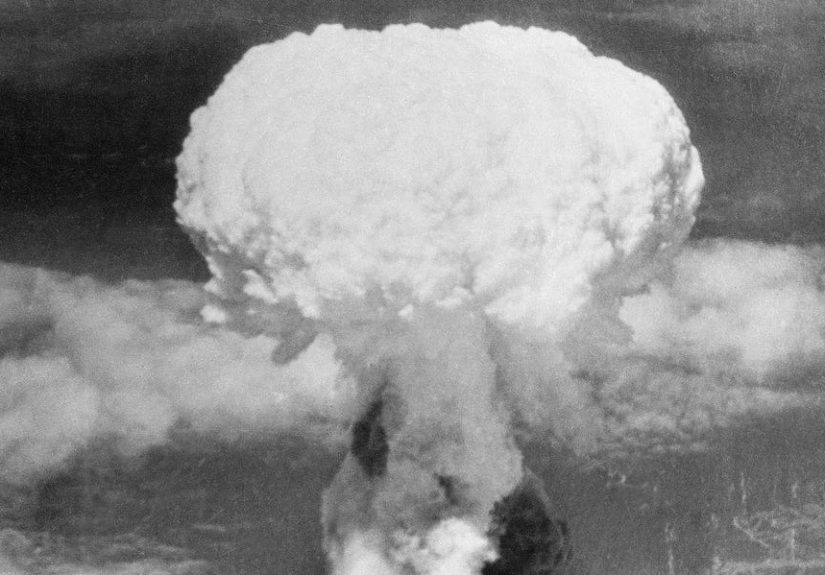
The 75th anniversary of Hiroshima was not just a date on a calendar. It was a moral alarm clock with a very loud bell. On August 6, 1945, the atomic bombing of Hiroshima introduced the world to a new kind of power: one capable of ending a war, destroying a city, reshaping global politics, and making every future generation wonder whether human intelligence had accidentally outrun human wisdom.
Seventy-five years later, the question was not simply, “What happened?” History has already answered that with painful clarity. The better question is: “What happens next?” The future of nuclear power and nuclear weapons sits at a strange crossroads. On one side, nuclear energy is being promoted as a reliable, low-carbon tool for fighting climate change and powering an electricity-hungry world. On the other side, nuclear weapons remain a terrifying reminder that civilization occasionally hands itself matches while standing in a fireworks warehouse.
This article explores the legacy of Hiroshima, the future of nuclear energy, the renewed risks of nuclear weapons, and the difficult balance between innovation, memory, security, and survival.
Why the Hiroshima 75th Anniversary Still Matters
The bombing of Hiroshima was the first use of an atomic weapon in war. The city suffered immediate destruction, mass casualties, fires, radiation injuries, and long-term trauma that continued far beyond the initial blast. Three days later, Nagasaki was bombed as well. Japan surrendered soon after, and World War II ended. But the nuclear age did not end. It had just opened its front door, hung up its coat, and made itself extremely difficult to evict.
The 75th anniversary in 2020 arrived during a world already dealing with uncertainty, public health fears, geopolitical tension, and a rising sense that the old rules were wobbling. Hiroshima became more than a historical event. It became a lens for viewing modern risk. Nuclear danger is not frozen in black-and-white photographs. It lives inside policy debates, military budgets, energy plans, climate strategies, and diplomatic failures.
Hiroshima as Memory, Not Just History
Remembering Hiroshima is not about turning history into a museum exhibit behind glass. It is about asking whether memory still has power. Survivors, known as hibakusha, spent decades sharing testimony about what nuclear weapons do to real human bodies, families, neighborhoods, and futures. Their message has never been complicated: nuclear war is not an abstract chess move. It is human catastrophe.
That message matters today because the world has become very good at discussing nuclear weapons in tidy phrases like “deterrence,” “strategic stability,” and “modernization.” Those terms have a place, but they can also make reality sound more polite than it is. Hiroshima cuts through the vocabulary fog. It reminds us that every nuclear policy eventually points back to cities, children, hospitals, schools, and people who did not volunteer to become footnotes in military theory.
The Two Nuclear Futures: Energy and Weapons
The word “nuclear” carries two very different futures. Nuclear energy and nuclear weapons are often thrown into the same mental junk drawer, but they are not the same thing. One is about producing electricity through controlled fission. The other is about destructive force. Still, they are historically linked, politically sensitive, and technically connected enough that public trust matters enormously.
The future of nuclear will depend on whether nations can separate peaceful use from military danger, strengthen safeguards, manage waste, control costs, and rebuild arms-control agreements before the world slides into a new arms race wearing a slightly more expensive suit.
The Future of Nuclear Energy: Comeback or Costly Detour?
Nuclear energy is having a comeback conversation. In the United States, nuclear power remains one of the largest sources of carbon-free electricity and provides steady power regardless of whether the sun is shining or the wind is feeling productive. That reliability is one reason many governments, utilities, and technology companies are taking a fresh look at reactors.
Climate change has made the energy debate more urgent. Solar and wind are growing quickly, batteries are improving, and energy efficiency still deserves more attention than it usually gets at dinner parties. Yet the grid needs reliable power around the clock. Nuclear energy’s biggest selling point is that it can produce large amounts of electricity without direct carbon dioxide emissions during operation.
Small Modular Reactors and Advanced Nuclear Designs
Small modular reactors, often called SMRs, are one of the most discussed ideas in the nuclear energy world. Unlike traditional large reactors, SMRs are designed to be smaller, potentially factory-built, and easier to deploy in stages. Supporters argue that they could reduce financial risk, fit into more locations, support industrial heat, power data centers, and replace fossil fuel plants. Critics respond with a raised eyebrow and a calculator, noting that “smaller” does not automatically mean “cheaper.”
The U.S. Department of Energy has supported advanced reactor demonstrations, while the Nuclear Regulatory Commission has certified the first U.S. small modular reactor design. These are important milestones, but they do not guarantee a smooth road. The nuclear industry has a long history of big promises, slow timelines, and budgets that sometimes behave like teenagers with a credit card.
Why Tech Companies Are Interested
Artificial intelligence, cloud computing, and data centers require enormous electricity supplies. As digital infrastructure expands, companies are hunting for reliable, low-carbon power. Nuclear energy is attractive because it can run continuously. That does not mean every data center will soon have a reactor next door like a very serious backyard generator, but it does explain why nuclear energy has returned to boardroom conversations.
The real test will be whether advanced nuclear projects can be licensed, financed, built, and operated safely at competitive costs. A reactor that exists only in a slide deck is not an energy strategy. It is a very expensive PowerPoint with ambition.
The Hard Problems Nuclear Energy Still Must Solve
Nuclear energy’s future is promising, but not magic. It faces several serious challenges that cannot be waved away with a glossy brochure.
Cost and Construction Risk
Traditional nuclear plants are expensive to build. Recent U.S. projects have shown how delays and overruns can weaken public confidence. Advanced reactors may reduce some risks, but first-of-a-kind projects are rarely cheap. Investors, regulators, and communities will need proof, not poetry.
Waste Management
Nuclear waste is manageable from an engineering perspective, but politically difficult. Spent fuel can be stored safely, yet the United States still lacks a permanent geologic repository. Until long-term waste policy becomes more credible, nuclear opponents will continue to ask a fair question: “If this energy is so futuristic, why is the waste plan still stuck in a government paperwork swamp?”
Safety and Public Trust
Nuclear power has a strong safety record in many countries, but public memory includes Three Mile Island, Chernobyl, and Fukushima. Even when technology improves, trust does not reboot like a laptop. Communities need transparent regulation, emergency planning, honest communication, and independent oversight.
The Future of Nuclear Weapons: A More Dangerous Moment
If nuclear energy is cautiously reentering the spotlight, nuclear weapons are doing something much darker. Arms-control agreements have weakened, modernization programs are expanding, and the relationship among major powers is tense. The United States and Russia still possess the vast majority of the world’s nuclear weapons, while China is expanding its arsenal. Other nuclear-armed states are also maintaining or improving their forces.
The expiration of New START in February 2026 left the United States and Russia without legally binding limits on deployed strategic nuclear weapons. That is not a small detail. It is the diplomatic equivalent of removing guardrails on a mountain road and hoping everyone drives politely.
Modernization vs. Arms Racing
Many governments describe nuclear upgrades as “modernization.” Sometimes that means replacing aging systems to maintain reliability and safety. But modernization can also trigger competition, suspicion, and escalation. When one country upgrades, another worries. When another responds, the first claims it must do more. Eventually everyone insists they are acting defensively while the planet quietly checks the exits.
The United States is projected to spend hundreds of billions of dollars over the next decade maintaining and modernizing nuclear forces. Supporters argue that credible deterrence prevents war. Critics argue that excessive investment in nuclear weapons increases risk, drains public resources, and normalizes a permanent state of danger.
What Hiroshima Teaches About Deterrence
Deterrence is the idea that nuclear weapons prevent war because the consequences of using them would be unbearable. This argument shaped the Cold War and still influences global security policy. It cannot be dismissed casually. Nuclear weapons have affected how major powers calculate risk.
But Hiroshima teaches that deterrence is not a moral victory. At best, it is a dangerous emergency arrangement. It depends on rational leaders, accurate information, secure systems, reliable communication, and luck. History has had too many close calls to treat luck as a policy pillar. Luck is great when finding five dollars in an old jacket. It is less charming when attached to civilization’s survival.
Nonproliferation: The World’s Nuclear Seatbelt
The Treaty on the Non-Proliferation of Nuclear Weapons, or NPT, remains central to global nuclear order. Its basic bargain is simple: countries without nuclear weapons agree not to acquire them, countries with nuclear weapons commit to pursue disarmament, and peaceful nuclear technology remains available under safeguards.
That bargain is under stress. Non-nuclear states often argue that nuclear-armed countries move too slowly on disarmament. Nuclear-armed states argue that security threats prevent faster reductions. Meanwhile, regional tensions in Europe, Asia, and the Middle East create incentives for more countries to consider nuclear options. If the nonproliferation system weakens, the future becomes more dangerous and much harder to manage.
What Should the Future of Nuclear Look Like?
The future of nuclear should not be a simple yes-or-no argument. The smarter question is: What kind of nuclear future is safe, ethical, affordable, and accountable?
1. Expand Nuclear Energy Only Where It Makes Sense
Nuclear energy can help reduce emissions, but it should compete honestly with renewables, storage, geothermal, transmission upgrades, and energy efficiency. The goal is not to crown one technology king. The goal is to build a cleaner, more reliable energy system. Nuclear projects should be judged by safety, cost, timeline, carbon impact, waste planning, and community consent.
2. Rebuild Arms Control
The world needs renewed arms-control agreements that include verification, transparency, and crisis communication. A future agreement between the United States and Russia is essential, but China and other nuclear-armed states will increasingly matter. Arms control is not a gift to rivals. It is a seatbelt for everyone in the car.
3. Reduce the Role of Nuclear Weapons in Security Policy
As long as countries treat nuclear weapons as the ultimate symbol of power, others will want them. Reducing the role of nuclear weapons in defense strategies would lower incentives for proliferation. That does not happen overnight, but it starts with doctrine, diplomacy, and public pressure.
4. Keep Hiroshima in the Conversation
Policy debates often drift into technical language. Hiroshima brings the debate back to human consequences. Education, survivor testimony, museum exhibits, documentaries, and public discussion are not soft extras. They are part of prevention. A society that forgets what nuclear weapons do becomes easier to convince that they are ordinary tools.
Experiences and Reflections on Hiroshima’s 75th Anniversary
Experiencing the Hiroshima 75th anniversary from a modern perspective feels different from reading a standard textbook chapter. A textbook gives dates, names, and outcomes. The anniversary gives silence. It asks people to pause in a world that is usually allergic to pausing. We scroll, swipe, click, refresh, and argue. Hiroshima asks for something slower: attention.
One of the most powerful experiences related to this topic is encountering survivor testimony. Even when read secondhand, these accounts change the scale of the event. The bombing is no longer only a military decision or a wartime turning point. It becomes a morning interrupted. People were commuting, working, studying, cooking, and walking through ordinary routines. Then the ordinary world ended. That is what makes Hiroshima so difficult to process. Catastrophe did not arrive with dramatic music. It arrived in the middle of daily life.
Another experience is visiting, reading about, or viewing images of the Hiroshima Peace Memorial. The skeletal dome has become one of the world’s clearest symbols of nuclear memory. It does not shout. It stands. That is enough. Its presence suggests that the future is not protected by technology alone. It is protected by remembrance, restraint, and the uncomfortable habit of telling the truth.
For younger generations, Hiroshima can feel distant at first. Seventy-five years sounds like ancient history when your phone becomes outdated after three software updates. But the nuclear issue is not old. It is current. The weapons still exist. The budgets are still active. The treaties still matter. The power plants still operate. The policy choices are still being made by people alive right now.
Reflecting on Hiroshima also changes how we think about progress. Human beings are brilliant. We can split atoms, map genomes, send spacecraft beyond planets, and teach machines to write suspiciously confident emails. But brilliance without judgment is not enough. The Hiroshima anniversary reminds us that progress must answer to ethics. A discovery is not automatically a destiny. Just because humanity can build something does not mean it should use it without limits.
The experience of thinking about the future of nuclear is therefore mixed. There is hope in nuclear medicine, clean energy, scientific research, and advanced reactors that may help reduce carbon emissions. There is fear in nuclear weapons, arms racing, treaty collapse, and political leaders treating catastrophe like a bargaining chip. The nuclear future is not one road. It is a fork, and humanity keeps walking while arguing over the map.
Perhaps the most useful personal lesson from Hiroshima’s 75th anniversary is humility. Nuclear technology is powerful enough to demand humility from scientists, soldiers, presidents, engineers, activists, and ordinary citizens. Nobody gets to shrug and say, “That is someone else’s problem.” Nuclear choices are public choices. They shape budgets, energy systems, foreign policy, environmental risk, and the survival of future generations.
In that sense, Hiroshima is not only a tragedy to remember. It is a responsibility to inherit. The best way to honor the anniversary is not by repeating solemn phrases once a year and then returning to business as usual. It is by asking harder questions, supporting serious diplomacy, demanding honest energy policy, and refusing to let nuclear weapons become background noise. The future of nuclear should be guided by memory, not amnesia.
Conclusion: Nuclear’s Future Is a Test of Human Maturity
The Hiroshima 75th anniversary forced the world to look backward and forward at the same time. Backward, toward the human cost of the first atomic bombing. Forward, toward a century that may depend on whether nuclear technology is governed wisely or recklessly.
Nuclear energy may become an important part of a low-carbon future, especially if advanced reactors prove safe, affordable, and practical. But nuclear energy is not a free pass. It must solve problems of cost, waste, regulation, and public trust. Nuclear weapons, meanwhile, remain one of humanity’s greatest self-created dangers. The weakening of arms control, rising modernization costs, and renewed great-power rivalry should concern anyone who enjoys small luxuries like breathable air and cities that remain cities.
The future of nuclear is not predetermined. It will be shaped by policy, diplomacy, engineering, public pressure, and moral imagination. Hiroshima’s lesson is not that science is evil. It is that power without restraint can become disaster. The next nuclear chapter should be written with cleaner energy, fewer weapons, stronger safeguards, and a much better memory than humanity has sometimes shown.