Table of Contents >> Show >> Hide
- What Is the Fate Line in Palm Reading?
- Which Hand Should You Read?
- How to Locate the Fate Line
- How Palmists Interpret the Fate Line for Career
- What the Fate Line May Suggest About Finances
- How the Fate Line Works With Other Palm Lines
- How to Use Fate Line Palm Reading in a Smart Way
- Common Mistakes When Reading the Fate Line
- Experiences People Commonly Describe Around Fate Line Readings
- Final Thoughts
If you have ever stared at your palm and thought, “Can this tiny line explain why I changed majors three times and still browse job boards at midnight?” welcome to the wonderfully curious world of fate line palm reading. In palmistry, the fate line is often linked with direction, work, ambition, outside influences, and the way a person moves through career and money matters. It is not a stock picker, a CPA, or a magical payroll department. Still, many people find it useful as a reflective tool for thinking about purpose, work patterns, and how life keeps nudging them toward certain paths.
This is where a grounded approach helps. Palmistry is best treated as symbolism, not science. In other words, your palm can spark questions, but it should not replace budgeting, skill-building, or making smart career decisions. Think of the fate line as a conversation starter with your own life story. And frankly, that is already more helpful than half the “get rich quick” advice floating around online.
What Is the Fate Line in Palm Reading?
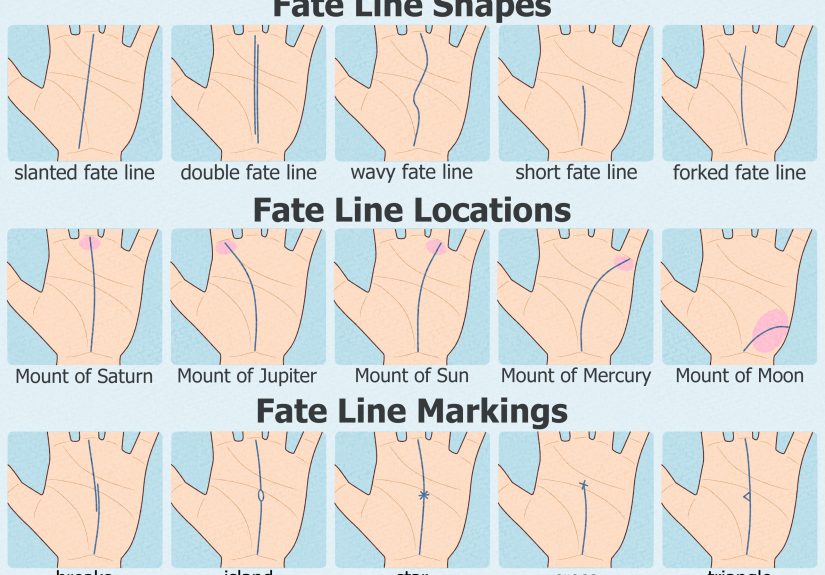
The fate line, also called the destiny line or career line, is usually described as a vertical line that runs up the center of the palm toward the base of the middle finger. In traditional palmistry, it is associated with life direction, purpose, career development, and the extent to which outside circumstances shape your path.
Here is the first important thing: not everyone has a bold, obvious fate line. Some people have a faint one. Some have multiple small vertical lines. Some seem to have none at all. Palmists generally do not treat that as a cosmic insult. Instead, they may read it as a sign that your path is more flexible, self-designed, experimental, or less tied to one single role for life.
So if your palm does not look like a neat subway map with one strong track, relax. That may simply reflect a life with more pivots, side quests, and reinventions.
Which Hand Should You Read?
Many modern palm readers compare both hands. A common approach is this: the non-dominant hand is read as potential, inherited tendencies, or your inner blueprint, while the dominant hand reflects how that potential is being used in real life. If you are right-handed, that usually means your right hand is read as the more active story. If you are left-handed, reverse it.
For career and finances, this comparison can be especially interesting. A clearer fate line on the dominant hand may be read as growing direction, stronger focus, or a path that has become more defined over time. If the line looks lighter or more fragmented on the active hand, some readers interpret that as a season of change, uncertainty, or experimentation.
How to Locate the Fate Line
Look at the center of your palm under good lighting. The fate line typically rises upward from the lower palm and moves toward the middle finger. It may begin near the wrist, from the middle of the palm, or appear only higher up. It can be long, short, straight, curved, broken, doubled, or barely there.
When reading it, palmists usually pay attention to four things:
- Depth: Is the line deep and clear, or faint and hard to follow?
- Length: Does it travel far up the palm, or stop early?
- Shape: Is it straight, curved, split, forked, or broken?
- Interaction: Does it cross or connect with major lines like the head line or heart line?
Those details are where the fun begins. Or, depending on what your palm looks like, where the plot twist begins.
How Palmists Interpret the Fate Line for Career
A Deep, Clear Fate Line
A strong, well-defined fate line is often interpreted as focus, structure, and a career path that feels more settled. In palmistry language, this kind of line suggests that work is a major organizing force in your life. People with this pattern are often described as steady builders. They may prefer long-term goals, defined responsibilities, and visible progress.
In practical terms, this could describe someone who thrives in clear systems: medicine, law, engineering, management, accounting, operations, or any field where consistency matters. It does not automatically mean “easy success.” It more often suggests commitment and a stronger sense of direction.
A Faint or Thin Fate Line
A lighter fate line is commonly read as a more flexible or uncertain path. That may sound dramatic, but it is not always negative. It can fit people who dislike rigid job titles, move between industries, freelance, build portfolio careers, or prefer purpose over hierarchy.
Someone with a faint fate line might spend their twenties and thirties experimenting before landing in the right lane. Or they may never choose just one lane at all. In today’s economy, where people mix remote work, side income, content creation, consulting, and traditional jobs, a softer fate line can feel less like confusion and more like modern life with Wi-Fi.
A Straight Fate Line
In many readings, a straight fate line suggests a relatively direct relationship with work and long-term goals. These people may prefer clear plans, measurable growth, and stable routines. Their career story tends to look like a ladder rather than a maze.
That does not mean zero surprises. It simply means the person may handle work through order, discipline, and sustained effort rather than dramatic reinvention.
A Curved or Wandering Fate Line
A more curved or shifting line is often associated with exploration. Palmists may connect it with people whose work path changes with interests, relationships, travel, creative urges, or new opportunities. This can describe the person who starts in finance, moves into marketing, launches a small business, and somehow ends up running workshops in Bali. Strange? Maybe. Impossible? Not at all.
In palmistry, this kind of line is less about failure and more about responsiveness. Career direction may evolve as life evolves.
A Broken Fate Line
Breaks in the fate line are often interpreted as shifts rather than doom. Palm readers may link them with career pivots, layoffs, burnout, returning to school, moving cities, changing industries, or redefining what success means. A broken fate line can reflect a chapter break, not the end of the book.
For example, imagine someone who spends ten years in corporate sales, burns out, earns a new certification, and becomes a therapist or UX designer. Palmistry would often read that interruption as a meaningful transition point. The line did not fail. The script changed.
A Fate Line That Starts Higher Up
If the fate line appears only from the middle of the palm or later in the hand, many readers interpret that as a later-blooming sense of purpose. Career clarity may come after life experience, not before it. This can fit people who need time to test, question, wander, and mature before their direction sharpens.
Plenty of successful adults did not know what they were doing at 22. Some still do not know at 32. Honestly, that may be the most universal symbol of all.
What the Fate Line May Suggest About Finances
Here is where things need a little realism. In palmistry, the fate line is not usually read as a literal dollar meter. It is more often linked to the way career structure influences financial stability. So rather than telling you, “Congratulations, yacht by Thursday,” it is used more symbolically to talk about work patterns that may affect money.
Strong Line, Structured Earning Style
A deep and steady fate line is often associated with disciplined earning, long-term planning, and gradual financial growth through consistent effort. This can fit people who build wealth through careers, promotions, credentials, retirement planning, or dependable business systems.
The message is usually not sudden riches. It is organized progress.
Faint or Changing Line, Variable Money Story
A softer or shifting line may be linked with variable income, changing work identity, or financial ups and downs tied to career transitions. This does not mean permanent instability. It may simply reflect commission-based work, self-employment, gig income, creative careers, or periods of reinvention.
In these cases, palmistry points less to “bad money luck” and more to the need for planning, cash buffers, and adaptability. Translation: your spreadsheet deserves respect.
Fate Line and Financial Mindset
Many people come to a fate line reading hoping to learn whether they will be rich. A better question is often: how do I approach work, risk, change, and discipline? Your money life usually grows out of those habits. Palmistry can be interesting when it pushes you to reflect on whether you are driven by security, recognition, freedom, or meaning. Those motives shape financial choices more than mystical certainty ever could.
How the Fate Line Works With Other Palm Lines
No experienced reader treats the fate line as a solo act. It is usually read alongside the head line, heart line, life line, and sometimes the sun line.
Fate Line + Head Line
This combination is often used to reflect how thinking styles affect career. If the fate line appears strong where it meets the head line, readers may talk about a period when education, ideas, analysis, or decision-making strongly shape your work path.
Fate Line + Heart Line
When the fate line interacts closely with the heart line, palmists may interpret career choices as deeply tied to emotions, values, relationships, or passion. This can show up in people who need meaningful work, people-centered careers, or jobs aligned with personal beliefs.
Fate Line + Sun Line
The sun line is often associated with visibility, reputation, recognition, or creative fulfillment. When readers look at both lines together, they may discuss whether a person’s work brings public acknowledgment, satisfaction, or a sense of legacy. In simple language: not just making money, but being seen for what you do.
How to Use Fate Line Palm Reading in a Smart Way
The healthiest way to use fate line palm reading is as reflection, not surrender. A palm reading can help you ask useful questions:
- Do I want stability, or do I secretly need change?
- Am I building a career, or just collecting jobs?
- Do my financial habits support the life I say I want?
- Where have outside pressures shaped my choices?
- What would “success” mean if nobody were watching?
Those questions matter whether you believe in palmistry, half-believe in it, or just enjoy a symbolic deep dive over coffee. A line on your hand may not control your future, but it can point your attention toward patterns you keep living out.
Common Mistakes When Reading the Fate Line
- Assuming one line decides everything: Palmistry looks at the whole hand, not one dramatic crease.
- Treating absence as bad luck: No fate line does not mean no future.
- Confusing symbolism with certainty: Palm reading is interpretive, not guaranteed prediction.
- Using it instead of real planning: Please do not replace saving, networking, or skill-building with staring aggressively at your palm.
Experiences People Commonly Describe Around Fate Line Readings
The experiences people report around fate line palm reading are often less about “My hand predicted my exact salary” and more about timing, perspective, and self-awareness. One common experience is recognition. Someone hears that their fate line looks faint or interrupted, and instead of panicking, they feel strangely seen. Maybe they have changed careers twice, paused work to care for family, or felt pulled between security and freedom. The reading gives language to a pattern they already sensed but had never named.
Another common experience is relief. People with a broken or irregular fate line often assume something is wrong with them. Then they learn that many readers interpret breaks as transitions, not failure. Suddenly, a layoff becomes a turning point, a career detour looks less embarrassing, and the messy middle of adult life stops feeling like proof that they missed the map. For some, that emotional shift is the whole value of the reading.
There are also people who describe fate line readings as motivation. Imagine a person in a stable but draining job who is told their line looks stronger later in the palm, symbolically suggesting growing direction with age and experience. Whether or not they believe the symbolism literally, the reading may encourage them to stop rushing and start building patiently. They update their resume, go back to school, ask for mentorship, or finally start the side project they keep talking about at dinner and never actually do.
Financially, people often say fate line readings make them reflect on how they earn rather than how much they earn. Someone with a deep, straight line may recognize that their best results come from consistency, structure, and long-term planning. Someone with a lighter or more shifting line may realize they are better suited to flexible, project-based, or creative income streams, but need stronger budgeting habits to balance that freedom. In that sense, the reading acts like a mirror. It does not hand over a lottery number. It highlights a working style.
Some experiences are more emotional than practical. A reading may bring up memories of parental expectations, unfinished ambitions, or the pressure to look successful from the outside. Because the fate line is often tied symbolically to direction and outside influence, people sometimes leave a reading asking bigger questions: Am I chasing my own goals or someone else’s version of success? Did I choose this path, or did I just keep saying yes until it became my life?
And yes, some people simply enjoy the ritual. They light a candle, study their hands, compare old photos, and treat the whole thing like a reflective check-in. That is valid too. Not every meaningful experience has to come with a spreadsheet, though the spreadsheet is still invited. The most balanced takeaway is this: fate line palm reading may not predict your bank account, but it can prompt honest reflection about work, ambition, money habits, and the stories you keep telling yourself about where your life is headed.
Final Thoughts
Fate line palm reading is most interesting when it is used as a thoughtful lens rather than a rigid verdict. In traditional palmistry, the fate line is linked with purpose, profession, outside influences, and how your working life unfolds over time. A strong line may suggest structure and focus. A faint or changing line may reflect reinvention, freedom, or a less conventional path. Neither is automatically better. They simply tell different stories.
For career and finances, the smartest interpretation is not “My hand guarantees success” or “My palm says I’m doomed.” It is this: what patterns am I living, what kind of work style fits me best, and what choices will move me toward stability and fulfillment? Palmistry can offer symbolism. You still supply the effort, strategy, and common sense. Destiny may be dramatic, but rent is due on the first.