Table of Contents >> Show >> Hide
- Why Bill Gates Buying Farmland Gets So Much Attention
- 5 Reasons To Invest In Farmland As Well
- How Regular Investors Can Invest In Farmland
- Risks To Understand Before Investing
- What Bill Gates’ Farmland Strategy Really Teaches Investors
- Experience-Based Insights: What It Feels Like To Evaluate Farmland As An Investment
- Conclusion
When people hear that Bill Gates has been buying farmland, the internet tends to put on its detective hat, grab a flashlight, and sprint into the cornfield. Is it about food security? Climate change? Potatoes? A secret plan to control Tuesday’s salad? The reality is less dramatic, but far more useful for investors: farmland is a serious, productive, income-generating asset that has been attracting wealthy individuals, institutions, family offices, and everyday investors looking beyond stocks and bonds.
Bill Gates has been reported as one of the largest private owners of farmland in the United States, with holdings spread across many states through investment structures connected to Cascade Investment. Gates himself has said there is no grand conspiracy behind the purchases and that the decisions are handled by a professional investment team. In plain English: farmland is being treated like an investment, not a movie villain’s headquarters.
That raises a practical question: should regular investors pay attention too? The answer is yes, but with a big asterisk. Farmland can offer long-term appreciation, rental income, inflation protection, and portfolio diversification. It can also come with risks such as weather, commodity prices, water access, management costs, interest rates, and local market conditions. So before anyone starts shopping for 80 acres and a tractor they do not know how to drive, let’s break down why farmland investing has become so interesting.
Why Bill Gates Buying Farmland Gets So Much Attention
Farmland is different from many other assets because it sits at the intersection of food, land scarcity, technology, climate, population growth, and real estate. That is a fancy way of saying: people need to eat, and good farmland is not exactly being manufactured in a warehouse outside Cleveland.
The United States still has hundreds of millions of acres of farmland, but the long-term trend is worth watching. USDA census data has shown a decline in both the number of farms and total acres of farmland in recent years. At the same time, productive agricultural land remains essential for crops, livestock, renewable energy siting debates, conservation programs, and rural economies. As cities expand and development pressure grows, high-quality farmland can become even more valuable in certain regions.
That is one reason farmland appeals to patient investors. It is not usually a “get rich by next Thursday” asset. Farmland tends to reward long holding periods, careful underwriting, and an understanding of local soil, water, tenants, crops, and market demand. In other words, it is more tortoise than hare. But the tortoise owns acreage.
5 Reasons To Invest In Farmland As Well
1. Farmland Is a Tangible Asset With Real Utility
Farmland is not just a number blinking on a trading screen. It is physical land that can produce food, fiber, feed, and sometimes energy-related income. Even when markets get noisy, farmland still has a basic economic function: growing things people need.
This is one of the reasons farmland can feel attractive during uncertain economic periods. Stocks can rise or fall based on earnings, sentiment, interest rates, or the mood of investors who had too much coffee. Farmland values are influenced by farm income, crop prices, local demand, soil quality, water rights, location, and comparable sales. Those factors can move slowly compared with public markets, which may help reduce emotional whiplash.
Of course, “tangible” does not mean “risk-free.” A farm can suffer from drought, flooding, poor tenant management, weak crop prices, or unexpected expenses. But the core asset is real, finite, and useful. That gives farmland a different kind of appeal from assets that depend entirely on financial engineering or market sentiment.
2. Farmland Can Provide Rental Income
One of the most appealing features of farmland investing is the potential for recurring income. Many landowners do not operate the farm themselves. Instead, they lease the land to farmers through cash rent agreements, crop-share agreements, or custom structures depending on the region and crop type.
In a cash rent arrangement, the farmer pays the landowner a set amount per acre. This can make income more predictable, although rent levels vary widely depending on soil quality, irrigation, location, crop profitability, and competition among operators. In a crop-share agreement, the landowner receives a portion of crop revenue, which can offer upside when yields and commodity prices are strong but may also create more volatility.
This income component is one reason farmland is often compared to commercial real estate. The big difference is that instead of renting space to a coffee shop, office tenant, or warehouse operator, the owner rents productive land to a farmer. There are still leases, tenants, due diligence, and operating considerations. There is just more dirt involved.
For investors who want passive exposure, direct ownership may not be the easiest route. Buying farmland requires capital, local knowledge, legal review, insurance, tenant relationships, and ongoing oversight. However, farmland investment platforms, agricultural funds, and publicly traded farmland real estate investment trusts may offer more accessible ways to participate, though each comes with its own fees, liquidity limits, and risks.
3. Farmland May Help Hedge Against Inflation
Inflation is the financial equivalent of finding out your grocery cart has developed expensive taste. When prices rise, investors often look for assets tied to real goods, real estate, or productive resources. Farmland can fit that category because agricultural land is connected to food production and the value of crops, rents, and hard assets.
Historically, farmland values have often shown resilience during inflationary periods. The logic is straightforward: land is limited, food demand is persistent, and farm revenues can sometimes rise when commodity prices increase. That does not mean farmland automatically beats inflation every year. It means farmland may behave differently from traditional financial assets and may help balance a portfolio over time.
There is a catch. Higher inflation can lead to higher interest rates, and higher interest rates can make farmland purchases more expensive to finance. They can also pressure farm profitability by raising borrowing costs for operators. So farmland is not a magic inflation shield. It is more like a sturdy umbrella: useful in a storm, but you still need to know which way the wind is blowing.
4. Farmland Offers Portfolio Diversification
Many investors build portfolios around stocks, bonds, cash, and maybe some real estate. Farmland adds a different return driver. Its performance is influenced by agricultural fundamentals, local land markets, farm rents, crop economics, and long-term demand for productive land. That can make it a useful diversifier when used carefully.
Diversification matters because no asset class wins forever. Stocks can be powerful wealth builders, but they can also be volatile. Bonds can provide stability, but rising rates can hurt bond prices. Residential and commercial real estate have their own cycles. Farmland brings a separate set of drivers, which may help reduce dependence on public market performance.
That said, diversification is not the same as decoration. Buying a tiny slice of farmland exposure without understanding the structure, fees, liquidity, and risk profile is not a strategy; it is portfolio confetti. A smart farmland allocation should match an investor’s time horizon, income needs, risk tolerance, and liquidity requirements.
5. Farmland Benefits From Long-Term Food Demand
The most basic investment case for farmland is also the oldest: people eat. Population growth, changing diets, biofuel demand, export markets, and agricultural technology all influence the value of productive land. High-quality farmland in strong growing regions can remain attractive because it supports an essential industry.
Food demand does not eliminate risk. Crop prices can fall. Input costs can rise. Trade policies can shift. Weather can ruin a promising season faster than you can say “record yield.” But the long-term need for agricultural production is not going away.
Technology may also increase farmland’s productivity. Better seeds, precision agriculture, irrigation systems, soil monitoring, drones, automation, and data analytics can help farmers produce more efficiently. Investors are paying attention because farmland is no longer just about acres. It is about productivity per acre, water efficiency, soil health, and operational excellence.
How Regular Investors Can Invest In Farmland
Direct Ownership
The traditional route is buying farmland outright. This offers maximum control, but it also requires the most work. Investors need to evaluate soil quality, drainage, water rights, zoning, local crop history, tenant strength, property taxes, environmental issues, access roads, and comparable land sales. A pretty field at sunset is nice, but it is not due diligence.
Direct ownership may work best for investors with significant capital, local advisors, agricultural knowledge, and a long-term horizon. It can produce rental income and appreciation, but it is illiquid. Selling farmland can take months, and the market is highly local.
Farmland REITs
Publicly traded farmland real estate investment trusts allow investors to buy shares in companies that own and lease farmland. This option is easier to access than buying a farm directly, and it offers liquidity through the stock market. However, REIT shares can still fluctuate with market sentiment, interest rates, company management, debt levels, and investor expectations.
Private Funds and Farmland Platforms
Private farmland funds and online investment platforms may offer fractional exposure to specific farms or diversified portfolios. These can be attractive for investors who want access without becoming a full-time land manager. Still, it is important to review fees, minimum investments, lockup periods, projected returns, farm location, water risk, crop type, sponsor experience, and exit strategy.
Agribusiness Stocks and ETFs
Investors can also gain indirect exposure through agribusiness companies, fertilizer producers, irrigation firms, equipment manufacturers, seed technology companies, grain handlers, and agriculture-focused ETFs. These are not pure farmland investments, but they may benefit from long-term agricultural demand.
Risks To Understand Before Investing
Farmland may be attractive, but it is not a sleepy asset where money magically grows next to soybeans. Investors should understand several major risks.
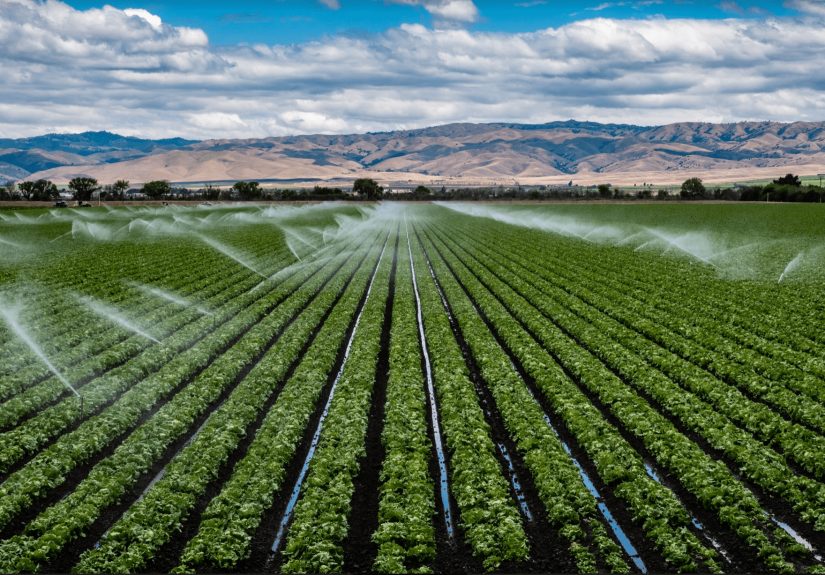
Weather risk is a big one. Drought, flood, hail, hurricanes, heat, and early freezes can affect yields and farm income. Commodity price risk matters because corn, soybeans, wheat, cotton, almonds, grapes, and other crops each have different economics. Water risk can be especially important in Western states where irrigation rights and groundwater rules can make or break a farm’s value.
Tenant risk also matters. A reliable farmer with strong finances and good land stewardship can be a major asset. A weak tenant can create late payments, poor soil management, or operational headaches. Liquidity risk is another issue. Farmland is not as easy to sell as a stock. Finally, valuation risk matters because farmland prices have risen significantly in many regions, and overpaying can reduce future returns.
The smartest investors treat farmland like a business asset, not a headline. They analyze cash flow, cap rates, rent trends, local demand, soil productivity, and downside scenarios.
What Bill Gates’ Farmland Strategy Really Teaches Investors
The biggest lesson is not “copy Bill Gates.” Most people do not have a private investment office, a team of analysts, and enough capital to make a bank manager suddenly sit up straighter. The lesson is that farmland deserves a seat at the alternative-investment table.
Gates’ farmland holdings show that productive agricultural land can be attractive to sophisticated investors. But it also reminds us that scale matters. Large investors can diversify across states, crops, tenants, and water profiles. Smaller investors need to be even more careful because one bad property can dominate the outcome.
For regular investors, the better approach is to ask: What role would farmland play in my portfolio? Is it for income? Inflation protection? Long-term appreciation? Diversification? A passion for agriculture? A hedge against uncertainty? Once the purpose is clear, the investment method becomes easier to choose.
Experience-Based Insights: What It Feels Like To Evaluate Farmland As An Investment
Looking at farmland from the outside can feel simple. You see a field, a crop, maybe a red barn if the universe is feeling cinematic, and you think, “Land is land.” But once you start studying farmland investing, you quickly realize that every acre has a résumé. Some acres are honor students. Some need tutoring. Some look beautiful but have drainage issues, weak soil, poor access, or water problems hiding under the surface like financial raccoons in the attic.
One of the most useful experiences in evaluating farmland is learning to think locally. National farmland headlines are interesting, but land value is intensely regional. Two farms in the same state can have very different economics. One might have rich soil, strong yields, reliable tenants, and nearby grain elevators. Another might have lower productivity, weak drainage, or limited buyer demand. The difference is not cosmetic; it directly affects rent, resale value, and long-term risk.
Another practical lesson is that tenant quality can matter as much as soil quality. A good farmer does more than pay rent. A good operator protects the land, manages fertility, controls erosion, maintains field access, communicates clearly, and thinks long term. Investors who ignore tenant relationships may discover that farmland is not truly passive. It is passive only when the right people are managing the right property under the right agreement.
Water is another eye-opener. In some areas, rainfall is enough. In others, irrigation rights, wells, pumping costs, aquifer rules, and drought restrictions can shape the entire investment case. A farm with strong water access may command a premium, while land with uncertain water availability may deserve a serious discount. This is especially important for permanent crops such as almonds, pistachios, vineyards, and orchards, where trees and vines cannot simply pack a suitcase and move during a dry year.
It also becomes clear that farmland investing rewards patience. A stock can move 5% before lunch. Farmland usually does not behave that way. Returns may come from annual rent, gradual appreciation, improved productivity, better lease terms, or strategic resale. That slower pace can be comforting for some investors and frustrating for others. If someone needs quick liquidity, farmland may feel like trying to turn a cruise ship in a kiddie pool.
Finally, farmland teaches humility. Weather does not read spreadsheets. Commodity markets do not care about your projections. Interest rates can change the math. Local politics can affect zoning, water, taxes, and development pressure. The best farmland investors leave room for uncertainty. They do not buy because a billionaire did. They buy because the numbers, location, operator, soil, water, and long-term thesis make sense.
The experience of studying farmland also makes one appreciate farmers more. Behind every “alternative asset” is a working landscape, expensive equipment, early mornings, unpredictable seasons, and people making difficult decisions with thin margins. Investors who respect that reality are more likely to make thoughtful, sustainable choices. Farmland is not just a portfolio line item. It is part of the food system. That deserves both financial discipline and common sense.
Conclusion
Bill Gates buying farmland is not a signal that everyone should run out and buy the nearest cornfield. It is a signal that farmland is worth understanding. Productive agricultural land can offer income, long-term appreciation, inflation protection, diversification, and exposure to one of the world’s most essential industries.
But farmland is not automatically a good investment at any price. Smart investors study the details: soil, water, rent, tenants, crop economics, location, debt, taxes, and exit options. They also choose the right structure, whether direct ownership, REITs, funds, platforms, or indirect agribusiness exposure.
In the end, farmland investing is appealing because it is real, useful, and tied to long-term human demand. People may argue about markets, politics, technology, and billionaires, but dinner still has to come from somewhere. And that “somewhere” often starts with land.
Note: This article is for educational and informational purposes only. It is not financial, legal, or tax advice. Investors should consult qualified professionals and conduct independent due diligence before investing in farmland or any farmland-related product.