

Table of Contents >> Show >> Hide
- What Is Imperial Danby Marble?
- Where It Comes From: Inside Vermont’s Underground Marble World
- The Look: Color, Veining, and “Personality”
- Performance: Beautiful, Strong… and Still Marble
- Imperial Danby vs. “Calacatta-Look” Marbles
- Best Uses for Imperial Danby in Real Homes
- Finishes and Fabrication Choices That Matter
- How Much Does Imperial Danby Cost?
- Care and Cleaning: The “Keep It Gorgeous” Routine
- How to Buy Imperial Danby Without Regrets
- Imperial Danby in the Wild: From National Landmarks to Modern Design
- Conclusion
- Experiences With Imperial Danby ( of Real-Life Vibes)
If you’ve ever looked at a kitchen photo and thought, “Wow… that countertop is quietly showing off,” there’s a decent chance you were staring at some form of Danby marble. And if the stone had a soft white background with elegant gray-and-gold movementlike a tuxedo with a subtle pocket squarethere’s an even better chance it was Imperial Danby.
Imperial Danby is a premium white marble quarried in Vermont, prized for its refined veining and “American-made luxury” vibe. Designers love it because it can read classic, modern, or transitional depending on the finish and how you pair it. Homeowners love it because it makes a space feel expensive in that “I didn’t try too hard” way. (You did. The stone did. We all know.)
What Is Imperial Danby Marble?
Imperial Danby is a top-tier grade within the broader family of Vermont Danby marbles. It’s known for a bright, soft white base with medium activity veiningusually a mix of gray with warm gold tones. In the world of white marbles, Imperial Danby is often discussed in the same breath as high-end Italian looks, but with a distinctly Vermont origin and supply chain.
It’s also worth knowing that “Danby” isn’t one single look. The quarry produces multiple grades/layers (each with its own personality). Imperial is the one people point to when they want that refined, luminous “white marble moment” without the stone looking flat or sterile.
Where It Comes From: Inside Vermont’s Underground Marble World
Imperial Danby comes out of the famous Danby quarry system in Vermontan underground operation carved into the mountain. Unlike the romantic mental image of a guy with a chisel and a dramatic scarf, this is a modern industrial marvel: tunnels, massive blocks, specialized cutting equipment, and a workflow built around consistency and scale.
Historically, Danby marble has been quarried for well over a century, and the “Imperial” quarry work has deep roots in the early 1900s. That long history matters because it’s one reason Danby marble shows up in serious architectural contextsnot just trendy backsplashes.
Why an underground quarry is a big deal
- Stable conditions: Underground quarrying can help keep temperature and working conditions consistent, which supports predictable production.
- In-house processing: Some suppliers emphasize that cutting and production occur on-site/within the mountain systemreducing extra handling and transport of raw blocks.
- Multiple layers, multiple looks: Different zones of the quarry yield different grades, which is why Danby has everything from quieter whites to dramatic, high-movement slabs.
The Look: Color, Veining, and “Personality”
Imperial Danby’s signature is its soft white background with gray and gold veining that feels natural and elegant rather than loud. You’ll usually see medium veiningenough to add movement, not so much that your countertop becomes the main character in every conversation.
What you can expect (and what you can’t)
- Expect variation: Marble is natural stone; no two slabs match perfectly. Even slabs from the same lot can shift in warmth, vein thickness, and contrast.
- Expect warmth: The gold tones can read creamy, beige, or honeyed depending on lighting.
- Don’t expect “pure white” uniformity: If you want a perfectly consistent white surface, that’s a different category (often engineered stone). Imperial Danby is about organic beauty.
Performance: Beautiful, Strong… and Still Marble
Imperial Danby is often described as a dense marble with a relatively low absorption rate for the category. That’s good news for everyday living, but it doesn’t turn marble into a superhero. It’s more like a very stylish friend who’s toughyet still refuses to tolerate lemon juice without making a face.
What the numbers mean in real life
Technical specs (like absorption, density, and compressive strength) help explain why Danby marble is used in major projects and why many homeowners feel comfortable putting it in kitchens. Lower absorption can translate to more breathing room for stainingespecially when the stone is properly sealed.
But: even a dense marble can etch. Etching is not the same as staining; it’s a chemical reaction where acids dull or mark the surface. Sealer helps with stains, not etches. That’s not a flawjust marble being marble.
Imperial Danby vs. “Calacatta-Look” Marbles
Imperial Danby is often compared to Calacatta-style marbles because of its white base and warm veining. The practical difference is less about “which is prettier” (that’s your eye) and more about availability, variation, and how forgiving it feels day-to-day.
Quick comparison checklist
- Veining style: Imperial Danby tends to have softer, more blended movement than some dramatic Calacatta slabs.
- Warmth: The gold notes in Imperial Danby can feel naturally creamy rather than stark.
- Maintenance reality: Both are marbles. Both can etch. Danby is often marketed as lower-absorption, which can help with staining when sealed and cared for.
Best Uses for Imperial Danby in Real Homes
Imperial Danby is versatile, but it shines most when it’s treated like the premium finish it is. Here are the spots where it tends to deliver maximum “wow” without maximum stress.
1) Kitchen countertops and islands
Yes, people use it in kitchensoften with a honed finish to make everyday etching less noticeable. It pairs beautifully with white oak, walnut, painted cabinets, and warm metals (brass, bronze, antiqued nickel).
2) Backsplashes (full-height or slab)
A full-height slab backsplash in Imperial Danby can look like a boutique hotel upgrade. Bonus: it reduces grout lines, which is basically the adult version of finding money in your pocket.
3) Bathroom vanities and shower walls
Bathrooms are a natural fit: less acidic food contact, more controlled use, and the stone’s glow looks incredible in soft lighting. In showers, you’ll want excellent waterproofing behind the stone and a clear plan for sealing and maintenance.
4) Fireplaces and feature walls
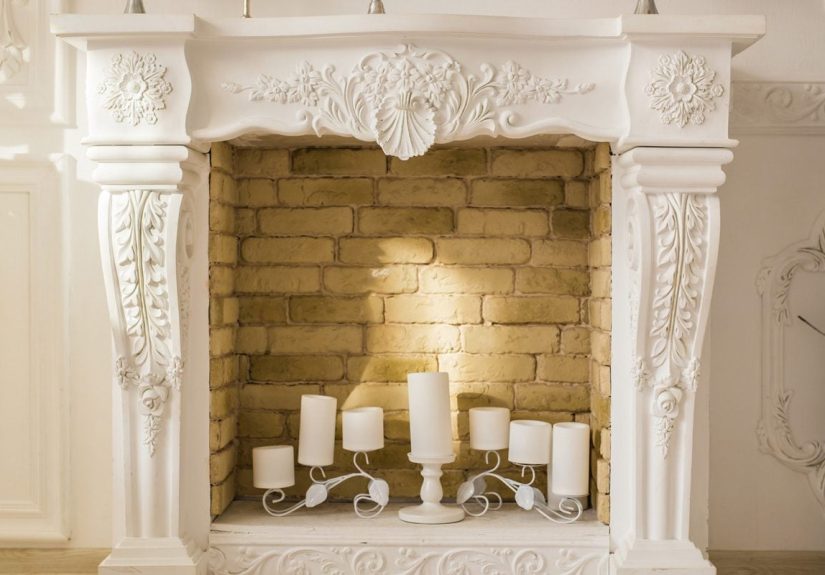
Imperial Danby can turn a fireplace surround into a focal point that still feels timeless. It’s particularly strong in minimalist rooms where the stone becomes the “art.”
Finishes and Fabrication Choices That Matter
The finish you choose changes how Imperial Danby behaves and how you experience it.
Polished
- Look: Glossy, reflective, higher contrast.
- Tradeoff: Etches can show more clearly because the shine makes dull spots obvious.
Honed
- Look: Soft matte, modern, calm.
- Tradeoff: Can show oils/darkening a bit more in some cases, but many people find it more forgiving overall.
Bookmatching and vein flow
Imperial Danby is often sold and fabricated with bookmatching in mindtwo adjacent slabs opened like a book so the veining mirrors itself. It’s dramatic (in a good way) for waterfall islands, shower walls, or fireplace surrounds.
How Much Does Imperial Danby Cost?
Pricing depends on grade, slab size, thickness, finish, region, and availability. Imperial Danby is commonly positioned as one of the higher-end Danby options, and it’s frequently treated as a “special stone” in slab yardsmeaning you’ll want to select your exact slabs rather than ordering sight-unseen.
What drives the price
- Rarity within the quarry: Higher-end grades can be less common.
- Slab size and thickness: Larger, thicker slabs typically cost more.
- Fabrication complexity: Waterfalls, mitered edges, full-height backsplashes, and bookmatching add labor and planning.
Care and Cleaning: The “Keep It Gorgeous” Routine
If you choose Imperial Danby, you’re not signing up for misery. You’re signing up for a simple rhythm: seal, wipe, and avoid harsh stuff.
Daily habits that make marble easy
- Use a pH-neutral cleaner or mild soap and water.
- Wipe spills promptlyespecially acidic items (citrus, vinegar-based dressings, tomato sauce).
- Use cutting boards and trivets. Not because you’re “fancy,” but because you’re smart.
Sealing and grout realities
For tile installations (like showers, floors, or backsplashes with grout), follow a seal-before-and-after-grout approach recommended by many stone/tile product lines, then maintain sealing as needed over time. Always test your sealer in an inconspicuous spot and follow manufacturer instructions.
And one more thing: avoid harsh cleaners, bleach, or acidic products. They can damage the finish and cause permanent etching.
How to Buy Imperial Danby Without Regrets
Marble regret usually happens for one of two reasons: people didn’t pick their slabs, or people expected marble to behave like quartz. Here’s how to avoid both.
Shopping checklist
- See the slabs in person (or get detailed photos/video in good lighting).
- Ask about the lot and whether multiple slabs are sequential for vein continuity.
- Decide your finish based on lifestyle, not just mood boards.
- Plan seam placement earlyespecially for islands and waterfalls.
- Talk about “patina” honestly: if you’ll hate the first etch mark, choose honedor choose a different surface.
Imperial Danby in the Wild: From National Landmarks to Modern Design
Imperial Danby isn’t just an “Instagram stone.” It’s been selected for high-visibility, high-meaning architecture. One famous example: the outer stonework of the Thomas Jefferson Memorial uses Vermont Imperial Danby marblechosen not only for aesthetics but also for symbolism tied to American geography and materials.
In contemporary interiors, Imperial Danby shows up in the kinds of spaces that get photographed because they feel both relaxed and elevatedlike a guest bath sink cut from Imperial Danby, or a vanity top that makes a small room feel like a private suite.
Conclusion
Imperial Danby is for people who want real stone, real character, and a finish that ages with the home rather than fighting it. It can look crisp and architectural in a polished finish, calm and modern in a honed finish, and downright cinematic when bookmatched on a feature wall.
Choose it with clear expectations: you’re buying beauty with a few rulesnot a plastic-wrapped surface that never changes. If you can make peace with the fact that marble tells the story of how you live (politely, in tasteful gray and gold), Imperial Danby might be your forever stone.
Experiences With Imperial Danby ( of Real-Life Vibes)
The “first week” experience: Most people don’t fall in love with Imperial Danby the second it’s installed. They fall in love the moment the room’s lighting hits it at 8:17 a.m. and the veining suddenly looks like watercolor. It’s one of those stones that doesn’t just sit thereit changes slightly as your day changes. Morning light makes it feel brighter and cleaner; warmer evening bulbs pull out the gold tones and make the whole space feel softer.
The “I’m learning marble” phase: In kitchens, the first real lesson is usually not a dramatic stain. It’s a faint etchoften from something innocent like citrus, vinegar, or a cleaner that was “totally fine on everything else.” The emotional journey goes like this: (1) denial, (2) Googling, (3) acceptance, (4) realizing the mark is barely visible unless you hold a flashlight like you’re investigating a mystery novel. A lot of homeowners end up describing it as “patina,” which is a fancy way of saying the stone is now officially part of the family.
Why honed finishes feel friendlier: People who choose honed Imperial Danby often say the surface feels more relaxed. Not “unfinished,” just less precious. They still wipe spills, but they’re not living in fear of the lemon. The stone looks like it belongs in a real home where someone actually cooksbecause someone does. The big surprise for many is that honed marble can look even more expensive than polished, especially in modern spaces where shine can feel a little too “showroom.”
The slab-yard moment: Designers and detail-oriented homeowners talk about picking Imperial Danby like choosing art. In the slab yard, you’re not just picking “white marble.” You’re picking a specific rhythm of veining, deciding whether you want warmth (more gold) or a cooler look (more gray), and imagining where that movement will land on an island or backsplash. This is also where you learn the magic words: “Can we see sequential slabs?” Because when you can keep the veining flowing across a long runor bookmatch for a waterfall edgethe installation stops being a countertop and starts being a statement.
The long-term relationship: Over time, many people say Imperial Danby becomes less stressful, not more. You stop staring at it like it’s a museum exhibit and start using it. You figure out your routine: gentle cleaner, soft cloth, reseal when needed. You learn where you naturally set down drinks or prep food and you put a tray or cutting board there. And after a while, the stone starts to feel like it was always meant to be thereclassic, warm, and quietly impressive, like the friend who never brags but always shows up looking put-together.