Table of Contents >> Show >> Hide
- Why Small Spaces Feel Smaller Than They Are
- 1. They Edit the Room Ruthlessly, but Not Coldly
- 2. They Choose Right-Sized Furniture, Not Tiny Furniture
- 3. They Show More Floor and More Air
- 4. They Simplify the Color Story
- 5. They Treat Lighting Like Extra Square Footage
- 6. They Use Mirrors Like Secret Architectural Tools
- 7. They Pull the Eye Up and Clear the Pathways
- Putting the 7 Tricks Together
- Final Thoughts
- Experiences From Real Small-Space Makeovers
Small rooms get blamed for a lot of crimes they did not commit. “Too cramped.” “Too dark.” “Too awkward.” “Too tiny for real furniture.” In reality, the room is often not the villain. The real troublemakers are visual clutter, clunky furniture, bad lighting, and layouts that make you sidestep a coffee table like you are in an obstacle course.
That is why home stagers are so good at making modest rooms feel calm, open, and surprisingly polished. They are not performing square-footage sorcery. They are guiding the eye, editing distractions, and making every inch work harder. A small living room can feel airy. A compact bedroom can look elegant. Even a narrow entry can stop giving “closet with ambition” and start giving “welcome home.”
If you have ever wondered why staged homes look bigger than they do in real life, here is the answer: good stagers know how to reduce visual friction. They make the room easier to read at a glance. That matters whether you are selling your home, refreshing an apartment, or simply trying to stop your studio from feeling like one long exhale.
Below are seven of the smartest tricks home stagers use to make small spaces look larger, plus practical ways to borrow those ideas without buying an entirely new house, a forklift, or a suspiciously expensive designer candle.
Why Small Spaces Feel Smaller Than They Are
Before we get into the tricks, it helps to understand what makes a room feel tight in the first place. Most small spaces suffer from one or more of these problems: too much stuff in view, furniture that is the wrong scale, blocked sightlines, dark corners, chopped-up color schemes, and too little visible floor.
When your eye keeps stopping, the room feels busy. When the room feels busy, it feels smaller. Home stagers work in the opposite direction. They create flow. They simplify shapes, soften contrast, and make sure your eye can travel around the room without bumping into visual roadblocks every three seconds.
1. They Edit the Room Ruthlessly, but Not Coldly
The first trick is not glamorous, but it works like magic: stagers remove stuff. Not all stuff. Just the stuff that makes the room feel crowded, overly personal, or harder to understand.
That means stacks of mail, extra side chairs, oversized baskets, tangled cords, ten countertop appliances, and the decorative objects that somehow multiplied overnight. In staged spaces, surfaces breathe. Rooms still look lived-in, but only in the “I have my life together” way, not in the “I am storing my entire personality on this bookshelf” way.
How to use this trick at home
Start with the biggest visual offenders. Clear floors, tabletops, counters, and window sills. Remove duplicates. If a room has three throw blankets, five pillows, two floor plants, and a decorative ladder, cut that down. In a small room, every item needs a job. If it is not useful, beautiful, or both, let it take a little vacation in a closet.
Stagers also depersonalize strategically. Family photos, highly specific collections, and bold niche decor may be meaningful, but they can also make a compact room feel visually busy. Keep a few personal touches, but edit them like a stylist, not a sentimental raccoon.
2. They Choose Right-Sized Furniture, Not Tiny Furniture
This is where a lot of people go wrong. Small room? Buy miniature furniture, right? Not exactly. Home stagers know that a room full of undersized pieces can look scattered and nervous. The goal is not to make everything tiny. The goal is to make everything proportional.
A properly scaled sofa can look better than a loveseat that feels too short for the wall. A real rug can make the room feel grounded, while a too-small rug makes everything float awkwardly like furniture auditioning for separate apartments. The best stagers choose pieces that fit the room’s dimensions and purpose, then trim the excess around them.
What “right-sized” really means
Think slimmer arms, cleaner lines, and less visual bulk. In a bedroom, that might mean keeping the queen bed but swapping chunky nightstands for narrower ones. In a living room, it might mean one well-scaled sofa and two compact chairs instead of a giant sectional that eats the walkways.
And please, let us talk about rugs. A rug that is too small can make the room look cheaper and smaller in one swift move. A larger rug creates continuity and helps the space read as one complete zone instead of a bunch of separate furniture islands having an argument.
3. They Show More Floor and More Air
One of the oldest staging tricks still works because your eye is easy to impress in this particular way: if you can see more floor, the room feels bigger. That is why home stagers often use furniture with legs, wall-mounted shelving, floating consoles, and pieces that leave some breathing room underneath.
Bulky furniture that sits flat on the floor can feel heavy, especially in small rooms. Furniture with visible legs lets light travel through and creates a sense of openness. It is a tiny optical illusion, but in tight spaces, tiny optical illusions are doing serious overtime.
Easy ways to create visual air
Swap a boxy coffee table for one with a lighter frame. Use open-leg chairs instead of skirted ones. Try floating shelves instead of a tall, bulky bookcase. If possible, mount the TV, install wall sconces, or use a floating nightstand. These moves free up floor space and make the room feel less packed from the bottom up.
Transparent materials help too. Glass, acrylic, and light-reflective finishes reduce visual weight. That does not mean your room needs to look like a museum gift shop. It just means a clear side table can do more for a small room than an espresso-colored cube the size of a mini fridge.
4. They Simplify the Color Story
Stagers love cohesion. In a small room, too many competing colors can chop the space into pieces. A calmer palette helps the room feel seamless, which helps it feel larger. That is why you often see soft neutrals, warm whites, muted greens, pale blues, grays, sand tones, and nature-inspired shades in staged homes.
Some stagers go a step further with color drenching, where walls, trim, and sometimes even the ceiling are painted in the same or similar shade. This reduces contrast, smooths out visual interruptions, and makes the room feel more unified. In plain English, your eye keeps moving, and that makes the room feel bigger.
Do you always need white?
Nope. White works, but it is not the only answer. A small space can also look wonderful in soft sage, dusty blue, warm greige, or even a deeper color used consistently. What matters most is that the palette feels intentional rather than fragmented.
If your room already has a neutral foundation, add personality through texture instead of chaos. Think linen curtains, woven baskets, a subtle patterned pillow, a ceramic lamp, or a natural wood accent. That gives the room dimension without making it feel overdecorated.
5. They Treat Lighting Like Extra Square Footage
Bad lighting can make a small room feel like a cave with throw pillows. Great lighting can make it feel inviting, open, and far more expensive than it has any business feeling.
Home stagers use light in layers. They welcome natural light first, then add ambient, task, and accent lighting so the room does not have shadowy corners. They also pay attention to fixture size. A light that hangs too low can make a room feel cramped, while a properly scaled flush mount, slim floor lamp, or wall sconce can brighten the room without crowding it.
How to brighten a small space fast
Open the blinds. Replace heavy drapes with lighter window treatments. Add a lamp to a dim corner. Use warm, consistent bulbs so the room feels cohesive. If your curtains are mounted just above the window frame, consider hanging them closer to the ceiling instead. That one move can make the room look taller almost immediately.
Lighting is also emotional staging. A well-lit room feels more welcoming, and welcoming rooms often register as larger because they feel easier to occupy. Dark corners make people think “tight.” Bright, balanced light makes them think “maybe I could actually breathe in here.”
6. They Use Mirrors Like Secret Architectural Tools
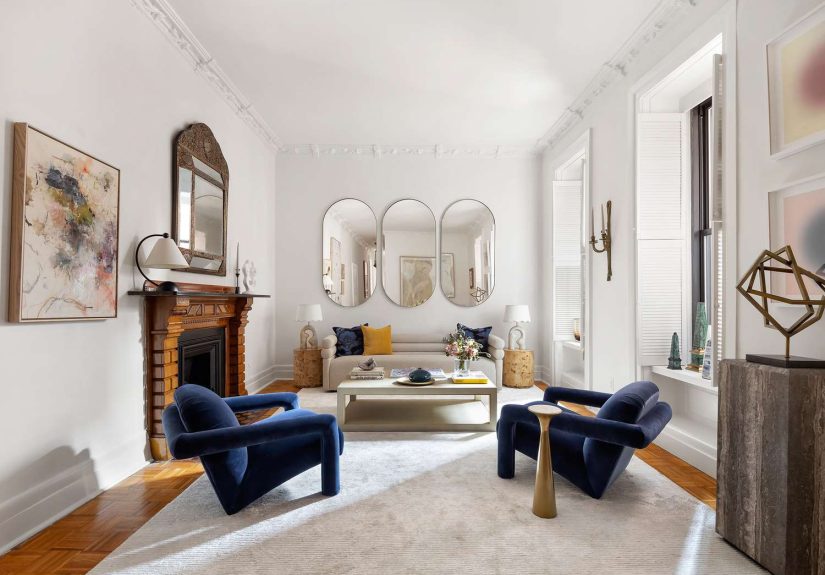
If home stagers had a hall of fame, mirrors would already have a wing. Mirrors reflect light, add depth, and help bounce brightness into the corners that need it most. They can visually double a wall, highlight a nice view, and make a dark room feel less boxed in.
But placement matters. A mirror tossed anywhere is just shiny wall decor. A mirror placed across from a window, near a bright area, or at the end of a narrow room can change how the entire space reads.
Best mirror moves for small rooms
Hang one opposite a window to amplify daylight. Lean a large mirror against a wall if you want a casual look. Use mirrored or reflective accents sparingly if you do not want a full glam moment. In entryways and small dining spaces, even one well-placed mirror can make the room feel less hemmed in.
The key is restraint. Mirrors should expand the room, not turn it into a funhouse. If they are reflecting clutter, they will simply create twice the mess. That is not design. That is multiplication.
7. They Pull the Eye Up and Clear the Pathways
Stagers know that a room feels bigger when your eye travels upward and when your body can move through the space easily. So they use vertical styling and smart layout choices to stretch the room visually.
That can mean hanging curtains near the ceiling, using taller art, adding shelves that rise up the wall, choosing a tall headboard, or incorporating vertical paneling, trim, or bookcases. These details create a sense of height, which helps compact rooms feel less compressed.
At the same time, stagers pay close attention to traffic flow. If you have to twist around a chair, squeeze past an ottoman, or edge around a console every time you enter the room, it will always feel smaller than it is. Good staging creates clear pathways so the room feels intuitive.
One surprisingly effective trick
Take photos. Seriously. Professional stagers do this all the time. A room that looks “fine” in person can suddenly reveal crooked balance, awkward empty corners, or clutter hotspots in a photo. Seeing the room through a camera helps you notice what is interrupting the space. It is basically free design therapy.
Putting the 7 Tricks Together
The real power of home staging is not in any single trick. It is in the layering. Decluttering helps the mirror work harder. Better lighting makes the cohesive color palette feel richer. Furniture with legs shows off more floor. Taller curtains and fewer obstacles improve the sightlines. A larger rug makes the whole layout feel intentional.
That is why staged spaces often feel bigger even when nothing structural has changed. The room has simply been edited to look clearer, lighter, and calmer.
If you want the fastest wins, start here: remove clutter, improve lighting, replace anything overly bulky, and raise your curtain rod. Then add a mirror and make sure your rug is large enough. Those changes alone can shift the feel of a room in a weekend.
Final Thoughts
Small spaces do not need pity. They need better strategy. Home stagers understand that “larger” is often a feeling before it is a measurement. A room looks bigger when it feels easier to move through, easier to read, and easier to imagine yourself living in.
So no, you may not be able to add 300 square feet before dinner. But you can make your home feel more open, polished, and comfortable with a few sharp choices. Edit harder. Scale smarter. Let the light in. Give the eye somewhere graceful to go. That is the real trick.
And once you get it right, your small room stops apologizing for itself. It just quietly starts showing off.
Experiences From Real Small-Space Makeovers
One of the most common experiences people have after trying these staging tricks is pure disbelief. They move one oversized chair out of a room, roll up a tiny rug, and suddenly realize the problem was never the square footage. It was the traffic jam. A small condo living room can feel dramatically larger just by replacing a dark sectional with a slimmer sofa and two leggy accent chairs. The room does not gain inches, but it gains rhythm, breathing room, and a layout that no longer says, “Please sidestep carefully.”
Bedrooms tell the same story. Many homeowners assume a smaller bed will make the room feel bigger, then discover that the real issue is everything around the bed. Swap thick nightstands for floating shelves, use lighter bedding, hang curtains higher, and add one large rug under the bed, and the whole room starts to feel intentional. Instead of looking cramped, it looks tailored. That difference matters. People respond emotionally to a room that feels composed.
Kitchens are often where the biggest surprises happen. Clearing counters, removing decorative clutter from cabinet tops, and storing rarely used appliances can make a tiny kitchen feel almost luxurious. Add brighter bulbs, a lighter runner, and one reflective surface, and the room starts working with you instead of against you. Many people say the space suddenly feels easier to clean, easier to cook in, and less mentally noisy. That last part is underrated. Visual calm changes how a room functions day to day.
Renters often have the most satisfying results because they usually have fewer renovation options. They cannot knock down walls, but they can still mount curtains close to the ceiling, use mirrors opposite windows, choose furniture with exposed legs, and rely on vertical storage. Even one wall-mounted shelf or a better lamp can shift the mood of a studio apartment. A room that once felt temporary starts to feel styled on purpose.
Another common experience is that once one room is staged well, the rest of the home suddenly looks louder. That is not a bad thing. It means your eye has learned what flow looks like. You start noticing when a room has too many small accessories, when a side table is too chunky, or when a dark corner needs a lamp instead of another decorative object. In that way, staging becomes less about selling and more about living better in the space you already have.
The best part is that these results do not require perfection. They require attention. Small homes can feel stylish, warm, and genuinely spacious when each choice supports openness instead of fighting it. That is why professional stagers keep coming back to the same principles. They work in real houses, real apartments, and real-life rooms where people still need storage, comfort, and a place to drop their keys without turning the whole room into visual chaos.