Table of Contents >> Show >> Hide
- What Is Burning Sage?
- 10 Benefits of Burning Sage
- 1. It Can Help Create a Mindful Reset
- 2. It May Support Relaxation
- 3. It Can Freshen the Atmosphere of a Room
- 4. It May Help You Set Intentions
- 5. It Can Mark New Beginnings
- 6. It May Encourage Better Focus
- 7. It Can Be Part of a Spiritual Practice
- 8. Sage Contains Aromatic Plant Compounds
- 9. It May Help You Build a Home Ritual
- 10. It Can Encourage You to Be More Present in Your Space
- How to Get Started Burning Sage Safely
- Risks and Precautions
- Ethical Sage Burning: Respect the Plant and the People
- Smoke-Free Alternatives to Burning Sage
- Real-Life Experiences: What Burning Sage Can Feel Like in Everyday Life
- Conclusion
Burning sage has gone from quiet spiritual corners and traditional ceremonies to coffee tables, yoga studios, wellness blogs, and that one friend’s apartment that always smells like “fresh start with a hint of forest.” Also known as sage cleansing, smoke cleansing, orin specific Indigenous contextssmudging, the practice involves lighting dried sage leaves and letting the smoke move through a space, around an object, or near the body with intention.
But before we crown sage smoke the superhero of home energy, let’s be clear: burning sage is not a magic medical treatment, a substitute for cleaning, or an excuse to avoid therapy, antibiotics, or opening a window after frying fish. Still, when used respectfully and safely, sage burning can be a meaningful ritual for relaxation, mindfulness, freshening a space, and marking emotional transitions.
This guide explores 10 possible benefits of burning sage, how to get started, what to avoid, and how to make the practice safer, more ethical, and more grounded in real life.
What Is Burning Sage?
Burning sage usually means lighting a dried bundle of sage leaves, letting it smolder, and using the smoke as part of a cleansing or reflective ritual. White sage, or Salvia apiana, is one of the most commonly sold varieties, but it is also culturally significant to many Indigenous communities and vulnerable to overharvesting. Common garden sage, or Salvia officinalis, is the familiar culinary herb used in stuffing, roasted vegetables, and “wow, this kitchen smells like Thanksgiving.”
The word “smudging” is often used casually online, but it has specific ceremonial meaning for many Native American and First Nations communities. If you are not part of those traditions, it is more respectful to describe your personal practice as “burning sage,” “smoke cleansing,” or “sage cleansing” rather than claiming to perform a traditional smudging ceremony.
10 Benefits of Burning Sage
1. It Can Help Create a Mindful Reset
One of the biggest benefits of burning sage is not mystical at all: it gives your brain a clear signal that something is changing. Lighting the bundle, pausing, breathing, and moving intentionally through a room can turn an ordinary moment into a ritual. That pause matters.
Mindfulness practices are often built around simple anchors: the breath, a sound, a candle flame, or a repeated phrase. Sage smoke can act as a sensory anchor, helping you slow down and pay attention. For example, after a stressful workday, burning sage for a few minutes while saying, “I’m done carrying work into my evening,” can help separate your office brain from your home braineven if your office is just a laptop on the kitchen table.
2. It May Support Relaxation
The scent of sage is earthy, herbal, and sharp enough to make a room feel less stale. For some people, that aroma becomes associated with calm. The benefit may come less from the smoke itself and more from the ritual around it: dimming the lights, opening a window, breathing slowly, and stepping away from the noise of the day.
Pairing sage burning with breathwork can make the practice more relaxing. Try inhaling gently through the nose before lighting the sage, exhaling slowly as you set an intention, and then continuing with slow, natural breathing while the bundle smolders. Keep the smoke away from your face; relaxation should not require coughing like a Victorian chimney sweep.
3. It Can Freshen the Atmosphere of a Room
Sage has a strong scent that can temporarily change the way a room smells. This is one reason people use it after cooking, after guests leave, or when a space feels stuffy. It will not replace cleaning, ventilation, or odor removal, but it can add a crisp herbal note to a room when used briefly.
For best results, tidy first. Take out trash, wash dishes, open a window, and then burn sage for a short period. Think of sage as the finishing touch, not the cleaning crew. If the room smells like old laundry, sage will not solve the problem; it will simply create “old laundry in a mystical forest.”
4. It May Help You Set Intentions
Intention-setting is one of the most practical uses of burning sage. The ritual gives you a physical action to pair with a mental decision. That combination can be powerful because it makes an abstract goal feel concrete.
You might use sage before starting a creative project, moving into a new home, ending a difficult week, or preparing for meditation. A simple intention might be: “I welcome focus into this space,” “I release tension from today,” or “I want this room to feel calm and supportive.” No need to sound like a moonlit oracle unless that is your brand. Clear and honest works beautifully.
5. It Can Mark New Beginnings
Humans love rituals because rituals help us cross invisible lines. We celebrate birthdays, graduations, weddings, and even the first day we finally cancel a subscription we forgot about for eight months. Burning sage can become a small ceremony for new beginnings.
People often burn sage after moving, rearranging furniture, recovering from an argument, or finishing a major life chapter. The smoke becomes a visual symbol of transition. You are not just thinking, “I want a fresh start.” You are doing something that represents it.
6. It May Encourage Better Focus
Because sage burning is usually brief and intentional, it can help create a boundary before focused work. You might burn sage before journaling, studying, reading, practicing music, or starting a deep-work session. The scent becomes a cue: now we focus.
This works best when repeated consistently. For example, open a window, burn sage safely for one minute, extinguish it completely, sit down, and begin writing. Over time, your brain may associate the ritual with concentration. In other words, sage becomes less of a “vibe” and more of a starter button.
7. It Can Be Part of a Spiritual Practice
For many people, burning sage has spiritual meaning. It may be used in prayer, meditation, energy work, or personal reflection. Some people believe sage smoke clears negative energy or invites protection. Others use it simply to create reverence before a quiet practice.
The key is respect. White sage has deep cultural meaning for many Indigenous peoples, and commercial sage products are not automatically ethical just because they are wrapped in twine and sold next to crystals. If your practice is spiritual, let it also be thoughtful: learn the history, avoid imitating closed ceremonies, and source plants responsibly.
8. Sage Contains Aromatic Plant Compounds
Sage plants contain aromatic compounds that contribute to their strong smell. Common sage has been studied for antioxidant and anti-inflammatory properties when used as an herb or extract, though burning sage is a different practice and should not be treated as a proven medical therapy.
That distinction matters. Eating sage in food, taking sage supplements, using sage essential oil, and burning dried sage are not the same thing. A roasted squash with sage is dinner. A supplement is a concentrated botanical product. A smoking bundle is an air-quality event. Your body can tell the difference, even if your Pinterest board cannot.
9. It May Help You Build a Home Ritual
Home rituals make a space feel cared for. Burning sage can be part of a weekly reset routine: open windows, clear surfaces, water plants, change sheets, and then use sage briefly as a symbolic closing step. This turns housekeeping into something more nourishing than “I am losing a war against dust.”
Rituals also support emotional consistency. If Sundays make you anxious, a Sunday evening reset can help. If mornings feel chaotic, a short smoke-free alternativesuch as placing fresh sage leaves in a bowl, using a herbal sachet, or practicing breath meditationmay offer the same sense of rhythm without adding smoke.
10. It Can Encourage You to Be More Present in Your Space
When you move slowly through your home with sage, you notice things: the cluttered corner, the neglected plant, the room that feels tense, the desk that needs a kinder setup. This awareness is a benefit in itself.
A sage ritual can become a check-in with your environment. Ask: How does this room feel? What needs to be cleaned, repaired, softened, or removed? Sometimes the answer is spiritual. Sometimes the answer is “that pile of mail has developed its own government.” Either way, attention is useful.
How to Get Started Burning Sage Safely
Choose the Right Sage
If you want to burn sage, start with sourcing. Avoid buying white sage unless you can confirm it was ethically grown or harvested with permission and respect. Consider alternatives such as garden sage, cedar, rosemary, lavender, or smoke-free rituals like bells, sound bowls, simmer pots, or fresh herbs.
If you do use white sage, look for sellers who are transparent about cultivation, harvesting, and community relationships. Vague labels like “wildcrafted” are not always reassuring. Wildcrafted can mean respectfully gatheredor it can mean someone stripped a hillside for profit.
Gather Your Supplies
You will need a small sage bundle or loose dried sage, a fire-safe bowl or shell, matches or a lighter, sand or ash for extinguishing, and a glass of water nearby for safety. Choose a heatproof surface and keep the bundle away from curtains, papers, bedding, children, and pets.
Ventilation is essential. Open a window before lighting sage. Smoke from burning plants can irritate the lungs, especially for people with asthma, allergies, chronic respiratory conditions, or smoke sensitivity. If anyone in your home dislikes smoke or has breathing issues, skip the burning and choose a smoke-free ritual instead.
Set a Simple Intention
Before lighting the sage, pause. Decide why you are doing it. Your intention does not have to be dramatic. Try one of these:
- “I want this space to feel calm and clear.”
- “I release the stress of today.”
- “I welcome focus, rest, and good conversation.”
- “I am making room for a fresh start.”
Keeping the intention simple helps the ritual feel grounded rather than performative.
Light, Waft, and Extinguish
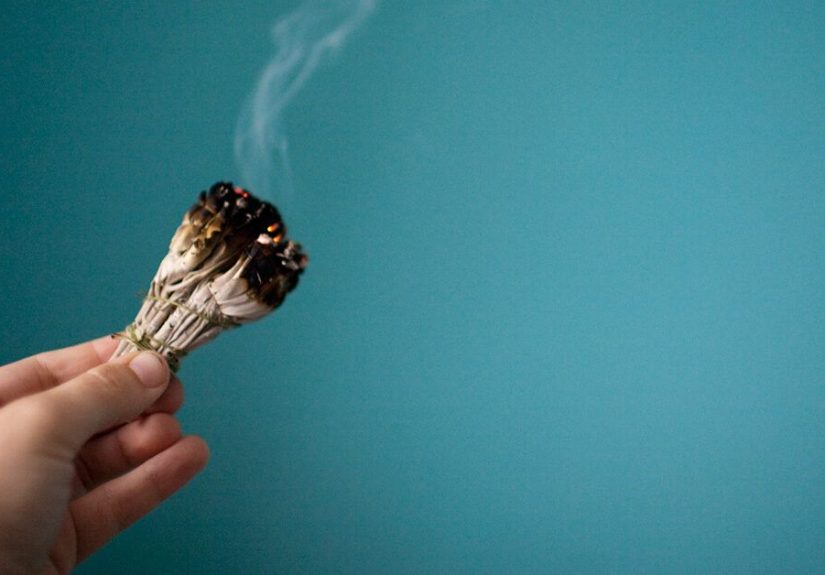
Light the tip of the sage bundle, let it catch briefly, then gently blow out the flame so the leaves smolder. Hold the bundle over your fire-safe bowl to catch ash. Move slowly through the room or sit in one place while the smoke rises. You can use your hand or a feather-like fan to guide smoke, but avoid copying ceremonial gestures you do not understand.
Use the sage for a short timeoften one to three minutes is enough. When finished, press the lit end into sand or ash until there are no glowing embers. Do not leave it unattended. Do not assume it is out because it “looks sleepy.” Embers are sneaky little drama queens.
Risks and Precautions
Smoke Can Irritate the Lungs
Burning almost anything indoors can create particulate matter and combustion byproducts. That includes sage, incense, candles, wood, and tobacco. People with asthma, COPD, allergies, pregnancy-related sensitivities, heart or lung disease, infants, older adults, and pets may be more vulnerable to smoke exposure.
If you cough, wheeze, get a headache, feel chest tightness, or notice eye irritation, stop using smoke. Open windows, leave the area, and consider smoke-free alternatives. A ritual should support well-being, not turn your living room into a tiny wildfire simulation.
Fire Safety Is Non-Negotiable
Sage bundles are open-flame objects. Treat them with the same seriousness you would give a candle. Keep them at least a foot away from anything flammable, use a stable heatproof dish, keep hair and loose sleeves away from the flame, and never burn sage in bed or when sleepy.
Keep sage away from children and pets. Cats, dogs, and toddlers are all gifted chaos engineers. They do not need access to a smoldering herb bundle.
Be Careful During Pregnancy and With Herbal Products
Burning sage occasionally is not the same as drinking sage tea or taking sage supplements, but pregnancy is a time to be cautious with herbs and smoke exposure. Some sage species contain thujone, a compound that can be unsafe in high amounts. If you are pregnant, breastfeeding, taking medication, or managing a health condition, ask a healthcare professional before using concentrated sage products, and avoid inhaling smoke.
Ethical Sage Burning: Respect the Plant and the People
The popularity of white sage has raised serious concerns about overharvesting, poaching, and cultural appropriation. White sage grows naturally in a limited region of Southern California and northern Baja California and has deep importance for Indigenous communities. Many Native voices emphasize that white sage is not just a trendy wellness product; it is a relative, medicine, food, and ceremonial plant.
Ethical practice means doing more than buying a bundle and hoping for good vibes. Learn whose traditions are being referenced. Avoid calling your personal ritual a traditional smudging ceremony unless you have been taught within that cultural context. Support Indigenous educators and plant conservation efforts. When possible, grow your own herbs or choose abundant alternatives.
Smoke-Free Alternatives to Burning Sage
If smoke is not right for your home, you can still create a meaningful cleansing ritual. Try opening windows and ringing a bell in each room. Place fresh rosemary, lavender, or garden sage in a bowl. Use a simmer pot with citrus peels, cinnamon, and herbs. Practice a five-minute breathing meditation. Play calming music while decluttering. Mist the room with plain water and a few drops of a safe, properly diluted essential oilonly if it is appropriate for your household and pets.
The heart of sage cleansing is intention, attention, and transition. Smoke is optional. Meaning is not.
Real-Life Experiences: What Burning Sage Can Feel Like in Everyday Life
For many people, the first experience with burning sage is surprisingly ordinary. There is no thunderclap, no cinematic wind, no ancient bookshelf opening to reveal a secret passage. Usually, there is a match, a curl of smoke, and a slightly awkward moment of wondering, “Am I doing this right?” That is perfectly normal. Most meaningful rituals begin a little clumsily.
One common experience is using sage after moving into a new home. Empty rooms can feel strange, even when the move is exciting. The walls do not know you yet. The floors creak like they are asking for references. Burning sage in this setting can help people feel like they are introducing themselves to the space. They may walk from room to room, open windows, and say something simple like, “May this home be peaceful, safe, and full of laughter.” The practical effect is a calmer mind; the emotional effect is a sense of arrival.
Another relatable use is after conflict. Suppose two roommates have had a tense conversation, or a couple has finally talked through a problem that had been quietly sitting in the corner wearing a little hat of resentment. After apologies and practical next steps, burning sage can become a closing ritual. It does not erase what happened, and it should never be used to avoid accountability. But it can symbolize, “We are not going to keep breathing the same emotional air.” In that sense, sage is less about banishing negativity and more about choosing not to keep feeding it snacks.
Creative people often use sage before beginning work. A writer might burn sage before drafting a chapter. A painter might use it before entering the studio. A student might light it briefly before organizing notes. The benefit comes from repetition. The scent, the pause, and the intention tell the brain: now we begin. Over time, this small ceremony can reduce procrastination because it creates a bridge between thinking about working and actually working.
Some people also describe sage burning as helpful during grief or emotional transitions. After a breakup, job loss, illness, or family change, a space can feel heavy with memory. Burning sage while cleaning, boxing up old items, or rearranging furniture can provide a gentle sense of participation in healing. It gives the hands something to do while the heart catches up. Still, it is important to remember that grief needs support, time, and sometimes professional care. Sage can be part of a coping ritual, but it is not a replacement for human connection.
There are also experiences where sage is clearly not the right fit. Someone with asthma may feel worse after a few seconds of smoke. A pet may hide. A smoke alarm may scream like it has been personally betrayed. These moments are not failures; they are information. A good ritual should fit the body, the home, and the people in it. If smoke creates stress, choose a different tool.
The best experiences with burning sage tend to share three qualities: respect, safety, and sincerity. Respect means understanding cultural roots and plant sourcing. Safety means ventilation, fire awareness, and sensitivity to health needs. Sincerity means not performing the ritual for aesthetics alone. A sage bundle is not a personality accessory. It is a plant, a symbol, and for many communities, a sacred medicine.
When approached thoughtfully, burning sage can be a beautiful way to pause, reset, and reconnect with your space. It is not about pretending life is suddenly perfect. It is about making one small, deliberate gesture toward calm. And sometimes, one small gesture is exactly how a better day begins.
Conclusion
Burning sage can offer a meaningful mix of sensory ritual, mindfulness, relaxation, and symbolic renewal. It may help you reset a room, prepare for meditation, mark a new beginning, or create a calmer home routine. But the practice is most beneficial when it is used with common sense: ventilate the room, avoid smoke if you have respiratory concerns, never leave burning sage unattended, and source herbs ethically.
The real power of sage burning is not in pretending smoke can solve every problem. It is in slowing down long enough to notice what needs careyour room, your mood, your habits, your boundaries, or maybe that mysterious drawer full of cables from 2009. Use sage thoughtfully, and it can become less of a trend and more of a grounded ritual for everyday renewal.