Table of Contents >> Show >> Hide
- Why Wool Works So Well in a Zero-Waste Kitchen
- The Pacific Northwest Angle: Why This Region Makes the Trend Feel Real
- The Best Zero-Waste Wool Kitchen Accessories to Look For
- How to Shop for Wool Kitchen Accessories Without Getting Played by Greenwashing
- Caring for Wool So It Lasts
- What It Feels Like to Actually Live With These Accessories
- Experience Notes: A Longer Look at Life With Zero-Waste Wool in the Kitchen
- Conclusion
There are two kinds of kitchens in this world: the kind with a junk drawer full of mystery clips, dead pens, and one tragic plastic chip clip hanging on by pure spite, and the kind that slowly, quietly gets smarter over time. This article is for the second kind. Or for the first kind that is ready for a glow-up.
Zero-waste living does not have to mean turning your kitchen into a beige museum of moral superiority. It can be warm, practical, beautiful, and a little playful. That is exactly why wool kitchen accessories deserve a momentespecially the kinds inspired by the Pacific Northwest, where wool history, small-scale making, sheep culture, repair-minded living, and natural materials all fit together like a very smug set of nesting bowls.
In a world full of disposable scrubbers, synthetic sponge funk, and accessories made to survive approximately three Tuesdays, wool offers something refreshingly old-school: durability, renewability, and charm. Felted wool trivets, washable wool dish sponges, soft coasters, table pads, and other reusable kitchen helpers are part practical tool, part design statement, and part quiet rebellion against throwaway culture. They are the kitchen equivalent of saying, “No thanks, I do not need my dish sponge to be neon green and existentially doomed.”
The Pacific Northwest gives this trend extra credibility. This is a region with a deep wool legacy, active fiber networks, longtime mills, and a strong culture of buying local, using things longer, and appreciating materials that age with dignity. If you want a kitchen that feels both cleaner and more grounded, zero-waste wool accessories are a smart place to begin.
Why Wool Works So Well in a Zero-Waste Kitchen
Zero-waste kitchens are not really about perfection. They are about reducing the stream of stuff that enters your house, falls apart, and exits in a small parade of guilt. The best swaps are the ones that do three things well: last longer, work harder, and look good enough that you actually enjoy using them.
Wool checks all three boxes. As a natural animal fiber, wool has a long-standing reputation for resilience. When it is felted, it becomes dense, sturdy, and useful in all kinds of household roles. In the kitchen, that matters. You want materials that can handle moisture, friction, heat, and repeated use without turning into sad confetti. Felted wool is not invincible, but it is impressively capable.
One of wool’s biggest advantages is that it fits the spirit of source reduction. The least wasteful product is often the one you do not need to replace every few weeks. A washable wool sponge can outlast a disposable synthetic one. A felted wool trivet can protect your table for years. A reusable wool coaster or table pad can replace stacks of paper products and impulse-bought seasonal nonsense that ends up in storage bins until the end of time.
Wool also has a tactile appeal that many “eco” products completely forget. Some sustainable swaps feel like punishment. Wool does not. It feels soft, substantial, and warm. It makes your kitchen feel less like a utility zone and more like a lived-in, well-loved room where people cook actual food instead of just opening delivery apps with great ambition.
And then there is the end-of-life advantage. Compared with petroleum-based plastic accessories, untreated or minimally treated 100 percent wool has a much more graceful relationship with the earth. It is a renewable fiber, and under the right conditions it can break down more naturally than synthetic kitchen gear. That does not mean you should toss everything in the compost heap like a Victorian shepherd-poet, but it does mean wool makes more sense in a low-waste household than a pile of plastic scrubbers that shed, smell, and retire early.
The Pacific Northwest Angle: Why This Region Makes the Trend Feel Real
The phrase “from the Pacific Northwest” is not just marketing perfume here. The region has real wool roots. Oregon and Washington have a long connection to sheep, mills, fiber work, and durable goods. Historic wool manufacturing helped shape the area’s identity, and today a new generation of regional fiber groups, mills, farms, and makers is pushing that story forward with a more regenerative, local-first mindset.
That matters because the best zero-waste products are not just made from better materials. They are usually tied to better systems. Regional fiber economies shorten the emotional and logistical distance between raw material and finished object. You are not just buying a trivet; you are buying into the idea that materials should have a place, a purpose, and ideally a future beyond the landfill.
The Pacific Northwest is especially good at this kind of thinking. It has the climate for wool appreciation, the design culture for quiet utility, and the stubborn streak required to believe that humble household objects deserve better materials. This is a region that can make a potholder sound philosophical. And honestly? Good for it.
That regional spirit shows up in how wool accessories are styled and sold. The look is often simple: earthy neutrals, forest tones, charcoal, oat, rust, moss, cream. Nothing screams for attention, yet everything earns its place. These pieces fit naturally into farmhouse kitchens, modern kitchens, Scandinavian-inspired kitchens, and kitchens that can only be described as “I own one expensive knife and a lot of opinions.”
The Best Zero-Waste Wool Kitchen Accessories to Look For
1. Felted Wool Trivets
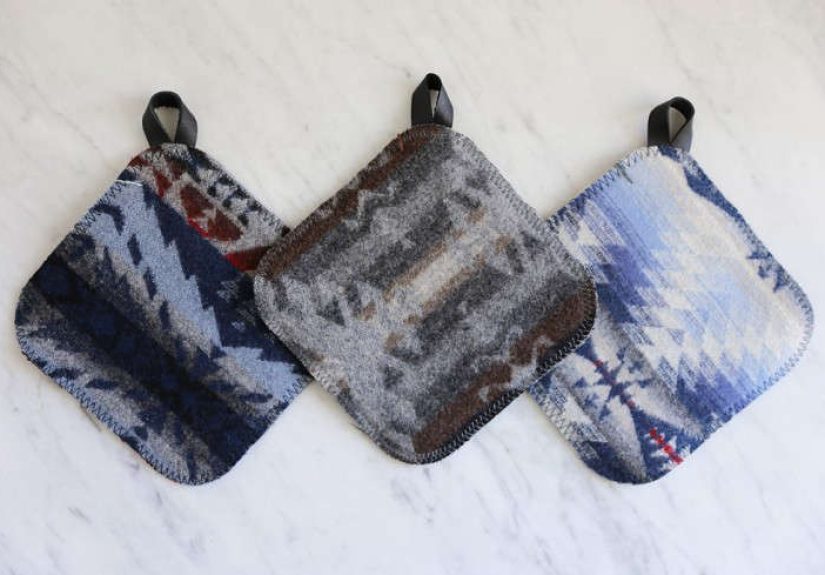
If there is a gateway product into the world of wool kitchen accessories, it is the felted wool trivet. A good one protects tables and counters from serving dishes, tea kettles, baking dishes, and warm bowls while also looking much nicer than a cork square that has seen things.
Felted wool trivets are popular for a reason. They are sturdy, lightweight, quiet on the table, and often beautiful enough to leave out all the time. Many come in round, square, pebble, or ball-style shapes. Some are minimalist and sleek; others look like cheerful little wool sculptures pretending to be practical. Both have merit.
The smart use case is serving heat, not testing the laws of thermodynamics. In other words, felted wool trivets are excellent for hot dishes that have come out to the table, but they are not a dare. If a brand specifies a temperature limit or says not to place ripping-hot cookware directly from the stove or oven onto the wool, listen. Your dinner party should not end with a lesson in fiber science.
What makes a trivet zero-waste friendly is longevity. One well-made trivet can replace years of throwaway pads, damaged tabletops, and ugly emergency improvisations involving folded mail. It also earns style points, which sounds superficial until you realize people keep and use attractive objects longer.
2. Wool Dish Sponges
Yes, wool dish sponges are real. Yes, they look slightly suspicious at first. And yes, they can be genuinely useful.
Felted wool sponges are designed for light dishwashing and surface cleaning. They are typically washable, reusable, and far less depressing than standard plastic sponges that begin their career brightly colored and end it smelling like wet regret. Wool versions are especially appealing for people trying to cut down on synthetic materials and microplastic-heavy cleaning tools.
The best ones are dense enough to hold together, soft enough for everyday dishes, and easy to rinse and dry. Some can even be sanitized in the dishwasher. They are not meant for heavy-duty scouring on every burned pan in your household, but they shine for glasses, plates, counters, and small daily messes. Think of them as the calm, competent minimalist in the sponge family.
They also embody a more thoughtful rhythm of kitchen care. Instead of tearing open a shrink-wrapped multi-pack every month, you use the same sponge longer, rinse it well, let it dry, and treat it like a tool rather than a disposable side character. Revolutionary? No. Weirdly satisfying? Very much so.
3. Wool Coasters, Table Pads, and Hot Pot Layers
Not every useful kitchen accessory needs to be dramatic. Smaller wool pieces can quietly reduce waste in daily life. Wool coasters protect surfaces and reduce the urge to use paper napkins as emergency landing pads for mugs. Table pads and soft felt layers can be used under serving bowls, oil bottles, French presses, or countertop items that tend to scratch or sweat.
These pieces matter because zero-waste living often succeeds through repetition, not grand gestures. A coaster you use ten times a day is more meaningful than a trendy “green” gadget you forget in a drawer. Wool is especially good in these roles because it brings texture and softness without feeling fussy.
4. Bread Basket Liners, Tea Cosies, and Soft Utility Pieces
This is where the Pacific Northwest aesthetic really shines. Wool utility items do not have to be strictly utilitarian. A felted bread basket liner, tea cosy, or table-side carrier brings warmth to the kitchen in both the practical and emotional sense. These are the accessories that make a loaf of sourdough feel like an event and a rainy breakfast feel like a tiny vacation.
They also help extend the usefulness of wool scraps and small-batch production. In low-waste design, the little pieces matter. Offcuts, remnants, and smaller runs can become useful household goods instead of waste. That is the kind of thinking the zero-waste movement needs more of: less heroic purchasing, more intelligent making.
How to Shop for Wool Kitchen Accessories Without Getting Played by Greenwashing
Let us be honest: the word “sustainable” gets thrown around so casually now it may as well arrive wearing sunglasses and a fake mustache. If you are shopping for zero-waste wool kitchen accessories, it helps to slow down and read the details.
First, look for fiber content. One hundred percent wool or mostly wool is usually a better sign than vague wording like “wool blend,” which can hide a lot of synthetic filler. If biodegradability or compostability matters to you, blended fibers can change the equation quickly.
Second, check whether the product is washable and realistically durable. A low-waste product still has to function in the real world, where tomato sauce splashes, coffee drips happen, and someone in the house always places a damp mug where it does not belong.
Third, pay attention to where it is made and how much information the seller provides. Small brands, regional makers, and transparent companies often do a better job explaining materials, care, and sourcing. The more specific the product story, the better. “Made from local wool” means something. “Eco-inspired lifestyle textile solution” means absolutely nothing and should be escorted out of the room.
Finally, buy fewer pieces, but better ones. A zero-waste kitchen is not built by replacing every object with a trendier version all at once. It is built through selective upgrades. Replace the item you use constantly. Keep what still works. Add wool where it solves a real problem. Sustainability becomes much more believable when it is less theatrical.
Caring for Wool So It Lasts
One reason some people hesitate around wool is maintenance anxiety. They imagine every wool product requires a handwritten letter, a basin, moonlight, and emotional support. Relax. Kitchen wool is usually far less dramatic than a cashmere sweater.
Most felted wool accessories do best with simple care: shake out crumbs, spot clean when needed, rinse gently if the product allows it, and let it dry thoroughly. Wool sponges should be rinsed well and dried between uses. Trivets and coasters usually need only occasional cleaning unless they take a direct hit from soup, in which case, condolences.
The biggest secret is this: wool lasts longer when you let it rest dry. Constant dampness is not your friend. Rotate items if you use them heavily, and do not store them crumpled under the sink like punished elves.
When a wool accessory finally reaches the end of its useful life, consider whether it can be reused in another role first. A tired coaster can become a plant pad. A worn sponge can move to utility cleaning. A stained trivet can still live a dignified second act in the mudroom or workshop. That is the real zero-waste mindsetnot perfection, just one more useful chapter.
What It Feels Like to Actually Live With These Accessories
Here is the part glossy product roundups skip: the best kitchen accessories are the ones you stop noticing because they quietly improve the day. Wool pieces do that. They soften the sound of dishes on the table. They make cleanup feel a little less industrial. They keep your kitchen from turning into a plastic convention.
There is also something deeply Pacific Northwest about the mood they create. Wool belongs in rainy light. It belongs next to ceramic mugs, cast-iron pots, wood counters, soup season, bread season, and that season where everyone insists they are not cold while wearing socks indoors. It makes the kitchen feel slower in the best way.
And because the objects are attractive, you leave them out. That alone changes behavior. Reusable things only work when they are easy to reach, pleasant to use, and not visually offensive. A beautiful felt trivet on the table gets used. A wool sponge by the sink gets picked up. A coaster beside the kettle becomes part of the ritual. Good design is not extra credit in sustainable living; it is often the reason the habit sticks.
Experience Notes: A Longer Look at Life With Zero-Waste Wool in the Kitchen
The first thing I noticed after swapping a few synthetic kitchen accessories for wool was not the sustainability halo. It was the mood. The kitchen felt calmer. That sounds ridiculous until you live with it for a while. Plastic is loud, visually and emotionally. Wool is not. A felted trivet on the table, a wool sponge by the sink, a couple of soft coasters near the coffee setupsuddenly the room feels like it belongs to a human being with standards, not a raccoon with a coupon code.
Morning is where these accessories earn their keep. You set down the French press on a felted pad and there is no clatter, just a soft landing. Your mug goes onto a coaster that does not stick to the bottom and flop dramatically to the floor like a clingy toddler. You wipe the counter with a reusable cloth, and the whole routine feels less disposable. Nothing squeaks. Nothing tears. Nothing gives off that faint chemical scent that says, “Hello, I was born in a package of twelve.”
Then there is cooking. On soup night, a wool trivet becomes the staging area for a hot Dutch oven. On pasta night, it takes the bowl of sauce. On toast-and-eggs mornings, it holds the butter dish and jam jar like it was born to host brunch. A good wool accessory is not flashy, but it keeps showing up in useful little ways. It protects the table, cushions the noise, and makes even a casual dinner look intentional. That is a lot of work for something most people would otherwise replace with a folded towel and optimism.
The wool sponge took slightly longer to win me over. At first, I looked at it the way one looks at a new haircut: with caution and a strong desire for reassurance. But after a few days, it made sense. It rinsed easily, did not get slimy nearly as fast, and handled everyday dishes without drama. Glasses, plates, cutting boards, the inevitable coffee ring on the counterit managed all of it. It was not the tool for scorched casserole residue from a culinary accident, but for daily cleanup it was surprisingly pleasant. Less stinky, less disposable, less annoying. A rare triple victory.
What surprised me most was how these items changed habits. When accessories are attractive and tactile, you treat them better. You rinse them. You dry them properly. You put them back where they belong. You do not buy backups “just in case” because you are not assuming immediate failure. That is the part of zero-waste living people rarely discuss: waste is often tied to expectation. If you expect an item to be flimsy and short-lived, you consume accordingly. When an object feels built to stay, your behavior shifts.
There is also an emotional comfort to wool in the kitchen that is hard to quantify but easy to recognize. On gray days, it softens the room. On busy days, it makes small routines feel grounded. During colder months, it feels completely at home beside simmering pots, loaves of bread, and overcommitted tea drinking. The Pacific Northwest influence makes sense here. Wool belongs to weather, ritual, and useful beauty. It does not scream for attention; it just makes daily life work better.
By the end of a few weeks, the experiment stopped feeling like an experiment. The wool accessories simply became part of the kitchen’s logic. They were there because they worked, because they lasted, and because they made the space feel a little more thoughtful. That is probably the best compliment a zero-waste product can get. Not that it made me feel virtuous. Not that it transformed my personality. Just that it quietly earned its place and kept it.
Conclusion
Zero-waste wool kitchen accessories from the Pacific Northwest hit a rare sweet spot: they are practical, attractive, rooted in real material traditions, and aligned with the kind of slower, smarter consumption many households are trying to build. They do not ask you to become a different person. They just ask you to choose better tools.
If you start anywhere, start small: a felted wool trivet, a washable wool sponge, a couple of coasters you will actually use. Let the kitchen evolve from there. Sustainability is not always dramatic. Sometimes it looks like a soft gray square under a hot bowl of soup, doing an excellent job and asking for absolutely no applause.