Table of Contents >> Show >> Hide
- What “Women Are People, Too!” was really calling out
- From magazine article to cultural earthquake
- The 1950s backdrop that made the mystique feel “natural”
- Friedan’s diagnosis: the issue wasn’t femininityit was confinement
- What Friedan proposedand what’s still useful today
- Impact: why The Feminine Mystique hit so hard
- Critiques and blind spots: reading Friedan with respect and realism
- Re-reading “Women Are People Too” in 2026
- Practical takeaways: using Friedan’s question as a personal compass
- Experiences: living the “Women Are People Too” lesson (then and now)
- Conclusion
- SEO Tags
In 1960, a mainstream women’s magazine ran a headline that sounds obvious enough to be a punchline:
“Women Are People, Too!” It wasn’t news in the “breaking” sense. It was news in the “why do we have to say this out loud?” sense.
Betty Friedan wasn’t arguing that women needed a new compliment. She was arguing that women needed their full humanity backbrains included, ambitions included,
and yes, the inconvenient need to grow included.
Three years later, Friedan expanded that magazine argument into The Feminine Mystique, the 1963 bestseller that helped ignite second-wave feminism in
the United States. The book gave language to a widespread, hard-to-explain dissatisfaction among many postwar American housewiveswhat Friedan memorably called
“the problem that has no name.” Even if you’ve never read a page of the book, you’ve probably heard its ripple effects: the idea that a life can look “perfect”
from the outside and still feel painfully small from the inside.
What “Women Are People, Too!” was really calling out
A message aimed at mainstream America on purpose
Friedan didn’t launch her early argument as a niche manifesto for a small circle of insiders. She put it where “ordinary” America would actually see it:
popular media. That choice mattered. If the ideal woman was being sold through glossy spreads, expert advice columns, and “scientific” pronouncements about
femininity, then the counter-argument needed to show up in the same grocery-store universeright there between the recipe section and the cleaning products ads.
The emotional math of the postwar housewife
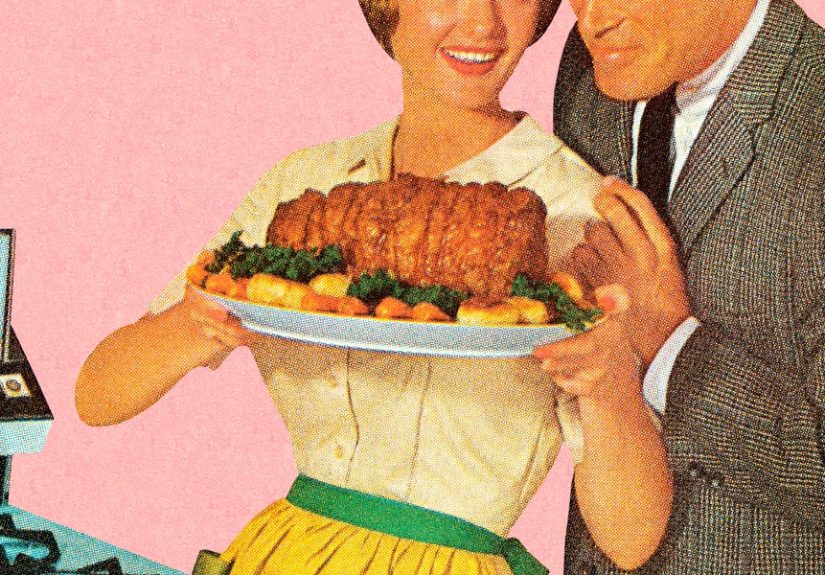
The cultural script of the 1950s and early 1960s promised a simple equation: marriage + children + a tidy home = fulfillment. Many women did love their families
and their homes. Friedan’s point wasn’t “home is bad.” Her point was that the culture treated home as the only legitimate destination for women’s
intelligence and energy. When women felt restless or depressed, the conclusion wasn’t “maybe this role is too narrow.” The conclusion was often “something must
be wrong with her.”
That’s why the phrase “women are people too” lands so hard. It reframes discontent as a clue rather than a character flaw. If you are a full human being, you
will eventually notice when your life is asking you to play a single note foreverno matter how pretty that note is.
From magazine article to cultural earthquake
Defining “the feminine mystique”
In The Feminine Mystique, Friedan described a powerful story that postwar America repeated until it sounded like nature: that a “truly feminine” woman
finds complete fulfillment through marriage, motherhood, and homemaking, and should not want a serious education, meaningful work, or a political voice. Friedan
called this story the “feminine mystique.” The mystique wasn’t one law or one rule. It was a cultural atmosphereso thick you could breathe it in without
noticing.
“The problem that has no name” (and why naming it mattered)
Friedan’s famous phrase captured a paradox. Many women felt unhappy, but they also felt guilty for feeling unhappy. If society insists the domestic ideal is
the highest form of womanhood, then dissatisfaction looks like personal failure: “Why can’t I be grateful?” Friedan flipped the frame. She argued that the
problem wasn’t a lack of femininity or a lack of chores. The problem was blocked growthan adult human need for purpose, identity, and development beyond
caretaking tasks.
Naming that problem did two things at once: it made women feel less alone, and it made the culture more accountable. A private ache became a public question:
If so many women feel trapped, maybe the trap isn’t imaginary.
The 1950s backdrop that made the mystique feel “natural”
Suburbs, consumer culture, and a profitable “perfect”
Post–World War II America saw major economic growth, suburban expansion, and a consumer boom. Domestic life became a market with a smile:
appliances, beauty products, furniture, magazines, and a never-ending parade of “helpful” purchases designed to keep the household humming.
The promise was seductive: if you buy the right things and follow the right advice, you can manufacture happiness.
The trouble is that consumer goods can solve practical problemsbut they can’t substitute for personhood. A washing machine can reduce workload; it cannot
provide meaning. (If your dryer starts giving life advice, please check the warranty paperwork.)
Cold War “normalcy” and the politics of the nuclear family
In the Cold War era, “American values” were often defined by stability and conformity. Traditional gender roles became a symbol of national strength: the
breadwinner husband, the nurturing wife, the thriving children, the orderly home. In that climate, questioning domestic destiny could be framed as selfish,
immature, or even unpatriotic. Friedan argued that the mystique didn’t just limit women; it limited the culture’s imagination for what women could be.
Friedan’s diagnosis: the issue wasn’t femininityit was confinement
How institutions repeated the same story until it sounded “true”
One of Friedan’s sharpest insights was how many institutions harmonized around the same message. Women’s magazines increasingly centered domestic content;
colleges steered women toward “safe” paths; experts treated ambition as a symptom; advertisers profited from insecurity. Each message on its own could be
dismissed as harmless advice. Together, they formed a system that narrowed women’s lives while insisting the narrowing was “for their own good.”
Human potential and the need to grow
Friedan drew on mid-century human-potential psychology to argue that adults need room to develop their capacities. When women were encouraged to treat
housework as a lifelong identity rather than a set of tasks, they were denied a developmental path. This is the most misunderstood part of her argument:
she wasn’t attacking caregiving. She was challenging the idea that caregiving should be the only socially acceptable self for women.
What Friedan proposedand what’s still useful today
Education and meaningful work are not “extras”
Friedan’s solutions focused on access: education that didn’t treat college as a waiting room for marriage, and work that allowed women to contribute, earn,
and build identity. She argued that meaningful work is not merely a paycheck; it is a way to use skills, develop competence, and participate in society as an
adult individual.
Her argument was also practical. When a culture sidelines women’s talents, it wastes human capacity. It also teaches children a quiet lesson about who gets to
have ambitions and who is expected to be the support staff for everyone else’s dreams.
Shared responsibility at home
Even when Friedan’s era treated men as “helpers” at best, her larger logic points toward shared domestic labor. If both partners are fully human, both partners
share responsibility for the invisible logistics of life: meals, appointments, childcare, elder care, cleaning, and emotional load.
Equality doesn’t arrive via a speech; it arrives when the household stops treating one adult as the default manager.
A modern translation: choice, support, and realistic expectations
Today, many women work outside the home, but the cultural script can still be punishingespecially through the modern myth of “having it all,” which often
translates to “doing it all.” A contemporary reading of “women are people too” is less about choosing between home and work and more about demanding real
choice, real support, and real respect for caregiving as labor rather than a natural female reflex.
Impact: why The Feminine Mystique hit so hard
It put words to a widespread feeling
The Feminine Mystique was controversial, but it was also recognizable. That combination is powerful: the book offered a framework that helped many
women reinterpret private unease as a shared, socially produced experience. The result wasn’t just agreement; it was momentum.
It helped catalyze organizing
Friedan’s work is closely linked to the rise of second-wave feminism, including the founding of the National Organization for Women (NOW) in 1966.
The shift here matters: consciousness became organization. The goal wasn’t only to discuss dissatisfaction; it was to challenge sex discrimination in employment,
education, and public life through coordinated action.
It provoked backlashand that’s part of the story
Not everyone welcomed Friedan’s message. Some readers felt she devalued homemakers or suggested domestic life couldn’t be meaningful. Others saw any critique of
traditional roles as a threat to family stability. Friedan’s argument was often flattened into “being a wife and mother is bad,” when her sharper claim was
“being forced into one identity is damaging.” The debate itself became evidence that the mystique had power: it was hard to question without triggering panic.
Critiques and blind spots: reading Friedan with respect and realism
The book’s narrow “default woman”
One of the most significant critiques of The Feminine Mystique is that it largely centers the experiences of white, middle-class suburban women.
Many womenespecially women of color and working-class womenhad long worked for pay, often out of necessity rather than self-actualization.
Their obstacles included racism, exploitation, lack of childcare, and exclusion from better jobs. For them, the problem was not always the absence of work,
but the absence of fair opportunity and safety.
Sexuality, inclusion, and movement tensions
Friedan and parts of the mainstream feminist movement of her era also struggled with LGBTQ+ inclusion, and Friedan’s own record is frequently criticized for
treating lesbian visibility as politically risky. That history matters because it reminds us that social movements can challenge one form of limitation while
reproducing others. A fully modern “women are people too” must include women across race, class, sexuality, disability, and immigration statusno footnotes,
no “later we’ll get to you.”
Why the book still matters anyway
Even with its limits, Friedan’s work remains a hinge point in American cultural history. It challenged the idea that a woman’s value should be measured by how
seamlessly she disappears into everyone else’s needs. It insisted that inner life, ambition, intellect, and creativity aren’t unfemininethey’re human.
Re-reading “Women Are People Too” in 2026
The mystique didn’t vanishit just updated the packaging
The old mystique promised fulfillment through domestic perfection. Newer versions can promise fulfillment through endless optimization:
perfect parenting, perfect productivity, perfect health, perfect appearance, and a perfectly curated life that somehow still leaves time to sleep.
If you feel tired reading that sentence, congratulationsyou are alive.
Friedan’s core insight still holds: people need room to grow. When society treats growth as optional for women, it quietly shrinks women’s lives.
When society treats caregiving as “women’s natural job,” it quietly devalues caregiving and overburdens families.
What a more inclusive version would emphasize
A broader modern lens would spend more time on childcare systems, labor protections, reproductive autonomy, economic inequality, and racial justicebecause
“choice” isn’t real if the cost is impossible. The goal becomes bigger than “let women into offices.” It becomes:
build a society where caregiving and paid work are both valued, and no one’s humanity is conditional.
Practical takeaways: using Friedan’s question as a personal compass
1) Separate roles from identity
Roles are realparent, partner, student, employeebut they’re not the whole person. If one role is swallowing the others, that’s a signal worth hearing,
not a shameful secret.
2) Treat growth as a need, not a reward
Growth isn’t dessert you earn after you finish being useful to everyone else. It’s part of being human. Plan for it the way you plan for groceries:
not as a luxury, but as a requirement.
3) Ask the “people too” audit questions
- What do I do that’s only mine?
- Where do I feel most capable and alive?
- What support would make my choices real (not theoretical)?
- What story am I livingand who wrote it?
Experiences: living the “Women Are People Too” lesson (then and now)
Note: The following scenes are composite experiencesbased on common patterns described in mid-century letters, interviews, and later reflections
written to illustrate how Friedan’s themes can show up in real life.
1) 1961: “I have everything… so why am I restless?”
She has a neat ranch house, two kids, and the newest kitchen gadgets that promise to “save time.” The problem is she doesn’t know what time is for.
Her days are full, but her mind feels underused. When she tries to explain the emptiness, the suggestions she gets are decorative:
throw more dinner parties, try a new casserole, volunteer at school. She does those thingsand still feels the same.
The ache isn’t about missing activity; it’s about missing identity.
When she reads Friedan’s argument, she doesn’t feel instantly “fixed.” She feels something more basic: recognized.
It’s the first time her dissatisfaction is treated as information, not ingratitude.
2) 1967: “I went back to schooland the guilt came with me.”
She enrolls in community college with a spiral notebook and a carefully negotiated childcare plan. She’s excited, but the guilt rides shotgun.
The cultural message is clear: a good mother is always available, always cheerful, always home.
The first time an exam overlaps with a child’s event, she feels like she’s failing at two lives at once.
Then she meets other women in the hallwaysome older, some youngercarrying the same mix of joy and fear.
They swap notes, trade babysitting, and laugh about how “selfish” it feels to learn.
Slowly she realizes the word “selfish” is doing suspiciously heavy lifting.
The real change isn’t only academic; it’s the moment she starts thinking of herself as a person with a future, not just a role with responsibilities.
3) 1994: “Two incomes, one household manager”
She works full-time and so does her partner. On paper, it’s equality. In practice, she is the default project manager of the home:
appointments, permission slips, groceries, birthdays, household repairs, the mental checklist that never ends.
Her partner “helps” (which is already telling language), but she’s still the one noticing, planning, remembering, and reminding.
When she reads about the old “mystique,” it doesn’t feel like ancient history. It feels like a software update:
now women can work outside the home, but the home still runs on the assumption that she will carry the invisible labor.
The breakthrough comes when they stop calling domestic work “help” and start calling it “shared responsibility.”
They make lists, rotate tasks, and treat the household as a systembecause love is great, but systems are what keep Tuesday from exploding.
4) 2026: “Remote work blurred the linesand I lost my edges”
She can do her job from a laptop, which sounds like freedom until every hour becomes available to everyone else.
She answers emails between school pickups, takes meetings with a child wandering into frame, and tries to look “fine” from the shoulders up while stepping over toys.
She isn’t trapped in a suburban fantasy, but she is trapped in constant accessibility.
Friedan’s point lands in a modern way: being a person requires boundaries.
She experiments with small acts of resistancecalendar blocks labeled “work,” a closed door that actually stays closed, a division of labor that doesn’t rely on her
being the default responder.
The change is not dramatic like a movie montage. It’s quieter: fewer resentments, more breathing room, and the return of a self that doesn’t vanish whenever someone
else needs something.
Across these eras, the details change, but the underlying theme stays steady: when society treats women’s needs for growth, privacy, and purpose as optional,
women end up negotiating for basic humanity. Friedan’s insistence that “women are people too” remains useful not as a slogan, but as a daily standardone that asks
whether our homes, workplaces, and policies are built for full humans, or for one-dimensional roles.
Conclusion
“Women Are People, Too!” and The Feminine Mystique weren’t simply complaints about housewives. They were arguments about personhood.
Friedan challenged a culture that praised women while shrinking them, and she helped transform private dissatisfaction into public debate and organized action.
A modern reader can honor the book’s catalytic power while also recognizing its blind spots and updating its message for a broader, more inclusive reality.
The lasting takeaway is simpleand still surprisingly radical: a woman is not a role. A woman is a whole human being.