Table of Contents >> Show >> Hide
- The Short Answer: Turkey Became the Perfect Thanksgiving Bird
- Was Turkey Really at the First Thanksgiving?
- Why Turkey Won the Thanksgiving Table
- The 19th Century Turned Turkey into Tradition
- How Turkey Became More Than Food
- What Turkey Represents Today
- Experiences That Show Why Turkey Still Feels Like Thanksgiving
- Conclusion
- SEO Tags
Every November, Americans perform one of the nation’s most beloved annual magic tricks: we turn one very large bird into dinner, leftovers, sandwiches, soup, family debate, and at least one person saying, “I’m never eating again,” right before dessert. Turkey is so wrapped up in Thanksgiving that the holiday is often casually called Turkey Day. But that raises a fair question: why this bird?
The short answer is that turkey became the symbol of Thanksgiving through a mix of history, convenience, storytelling, and good old-fashioned American image-making. It was native to North America, widely available in colonial New England, large enough to feed a crowd, and special enough to feel celebratory. Then 19th-century writers, editors, politicians, illustrators, and cooks helped elevate it from a practical feast bird to the undisputed mascot of the American holiday table.
So no, the answer is not simply, “Because the Pilgrims ate it.” That version is neat, tidy, and wonderfully dramatic for school bulletin boards. It is also a bit too tidy. The real story is much more interesting. Turkey became a Thanksgiving symbol not because one single meal crowned it king forever, but because generations of Americans kept choosing it, writing about it, serving it, and imagining it at the center of the holiday until the bird practically walked into mythology on its own.
The Short Answer: Turkey Became the Perfect Thanksgiving Bird
If you had to pick one sentence to explain it all, here it is: turkey became a symbol of Thanksgiving because it was the right bird for a growing American tradition. It fit the meal, the season, the culture, and eventually the national story Americans wanted to tell about themselves.
Unlike beef or pork, turkey felt festive without seeming too extravagant. Unlike chicken, it was big enough to feed a hungry group without requiring a small army of birds lined up like a poultry convention. Unlike goose or duck, it was strongly associated with North America and more accessible to many households. In other words, turkey checked every box: practical, impressive, and unmistakably American.
Then culture took over. Once Thanksgiving became a national holiday, the turkey moved from “popular entrée” to “main character.” It appeared in novels, magazines, newspaper illustrations, advertisements, greeting cards, family memories, and later television specials. Before long, Thanksgiving without turkey started to feel like Christmas without lights: technically possible, emotionally suspicious.
Was Turkey Really at the First Thanksgiving?
What the historical record actually says
The 1621 harvest feast shared by Plymouth colonists and the Wampanoag people sits at the center of the Thanksgiving origin story, but the menu is not as thoroughly documented as many people assume. There is no surviving menu card, no proud recipe pamphlet, and sadly no 17th-century food influencer posting, “Come with me to plate the first Thanksgiving feast.”
The surviving eyewitness evidence mentions venison and “fowl,” which may have included turkey, but historians cannot say with certainty that roast turkey was the centerpiece. Wildfowl could also have meant ducks or geese. What scholars can say is that wild turkeys were abundant in the region, and colonial accounts from the period describe a “great store of wild turkeys” in New England. So turkey was absolutely plausible. It just was not yet the unquestioned icon it would later become.
Why the uncertainty matters
This matters because the modern Thanksgiving turkey was shaped as much by later Americans as by the 1621 feast itself. The first harvest celebration became a powerful national story in the 1800s, and people retold it through the lens of their own traditions. When they pictured Thanksgiving, they pictured a grand family meal with turkey in the middle. Then they projected that image backward onto the past.
That means the bird’s symbolic power comes from two timelines at once: the colonial reality, where turkey was one possible food among many, and the 19th-century American imagination, where turkey became the shining bronze centerpiece of gratitude, family, and national identity.
Why Turkey Won the Thanksgiving Table
It was native to North America
One reason turkey became such a strong symbol is that it was deeply tied to North America. Wild turkeys are native to the continent, and Indigenous peoples had valued and domesticated turkeys long before English colonists arrived. That made the bird feel distinctly rooted in American land and foodways.
As Thanksgiving evolved into a national holiday, that mattered. Americans often looked for symbols that seemed uniquely their own: the bald eagle, the frontier, corn, pumpkins, and yes, the turkey. A holiday built around harvest, home, and national identity was bound to embrace a bird that practically screamed, “Made on this continent.” Well, maybe “gobbled” is the better word.
It was big enough to feed a crowd
Thanksgiving is not a minimalist holiday. It is a generous, elbows-on-the-table, somebody-needs-a-bigger-platter kind of holiday. Turkey works beautifully in that setting because one bird can feed a family gathering. That practicality helped it stand out from other meats.
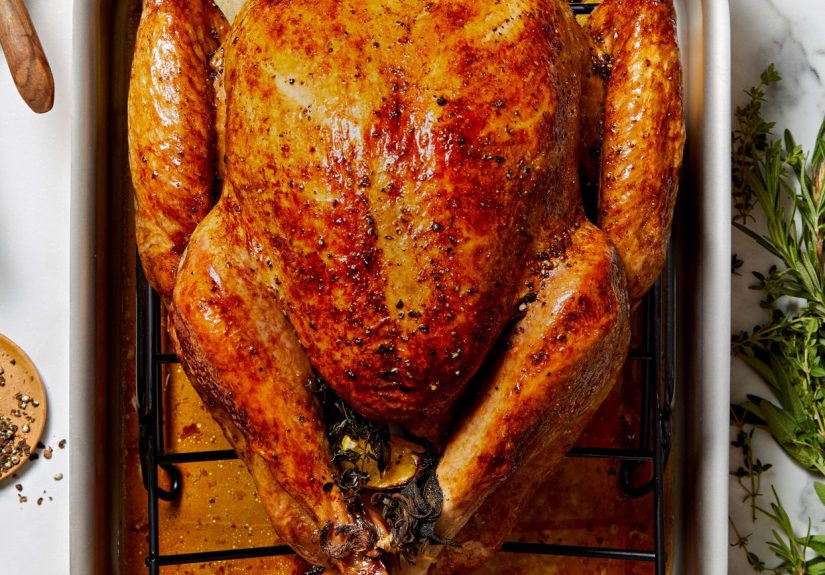
A large turkey also creates a visual center for the meal. It looks ceremonial. It gives the table a focal point. It produces that classic carving moment that says, “Yes, this is the event.” A platter of cutlets does not inspire quite the same level of awe. It may feed people, but it does not arrive with pageantry.
It felt special, but not wildly luxurious
Turkey occupied a sweet spot in American food culture. Chickens were useful for eggs. Cows were valuable for milk and labor. Pigs were everyday workhorses of the kitchen. Turkey, by contrast, felt festive. It was not something every household ate all the time, which made it suitable for an annual celebration.
That balance mattered in the 18th and 19th centuries. Thanksgiving was meant to be abundant, but it was also supposed to be broadly accessible. Turkey signaled occasion without requiring aristocratic wealth. It was celebratory without being absurdly fancy, which is probably why it stuck around while peacock somehow failed to become the people’s holiday bird. A heartbreaking loss for dramatic tablescapes, perhaps, but understandable.
The 19th Century Turned Turkey into Tradition
Sarah Josepha Hale helped write the holiday into American life
If Thanksgiving had a chief marketing officer in the 19th century, it was Sarah Josepha Hale. Writer, editor, and relentless advocate, Hale played a huge role in shaping the holiday Americans now recognize. In her 1827 novel Northwood, she described a Thanksgiving feast with roast turkey placed proudly at the head of the table. That image mattered. Literature does not just reflect culture; sometimes it helps build it.
Hale did more than describe a delicious meal. Through her work as editor of Godey’s Lady’s Book, one of the most influential magazines of the era, she promoted the idea of Thanksgiving as a national holiday rooted in home life, moral values, family gathering, and shared American identity. Turkey was central to that vision.
In other words, Hale did not invent turkey, or Thanksgiving, or appetite. But she was instrumental in bundling them into one emotionally powerful package that American readers could picture, desire, and imitate.
Lincoln made Thanksgiving national
In 1863, President Abraham Lincoln proclaimed a national Thanksgiving holiday during the Civil War. This was a major turning point. Once Thanksgiving became a fixed national observance, its customs had room to standardize. A national holiday invites national symbols, and turkey was perfectly positioned to become one.
Lincoln’s proclamation gave the holiday official weight, but culture filled in the details. Families wanted a menu. Newspapers offered one. Magazines described one. Hosts reproduced one. And once the turkey became established as the centerpiece in enough homes, it gained symbolic force. At that point, people were not simply eating turkey on Thanksgiving. They were eating the Thanksgiving turkey.
Print culture made the image stick
The rise of magazines, newspapers, cookbooks, greeting cards, and illustrated holiday scenes in the 19th century helped lock turkey into the public imagination. Repetition is powerful. When readers repeatedly saw the same image of a crowded table, a glowing roast bird, and grateful family members, turkey stopped being just one possible option and became the expected symbol.
This is one reason traditions can feel ancient even when they were shaped relatively late. Once a ritual is repeated across media, households, and generations, it gains the aura of inevitability. Turkey became a symbol of Thanksgiving because Americans kept seeing it, serving it, and passing it on until it felt impossible to separate the bird from the holiday.
How Turkey Became More Than Food
An American symbol for an American holiday
Thanksgiving is not only about eating. It is about storytelling. Families tell stories about the past, schools tell stories about national origins, and communities tell stories about belonging. Turkey fits beautifully into that symbolic world because it connects nature, harvest, history, and national identity all at once.
It is a native bird. It evokes the fall season. It is large enough to represent abundance. It lends itself to ritual carving and shared serving. And over time, it became one of the easiest visual shortcuts for “American Thanksgiving.” Draw a pumpkin and people might think autumn. Draw a turkey and they know exactly which Thursday you mean.
Ritual matters as much as flavor
Let’s be honest: turkey’s reputation as the most thrilling meat ever roasted is, at best, a lively national debate. The bird’s symbolic power does not come only from taste. It comes from ritual. It arrives whole. It gets carved. It anchors the table. It produces leftovers that extend the holiday into the weekend and, in some households, into the next geological era.
Symbols survive because they do something socially useful. Turkey gives people a shared object around which they can gather. It marks the day as different from ordinary dinners. It slows everyone down for the ceremonial moment before the meal begins. That is part of why the symbol lasts even in homes where not everyone thinks turkey is the best item on the menu. The cranberry sauce knows what it did.
Politics and pop culture kept the bird in the spotlight
In the modern era, the turkey’s symbolic status has been reinforced by pop culture and public ritual. Holiday films, cartoons, advertisements, department store displays, and magazine covers all helped repeat the same image. Then the White House turkey presentation and later the presidential pardon tradition gave the bird a peculiar extra role in American civic theater.
That annual event is playful, slightly absurd, and entirely on brand for a country that can turn a farm bird into a national celebrity for one week each year. It does not explain the origin of the symbol, but it does show how thoroughly the symbol has taken hold.
What Turkey Represents Today
Today, turkey symbolizes more than a historical menu. It represents gathering, abundance, continuity, and the feeling of coming home to a shared ritual. Even households that skip the bird entirely often define themselves in relation to it: smoked turkey, deep-fried turkey, tofu turkey, lasagna instead of turkey, “we only do sides,” or “Aunt Lisa makes a ham because she has had enough of dry poultry.” The symbol remains powerful even when the menu changes.
That is the mark of a true cultural icon. Turkey no longer belongs only to history. It belongs to memory. It belongs to expectation. It belongs to the emotional architecture of the holiday. You may love it, improve it with heroic amounts of gravy, or politely avoid it in favor of mac and cheese, but you still know what it stands for.
Experiences That Show Why Turkey Still Feels Like Thanksgiving
One of the best ways to understand why turkey became a Thanksgiving symbol is to look at how people experience the holiday in real life. The bird often appears long before anyone takes a bite. It shows up in grocery-store planning, family group texts, kitchen strategy meetings, and the annual question of whether this is finally the year someone dares to deep-fry it without ending up on the evening news.
For many families, the turkey is the meal’s unofficial opening ceremony. Someone rinses vegetables, someone forgets the rolls, someone argues about oven space, and in the middle of the chaos sits the bird, calmly defrosting like the diva star of a very stressful production. When it finally emerges from the oven, people gather around it almost automatically. Phones come out. Compliments are offered. A carving knife appears. Nobody does this with a casserole.
There is also something deeply theatrical about turkey. It arrives whole and dramatic, which makes it feel communal. Everyone shares from the same centerpiece. That matters. Thanksgiving is one of the few holidays where the food itself helps stage the togetherness. The turkey is not just dinner; it is a social signal that says the table is ready, the guests are here, and the ordinary rules of weekday life are suspended for a while.
In many American homes, memories of Thanksgiving are tied to the sensory details of turkey: the smell of roasting skin and herbs, the sound of someone asking whether it is done yet for the fifteenth time, the sight of a grandparent carving with great seriousness, or the glorious moment leftovers are packed away for sandwiches the next day. Those repeated experiences are how symbols stay alive. People remember the bird not only because of history books, but because it keeps showing up in the emotional scrapbook of family life.
Even in households that reinvent the meal, turkey still has symbolic gravity. Some families smoke it outdoors. Some stuff it with regional flavors. Some serve a smaller breast because the guest list has shrunk. Some replace it altogether but still joke about “not doing turkey this year,” which proves the point. The bird remains the benchmark. You either serve it, adapt it, or deliberately reject it. Either way, it is still the reference point for the holiday.
That lived experience explains why turkey survived changing tastes, modern schedules, and endless recipes promising to “fix” turkey forever. The bird persists because it carries memory better than almost any other Thanksgiving food. It is tied to reunion, ritual, and the gentle chaos of people trying to create one meaningful meal together. In that sense, turkey symbolizes Thanksgiving not just because of what happened in history, but because of what keeps happening around American tables every November.
Conclusion
So why is the turkey a symbol of Thanksgiving? Not because one single historical moment settled the matter forever, but because the bird steadily earned its place through practicality, symbolism, and repetition. It was native to North America, available in the right season, large enough to feed a group, and special enough to mark a feast. Then writers like Sarah Josepha Hale, leaders like Abraham Lincoln, and generations of cooks, families, and advertisers turned it into the visual and emotional centerpiece of the holiday.
In the end, the turkey became a symbol of Thanksgiving because it told Americans the story they wanted their holiday to tell: a story about abundance, gathering, memory, and a shared table. That story is more complicated than the old myth, but it is also richer. And frankly, any bird that can survive history, politics, advertising, leftovers, and dry-meat jokes deserves a little respect.