Table of Contents >> Show >> Hide
- First, Identify the Type of Beep
- The Common, Everyday Reasons Your Car Is Beeping
- Modern Safety Systems That Beep on Purpose
- Warning Beeps That Mean “Handle This Soon”
- Warning Beeps That Mean “Stop Driving If It Is Safe”
- How to Diagnose the Beeping Without Guessing
- When You Should Stop Driving Right Away
- Final Thoughts
- Real-World Beeping Experiences Drivers Commonly Run Into
- SEO Tags
Modern cars do not believe in silence. They beep when you forget your seat belt, beep when you back toward a shopping cart, beep when you drift toward a lane marker, and sometimes beep just to remind you that, yes, your headlights are still on and no, your key fob is not magically in the cupholder. Helpful? Often. Annoying? Also often.
If your car has turned into a part-time smoke alarm, the good news is that most warning sounds follow patterns. A quick chirp usually means “pay attention.” Repeating beeps often mean “fix this soon.” A loud, persistent alarm paired with a red warning light means “this is not a drill.” The trick is learning which is which before your dashboard starts sounding like a tiny, judgmental orchestra.
This guide breaks down the most common reasons a modern car beeps, what those warning sounds usually mean, and how to figure out whether you can keep driving, should schedule service, or need to pull over immediately. Think of it as a translator for your car’s passive-aggressive little noises.
First, Identify the Type of Beep
Before you diagnose anything, pay attention to when the sound happens. That timing tells you a lot.
- Beep at startup: Often a seat belt reminder, door-ajar warning, key warning, or a message that a system needs attention.
- Beep only in reverse: Usually parking sensors, rear cross-traffic alert, or a backup-assist feature.
- Beep while changing lanes or drifting: Often blind-spot monitoring or lane departure warning.
- Rapid beeping in traffic: Could be forward collision warning or parking sensors reading nearby objects.
- Beep with a yellow warning light: Caution. The car wants attention soon.
- Beep with a red warning light: Stop, assess, and do not play guessing games with physics.
Also note whether the beep comes with a message on the instrument cluster, a flashing icon, steering wheel vibration, or a camera view. In newer vehicles, the sound is only half the message; the screen usually tells the rest of the story.
The Common, Everyday Reasons Your Car Is Beeping
1. Seat Belt Reminder
This is the reigning champion of car beeps. If you start driving and hear repeating chimes, your driver or passenger seat belt is the first thing to check. Some systems also detect occupied rear seats or recently opened rear doors and can remind you to check the back seat before leaving the vehicle.
Modern seat belt reminders are more persistent than older ones, and they may continue until the belt is fastened. Sometimes a bag, laptop, or takeout order riding shotgun can trick the seat sensor into thinking a human is sitting there. Your burrito may be delicious, but it still does not need occupant protection.
2. Door, Trunk, Hood, or Liftgate Ajar
If the beeping starts when you shift into drive or pick up speed, check whether a door, trunk, hood, or liftgate is not fully latched. This is one of the most common causes of startup or low-speed warning chimes. Many cars will also flash a door icon or show which opening is the problem.
Do not ignore this one. A slightly open hatch can lead to cargo movement, exhaust intrusion in some situations, or a very dramatic “why is all my stuff now in the parking lot?” moment.
3. Lights Left On
If the beeping happens after you turn the vehicle off and open the driver’s door, your headlights or parking lights may still be on. This is usually a reminder rather than a fault. It is your car’s way of saying, “I am trying to save you from a dead battery and a very grumpy tomorrow morning.”
4. Key Fob Not Detected or Left in Vehicle
Push-button-start vehicles love to chirp when the key fob is missing, left inside the cabin, or has a weak battery. If you hear a warning when you exit the car or try to lock it, the system may be telling you the key is still inside or not being recognized properly.
If this happens repeatedly, replace the key fob battery before you convince yourself the car is haunted.
5. Parking Brake Still Engaged
If the car beeps while moving and the brake warning light is on, make sure the parking brake is fully released. On vehicles with electronic parking brakes, you may also get a message or chime if the system is applied when you try to drive away.
This can be a simple fix, but if the brake light stays on after release, treat it as a real brake-system warning until proven otherwise.
6. Low Fuel Reminder
Some vehicles chime once when the fuel level gets low. That is not a mechanical crisis. It is just your car politely warning you that “coasting on optimism” is not an approved fuel strategy.
Modern Safety Systems That Beep on Purpose
Many of today’s warning sounds come from advanced driver assistance systems, or ADAS. These alerts are usually trying to prevent a collision, parking mishap, or lane-drift incident. They can be useful, but if you do not know what they sound like, they can feel like your vehicle is criticizing your life choices in real time.
7. Parking Sensors
If your car beeps in reverse or while creeping into a tight spot, parking sensors are a likely cause. Typically, the beeps get faster as you get closer to an object. A steady tone often means you are very close and should stop.
These alerts can trigger on walls, poles, curbs, shopping carts, or anything else that ruins a bumper’s day. Dirt, snow, ice, or heavy rain can sometimes interfere with sensors too, making the system overly sensitive or temporarily unavailable.
8. Rear Cross-Traffic Alert
If you are backing out of a parking space and hear sudden beeping, especially with arrows or warnings on the screen, rear cross-traffic alert may be detecting a vehicle approaching from the side. This system is especially helpful in busy lots where visibility is lousy and giant SUVs seem to materialize from nowhere.
9. Blind-Spot Monitoring
Many blind-spot systems stay quiet until you signal a lane change with another vehicle in the danger zone. Then the car may beep, flash a mirror icon, or both. If you hear the alert right as you start moving over, your car is essentially saying, “Absolutely not. There is a sedan hiding where your eyeballs cannot see it.”
10. Lane Departure Warning
Lane departure warning systems may chime, buzz, or vibrate the steering wheel when the vehicle drifts out of its lane without a turn signal. Some systems also add gentle steering assistance.
If you hear this alert often, it does not always mean the system is wrong. It may mean the road markings are faded, the camera is blocked, you are driving through construction, or you are just a little too casual with lane discipline. Dirty windshields and bad weather can also reduce camera performance.
11. Forward Collision Warning
This is one of the more urgent modern beeps. If the car thinks you are closing too fast on a vehicle, pedestrian, or obstacle ahead, it may sound a sharp warning and flash a message. Some vehicles will also pre-charge the brakes or apply braking automatically if the driver does not react quickly enough.
If this happens once because traffic suddenly stops, fine. If it happens often in normal driving, the system may be set too sensitive, the sensors may need cleaning, or the camera may need inspection. Either way, do not assume the alert is meaningless.
12. Driver Attention or Drowsiness Alert
Some newer vehicles monitor steering inputs, lane position, eye movement, or other behavior to decide whether the driver looks distracted or sleepy. If the system senses inattention, it may chime and display a coffee-cup icon or a “take a break” message.
No, your car is not being dramatic. It is saying that your driving pattern resembles someone whose brain would benefit from caffeine, fresh air, or both.
Warning Beeps That Mean “Handle This Soon”
13. Tire Pressure Warning
If you get a beep and see the TPMS light, one or more tires may be underinflated or, in some vehicles, overinflated. On modern dashboards, the car may even show which tire is low and the exact pressure. Check the tire pressures with a gauge and compare them with the sticker on the driver’s door jamb, not the number printed on the tire sidewall.
A sudden drop may indicate a puncture. A seasonal drop on a cold morning might be simple temperature-related pressure loss. Either way, do not ignore it. Tires are expensive, blowouts are worse, and poor inflation can affect braking, handling, and fuel economy.
14. Check Engine Light with a Chime
A check engine light can be anything from a loose gas cap to a more serious emissions or engine-control issue. If the light is steady and the car drives normally, you usually have time to schedule service soon. If the light is flashing, that is more serious and can point to an active misfire that may damage the catalytic converter.
The beep is there because the car wants your attention now, not three months from now after you have mentally rebranded it as “decor.”
15. Charging System or Battery Warning
If the battery light comes on and the car chimes, the issue is often the charging system, not just the battery itself. A weak alternator, failing belt, poor connection, or electrical fault may mean the battery is no longer being charged properly while you drive.
You might still be able to continue for a short distance, but think of that as borrowed time. If lights begin flickering, accessories slow down, or the dash gets weird, the car may stall once the remaining battery power runs out.
Warning Beeps That Mean “Stop Driving If It Is Safe”
16. Oil Pressure Warning
This is one of the big ones. If the oil pressure light comes on with a warning sound, stop the engine as soon as it is safe to do so. Low oil pressure can destroy an engine very quickly. This is not a “wait and see” light. This is a “pull over before your engine becomes an abstract sculpture” light.
Sometimes the issue is low oil level. Sometimes it is a pump or lubrication problem. Either way, driving further can turn a manageable repair into a wallet-leveling disaster.
17. Brake Warning Light
If the brake warning light stays on and the car beeps, first confirm the parking brake is released. If it is, possible causes include low brake fluid or a more serious brake-system problem. If the pedal feels soft, sinks, or braking performance changes, do not keep driving unless it is necessary to reach a safe stopping point.
When the car tells you the brakes may be unhappy, take that personally.
18. Engine Temperature Warning
An overheating warning, often red, can come with a chime and a temperature icon. If this happens, pull over safely, shut the vehicle off, and let it cool. Continuing to drive an overheated engine can cause severe damage, including warped components and head gasket failure.
Steam from under the hood is your car’s way of escalating the conversation.
How to Diagnose the Beeping Without Guessing
- Look at the dashboard immediately. The icon or message is usually the fastest clue.
- Notice the timing. Startup, reverse, lane changes, and highway cruising all point to different systems.
- Check the obvious stuff first. Seat belts, doors, trunk, fuel level, parking brake, and whether the key fob is in the car.
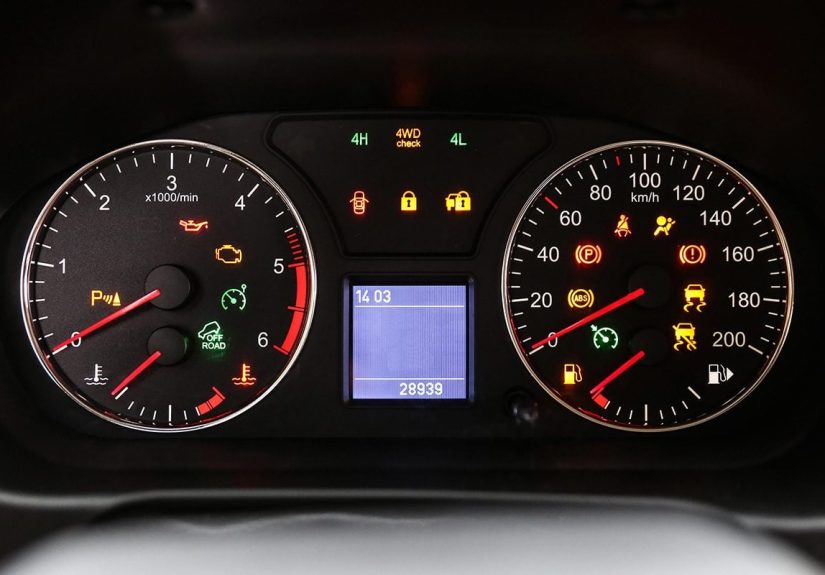
- Watch for color. Green and blue are usually status indicators. Yellow and amber mean caution. Red means stop and assess immediately.
- Think about the weather. Snow, dirt, ice, and heavy rain can interfere with cameras and sensors.
- Read the message center. Newer cars are usually pretty specific if you actually look instead of muttering at the steering wheel.
- Use the owner’s manual. Annoying answer, yes. Correct answer, also yes.
- Scan trouble codes if needed. For persistent warning lights, an OBD-II scan tool can narrow things down fast.
When You Should Stop Driving Right Away
Pull over as soon as it is safe and shut the vehicle off if the beeping is paired with any of the following:
- Red oil pressure warning
- Red brake warning with poor braking feel
- Engine overheating warning
- Charging-system warning plus flickering lights or loss of power
- Any warning telling you to stop the vehicle immediately
When in doubt, treat a red warning plus an audible alert as serious. A tow bill is annoying. An engine or brake-system failure is much more annoying.
Final Thoughts
If your car is beeping at you, it is usually not random. It is either reminding you about a routine safety habit, warning you about nearby traffic or obstacles, or telling you a system needs attention. The smartest move is to match the beep with the dashboard message, understand the context, and separate the minor nuisances from the genuine emergencies.
In other words, do not panic when your car chirps because your passenger seat thinks your backpack is a person. But do pay attention when it combines beeping with a red warning light and a message that sounds expensive. Modern vehicles are loaded with technology, and while they can be noisy, they are usually trying to save you from damage, danger, or at minimum an embarrassing parking-lot mishap.
Your car may be dramatic, but it is not usually wrong for no reason.
Real-World Beeping Experiences Drivers Commonly Run Into
One of the most common “mystery beep” experiences happens about ten seconds after pulling out of the driveway. Everything feels normal, the engine sounds fine, and then the car starts chiming like it just remembered a terrible secret. In a surprising number of cases, the problem is not mechanical at all. A purse, grocery bag, laptop, or giant winter coat is sitting in the front passenger seat, the seat sensor thinks a person is there, and the seat belt reminder starts its little protest concert. Drivers often spend several minutes assuming something is terribly wrong before realizing the car is trying to buckle in a watermelon.
Another classic scenario shows up on cold mornings. You start the car, get halfway down the block, and suddenly hear a beep with the tire pressure warning light. Panic briefly enters the chat. Then you remember it got much colder overnight. Tire pressure drops as temperature drops, so a borderline tire can trigger a warning after a chilly night even if it looked fine yesterday. The smart move is to check the pressure when the tires are cold and inspect for damage, not just stare accusingly at the dashboard like it betrayed you.
Parking lots create their own special beeping genre. You shift into reverse, and suddenly the vehicle begins pinging, chirping, or beeping faster than a microwave with abandonment issues. Sometimes that means there is an actual hazard behind you. Sometimes it means the sensors have discovered a pole, curb, shopping cart, or a hedge trimmed by someone with a personal grudge against mirrors. Rear cross-traffic alerts can be especially startling because they often go off before the approaching vehicle is visible in the backup camera. It feels dramatic until you realize that yes, there really was a car zipping across the aisle behind you.
Highway beeps are usually the ones drivers remember most because they feel urgent. A lane departure warning can fire when you drift a little too close to the line while reaching for a water bottle or adjusting climate controls. Forward collision warnings are even more attention-grabbing. Drivers often describe the experience as their car suddenly deciding it is the manager of the situation. A sharp alert, a flashing message, and sometimes a brake pre-charge can make your pulse jump instantly. Even when the system feels overly cautious, it is still worth taking seriously. The whole point is to interrupt you before a close call becomes a real one.
Then there is the key-fob saga. Plenty of drivers hear random chirps after parking, locking, or walking away from the car, only to discover the key is still in a cupholder, buried in a bag, or sitting in the cargo area next to gym shoes and forgotten reusable totes. Push-button-start cars are wonderfully convenient until the key battery weakens and the vehicle starts sending mixed signals. One day it unlocks normally. The next day it acts like you are trying to break into your own car. If the beeps seem inconsistent and involve lock or start issues, the tiny coin battery in the fob is often the culprit.
And finally, there is the experience every driver has at least once: the “I ignored the warning because it stopped” mistake. Maybe the battery light flickered and went away. Maybe the brake alert disappeared after restarting. Maybe the car only beeped once, so it seemed fine. Then a few days later the alternator quits, the battery dies, or the brake fluid turns out to be low. Modern cars often give early warnings before a problem becomes obvious. That is why the best habit is not just listening to the beep, but asking what triggered it, checking the message center, and dealing with the issue while it is still a manageable inconvenience instead of a roadside event with hazard lights and regret.