Table of Contents >> Show >> Hide
- The Tiny Bone With a Big Reputation
- Ancient Origins: Chickens, Not Turkeys
- From Europe to the American Thanksgiving Table
- How the Wishbone Game Works (and Why We Love It)
- What the Wishbone Really Represents
- Modern Twists on the Wishbone Tradition
- Is There Any Science Behind It?
- Wishbone Etiquette (and a Few Safety Tips)
- Why We Still Break the Turkey Wishbone
- Real-Life Wishbone Moments: Experiences from the Table
- Conclusion: A Little Bone With a Lot of Heart
If your Thanksgiving isn’t complete until two people are standing over the sink, elbows out, silently tugging on a skinny little bone like it’s the Super Bowl, you’re not alone. The turkey wishbone tradition is one of those quirky holiday rituals we rarely question. We just know that if we grab a side, close our eyes, and pull, something good is supposed to happen.
But where did this custom come from? Why do we break the turkey wishbone at Thanksgiving, and what does it really mean? Spoiler: it started long before stuffing mix, football, or canned cranberry sauce existed.
The Tiny Bone With a Big Reputation
Before we dive into history, let’s talk about what this “wishbone” actually is. Anatomically speaking, it’s called the furcula, a V-shaped bone found in birds (and some dinosaurs). It sits between the bird’s neck and breast, acting like a spring that helps support flight. Think of it as the avian equivalent of a flexible collarbone.
In turkeys and chickens, the furcula is sturdy enough to survive roasting and carvingperfect for drying out and snapping in half later. At some point, our ancestors decided that this odd little bone wasn’t just bird hardware; it was a direct line to good fortune.
Ancient Origins: Chickens, Not Turkeys
The Etruscans and Sacred Chickens
The wishbone tradition didn’t start with Pilgrims or even turkeys. Historians trace it back to the Etruscans, an ancient Italian civilization that lived long before the Roman Empire. The Etruscans believed birdsespecially chickenscould predict the future. Priests watched the way birds behaved and interpreted these signs as messages from the gods.
When a chicken was slaughtered, the Etruscans would carefully remove the furcula and let it dry in the sun. People would then touch or stroke the bone while making wishes, hoping to tap into divine wisdom and luck. No breaking yetjust a sacred, shared wishbone.
How the Romans Turned It Into a Contest
The Romans loved a good upgrade, and when they adopted Etruscan customs, they didn’t just copy themthey embellished them. The story goes that there were so many people wanting to make a wish on the same bone that folks started grabbing it at the same time. Eventually, it broke.
Instead of seeing this as a problem, people turned it into a game: two people pulled, made a wish, and whoever ended up with the larger piece was believed to have the better chance of getting their wish granted. That’s the basic structure of the wishbone game we still play today.
From Europe to the American Thanksgiving Table
How the Tradition Crossed the Ocean
The wishbone ritual traveled with the Romans into England, where it became part of Sunday roast traditions. English families often broke chicken wishbones after meals, turning a simple leftover bone into a moment of fun and superstition.
When English settlers came to North America, they brought their food customs and superstitions with them. As turkey gradually became the star of the American Thanksgiving feast in the 1800s, the wishbone tag-alonged right onto the holiday menu. Instead of chickens, the larger turkey wishbone became the preferred trophy.
By the time Thanksgiving was firmly established as a national holiday, the wishbone game was already woven into the celebration. For many families, breaking the turkey wishbone is as essential as pumpkin pie or arguing about whether stuffing belongs inside the bird.
How the Wishbone Game Works (and Why We Love It)
The Classic Rules
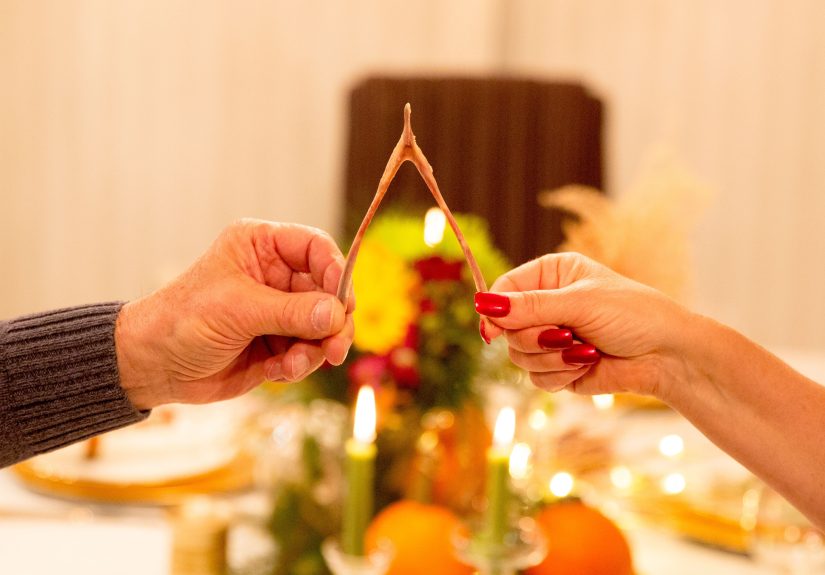
The basic wishbone rules are wonderfully simple:
- After carving the turkey, someone sets the wishbone aside to dryusually on a windowsill or countertop.
- Later (or the next day), two people each grab one end of the bone.
- They silently make a wish, then pull until the bone snaps.
- Whoever gets the larger piece is said to have their wish come true.
The tradition turns a leftover bone into a mini ritual of suspense and silliness. Kids love it because it gives them a rare chance to “win” against an adult. Grown-ups love it because it’s nostalgicand honestly, it’s kind of fun to pretend your fate hinges on poultry anatomy.
“Getting a Lucky Break”
Some language experts think the phrase “getting a lucky break” may be connected to winning the wishbone game. Whether that’s literally true or not, it fits perfectly. The moment the bone snaps, there’s a tiny rush: laughter, cheering, maybe a dramatic groan from the loser. For a split second, everyone is invested in who got the bigger piece.
What the Wishbone Really Represents
More Than Just Good Luck
On the surface, the wishbone is about good luck and wishes coming true. But if you look a little deeper, it’s also about hope and connection:
- Hope: Making a wish is a small act of optimism. Whether you’re wishing for a new job, good health, or just another slice of pie, you’re looking toward the future with a bit of faith.
- Playfulness: The game doesn’t take itself seriously. It’s a reminder that even in big, meaningful gatherings, there’s room for lighthearted fun.
- Connection: Two people are literally linked by the same bone and the same moment. Everyone else at the table often stops to watch. For a few seconds, the whole family shares one tiny, collective story.
In a way, the Thanksgiving wishbone tradition is less about destiny and more about pausing to wish, laugh, and feel lucky together.
Modern Twists on the Wishbone Tradition
Plastic Wishbones and Party Packs
Because not every family wants to fight over a single bone, some brands now sell plastic wishbones in multi-packs. That way everyone at the table, or at least the kids’ table, gets a turn to make a wish and “get a lucky break.”
There are also novelty wishbone ornaments, napkin rings, and even Thanksgiving décor featuring the familiar V-shape. The wishbone has moved beyond the bird and into the realm of symbolsright up there with pumpkins, leaves, and cornucopias.
Wishbone Jewelry and Everyday Luck
The wishbone’s meaning has expanded beyond Thanksgiving too. You’ll find wishbone-shaped necklaces, earrings, and rings used as symbols of luck, hope, and positive energy. For some people, wearing a wishbone charm is like carrying a tiny promise that things can get better, one “lucky break” at a time.
Is There Any Science Behind It?
Why the Bone Snaps the Way It Does
While the tradition is mostly superstition and fun, there is a little science involved. A dried wishbone behaves like a fragile spring. When two people pull on each end, tiny imperfections in the bone determine where it’s most likely to break. The person holding the stronger, thicker side and gripping closer to the center usually has better odds.
Some people even turn this into a strategy game: choosing the wider side, holding the bone closer to the top, and pulling steadily instead of yanking wildly. Of course, the “official” wishbone rulebook lives only in family argumentseveryone has their own house rules.
Probability, Luck, and Perspective
At the end of the day, the wishbone is a fun reminder that human beings are experts at finding meaning in randomness. Two people pull; someone wins; life goes on. The real magic isn’t in the boneit’s in the hopes we attach to it and the memories we build around that silly little snap.
Wishbone Etiquette (and a Few Safety Tips)
How to Keep It Fun and Safe
As charming as the wishbone tradition is, it does involve brittle bone shards and excited people, so a few basic tips help keep the mood festive:
- Let it dry: A wishbone that’s too fresh can be rubbery instead of brittle, making it harder to snap cleanly.
- Watch the flying pieces: Don’t aim your wishbone duel toward anyone’s face. Shards can fly when the bone breaks.
- Kids’ version: If little kids are playing, supervise closely or use plastic wishbones designed for the game.
- Keep it light: It’s fine to joke, but don’t turn it into a serious competition. The whole point is playful, not stressful.
Handled well, breaking the wishbone becomes one of those small, cozy rituals that your family talks about long after the dishes are done.
Why We Still Break the Turkey Wishbone
So, why do we keep this tradition alive in a world full of streaming services, smartphones, and smart ovens that can roast turkey for us?
- Because it’s simple and fun.
- Because it adds a tiny burst of drama to a familiar meal.
- Because it reminds us to stop and wish for somethinganythingbeyond the mashed potatoes in front of us.
The wishbone isn’t about whether the universe actually grants your wish. It’s about the shared experience: everyone pausing to watch, cheering, laughing, and maybe asking, “Well, what did you wish for?” even though you’re technically not supposed to say.
Real-Life Wishbone Moments: Experiences from the Table
Ask people about their Thanksgiving wishbone stories, and you’ll get everything from sweet to downright chaotic. The details differ, but the emotional core is always the same: tradition, connection, and a bit of goofy suspense.
Sibling Rivalry in One Snap
In many families, the wishbone match automatically goes to the siblings who bicker the most. Picture two kids who have spent the entire day competing over who gets the drumstick, who sets the table, and who stole the last roll. When the wishbone comes out, everyone knows it’s their moment.
Each of them grips an end, their faces serious in a way usually reserved for spelling bees and video game bosses. The room goes quiet. Snap. One kid triumphantly holds up the larger piece, the other groans dramaticallyand within seconds, they’re both laughing and back to arguing about pie slices instead. The wishbone didn’t solve their rivalry, but it turned it into a harmless, funny story they’ll tell as adults.
Grandma’s Unbreakable Streak
Every so often, there’s a family legend: the person who always seems to win the wishbone. Maybe it’s Grandma, who swears she’s just lucky, even though she somehow always chooses the thicker side and adjusts her grip like a seasoned pro.
Her wishes are usually less about stuff and more about people: health for the grandkids, peace in the family, maybe a little extra energy to host next year. Everyone acts mock-annoyed that she “won again,” but secretly, they’re glad her wishes keep getting the bigger piece.
The Long-Distance Wish
In some families, especially when loved ones are spread out across different states or countries, the wishbone can turn into a connection ritual. One person might save the bone, dry it, and then break it over a video call with someone who couldn’t make it home.
Is it awkward to coordinate a wishbone break over a phone screen? Absolutely. Does that make it any less sweet? Not at all. Two people share a wish, miles apart, but still tied together by an old tradition and a skinny little bone that somehow feels like home.
New Traditions, Same Spirit
Other households create modern twists. Maybe everyone writes a wish or a gratitude note on a slip of paper, then chooses two at random to read before the wishbone pull. Maybe the winner’s “prize” is something silly, like getting the last roll or picking the movie for the night.
Even families who don’t eat turkey sometimes borrow the idea with a rotisserie chicken or skip the bone entirely and use symbolic gestures instead. The point isn’t the exact object; it’s the shared moment of wishing, hoping, and laughing together.
When you look at all these experiences, one thing becomes clear: the wishbone lasts because it’s small, human, and charmingly imperfectjust like our holiday gatherings. It gives us an excuse to pause, smile, and cling to the idea that, with a little luck and a good “break,” next year might be even better.
Conclusion: A Little Bone With a Lot of Heart
We break the turkey wishbone at Thanksgiving because humans love rituals that mix food, family, and hope. The tradition has traveled from ancient Italy to modern American dining rooms, changing forms but keeping the same core idea: two people share a moment, make a wish, and let fate decide who gets the bigger piece.
Whether you’re a hardcore believer in good luck or just in it for the laughs, the wishbone tradition adds a bit of magic to a meal that’s already about gratitude. Next time you pick up that delicate V-shaped bone, you’ll know you’re participating in something that’s older than Thanksgiving itselfand still going strong with every “lucky break.”