Table of Contents >> Show >> Hide
- Why booths still win at top industry events
- The “effort” part: what separates a booth that works from a booth that exists
- Effort phase 1: Before the show (where winners are quietly made)
- Effort phase 2: On the show floor (where good intentions go to die unless you plan)
- Your booth message must land in seconds
- Design for flow: stop, stay, talk, next step
- Run scheduled demos (so your booth always has momentum)
- Use experiential tactics to support conversationsnot replace them
- Train your staff like this is a performance (because it is)
- Lead capture is not badge scanningit’s note-taking with intent
- Effort phase 3: After the show (where booth ROI is either created or cremated)
- A simple booth success scorecard you can actually use
- The biggest reasons booths “don’t work” (and how to avoid them)
- Field notes: of real-world patterns (and how to steal the good ones)
- Conclusion: Booths workwhen you treat them like a system
Trade shows and top-tier industry conferences are basically the Olympics of B2B attention. Everyone shows up wearing their best
“we totally have our lives together” badge lanyard, and then immediately gets lost trying to find Hall C, Booth 2147, near the
“interactive activation” that is somehow always a fog machine.
Here’s the truth: booths do work at major events. They work because live events compress months of outreach into a few days.
But booths only “work” the way a gym membership “works”: owning it isn’t the same as using it. If you show up with a pretty backdrop
and a bowl of stress mints, you’re not exhibitingyou’re decorating.
This article breaks down why trade show booths still deliver results at top industry events, and exactly where the effort has to go:
before the show, on the show floor, and (especially) after the showwhen the ROI is either realized or quietly buried under a pile of
badge scans and regret.
Why booths still win at top industry events
Because the market shows up… all at once
Digital marketing is powerful, but it’s also a slow drip. Events are the opposite: they’re a concentrated gathering of your ideal
customers, partners, competitors, and “people who might become customers if your pricing page didn’t scare them.” When the right show
is truly industry-defining, it becomes a temporary headquarters for your entire category.
A booth is your claim to a piece of that headquarters. It’s your physical “we are here, we belong here, and yes, we can solve your
problem” statementdelivered in a format the human brain still takes seriously: face-to-face interaction.
Because trust accelerates when humans share oxygen
Big deals aren’t just about features. They’re about confidence: “Will this company deliver?” “Do they understand our use case?”
“Will this partnership make me look smart internally?” Live conversations let prospects read intent, competence, and credibility in ways
a PDF never will.
The booth creates a controlled environment for that trust-building. You can demonstrate, answer questions live, handle objections in
real time, and move people from curiosity to next steps faster than a 12-email nurture sequence titled “Just checking in 🙂.”
Because events aren’t only about leadsthey’re about positioning
The best booths do three jobs at once:
- Demand capture: turning active shoppers into qualified opportunities.
- Brand building: making sure the market remembers you when they’re ready.
- Category positioning: showing what you stand for, who you’re for, and why you’re different.
Trade shows can deliver short-term lead generation and long-term brand impact in one place, which is why they remain a core channel
for many industries.
The “effort” part: what separates a booth that works from a booth that exists
Step 1: Start with goals, not graphics
Your booth should be designed to achieve something specific. “We want traffic” is not a goal. That’s a wish. A goal has a measurable
outcome, a target audience, and a next step.
Common high-performing booth goals include:
- Pipeline: schedule qualified demos and sales meetings, collect buying-timeline notes, and create opportunities.
- Customer growth: book account check-ins, roadmap conversations, or renewals upsell discussions.
- Partner development: secure co-marketing, integration, or channel conversations.
- Product launch: deliver hands-on demos and gather feedback from real users.
- Thought leadership: pull the right people into deeper conversations (not just swag drive-bys).
Once the goal is clear, everything aligns: booth design, staffing, messaging, demos, lead capture, and follow-up cadence. Without clear
objectives, you can spend a fortune building a gorgeous booth that’s optimized for… nothing in particular.
Effort phase 1: Before the show (where winners are quietly made)
Pick the right show and define “who we’re here for”
Not every “big” event is big for you. Top industry events are powerful because they attract concentrated decision-makersbut only
if the audience matches your market. Choose shows where your buyer persona actually attends, your category is relevant, and the format
supports real conversations (not just drive-by foot traffic).
Then define your target list: industries, job roles, account tiers, and “must meet” companies. A booth is not a fishing netit’s a spear.
(Okay, it can be a net too, but if it’s only a net, you’ll catch a lot of socks.)
Pre-book meetings like your pipeline depends on it (because it does)
The easiest conversations at a trade show are the ones you schedule before your team arrives and realizes the venue coffee is $9.
Do pre-event research, identify key attendees, use LinkedIn and event tools, and reach out to set specific meeting times.
Even if you don’t lock a full calendar, creating “soft commitments” helps:
“Come by at 2:00we’ll show you the new workflow,” beats “Swing by sometime,” which translates to “I will never see you again.”
Give people a reason to stop (and make it about them)
Pre-show promotion works best when you’re not shouting “VISIT OUR BOOTH!” like a carnival barker. Instead, offer a clear value:
- a scheduled demo time that solves a specific pain point
- a short “expert office hours” slot with your product leader
- a mini-workshop, teardown, or consultation
- a customer story session (“how they reduced cycle time by 30%”)
- a product reveal or hands-on preview
If you’re using giveaways, make them a conversation opener, not a strategy. The goal is not “more stuff leaves the booth.”
The goal is “the right people leave the booth with clarity and next steps.”
Effort phase 2: On the show floor (where good intentions go to die unless you plan)
Your booth message must land in seconds
People move fast at top industry events. Your booth needs a simple, direct statement of what you do and why it matters.
If attendees need a three-minute explanation just to understand your category, you’ve already lost them to the booth offering free espresso.
Try this format:
- What we do: “We help [role] achieve [outcome].”
- Who it’s for: “Built for teams in [industry/use case].”
- Proof: “Used by [type of customer] to [specific benefit].”
- Next step: “See a 5-minute demo at 11:00, 1:00, or 3:00.”
Design for flow: stop, stay, talk, next step
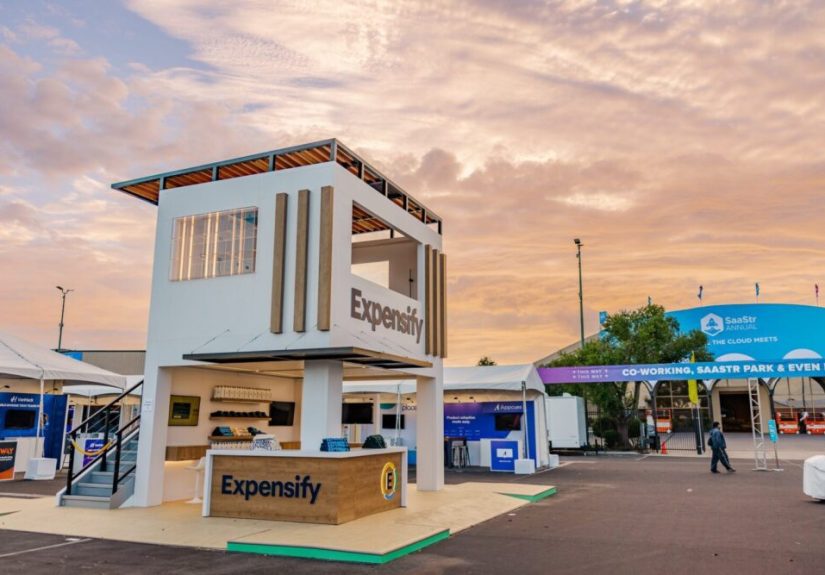
A booth that “works” isn’t just attractiveit’s functional. The best layout makes it easy for a passerby to:
(1) notice you, (2) understand you, (3) step in without feeling trapped, and (4) engage with staff naturally.
High-performing booths often include:
- Open entry points (no “wall of banners” at the aisle)
- Clear zones: quick interactions near the edge, deeper conversations inside
- Visible demo area with scheduled times and a small crowd-friendly setup
- Storage so your booth doesn’t look like a suitcase explosion
- A small meeting nook for private discussions and serious prospects
Bonus: details like lighting and a focal point can increase visibility without adding a giant screen that requires a dedicated technician and
a prayer to the Wi-Fi gods.
Run scheduled demos (so your booth always has momentum)
Live demos work because they create a reason to gather. They also give your team a rhythm: invite people to the next demo, deliver value,
then capture qualified interest.
Keep demos short, interactive when possible, and consistent. Promote the schedule on signage and in your pre-show outreach.
A booth with a reliable cadence feels “alive,” which attracts more attention (and makes your team look like they know what they’re doing,
which is always a nice bonus).
Use experiential tactics to support conversationsnot replace them
Experiential marketing at trade shows works best when it buys you time and attention for meaningful interaction.
Good examples:
- Interactive stations that let attendees try the product or simulate outcomes
- Photobooths or branded moments that extend reach through social sharing
- Comfort upgrades (a small recharge lounge, seating, or “oasis” space) that increase dwell time
- Localized themes that tie into the host city and spark curiosity
The best activations are “conversation multipliers.” The worst are “distractions with a logo.” If your activation pulls your staff away from
talking to qualified prospects, you’ve built an expensive way to be busy.
Train your staff like this is a performance (because it is)
Booths don’t fail because the carpet was the wrong shade of gray. Booths fail because the staff is unprepared, inconsistent, or hiding behind
laptops like they’re in witness protection.
Strong booth staffing includes:
- A short elevator pitch everyone can deliver naturally
- Three to four qualifying questions to sort real prospects from friendly wanderers
- Clear etiquette rules (no eating, phone scrolling, or “just one quick email” in the booth)
- Role clarity: greeter, demo lead, technical expert, note-taker/lead-capture support
- Break schedules so the booth stays energetic instead of exhausted
Most importantly: train staff to be approachable. Your team shouldn’t look like they’re guarding a museum exhibit. They should look like
they’re hosting.
Lead capture is not badge scanningit’s note-taking with intent
A scan without context is just a future unsubscribe. Lead capture should include:
- what problem they mentioned
- what product or solution area interested them
- timeline (“this quarter” vs. “someday when Mercury is in retrograde”)
- stakeholders (“I need to loop in procurement and IT”)
- agreed next step (demo, call, trial, partner intro)
Your qualifying questions should be specific to your business, but they often map to: fit, urgency, authority/influence, and current solution.
If you don’t define qualification in advance, the team will default to “everyone seems nice,” and you’ll return with 400 “leads” and zero momentum.
Effort phase 3: After the show (where booth ROI is either created or cremated)
Follow-up starts before they leave the booth
A critical mindset shift: don’t put the follow-up burden on the attendee. If someone is qualified, you should agree on what happens next
while the conversation is fresh.
Examples:
- “Let’s book a 20-minute demo next weekdoes Tuesday or Thursday work better?”
- “I’ll send a recap and two relevant case studies by Fridaywho else should I include?”
- “Our solutions engineer can map this to your workflowwant a short working session?”
When next steps are explicit, follow-up becomes expected rather than intrusive. It also increases the odds your email won’t get eaten by the
“post-conference inbox avalanche.”
Follow up fast, and segment like a professional
“We’ll follow up when we get back” is how leads go to die. Your best prospects are comparing you to competitors right after the show, while the
conversations are still vivid.
A practical approach:
- Hot leads (high intent): personalized email + meeting request within 24–48 hours
- Warm leads (good fit, lower urgency): recap + relevant resource + suggested next step
- Cold leads (unclear fit): light nurture, not an aggressive sales chase
Keep your messages human and specific. A good follow-up references what you discussed, offers something useful, and makes the next step easy.
Generic “Great meeting you at Booth 2147!” emails are basically spam with better lighting.
Debrief immediately (while the truth is still available)
Your team will forget details quickly once they’re home and reintroduced to normal life. Hold a post-show debrief within a day or two.
Capture:
- what messaging landed (and what confused people)
- which demos worked best
- top objections and how to answer them
- booth layout wins and pain points
- competitor patterns and positioning insights
- what to change next time
This is also where you validate whether the show itself was right for your program. Not every event deserves a repeat. The best companies treat
events like an investment portfolio, not a yearly tradition.
Prove impact with an ROI story leadership understands
Event ROI is more than “how many people walked by.” Smart reporting connects event activity to outcomes: pipeline, revenue influence, brand lift,
and customer growth. That requires tracking and a simple attribution plan that ties booth interactions to what happens next in your CRM.
A good executive summary includes:
- Objectives: what you set out to do
- Outputs: meetings, qualified conversations, demos, content engagement
- Outcomes: opportunities created, pipeline influenced, revenue won (over a realistic window)
- Learnings: what you’ll improve next time
This is also where a KPI framework helps. When you track a balanced set of engagement, brand, financial, sponsorship, and pipeline metrics,
you can show value even when sales cycles are long.
A simple booth success scorecard you can actually use
If you want a practical way to measure booth performance at a top industry event, start here. Pick a small set of KPIs tied to your goals:
- Pre-show: meetings booked, target accounts confirmed, demo schedule promoted
- On-site activity: qualified conversations, demos delivered, meetings held, engagement actions
- Lead quality: hot/warm/cold distribution with notes attached
- Post-show speed: % of leads contacted within 48 hours, meetings scheduled
- Pipeline: opportunities created/influenced, stage progression over 30/60/90 days
- Brand signals: site traffic spikes, content downloads, social mentions, survey/NPS (if applicable)
The key is consistency. Use the same scorecard across events so you can compare performance and make smarter decisions about where to invest next.
The biggest reasons booths “don’t work” (and how to avoid them)
- No clear goal: the booth becomes a nice-looking room with no purpose.
- Staff aren’t trained: inconsistent messaging, weak qualification, awkward handoffs.
- Booth behavior kills approachability: phones, laptops, food, and “we’re too busy to talk.”
- Too much friction: unclear message, cluttered layout, no simple next step.
- Lead capture without context: badge scans become a list, not a pipeline.
- Late or generic follow-up: interest fades and competitors win by default.
- No ROI narrative: leadership remembers the bill, not the impact.
Field notes: of real-world patterns (and how to steal the good ones)
Because I can’t claim personal “I was there” memories, here’s the next best thing: the most common booth experiences repeatedly reported by
exhibitors, event marketers, and sales teamsand what those patterns teach you.
Pattern #1: The “beautiful museum” booth. This booth looks incrediblehigh-end graphics, perfect lighting, maybe a giant screen
playing a cinematic brand video. The problem is nobody talks to anyone. Staff stand in a line, waiting for attendees to cross an invisible
threshold that feels suspiciously like a sales trap. The experience from the attendee side is: “Wow, pretty… I’m not sure what they do…
and I don’t want to be the first one to ask.” The fix is almost always human: assign a friendly greeter, train staff to open with a helpful
question, and put a clear “what we do” statement where people can read it while walking. Suddenly the booth stops being a showroom and starts
being a conversation engine.
Pattern #2: The “swag tornado” booth. The giveaway is popular, the booth is crowded, and the team feels successful because
the traffic is constant. After the show, the CRM has 600 scans and a mysterious pile of half-filled forms that look like they were completed
during mild turbulence. Two weeks later, sales complains the leads are low quality. The fix is not “less swag.” It’s “swag with gates and
intention.” Tie the giveaway to a quick qualifier (role, use case, timeline), or offer a choice-based reward that requires a short form and
creates a natural moment to ask: “What brought you here today?” Your goal isn’t to reduce trafficit’s to turn traffic into qualified follow-up.
Pattern #3: The demo that never starts on time. Scheduled demos attract people, but only if you treat the schedule like it’s
a real promise. When demos start late, run long, or depend on the one technical person who wandered off for a coffee refill, attendees drift away.
The fix: rehearse a tight demo, keep a backup presenter, and build a “demo runway” with a one-minute opener that hooks interest fast. Also,
give the audience a next step at the end (“scan here for the setup checklist” or “book a deeper session”). A demo without a next step is just
entertainmentfun, but not profitable.
Pattern #4: The post-show emotional crash. The team returns energized, then reality hits: inboxes are full, normal work resumes,
and follow-up becomes “next week.” This is where ROI disappears. High-performing teams plan follow-up before the show, including templates,
segmentation rules, and calendar blocks for outreach. They also capture notes properly on-site so messages can be personal and relevant.
The experience becomes: “We met at the show, you mentioned X, here’s the resource for X, and here’s a simple way to continue.” Prospects
respond because it feels like a real continuation of a real conversationbecause it is.
If you take nothing else from these patterns, take this: booths don’t fail on the show floor. They fail in the planning and follow-through.
When you design for clarity, staff for hospitality, qualify with intent, and follow up fast, booths become one of the most efficient ways to
create pipeline and elevate your position in the market.
Conclusion: Booths workwhen you treat them like a system
Top industry events are still one of the rare places where your market gathers, your buyers are accessible, and trust can be built quickly.
A booth gives you a home base for attention, conversations, and momentum. But the booth itself is not the strategy.
The strategy is the effort: clear goals, pre-booked meetings, a booth designed for flow and clarity, staff trained to host, lead capture with
real notes, and follow-up that starts before the attendee walks away. Do that, and your booth stops being “an expense for visibility” and starts
becoming a repeatable growth channel.