Table of Contents >> Show >> Hide
- First, What Counts as a “Bump on the Eyeball”?
- The Most Common Causes of a Bump on the Eyeball
- How Eye Doctors Figure Out What the Bump Is
- How to Treat a Bump on the Eyeball
- When a Bump on Your Eyeball Is an Urgent Problem
- Can You Prevent an Eyeball Bump?
- Common Experiences People Have With a Bump on the Eyeball
- The Bottom Line
- SEO Tags
Finding a bump on your eyeball can be the kind of discovery that turns a normal morning into a full-blown internet spiral. One glance in the mirror, one tiny raised spot on the white of your eye, and suddenly you are mentally drafting your memoir. The good news: many bumps on the eye are benign and treatable. The less-fun news: not every bump should be ignored.
A bump on the eyeball can come from irritation, sun exposure, inflammation, a fluid-filled cyst, or an overgrowth of tissue on the eye’s surface. Sometimes it is just annoying. Sometimes it can affect vision. And sometimes, though less commonly, it needs prompt medical attention. Knowing the difference is the trick.
This guide breaks down the most common causes of an eyeball bump, what each one tends to look and feel like, how eye doctors treat them, and when it is time to stop Googling and call an ophthalmologist.
First, What Counts as a “Bump on the Eyeball”?
When people say they have a bump on the eyeball, they usually mean a raised spot on the white part of the eye or on the clear tissue covering it, called the conjunctiva. That is different from a lump on the eyelid, such as a stye or chalazion. It is also different from something deeper inside the eye.
Location matters. A yellowish bump near the inner corner of the eye points to one possibility. A clear bubble suggests another. A fleshy wedge growing toward the cornea is its own category entirely. In other words, your eye is not being “dramatic.” It is dropping clues.
The Most Common Causes of a Bump on the Eyeball
1. Pinguecula: The Usual Suspect
A pinguecula is one of the most common reasons for a small bump on the white of the eye. It usually appears as a yellowish or whitish raised spot on the conjunctiva, often on the side closest to the nose. It does not grow over the cornea, which is the clear dome at the front of your eye.
This type of bump is often linked to long-term exposure to sunlight, wind, dust, and dry conditions. Think of it as your eye’s version of a weathered porch railing: still functional, but clearly it has seen some stuff.
A pinguecula may cause no symptoms at all. But when it becomes irritated, you might notice:
- Dryness
- Redness
- A scratchy or gritty feeling
- Mild inflammation
Treatment: Artificial tears are often enough to calm irritation. If the area becomes inflamed, an eye doctor may prescribe medicated drops. Surgery is uncommon but may be considered if the bump is chronically irritated, interferes with contact lenses, or is especially bothersome.
2. Pterygium: When the Bump Starts Traveling
A pterygium, sometimes called surfer’s eye, is related to pinguecula but more aggressive. It is a fleshy, wedge-shaped growth that begins on the conjunctiva and can extend onto the cornea. That detail matters, because once tissue starts encroaching on the cornea, vision can eventually be affected.
Pterygium is also associated with chronic exposure to UV light, wind, dust, sand, and dry climates. It tends to be more common in people who spend a lot of time outdoors.
Symptoms may include:
- Redness
- Burning or stinging
- A feeling that something is stuck in the eye
- Dryness or tearing
- Blurred vision if it grows enough to affect the cornea
Treatment: Mild cases may improve with lubricating drops and protection from sun and wind. If inflammation flares up, prescription drops may help. Surgery may be recommended if the pterygium threatens vision, causes significant discomfort, or keeps returning with irritation.
3. Conjunctival Cyst: The Tiny Bubble Scenario
Sometimes the bump is not solid-looking at all. Instead, it resembles a small clear or translucent bubble. That can be a conjunctival cyst, a benign fluid-filled sac on the eye’s surface.
Some people are born with these cysts, while others develop them after irritation, allergies, inflammation, or minor trauma. Small cysts may not cause symptoms. Larger ones can feel like there is something in your eye every time you blink, which is exactly as charming as it sounds.
Treatment: Many conjunctival cysts can simply be watched. If a cyst becomes uncomfortable, interferes with blinking, or keeps getting irritated, an ophthalmologist may drain it or remove it safely in the office or surgical setting. Please do not attempt any DIY “popping.” Your eyeball is not a stress ball.
4. Conjunctival Nevus: An Eye Freckle
A conjunctival nevus is essentially a freckle or mole-like spot on the conjunctiva. It is usually pigmented, meaning it may look brown, tan, or slightly darker than the surrounding tissue. Some people notice it early in life, while others only spot it later when they start examining every millimeter of their eye in bright bathroom lighting.
Most conjunctival nevi are benign. Still, they should be checked if they are new, changing in size or color, becoming raised, or associated with unusual blood vessels or irritation.
Treatment: Many eye freckles are simply monitored with periodic eye exams and photos to track changes. Removal or biopsy may be considered if the appearance becomes suspicious.
5. Episcleritis or Scleritis: When Inflammation Is the Real Problem
Not every “bump” is a growth. Sometimes the eye looks raised in one area because tissue is inflamed. Episcleritis affects the thin layer between the conjunctiva and sclera and often causes a localized red or pink area that can seem raised. It may feel mildly tender or irritating.
Scleritis, however, is more serious. It affects the white part of the eye itself and is usually much more painful. People often describe deep, boring eye pain, and vision can be affected.
Treatment: Episcleritis may improve with lubricating drops, anti-inflammatory treatment, and monitoring. Scleritis requires prompt medical care because it can threaten vision and may be linked to an underlying inflammatory disease.
6. Less Common but Important Causes
In some cases, a bump on the eyeball can be caused by:
- A retained foreign body or prior eye injury
- Infection or severe surface inflammation
- A rare conjunctival tumor or precancerous lesion
- A lymphoid or pigmented growth that needs specialist evaluation
These causes are less common than pinguecula or cysts, but they matter because the treatment is completely different. Any new bump that grows quickly, bleeds, hurts significantly, looks unusually fleshy, or comes with vision changes deserves an in-person exam.
How Eye Doctors Figure Out What the Bump Is
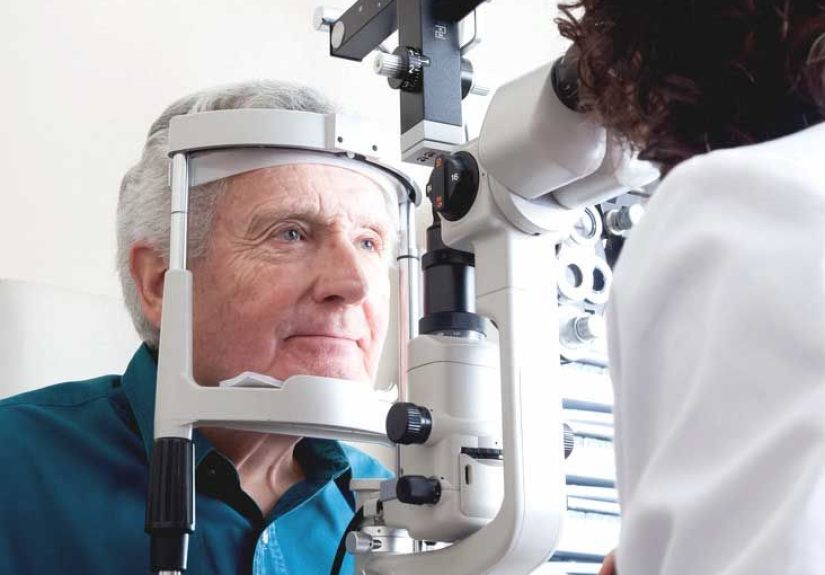
Diagnosing a bump on the eye usually starts with a standard eye exam. An ophthalmologist or optometrist may use a slit lamp, which is a microscope with a bright light, to inspect the bump closely. This helps determine whether the problem is superficial, fluid-filled, inflamed, pigmented, or growing toward the cornea.
In some cases, the doctor may take photos to compare over time. If the lesion looks unusual, they may recommend additional testing or referral to a specialist. That is not automatically a reason to panic. It is simply how eye doctors avoid guessing when the eyeball is offering mixed signals.
How to Treat a Bump on the Eyeball
Treatment depends entirely on the cause, which is why the internet can only get you so far. A bump caused by dryness and UV exposure is handled differently than one caused by inflammation, and very differently from one that may need removal.
Common treatment options include:
- Artificial tears: Often the first step for pinguecula, pterygium, dryness, and mild irritation.
- Prescription anti-inflammatory drops: Sometimes used for inflammation or flare-ups under medical supervision.
- Protective eyewear: Sunglasses with UV protection and wraparound styles can help reduce further irritation from sun and wind.
- Avoiding irritants: Dust, smoke, dry air, and over-wearing contact lenses can make symptoms worse.
- Surgical removal or drainage: Considered for larger cysts, pterygia that affect vision, suspicious lesions, or persistent symptoms.
Things you should not do:
- Do not pop, scratch, or squeeze the bump
- Do not use leftover prescription eye drops from an old eye issue
- Do not ignore a painful or fast-changing bump
- Do not keep wearing contact lenses if the eye is irritated until you have been evaluated
When a Bump on Your Eyeball Is an Urgent Problem
Many eyeball bumps are harmless, but some symptoms should move you from “I’ll watch it” to “I need care now.” Seek urgent medical attention if you have:
- Severe eye pain
- Sudden blurred vision or vision loss
- Marked light sensitivity
- A rapidly growing bump
- Pus, significant discharge, or swelling
- A chemical splash or foreign object injury
- Nausea, vomiting, or headache along with eye symptoms
- Difficulty opening the eye
Those signs can point to problems more serious than a routine surface bump. Eyes are not fond of being ignored when they are already upset.
Can You Prevent an Eyeball Bump?
You cannot prevent every eye condition, but you can lower your risk of the most common surface bumps.
- Wear UV-blocking sunglasses outdoors
- Use a hat with a brim in bright sun
- Protect your eyes from wind, dust, and debris
- Use lubricating drops if your eyes run dry easily
- Follow healthy contact lens habits
- Get regular eye exams, especially if a spot is already being monitored
Prevention is not glamorous, but neither is explaining how you got a sun-and-dust-related eye growth after years of refusing sunglasses because they “mess up your hair.”
Common Experiences People Have With a Bump on the Eyeball
One reason this topic causes so much anxiety is that eyeball bumps often show up in a very ordinary way. There is usually no dramatic movie soundtrack, no lightning flash, no villain reveal. Just a mirror, a weird spot, and a very immediate sense that life has become oddly specific.
A lot of people first notice the problem after a long day outside. Maybe they were driving with the window cracked, walking the dog in bright sun, gardening in dusty weather, or spending hours at the beach. Later, they see a small yellow bump near the inside of the eye. It does not hurt much, but it feels dry and annoyingly “present.” That pattern often lines up with a pinguecula or early pterygium.
Others describe a sensation that something is stuck in the eye, but every time they check, there is no eyelash, no speck of dirt, nothing obvious. Then they pull down the lower lid or look from the side and spot a tiny clear bubble on the white of the eye. That experience is common with conjunctival cysts. The bump may be small, but because blinking drags the eyelid over it all day, it feels much larger than it looks.
Contact lens wearers sometimes have a slightly different story. They may notice that one lens suddenly feels “off,” or that one eye gets red more often. A previously minor bump becomes more noticeable because the eye surface is already irritated. In those cases, the bump may not be caused by the lenses, but contact use can make symptoms harder to ignore.
There are also people who discover a bump accidentally and have absolutely no symptoms. No pain. No redness. No irritation. Just a pigmented spot or raised area they happened to notice while applying makeup, putting in eyedrops, or leaning way too close to a magnifying mirror. That can happen with a conjunctival nevus or a quiet pinguecula. It feels alarming because it is new to you, even if it has been there for years.
Then there is the more concerning experience: a red, tender, localized area that seems swollen and gets progressively more uncomfortable. Some people describe it as pressure. Others call it sharp pain or soreness when moving the eye. Those symptoms can suggest inflammation such as episcleritis or, in more serious cases, scleritis. That is the point where self-diagnosis usually stops being a cute hobby and starts becoming a bad plan.
Emotionally, people often bounce between two extremes. First comes denial: “Maybe it is just the lighting.” Then comes panic: “I have definitely discovered a rare eye disease at 10:43 p.m.” The truth is usually much less dramatic. Most eyeball bumps turn out to be manageable, especially when they are checked early and treated appropriately.
The most helpful real-world takeaway is simple: pay attention to what the bump is doing. Is it staying the same? Growing? Getting redder? Affecting vision? Causing pain? That little pattern tells an eye doctor far more than one blurry selfie ever will.
The Bottom Line
A bump on your eyeball can come from several causes, but the most common are pinguecula, pterygium, conjunctival cysts, and benign pigmented spots. Inflammatory conditions such as episcleritis can also make one area of the eye look raised and red. Many of these problems are treatable with lubrication, eye protection, prescription drops, or, in some cases, a procedure.
What matters most is not whether the bump looks weird. Eyes are allowed to look weird occasionally. What matters is whether the bump is new, changing, painful, or affecting vision. If it is, get it checked. The sooner you know what you are dealing with, the sooner you can stop interrogating your own reflection.