Table of Contents >> Show >> Hide
- 1) Dresser vs. Chest of Drawers: Same Family, Different Personalities
- 2) Measure First (Yes, Before You Fall in Love With the Photo)
- 3) Pick the Right Dresser Type for Your Storage Habits
- 4) Dresser Dimensions and Capacity: What’s “Standard,” Really?
- 5) Materials: Solid Wood, Engineered Wood, and the Truth About “Wood”
- 6) Construction Quality: Where Great Dressers Separate Themselves
- 7) Drawer Slides and Hardware: The “Daily Feel” of Your Dresser
- 8) Safety First: Tip-Over Risk Is Real (and Preventable)
- 9) Layout and Organization: Drawers Should Match the Stuff You Own
- 10) Style and Placement: Make It Look Intentional (Even If You’re Not)
- 11) Budget and Shopping Tips: How to Get Value Without Regret
- 12) Care and Maintenance: Keep Your Dresser From Aging Like Milk
- Conclusion: The Right Bedroom Dresser Makes Daily Life Easier
- Real-World Dresser Experiences (The Stuff People Learn the Hard Way)
A bedroom dresser is basically your closet’s best friend: it holds the stuff you swear you’ll “fold later,” keeps socks from multiplying in the laundry basket, and provides a flat surface that will inevitably become a charging station, jewelry valet, and temporary shelf for that one book you’re “definitely still reading.”
But not all dressers are created equal. Some glide like a figure skater. Others sound like a haunted ship when you open a drawer. Some are rock-solid. Others wobble like a baby deer on hardwood floors. This guide breaks down what matterssize, layout, materials, construction, safety, and stylingso you can pick a bedroom dresser you’ll still like when your fashion phase changes (again).
1) Dresser vs. Chest of Drawers: Same Family, Different Personalities
In everyday conversation, people call nearly any drawer storage “a dresser,” but retailers often separate two common shapes:
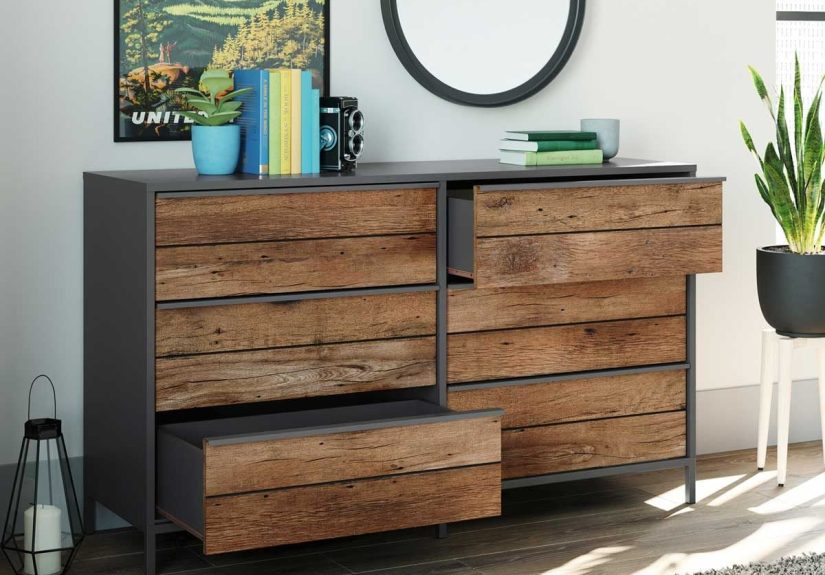
- Dressers (often “double dressers”) tend to be wider and lower, giving you more top surface area for a mirror, lamp, or décor.
- Chests of drawers are typically taller and narrowergreat when floor space is limited but you want vertical storage.
If your bedroom is tight, a tall chest can tuck into a corner like it’s playing hide-and-seek. If you love a “getting-ready” setup, a wide dresser gives you the stage for a mirror and the lighting to pretend you’re in a movie montage.
2) Measure First (Yes, Before You Fall in Love With the Photo)
A dresser that looks perfect online can become a real-life “why is this blocking the closet door?” situation. Measure three things:
Room fit
- Width: How much wall space can you spare without crowding doors, vents, or nightstands?
- Depth: Leave enough clearance to walk and to open drawers comfortably.
- Height: Consider sightlines (windows), artwork placement, and whether you want a mirror above it.
Drawer swing + walkway clearance
Drawers need space to open; your body also needs space to exist without turning sideways like you’re sneaking past someone in a packed theater row. If you’re choosing between a deeper dresser with huge drawers and a slightly shallower one that keeps traffic flowing, your shins may vote for “shallower.”
Delivery reality
The most common heartbreak is a dresser that fits the bedroom but not the hallway. Measure doorways, stair turns, and elevatorsespecially for fully assembled solid-wood pieces. (A “white-glove delivery” fee is cheaper than a “we’re removing your door hinges” moment.)
3) Pick the Right Dresser Type for Your Storage Habits
The best bedroom dresser is the one that matches how you actually live, not how you imagine you’ll live after your “new year, new organization” moment. Here are practical matches:
Double dresser (wide, low)
Great for shared bedrooms, people with lots of folded clothing, or anyone who wants a mirror/TV/decor surface. It also visually “anchors” a wall and can balance a larger bed.
Tall chest / vertical dresser (narrow footprint)
Ideal for small bedrooms, apartments, or corners. You gain drawer count while sacrificing top surface width.
Combo dresser or “dresser + cabinet”
Useful if you want drawers for clothes and a door cabinet for bulkier items. Think sweaters in drawers, linens behind doors.
Gentleman’s chest / highboy style
Usually includes a mix of drawers and a taller cabinet compartmenthandy if your closet is tiny and you need a “mini wardrobe” in one piece.
4) Dresser Dimensions and Capacity: What’s “Standard,” Really?
Dresser sizes vary, but many “standard” bedroom dressers land in a familiar range: roughly mid-height, a moderate depth, and a width that depends on whether it’s a compact piece or a wide double dresser. The key is matching drawer volume to what you’re storing.
- Deep drawers: great for jeans, sweaters, bulky pajamas, and “hoodie season.”
- Shallow drawers: great for tees, socks, underwear, accessories, and keeping small items from becoming a tangled mystery.
- Wide drawers: can hold more, but they also tempt you to overfill (and then drawers complain).
A quick rule: if you fold lots of clothing (tees, knits, workout gear), prioritize drawer count and smooth glide. If you hang most items, you may only need a smaller dresser for “the rest.”
5) Materials: Solid Wood, Engineered Wood, and the Truth About “Wood”
“Wood” is a category, not a guarantee. Two dressers can both be labeled “wood,” while one lasts 20 years and the other starts sagging after one ambitious sock drawer.
Solid wood
Solid wood dressers (oak, maple, walnut, etc.) are often heavier and more durable. They’re also usually more expensive and can be sensitive to humidity (wood expands and contracts). If you want heirloom vibesor you’re hard on furnituresolid wood is worth considering.
Plywood
Quality plywood can be strong and stable. It’s often used for drawer boxes or panels in better-built furniture, especially when designed to resist warping.
MDF / particleboard (engineered wood)
These materials can be cost-effective and stable for flat panels, especially when well-finished and properly supported. The main downside is that they can be more vulnerable to damage from moisture and impacts, and fasteners may not hold as robustly after repeated disassembly. Translation: move it five times, and it might start acting like it’s tired of your lifestyle.
Veneer isn’t “fake” (when it’s done well)
Veneer is a thin layer of real wood over a core. High-quality veneer can look beautiful and helps achieve consistent grain patterns. The issue is cheap veneer plus rough treatment (sharp impacts and water are its nemesis).
6) Construction Quality: Where Great Dressers Separate Themselves
If you can’t tell a “good dresser” from a “looks good until Tuesday” dresser, check these build details.
Drawer joinery (how the drawer box is built)
Strong joinery matters because drawers are the hardest-working part of the piece. Dovetail joinery is a classic sign of strength; it’s designed to resist pulling apart over time. Other sturdy approaches exist, but avoid flimsy stapled joints if you want drawers that keep their dignity.
Drawer bottoms
A thicker, well-supported drawer bottom holds up better. If the bottom panel feels thin and bouncy, it may sagespecially in wide drawers loaded with heavy clothing.
Back panels and overall rigidity
The back panel isn’t glamorous, but it contributes to stability and squareness. A sturdier back helps prevent racking (that side-to-side wobble). If a dresser twists, drawers stop aligning, and then you’re living with the “one drawer that only closes if you apologize to it.”
7) Drawer Slides and Hardware: The “Daily Feel” of Your Dresser
Drawer slides determine whether your morning routine feels smooth or mildly rage-inducing.
Side-mount slides
Common and often durableespecially ball-bearing versions. They may slightly reduce interior drawer width, but they’re usually dependable.
Undermount slides
Hidden under the drawer, often smoother and higher-end. Many undermount systems support soft-close features and a clean look.
Center-mount slides
A single slide under the drawer. It can work fine, but it’s often less robust than quality side-mount or undermount systemsespecially for wide, heavy drawers.
Soft-close: luxury or lifesaver?
If you’ve ever slammed a drawer at 6 a.m. and then stood perfectly still hoping nobody woke up, soft-close can be worth it. It also reduces long-term wear from repeated impact.
8) Safety First: Tip-Over Risk Is Real (and Preventable)
Dressers and other clothing storage units can tip if drawers are opened and weight shifts forwardespecially with children climbing or pulling. Modern safety standards focus on stability testing and real-world scenarios. The safest move is simple: anchor the dresser to the wall using an anti-tip kit.
Even if you don’t have kids, anchoring is still smartearthquakes, uneven floors, pets that treat furniture like parkour, and “I’ll just put this heavy thing on top” decisions happen.
Smart habits that reduce tip risk
- Anchor the dresser (seriouslydo it once and forget about it).
- Keep heavy items in lower drawers.
- Don’t open multiple heavy drawers at once (your dresser is not a filing cabinet in an action movie).
- Use the right size for your room so drawers can open fully without awkward tugging.
9) Layout and Organization: Drawers Should Match the Stuff You Own
The best dresser for a bedroom isn’t just about how many drawersit’s about whether the drawer sizes match your wardrobe. Consider how you’ll divide categories:
- Top drawers: underwear, socks, accessories, chargers (yes, chargers).
- Middle drawers: tees, pajamas, workout clothes.
- Bottom drawers: jeans, sweaters, linens, heavier items.
Want instant “my life is together” energy? Add drawer organizers, small bins, or dividers. You’ll stop losing belts in the same way you stop losing small children at the mall: by giving everything a designated spot.
10) Style and Placement: Make It Look Intentional (Even If You’re Not)
Dressers are big visual anchors in a bedroom, so style matters. The trick is to coordinate without making everything match like a showroom.
Match tone, not necessarily the exact set
If your bed is warm walnut, you don’t need the dresser to be identical. Aim for a complementary wood tone or a contrasting color that still fits the room’s palette.
Top styling that also reduces clutter
- A mirror to bounce light and create a “ready zone.”
- A tray to corral small daily items (keys, perfume, watch).
- A lamp for softer lighting and balance.
- One plant (real or convincingly fakeno judgment).
11) Budget and Shopping Tips: How to Get Value Without Regret
Price doesn’t always equal quality, but it often correlates with better materials, smoother hardware, and sturdier construction. To shop smart:
Check the “touch points”
- Open and close drawers several timesdo they glide smoothly?
- Look for wobbledoes the frame feel rigid?
- Check drawer alignmentgaps should look consistent.
- Ask about weight capacity and warranty details.
Assembly reality check
Flat-pack dressers can be great, but they demand careful assembly. If you’re not in the mood for a three-hour “why are there extra screws?” journey, consider paying for assembly or choosing a mostly pre-assembled piece.
Secondhand dressers can be a hidden jackpot
Older solid-wood dressers can be incredibly sturdy, and refinishing can modernize the look. Just check for musty odors, sticky drawers, water damage, and structural issues before committing.
12) Care and Maintenance: Keep Your Dresser From Aging Like Milk
A little care keeps drawers gliding and finishes looking good:
- Level it: uneven floors cause wobble and drawer misalignment; use shims or adjustable feet if available.
- Use felt pads: protect flooring and reduce shifting.
- Clean gently: soft cloth; avoid harsh chemicals that can dull finishes.
- Control moisture: wipe spills quickly and keep furniture away from constant humidity.
- Tighten hardware: once or twice a year, snug up knobs and screws.
Conclusion: The Right Bedroom Dresser Makes Daily Life Easier
Buying a bedroom dresser is less about chasing a trend and more about choosing the right size, layout, and build quality for your space and routines. Measure carefully, prioritize smooth drawers and sturdy construction, and don’t skip safety anchoring. Do that, and your dresser won’t just store clothesit’ll quietly improve your mornings, reduce clutter, and make your bedroom feel like a calmer place to land.
Real-World Dresser Experiences (The Stuff People Learn the Hard Way)
Let’s talk about dresser realitythe part no product photo includes. If you’ve ever moved apartments, you already know that a dresser is either your loyal companion or your sworn enemy, and you don’t find out which until you’re halfway up a staircase.
One of the most common experiences is the “doorway surprise.” On paper, your new dresser fits the wall perfectly. In practice, it has to pass through a hallway that narrows like a cartoon trap. This is where measuring the delivery path earns its paycheck. People end up removing drawers to lighten the load, turning sideways, and doing that awkward three-point-turn that makes you question every life choice. If the dresser is fully assembled and heavy, the moving crew may give you a look that says, “We can do it… but we will remember this.”
Then there’s the drawer glide momentyour first daily interaction with the piece. Smooth drawers feel almost fancy, like your bedroom is a boutique hotel. Sticky drawers, on the other hand, turn into a morning obstacle course. People describe it as a “two-hand operation,” where one hand pulls and the other stabilizes the whole dresser because it wants to scoot across the floor. That’s often a sign of flimsy slides, poor alignment, or an unlevel dresser. The fix can be as simple as leveling the unit or tightening hardware, but sometimes it’s just… not a great dresser.
Another classic experience is the “I didn’t realize I owned this many sweaters” problem. Big, deep drawers are amazing until they become permission to overstuff. Over time, overloaded wide drawers can sag, and suddenly you’re nudging the drawer upward like you’re helping it climb a tiny hill. People who avoid this long-term usually do two things: they store heavy items lower (for both drawer health and tip safety), and they use organizers so everything isn’t one giant compressed textile lasagna.
If you live with kidsor even just nieces, nephews, or a friend’s toddler who visitsthere’s another very real learning moment: children treat drawers like steps. It’s not mischief; it’s physics plus curiosity. Many families have the “anchor kit awakening” after noticing a child tugging on a drawer or trying to climb. The good news is anchoring is a one-time task that pays off immediately. People who anchor early tend to forget about it entirely… which is the best kind of safety upgrade.
Finally, there’s the joy of a secondhand find. Plenty of folks score an older solid-wood dresser that’s built like a tank, then refinish it for a modern look. The experience usually includes sanding dust in places you didn’t know existed and a newfound respect for “ventilation.” But the end result can feel custom and surprisingly high-end. The big lesson from these stories is simple: the dresser you love long-term is the one that matches your space, your routines, and the everyday wear-and-tear of real lifenot just the vibe of the listing photo.