Table of Contents >> Show >> Hide
- What Traditional Interior Design Really Means
- Key Characteristics of Traditional Interior Design
- Traditional vs. Other Popular Styles
- Where Traditional Style Works Best in Your Home
- How to Bring Traditional Style into Your Home
- Common Mistakes to Avoid
- Real-Life Experiences with Traditional Interior Design
- Conclusion
If minimalism is a plain black T-shirt, traditional interior design is your
perfectly tailored blazer: structured, timeless, and somehow always appropriate.
It feels familiar even the first time you walk into the room. But what exactly
makes a space traditional rather than just “old-fashioned” or “formal”?
Let’s break it down in a way that’s practical, fun, and actually usable for your
next decorating project.
What Traditional Interior Design Really Means
In the interior design world, “traditional” doesn’t mean “grandma’s house”
(although your grandma might have fabulous taste). Traditional interior design
is a classic, warm, and welcoming style rooted in European decorating from the
18th and 19th centuries. Think symmetry, refined details, and rooms that look
polished without feeling like a museum.
Instead of chasing trends, traditional design focuses on longevity: well-made
furniture, quality materials, and layouts that feel balanced and intentional.
Designers often describe it as “timeless,” “placeless,” and “comfortable,”
which is a fancy way of saying it still looks good even after your social
media feeds have moved on to five new micro-trends.
Traditional rooms often include:
- Symmetrical furniture arrangements (matching nightstands, paired lamps).
- Rich but soothing color palettes with warm neutrals and deeper accent tones.
- Classic furniture shapes: rolled arms, cabriole legs, carved wood details.
- Architectural flourishes: crown molding, wainscoting, paneled doors.
- Layered textiles: rugs, drapery, upholstery, and pillows in substantial fabrics.
The overall goal: a space that feels gracious, lived-in, and inviting more
“curl up with a book” than “do not touch anything.”
Key Characteristics of Traditional Interior Design
1. Symmetry and Balance
If traditional style had a love language, it would be symmetry. Sofas often
face a fireplace, flanked by matching chairs or bookcases. Lamps come in pairs.
Artwork is centered. The room feels calm because everything looks balanced and
grounded. Designers point to this organized, mirrored layout as one of the
defining traits of traditional interiors.
This doesn’t mean every single item must be identical, but the visual weight on
each side of the room is usually similar. If you’re someone who straightens
picture frames at other people’s houses, you’ll thrive with traditional decor.
2. Rich, Warm Color Palettes
Traditional interiors lean into warm, enveloping colors. You’ll frequently see:
- Deep reds, burgundy, or wine tones.
- Navy, forest green, or rich blues.
- Warm neutrals like cream, beige, taupe, and soft gray.
- Metallic accents in gold, bronze, or brass.
These richer hues are usually layered over a neutral base to keep the room from
feeling too heavy. Together, they create that “cozy but elegant” mood that
traditional design is known for.
3. Classic Furniture and Antiques
Traditional interiors are where classic furniture really shines. Pieces tend to
have curves, carved details, and a sense of history. You might see:
- Wingback chairs with rolled arms.
- Chesterfield or tight-back sofas.
- Wood coffee tables with turned legs.
- Sideboards, buffets, or china cabinets with glass fronts.
Even if you don’t own true antiques, well-made reproduction pieces can deliver
the same visual weight and charm. Traditional rooms value craftsmanship over
novelty, so quality wood, good joinery, and durable upholstery are key.
4. Architectural Details and Millwork
One of the fastest ways to recognize traditional interior design is by the
architectural details. Crown molding, chair rails, wainscoting, coffered
ceilings, paneled doors, and decorative trim all help the room feel layered and
substantial.
These elements can be subtle (slim crown molding in a small bedroom) or bold
(full paneling and ceiling beams in a formal dining room), but they always add
depth and a sense of craftsmanship to the space.
5. Luxurious Fabrics and Patterns
Traditional rooms don’t shy away from textile drama. You’ll often see:
- Velvet, silk, damask, chenille, or linen blends.
- Patterns like florals, toile, stripes, paisleys, and plaids.
- Pleated drapery panels with full, generous volume.
- Layered rugs – often Persian or Oriental styles.
The fabrics feel substantial, not flimsy, and they’re used generously: floor-to-ceiling curtains,
upholstered chairs, skirted tables, and plenty of pillows. Traditional style
loves a well-dressed room.
6. Thoughtful Accessories and Art
Accessories in a traditional space tell a story. Framed art, oil paintings,
landscapes, portraits, decorative mirrors, ceramic vases, books, and collected
objects all have their place. The key is not to clutter every surface, but to
curate meaningful items that reinforce the room’s color palette and overall mood.
If you have family heirlooms or pieces you’ve collected over time, traditional
design is the perfect backdrop to highlight them.
Traditional vs. Other Popular Styles
Traditional vs. Transitional
Transitional design is like traditional’s more relaxed, slightly younger cousin.
It blends classic shapes with cleaner lines and a lighter color palette. You’ll
still see symmetry and familiar furniture silhouettes, but with less ornate
detailing and more neutral tones.
In short:
- Traditional: richer colors, more decorative details, heavier drapery, formal vibe.
- Transitional: softer neutrals, fewer flourishes, simpler hardware, relaxed feel.
Traditional vs. Modern / Contemporary
Modern and contemporary styles focus on minimalism, open space, and cleaner
lines. Traditional design is more layered and ornamented. Where modern interiors
might feature metal, glass, and sharp geometry, traditional rooms favor wood,
curves, and intricate details.
If your dream living room has a single sleek sofa and almost no accessories,
you’re probably not a traditionalist. If you love a fireplace with a mantel
full of art, candlesticks, and books that’s traditional energy.
Traditional vs. “Modern Traditional”
Modern traditional (or “new traditional”) is a popular evolution: classic
bones with updated finishes. Think: traditional millwork and layouts combined
with fresher fabrics, cleaner lighting, and a bit more negative space than
a purely traditional room.
This hybrid approach works beautifully in homes where you want the warmth of
tradition without feeling overly formal or historical.
Where Traditional Style Works Best in Your Home
Living Rooms
The traditional living room is the star of the show. A typical layout might
include a sofa facing a fireplace, two matching chairs, and a coffee table in
the center. Side tables with lamps anchor each end of the sofa, while a rug
defines the seating area.
Add built-in bookcases, a classic mantel, and layered lighting (table lamps,
sconces, and maybe a chandelier), and you have a room that feels ready for
everything from holiday gatherings to movie night.
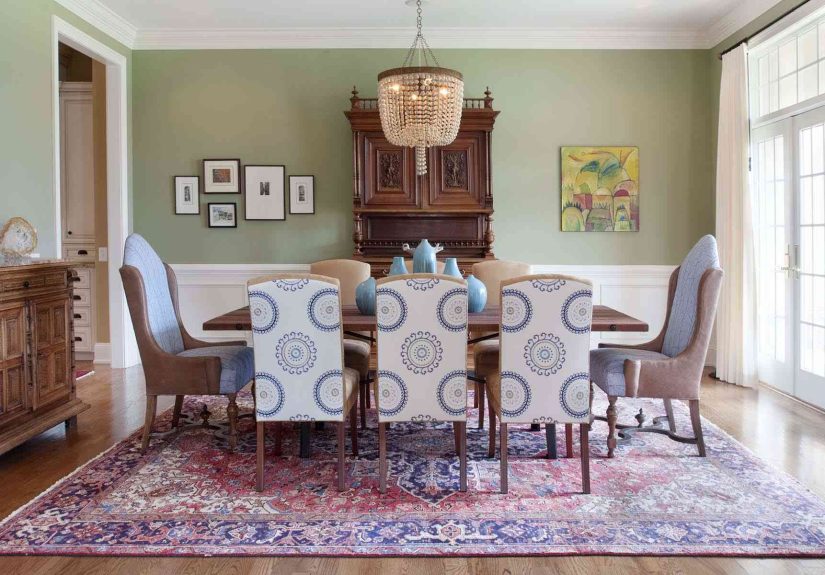
Dining Rooms
Traditional dining rooms love a moment. A solid wood table, upholstered or
carved dining chairs, a statement chandelier, and perhaps a sideboard or china
cabinet create a formal but inviting space. Artwork, a mirror, or a pair of
sconces above the buffet help finish the room.
If your home has an open floor plan, you can still introduce traditional
touches with a more substantial table, classic chair shapes, and drapery that
frames nearby windows.
Bedrooms
In a traditional bedroom, the bed is the undisputed focal point. Four-poster,
sleigh, or upholstered headboards work beautifully. Matching nightstands,
table lamps, and a bench at the foot of the bed reinforce that love of symmetry.
Add layered bedding, decorative shams, a rug under the bed, and perhaps a
small upholstered chair or settee, and you’ve created a cozy retreat that
still feels tailored.
Kitchens and Bathrooms
Traditional kitchens often showcase raised-panel cabinets, classic hardware,
stone countertops, and warm, neutral palettes. In bathrooms, you might see
pedestal sinks, paneled vanities, marble or stone tile, and framed mirrors.
Even in newer builds, these details can make the space feel rooted and
timeless.
How to Bring Traditional Style into Your Home
Ready to test-drive traditional interior design at home? Here’s a practical
roadmap you can follow without needing a design degree.
Step 1: Start with the Layout
Decide on a clear focal point (fireplace, bed, large window, or TV wall), then
arrange your main furniture pieces symmetrically around it. If you don’t have
matching items, aim for equal visual weight: two different chairs can still
feel balanced if they’re similar in scale.
Step 2: Choose a Traditional Color Palette
Pick a warm neutral for your walls (cream, beige, greige, or soft gray), and
then layer in deeper tones through rugs, upholstery, and accessories. For
example, mix navy and camel with brass accents, or burgundy and ivory with
dark wood furniture.
Step 3: Upgrade One Architectural Detail
You don’t have to remodel the entire house. Adding crown molding, a chair
rail, picture frame molding, or paneled doors in a key room can instantly
nudge your home toward traditional style.
Step 4: Invest in One Classic Furniture Piece
Choose one “anchor” item a well-made sofa with rolled arms, a classic
wood dining table, or a wingback chair and build around it over time.
Traditional interiors are often collected slowly, not purchased in one
weekend at a big-box store (no shade, we’ve all been there).
Step 5: Layer Fabrics and Lighting
Add full-length curtains, a substantial area rug, a few throw pillows, and
at least two or three light sources (overhead, table lamps, sconces). This
layered approach makes the room feel finished and welcoming.
Common Mistakes to Avoid
-
Going too dark everywhere.
Rich colors are great, but if you pair dark walls with dark floors and very heavy drapery,
the room can feel heavy. Balance depth with lighter elements. -
Overcrowding every surface.
Traditional doesn’t mean clutter. Choose fewer, better accessories instead of
covering every square inch with trinkets. -
Ignoring comfort.
If a chair looks beautiful but feels like a medieval punishment device, it’s not
truly traditional. This style is formal and comfortable. -
Matching absolutely everything.
A fully matched sofa, chair, table, and rug set can look flat. Traditional
rooms feel collected, not purchased as a package.
Real-Life Experiences with Traditional Interior Design
Theory is nice, but what does traditional interior design look like in real
homes and real lives? Here are a few grounded examples that show how this
style behaves outside of Pinterest-perfect photos.
1. The “Inherited Furniture” Living Room
Imagine you’ve just inherited your grandparents’ mahogany dining set and a
pair of wingback chairs. At first glance, everything feels a bit too formal
and heavy for your lifestyle. Instead of calling the nearest resale shop,
you decide to lean into traditional style with a twist.
You paint the walls a warm, soft neutral, add a wool rug with a subtle
pattern, and reupholster the wingback chairs in a modern, solid fabric
instead of the tiny floral they arrived with. You keep the classic shapes
and wood tones but lighten the overall mood with updated textiles and
streamlined accessories.
Suddenly, the room feels like a sophisticated mix of old and new, and those
inherited pieces become story-rich focal points instead of design problems.
This is traditional style working exactly as it should: honoring history
without freezing it in time.
2. A Family-Friendly, Traditional-Lean Bedroom
In another home, a busy family with small kids wants their primary bedroom
to feel like a grown-up retreat. They choose a traditional four-poster bed,
matching wooden nightstands, and classic white lamps. To keep the room
approachable, they layer on a soft area rug, linen bedding, and a mix of
patterned and solid pillows.
Above the bed, they hang a simple landscape painting, and on the opposite
wall, a low dresser holds a mirror and a few personal photos in frames.
The symmetry of the layout and the classic furniture shapes shout
“traditional,” but the practical materials (washable duvet, durable rug)
whisper “we actually live here.”
The result is a room that feels like a sanctuary, not a showroom. On hectic
mornings, that sense of order and balance helps the space feel calm, even
when someone is hunting for a missing shoe.
3. Updating a Builder-Basic Home with Traditional Details
Consider a newer home with plain drywall, basic trim, and open-concept
spaces. The owners love traditional style but don’t have ornate architecture
to work with. Instead of starting from scratch, they introduce traditional
elements strategically:
- Adding crown molding and a chair rail in the dining area.
- Installing a simple but classic fireplace surround in the living room.
- Swapping in a more traditional chandelier and wall sconces.
- Choosing framed art and a Persian-style rug for the seating area.
These relatively small updates dramatically change the feel of the space.
The home still functions like a modern layout, but visually it leans much
more traditional. Over time, they upgrade furniture pieces one by one,
building a collected, classic look without blowing the budget in a single year.
4. Traditional Style on a Small Scale
You don’t need a large home to enjoy traditional design. In a small apartment,
a renter might create a traditional corner by pairing a vintage-style armchair
with a small side table, a brass lamp, and framed art. A patterned rug and a
few hardcover books complete the vignette.
Even though the rest of the space may lean more simple or contemporary, this
little traditional “moment” adds warmth and personality. It’s a good reminder
that style doesn’t have to be all-or-nothing; you can experiment with
traditional elements in doses that fit your home and lifestyle.
Across all these examples, one thing is clear: traditional interior design
is less about copying a specific era and more about embracing balance,
quality, and comfort. When you mix thoughtful layouts, classic shapes,
rich materials, and personal stories, you end up with a space that not only
looks timeless it actually feels like home.
Conclusion
Traditional interior design style is your go-to if you want a home that feels
warm, grounded, and gracefully put together. It celebrates symmetry, classic
furniture, rich color palettes, and architectural details, all while leaving
room for your own family history and personality.
Whether you’re decorating a new build, updating an older home, or finally
figuring out what to do with that inherited furniture, leaning into
traditional style can help you create a space that looks good today and
still feels right ten years from now. Trends may come and go, but a
well-executed traditional room is always in style.