Table of Contents >> Show >> Hide
- Quick ID: Is It an Air Gap or Something Else?
- What Is a Dishwasher Air Gap?
- How an Air Gap Works
- Why Air Gaps Exist: Hygiene, Backflow, and Plumbing Code
- Air Gap vs. High Loop
- Common Air Gap Problems (and How to Fix Them)
- Air Gap Installation Basics (Remodel-Friendly Overview)
- What If It’s Related to Reverse Osmosis (RO) Instead?
- Conclusion
- Bonus: Real-World Air Gap Experiences (500-ish Words of Reality)
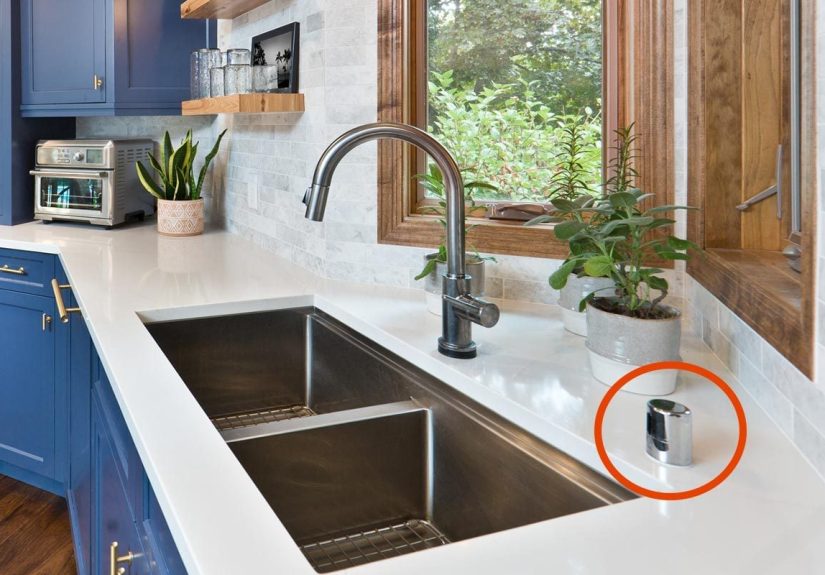
There’s a special kind of kitchen mystery that starts with, “What is that thing?” and ends with you Googling while holding a dish towel like it’s a lab coat. If you’ve got a small metal cylinder sitting next to your kitchen faucetusually near the back of the sinkchances are it’s not a secret button or a tiny periscope for spotting dirty dishes. It’s probably a dishwasher air gap.
An air gap is a simple plumbing device that helps keep dirty drain water from flowing backward into your dishwasher. In plain English: it protects your clean plates from getting “re-seasoned” with whatever is lurking in the sink drain.
Quick ID: Is It an Air Gap or Something Else?
Most dishwasher air gaps look like a short chrome or stainless “cap” on the sink deck or countertop. The giveaway is underneath the sink: you’ll typically see two hoses attachedone from the dishwasher and one heading to the garbage disposal or sink drain.
Common look-alikes include soap dispensers (they have a pump and a soap bottle) and filtered-water/RO faucets (they look like mini faucets and actually dispense water).
What Is a Dishwasher Air Gap?
A dishwasher air gap is a fitting that creates a physical break (a literal gap of air) between the dishwasher drain hose and the home’s drain plumbing. That gap prevents backflowwastewater being siphoned or forced back toward the dishwasher if the sink drain clogs or pressure changes in the plumbing system. Manufacturers and plumbing references describe it as a straightforward backflow-prevention method that doesn’t rely on moving parts.
The “straw” version
When you lift a straw out of a drink, liquid doesn’t climb upward unless there’s a sealed path and pressure difference. An air gap makes sure there’s no sealed path between the drain and the dishwasher line. The water has to “jump” through open airso siphoning back into the dishwasher becomes far less likely.
How an Air Gap Works
Under the sink, the air gap typically has:
- A smaller inlet connected to the dishwasher drain hose (often 5/8″).
- A larger outlet connected to the garbage disposal or sink tailpiece (often 7/8″).
When the dishwasher drains, water runs up to the air gap, passes through an open chamber, then drops into the larger hose that goes to the disposal/drain. If the downstream path is blocked, the air gap “fails safe” by letting water spill out through the top vents and into the sinkan intentional warning that something is clogged.
Why Air Gaps Exist: Hygiene, Backflow, and Plumbing Code
Backflow isn’t just grossit’s the exact kind of cross-connection plumbing codes try to prevent. That’s why many jurisdictions require air gaps for dishwasher drains. For example, plumbing-code guidance based on the Uniform Plumbing Code (UPC) calls for an approved dishwasher air gap fitting and specifies that the device’s flood-level marking be at or above the sink’s flood level.
Do all places require them? Not necessarily. Some municipalities allow a high loop (the dishwasher drain hose strapped as high as possible under the countertop) when local rules and the dishwasher manufacturer’s instructions permit it.
Air Gap vs. High Loop
A high loop is exactly what it sounds like: you loop the drain hose up high under the counter before it drops down to the disposal/drain. It helps discourage backflow, but it’s not the same as a true air gap in every code system. Some manufacturer guidance says a high loop is required when an air gap isn’t.
- Air gap: Most robust separation (physical break) and a visible “hey, fix your clog” alert.
- High loop: Hidden and simple, but can sag, kink, or be disallowed by local code.
Common Air Gap Problems (and How to Fix Them)
Problem 1: Water spurting out of the air gap
Usually, this means the water can’t get from the air gap to the drain fast enough, so it exits through the air gap vents. The most common causes are:
- A partially clogged hose from the air gap to the disposal/tailpiece
- A clogged garbage disposal or sink drain
- A garbage disposal knockout plug that was never removed after a new disposal install
That last one is a classic: the dishwasher drain hits a metal plug inside the disposal inlet and backs up immediately.
Problem 2: Funky smell
Food debris can sit in the cap area or in the outlet hose to the disposal. A quick cleaning usually helps.
How to clean a dishwasher air gap (quick DIY)
- Lift off the metal cover.
- Unscrew/remove the plastic cap.
- Rinse and scrub debris (a bottle brush is great).
- Check the hose from the air gap to the disposal/drain for clogs or kinks.
- Run a short rinse cycle and watch for leaks.
If the clog is stubborn, some plumbers suggest blowing through the opening (paper towel tube trick) or using a wet/dry vacuum to pull debris out.
Air Gap Installation Basics (Remodel-Friendly Overview)
Most sinks/countertops have a pre-cut hole that can be used for an air gap or covered with a flat plate. If you’re installing an air gap, place it close enough to the sink so any overflow goes into the basin, not onto the counter.
In many setups, the dishwasher drain connects to the smaller air gap leg, and a 7/8-inch hose runs from the larger leg to the garbage disposal inlet (or to a Y-branch tailpiece if there’s no disposal). Avoid kinks, trim hoses to length, and secure with hose clamps.
What If It’s Related to Reverse Osmosis (RO) Instead?
If you have an under-sink reverse osmosis system, you may have an air-gap RO faucet or an RO drain air gap arrangement. Air-gap RO faucets look like small drinking-water faucets and typically involve additional drain tubing under the sink (often three connections overall: one for clean water and two for RO wastewater routing).
Same principle, different job: it keeps drain water from backing up into the filtration system, and in some designs, backflow can be directed out through a vent into the sink.
Conclusion
That “thing” next to your kitchen faucet is usually a dishwasher air gapa small, code-loved backflow-prevention device that protects your dishwasher (and your dinnerware) from dirty drain water. If it ever spits water, don’t blame the air gap; treat it as a helpful alarm that says, “Hey, your drain path is clogged.” Clean it, check the hose, andif a new garbage disposal is involvedmake sure the knockout plug is removed.
Bonus: Real-World Air Gap Experiences (500-ish Words of Reality)
Air gaps have one major talent: staying invisible until the exact moment you have guests. Then they choose chaos. If you’ve ever started the dishwasher right before a dinner party, heard a weird gurgle, and found water dribbling near the faucet, you’ve met the air gap’s personality. It’s not being dramatic. It’s announcing that your drain line is having a bad day.
The most common “experience story” starts with a clogged or slow garbage disposal. The dishwasher drains, water reaches the air gap, and the hose to the disposal can’t move water fast enough. Instead of pushing dirty water back toward the dishwasher, the air gap lets it escape into the sink. Homeowners often assume something is “leaking,” but the spill is actually the safety feature doing its job: it’s telling you to clear the obstruction downstream. Clean the disposal, check for grease buildup, and suddenly the air gap goes back to being a quiet metal bystander.
Then there’s the remodel classic: “We just installed a brand-new garbage disposal, and now the air gap is exploding.” This is where the knockout plug makes its starring appearance. Disposals often ship with a plug blocking the dishwasher inlet. If nobody removes it, the dishwasher’s drain water hits a dead end, backs up immediately, and exits through the air gap vents. It feels like a plumbing prank, but it’s a normal install step. Once the plug is popped out and retrieved, the problem often disappears instantly.
Another real-life scenario is the “mystery smell” that won’t quit. Because the air gap is connected to drain plumbing, tiny bits of food and residue can collect in the cap area or in the outlet hose. People describe it as a stale, swampy odor that comes and goes. The fix is rarely complicated: remove the decorative cover, clean out debris, rinse the plastic cap, and make sure the downstream hose isn’t partially clogged. It’s not glamorous, but neither is sniffing your sink every time you walk by.
Finally, there’s the design dilemma: “Can I remove it because it ruins my sleek faucet vibe?” Some people doespecially in areas where a high loop is allowedbut the real-world outcome depends on how carefully it’s done and what local inspectors expect. If your area requires an air gap, removing it can create an inspection headache later. If a high loop is allowed, it needs to be secured properly and kept high; if it falls, sags, or kinks, you can get drainage issues or odors. The best experience-based advice is boring but useful: follow your local rules, follow your dishwasher’s install instructions, and choose the method that will pass inspection the first time.
One more experience worth mentioning: the gurgling soundtrack. People sometimes notice a burp-y, slurpy noise near the sink when the dishwasher drains. That can be totally normalwater is moving through the air gap and dropping into the drain hose, and air is mixing in along the way. But if the gurgle is followed by standing water in the sink, slow draining, or a little splash from the air gap, it’s a hint to check the disposal and the downstream hose for partial clogs. Think of it as your plumbing doing a throat-clear before it commits to a full cough.
And yes, confusion happens in the other direction too. During a kitchen upgrade, homeowners will sometimes install a filtered-water faucet or an RO system and then assume that little faucet is the “air gap,” so they remove the dishwasher air gap cap to free up a hole. Later they learn the hard way that RO air-gap faucets (when used) are about protecting the filtration drain linenot the dishwasher drain lineand the dishwasher still needs its own code-approved setup. The moral: before you reassign countertop real estate, peek under the sink and follow the hoses like a detective in a plumbing noir.
In short: an air gap isn’t a random countertop wart. It’s a simple device that turns hidden drain problems into visible, fixable onesbefore they turn into a dishwasher full of questionable water.