Table of Contents >> Show >> Hide
- Quantum Supremacy, in Plain English
- The Key Quantum Ideas That Make Supremacy Possible
- What Counts as a “Supremacy” Task?
- Famous Quantum Supremacy Milestones
- So… Is Quantum Supremacy “Useful”?
- Why Quantum Supremacy Is Controversial (and Why That’s Okay)
- What Comes After Quantum Supremacy?
- Quick FAQ
- Experiences With Quantum Supremacy: What It’s Like Up Close (A 500-Word Bonus)
- Conclusion
Imagine you’re at an arcade. Classical computers are the kid who has mastered every gamepinball, skee-ball, even that
suspicious claw machine that never pays out. Quantum computers are the new kid who strolls in, flips the cabinet’s power
switch using the laws of physics, and gets a score that makes everyone else look like they’re playing with oven mitts on.
That “new-kid score” is the idea behind quantum supremacy: the moment a quantum computer performs a
computation that would be impractical for any classical computer to do within a reasonable time, using the best
known methods. It’s a benchmark, not a product launch. More like “we proved the engine can rev” than “your quantum car
is ready for the driveway.”
Quantum Supremacy, in Plain English
Quantum supremacy refers to a demonstration where a programmable quantum device completes
a specific computational task faster (or at a scale) that’s effectively out of reach for classical computers.
The task doesn’t have to be usefulsometimes it’s deliberately weirdbecause the goal is to prove the quantum machine can
enter territory classical machines can’t realistically reach.
Why “impractical” matters more than “impossible”
In theory, a lot of things are “possible” on a classical computer if you’re willing to wait long enough. Like, say, until
the sun becomes a red giant. In practice, we care about what can be done with real budgets, real energy, and real time.
Quantum supremacy is about that practical boundarywhere classical simulation becomes too slow, too memory-hungry, or too
expensive to be feasible.
Quantum supremacy vs. quantum advantage
You’ll also hear quantum advantage. People often use it to mean “a quantum computer beats classical for a
task,” especially when the task has real value (chemistry simulation, optimization, materials). In everyday conversation,
“supremacy” and “advantage” sometimes get mixed. In technical circles, “supremacy” is usually the
first clear crossing of the classical feasibility line, while “advantage” is broader and often implies
usefulnessor at least repeatable performance under fair comparisons.
The Key Quantum Ideas That Make Supremacy Possible
Qubits: not just 0 or 1
Classical bits are either 0 or 1. A qubit can be in a blend of states (called
superposition) until you measure it. This doesn’t mean it magically tries every answer at once like a
superhero montage. It means quantum systems represent information differentlyand when you steer that representation with
quantum gates, you can create patterns that are hard for classical machines to track.
Entanglement: the “spooky group chat” effect
Entanglement links qubits so that measuring one is related to the others, even when the system is spread
out. When many qubits are entangled, the overall quantum state can become extremely complex. That complexitysometimes
called exploring the “entanglement frontier”is one reason certain quantum tasks become brutally difficult to simulate
classically.
Decoherence and noise: the villain arc
Today’s quantum computers are often described as NISQ devices: “noisy intermediate-scale quantum”
machines. Noise and decoherence (the environment messing with delicate quantum states) create errors. This is why quantum
supremacy demonstrations usually focus on tasks that can tolerate some noise, or where you can statistically validate the
outcome rather than demand a perfect, single answer.
What Counts as a “Supremacy” Task?
Here’s the catch: if you choose a task that’s obviously usefullike breaking encryption or designing a miracle material
you’ll also choose a task that’s currently too hard for today’s noisy hardware. So early supremacy tests tend to use
problems that are:
- Hard to simulate classically as the system scales
- Natural for quantum hardware to generate
- Easy-ish to verify through statistical checks
Random circuit sampling
A common benchmark is random circuit sampling. You run a circuit made of many randomly chosen quantum
gates and sample the output bitstrings. The quantum machine produces a distribution of outputs. The challenge is that
predicting or reproducing that distribution on a classical computer becomes extremely expensive as the number of qubits
and circuit depth increase.
Boson sampling (photonic quantum computing)
Another approach uses photons and a task called boson sampling (including variants like Gaussian boson
sampling). The goal is similar: generate output samples from a quantum system whose probability distribution is believed
to be classically intractable at scale.
Famous Quantum Supremacy Milestones
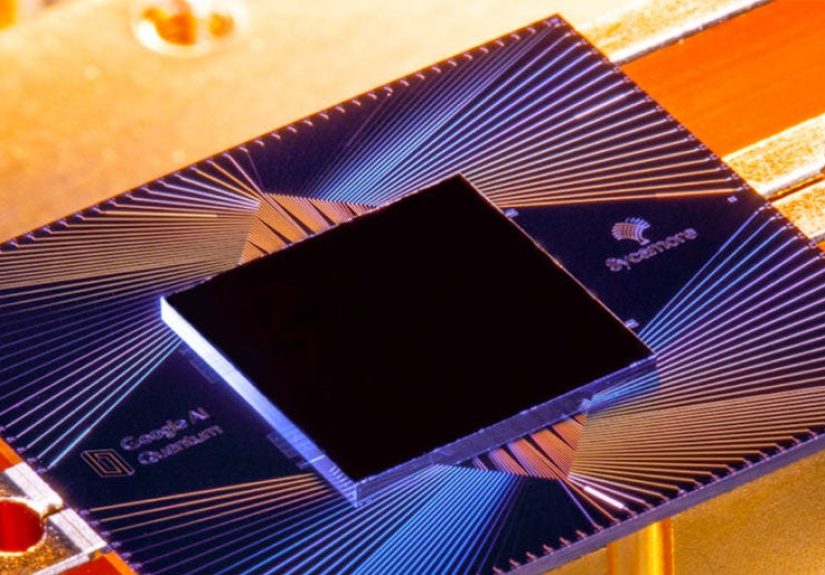
2019: Google’s Sycamore and the “200 seconds” headline
One of the most widely discussed milestones came in 2019, when a Google team reported that its superconducting quantum
processor (Sycamore) completed a random circuit sampling task in about seconds-to-minutes, while estimating a leading
classical supercomputer would take vastly longer. This was a “first flag on the hill” moment: an experimental proof that
a programmable quantum machine could outperform classical approaches on a carefully chosen benchmark.
The debate that followed was just as important as the headline. Classical simulation methods improved, and critiques
argued that the classical gap could shrink under different assumptions. This tug-of-war is a feature, not a bug: supremacy
claims often accelerate classical algorithm innovation, which sharpens the benchmark and forces more honest comparisons.
2020: Photonic quantum computing and Jiuzhang-style demonstrations
In 2020, researchers using photonic systems reported strong “quantum computational advantage” results using boson sampling
techniques. Photonics is a different hardware approach than superconducting qubits, and these experiments underscored an
important point: “supremacy” is not one single race with one finish line. It’s a category of demonstrations across
hardware platforms and problem types.
2024–2025: Error correction starts to steal the spotlight
If early supremacy was about outrunning classical computers on a specialized sprint, the next chapter is about building a
quantum runner who can survive a marathon without tripping over noise. That’s where quantum error correction
comes in. In late 2024 and into 2025, major results highlighted “below-threshold” behavior in surface-code memories on new
superconducting processorsevidence that as error-corrected systems scale, logical performance can improve rather than
collapse. This matters because long-term, useful quantum computing depends on error correction.
2025: Claims of beyond-classical quantum simulation (including annealing approaches)
Another set of attention-grabbing claims centers on quantum simulation of physical systemslike magnetic
materialsperformed on specialized quantum hardware. These results often spark immediate back-and-forth: are classical
methods truly outmatched, or did someone just find a new classical shortcut? Again, that argument is part of progress.
So… Is Quantum Supremacy “Useful”?
Sometimes yes, often not yet. Think of quantum supremacy as the Wright brothers’ flight: it proved something new was
possible, but it didn’t immediately deliver affordable vacations to Hawaii. Supremacy experiments demonstrate that a
quantum device can do something that appears infeasible for classical machines, but they usually:
- Focus on sampling problems rather than practical optimization or chemistry
- Require careful benchmarking and validation
- Don’t automatically translate into everyday speedups for common computing tasks
What “useful” quantum advantage might look like
The most promising near- and mid-term directions tend to be:
- Quantum chemistry and materials (estimating energies, reaction pathways, magnetic behaviors)
-
Hybrid quantum-classical workflows where quantum hardware tackles a subproblem and classical hardware
does the rest - Optimization in constrained settings (though classical optimization is fiercely competitive)
Why Quantum Supremacy Is Controversial (and Why That’s Okay)
1) Classical computers keep getting better at the benchmark
Supremacy claims are often based on “best known” classical methods at the time. Then researchers improve simulations,
hardware assumptions change, and the gap narrows. This doesn’t mean the quantum experiment was fake; it means the
comparison is a moving target.
2) Verification is tricky
If the problem is too hard for classical computers, how do you confirm the quantum computer did the right thing?
Supremacy experiments use statistical checks, cross-entropy benchmarking, and smaller “easy” instances where classical
simulation is still feasible. Verification is a whole subfield because we need confidence without relying on
“trust me, bro” science.
3) The term itself is debated
Many researchers prefer “quantum advantage” or “quantum utility” because “supremacy” carries uncomfortable cultural
associations. You’ll see organizations and authors choose language carefully depending on audience, context, and values.
The science doesn’t change, but the communication canand often shouldevolve.
What Comes After Quantum Supremacy?
The future isn’t “one more supremacy demo and we’re done.” The real roadmap looks more like:
1) Better qubits and lower error rates
Progress depends on improving coherence, gate fidelity, calibration, and stability. A machine with fewer qubits but much
lower error can outperform a bigger, noisier machine on meaningful workloads.
2) Scalable quantum error correction
Error correction is the difference between “impressive lab demo” and “reliable computer.” Surface codes, real-time
decoding, and engineering that supports many physical qubits per logical qubit are central to the long-term goal.
3) Honest, standardized benchmarks
The field is increasingly focused on benchmarking that reflects real performance: not just qubit counts, but error per
cycle, circuit depth, connectivity, and the ability to run larger algorithms repeatedly with predictable outcomes.
Quick FAQ
Does quantum supremacy mean quantum computers can break encryption today?
No. Supremacy demonstrations typically involve specialized sampling tasks. Breaking widely used encryption (like RSA at
strong key sizes) would require large, fault-tolerant quantum computers with far more capability than today’s devices.
Meanwhile, the world is already moving toward post-quantum cryptography standards to prepare.
Is quantum supremacy a single event?
Not really. Different hardware platforms (superconducting qubits, trapped ions, photonics, annealers) can demonstrate
beyond-classical performance on different tasks. It’s better to think of it as a category of milestones.
Why not just pick a useful problem for supremacy?
Because useful problems often demand deep circuits and extremely low error ratesthings today’s hardware struggles with.
Supremacy benchmarks are often chosen because they’re achievable now and still meaningfully stress classical simulation.
Experiences With Quantum Supremacy: What It’s Like Up Close (A 500-Word Bonus)
If you’ve ever tried a “quantum computer in the cloud” demo, your first experience is usually a mix of awe and confusion.
Awe, because you’re literally scheduling time on hardware cooled to temperatures that make outer space look like a beach
vacation. Confusion, because you run a circuit you swear is simple, and the results come back looking like your qubits
rolled dice while you weren’t watching. Welcome to the NISQ era.
A common hands-on path starts with building tiny circuitsone qubit, then two, then a small entangled statejust to learn
how measurement statistics work. You press “run,” choose a number of “shots” (repetitions), and get a histogram of outcomes.
On a perfect simulator, your bars look crisp. On real hardware, the bars wobble. That wobble is noise showing up in public.
Many learners describe the moment they realize quantum computing is fundamentally statistical as the first “ohhh… I get it”
clicklike switching from believing in one right answer to thinking in distributions.
When people explore supremacy-style ideas, they often try sampling experiments: circuits designed not to compute a
tidy output like “42,” but to generate a complex output distribution. The experience feels less like “solve a puzzle” and
more like “conduct an experiment.” You’re not asking the machine for a single treasure chest; you’re asking it to produce a
signaturean output pattern that matches what quantum mechanics predicts. Then you validate the signature using tools such as
cross-checking smaller circuit versions, comparing against approximate classical simulations, or applying statistical tests
that distinguish “quantum-shaped” output from random noise.
The surprising part is how often classical computing is the co-star of your quantum journey. You might spend more time
writing classical code to compile circuits, optimize gate layouts, and analyze results than you spend “doing quantum.”
That’s not a disappointmentit’s the reality of modern quantum workflows. People who stick with it usually develop a new
respect for classical high-performance computing, because every quantum claim invites a classical rematch. Supremacy isn’t
just a victory lap; it’s a rivalry that sharpens both sides.
Another common experience is explaining quantum supremacy to non-technical friends. You’ll say, “It’s when quantum computers
beat classical computers,” and someone will respond, “So my laptop is obsolete?” Then you’ll backpedal so fast you’ll invent
a new sport. Many communicators learn to use analogies: “It’s like a skateboard beating a car… at doing skateboard tricks.”
The trick is honesty without killing the excitement: yes, quantum devices have crossed important benchmarks, but usefulness
depends on reliability, error correction, and matching the right quantum method to the right real-world problem.
In that sense, the most meaningful “experience” of quantum supremacy is the mindset shift: you stop treating it as a single
dramatic finish line and start seeing it as a series of measurable stepsbetter qubits, better error correction, better
benchmarkseach one turning quantum computing from a physics spectacle into an engineering discipline.
Conclusion
Quantum supremacy is a milestone concept: it marks the point where quantum machines can do a computation
that’s effectively beyond classical reach. It doesn’t mean quantum computers are ready to replace your GPU, break all
encryption tomorrow, or solve every hard problem with a dramatic cape flourish. What it does mean is that quantum hardware
has matured enough to enter genuinely new computational territorywhile also kicking classical computing into a new era of
faster simulation and better benchmarking.
The next era is less about winning a single race and more about building trustworthy, error-corrected systems that can
deliver repeatable quantum advantage on problems we actually care about. Supremacy may be the headline, but
reliability is the plot.