Table of Contents >> Show >> Hide
- Gefilte Fish, Defined
- A Brief History of Gefilte Fish
- What Is Gefilte Fish Made Of?
- How Gefilte Fish Is Prepared
- Why Do People Eat Gefilte Fish on Holidays?
- Love It or Hate It? Why Gefilte Fish Is Controversial
- Is Gefilte Fish Healthy?
- How to Buy Gefilte Fish Today
- Serving Ideas and Modern Twists
- Common Questions About Gefilte Fish
- Real-Life Experiences With Gefilte Fish
- The Bottom Line
If you’ve ever opened a Jewish holiday fridge and spotted a jar filled with mysterious, pale ovals floating in jelly, you’ve already met gefilte fish.
It’s the punchline of a lot of jokes, the star of some very strong opinions, and, for many families, a beloved taste of home that says
“it’s Passover” or “Shabbat is here” before anyone even lights a candle.
But beyond the jar and the jokes, what is gefilte fish, exactly? Is it a specific kind of fish? A recipe? A dare?
Let’s break down what’s really going on with this classic Ashkenazi Jewish dish, why it became a holiday staple, and how to enjoy it
even if you didn’t grow up with a bubbie (grandma) quietly poaching fish balls at 6 a.m.
Gefilte Fish, Defined
The short version: gefilte fish is a poached mixture of ground, deboned fish, usually shaped into oval patties or balls and served chilled,
often with a slice of carrot on top and a side of horseradish. The word “gefilte” comes from German and Yiddish for “stuffed,”
because the original dish was literally a stuffed fish.
Traditionally, gefilte fish is made from freshwater fish like carp, pike, and whitefish. These are ground together with ingredients like:
- Onions
- Eggs
- Matzo meal or breadcrumbs (to bind)
- Salt, pepper, and sometimes sugar
Today, you’ll see gefilte fish as:
- Homemade patties or loaves simmered in fish broth
- Frozen loaves you can bake or boil
- Jarred pieces floating in jellied broth, lining supermarket shelves before Passover
So no, gefilte fish is not a species swimming sadly in some distant river. It’s a method and a recipe, not an animal you would see at an aquarium.
A Brief History of Gefilte Fish
From Medieval Germany to the Seder Plate
Gefilte fish actually started as a general European dish, not specifically Jewish. Medieval German cookbooks describe
gefüllte Hecht (stuffed pike): cooks removed the flesh from a fish, seasoned and chopped it, stuffed it back into the skin,
and roasted or poached the whole thing. Over time, Ashkenazi Jews adopted and adapted this dish, making it their own.
As the recipe moved east into areas like Poland, Lithuania, and Ukraine, several things happened:
- Stuffed whole fish gradually turned into simpler patties or loaves, which were easier and quicker to make.
- Sugar levels changed: Polish-style gefilte fish became famous for being sweet, while Lithuanian-style is more peppery and savory.
- Poor families stretched ingredients by mixing fish with fillers like bread or matzo meal to make it go further.
Why Deboned Fish Was a Big Deal
On Shabbat, religious law traditionally prohibits certain forms of separating or sorting, including picking bones out of fish on your plate.
Serving a pre-boned fish mixture was a practical solution: people could eat fish without worrying about breaking religious rules
(or choking on tiny bones in front of their in-laws).
Gefilte fish also made sense for big families: one fish could become many servings. It was economical, made-ahead, and special enough for holidays.
That’s a trifecta every home cook can respect.
From Handmade to Jarred
For centuries, gefilte fish was a completely homemade operation. Fishmongers in Jewish neighborhoods would grind fish to order before major holidays,
and families would spend hours shaping and poaching. With industrial food production, jarred gefilte fish appeared, especially in the United States.
The jarred versions made life easier but also gave gefilte fish its reputation as “that weird, beige thing in jelly.”
Today, there’s a revival of artisanal and more flavorful gefilte fish, with brands and chefs reimagining it using higher quality fish, fresh herbs,
and modern plating.
What Is Gefilte Fish Made Of?
The Fish
Traditional gefilte fish recipes usually combine at least two of these freshwater fish:
- Carp – rich and flavorful, often the backbone of classic recipes
- Whitefish – mild and tender, helps balance stronger flavors
- Pike – adds a distinct, slightly firmer texture
Modern recipes sometimes substitute:
- Salmon (for a pink, richer version)
- Haddock, cod, or other white fish if carp or pike are hard to find
The Support Crew: Binders and Seasonings
To turn fish into something that holds its shape, recipes typically use:
- Eggs – to help bind the mixture
- Matzo meal or breadcrumbs – for structure
- Onions – for moisture and flavor
- Salt and pepper – the seasoning baseline
- Sugar – in sweet Polish-style versions
Once shaped, the fish patties or loaf are poached in a seasoned fish stock, often with onions and carrots.
As the broth cools, natural gelatin helps create that wobbly, jellied layer you see in traditional presentations.
How Gefilte Fish Is Prepared
While every family swears their recipe is “the right one,” the general method looks something like this:
- Grind the fish: Fresh fish fillets are ground or finely chopped.
- Mix the base: Fish, eggs, matzo meal, onions, seasonings, and optional sugar are combined into a thick, sticky mixture.
- Shape it: The mixture is formed into oval patties, balls, or packed into a loaf pan.
- Poach: The fish is gently simmered in a flavorful broth with vegetables (especially carrots and onions).
- Chill: Once cooked, the gefilte fish cools in its broth. It’s usually served cold or at room temperature.
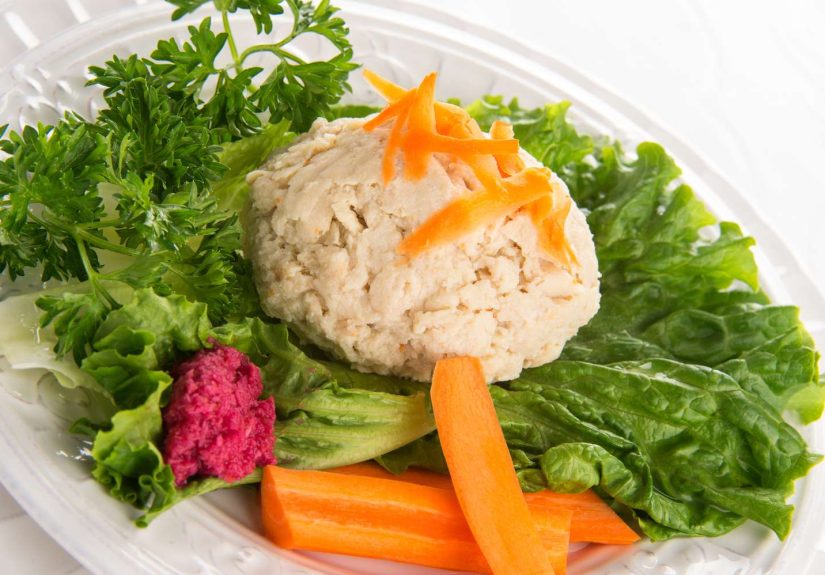
On the plate, you’ll often see:
- A slice of carrot on top for color and tradition
- Horseradish (called chrein): either white (plain) or red (mixed with beets)
The horseradish isn’t just for decoration. It cuts through the richness of the fish and adds heat, turning a mild dish into something with real personality.
Why Do People Eat Gefilte Fish on Holidays?
Gefilte fish is most associated with:
- Shabbat dinners
- Passover seders
- Rosh Hashanah (the Jewish New Year)
There are several reasons it became such a holiday staple:
- Religious convenience: Pre-boned fish avoids the issue of picking bones on Shabbat.
- Make-ahead friendly: You can cook it the day before and serve it cold, which is a gift when you’re juggling multiple dishes.
- Symbolism: Fish are often associated with blessing, abundance, and protection from the “evil eye” in Jewish tradition.
- Culture and nostalgia: For many families, it’s not a real seder without that plate of gefilte fish appearing before the soup.
Love It or Hate It? Why Gefilte Fish Is Controversial
Let’s be honest: gefilte fish is polarizing. People tend to:
- Love it unconditionally
- Tolerate it for tradition’s sake
- Refuse to be in the same room as the jar
Much of the hate comes from:
- Texture: If overcooked or poorly made, the fish can seem dense or rubbery.
- Jarred versions: The jellied broth and muted flavors don’t always win over first-timers.
- Smell: Opening a jar of cold fish in brine isn’t exactly like uncorking a fine wine.
On the flip side, those who grew up with homemade gefilte fish often describe it as delicate, subtly sweet or peppery, and deeply comforting.
The difference between jarred and homemade can feel like two completely different foods.
Is Gefilte Fish Healthy?
Nutrition depends on the recipe and brand, but overall, gefilte fish has some solid selling points:
- Protein: Made primarily from fish, it’s a good source of protein.
- Low in saturated fat: Compared with many meat-based appetizers, it’s usually lighter.
- Omega-3s: Fish provides heart- and brain-friendly omega-3 fatty acids.
Where you need to keep an eye out is:
- Sodium: Many commercial gefilte fish products are high in salt, especially jarred versions.
- Sugar: Sweet-style recipes and jarred varieties can include added sugar.
- Allergens: It contains fish (obviously) and often eggs and gluten (from matzo meal or breadcrumbs).
If you’re watching sodium or sugar, homemade or “reduced sodium” products can be a better fit. Reading labels matters just as much
for gefilte fish as it does for anything else in the holiday lineup.
How to Buy Gefilte Fish Today
If you’re curious about trying gefilte fish or serving it for a holiday, you’ve got options:
Jarred Gefilte Fish
This is the most accessible format in mainstream supermarkets, especially during Passover season. Look for:
- “Sweet” vs. “savory” styles (your taste buds will care)
- Lower-sodium lines if available
- Brands that list recognizable ingredients and real fish as the first item
Frozen Loaves
Frozen gefilte fish loaves are common in kosher markets and some grocery stores. You simmer or bake the loaf, then slice it before serving.
These often taste fresher and more homemade than jarred pieces and let you control the seasoning of the cooking liquid.
Homemade or Deli-Style
In areas with large Jewish communities, you might find freshly made gefilte fish at delis, bakeries, or kosher markets.
This is usually the closest to what a home cook would serve, and a great way to experience the dish at its best without grinding fish in your own kitchen.
Serving Ideas and Modern Twists
Classic gefilte fish is served as an appetizer, but modern cooks have gotten creative. You might see:
- Gefilte fish boards – like a charcuterie or bagel board, but with sliced gefilte, pickles, veggies, and different horseradishes.
- Pan-seared slices – lightly browned in a skillet for extra texture.
- Mini gefilte “bites” – served on cucumber rounds or crackers with a dollop of beet horseradish.
- Terrines and molds – layered gefilte fish served in elegant slices for holiday dinners.
If you’re nervous about serving it to newcomers, dressing it up with fresh herbs, lemon wedges, and colorful garnishes can
help it feel more like a modern appetizer and less like a dare from 1953.
Common Questions About Gefilte Fish
Is gefilte fish always sweet?
No. Sweetness depends mostly on regional style and recipe. Polish-style tends to be sweeter; Lithuanian-style, more peppery and savory.
Jar labels often say “sweet” or “old world” to hint at the flavor profile.
Is gefilte fish kosher?
Gefilte fish can be kosher if it’s made from kosher species of fish and prepared under kosher supervision. Many jarred and frozen brands
are certified kosher and clearly labeled as such.
Do you eat it hot or cold?
Traditionally, gefilte fish is served chilled or at room temperature. However, some people enjoy warm slices from a baked loaf.
There’s room for personal preference here.
Can you freeze gefilte fish?
Yes. Many homemade recipes freeze well, especially loaves or patties stored in some of their broth.
Just thaw in the refrigerator and serve chilled.
Real-Life Experiences With Gefilte Fish
It’s almost impossible to talk about “What is gefilte fish?” without also talking about what it feels like to encounter it.
For some people, it’s pure nostalgia: a taste that instantly teleports them back to crowded dining rooms, kids in slightly itchy clothes,
and relatives arguing good-naturedly across the table.
Picture this: it’s the night of your first seder with your partner’s family. You’ve survived the introductions, you’ve nodded politely
through several unfamiliar songs, and you’re starting to relax. Then a plate appears in front of you with a pale oval of something fishy,
crowned with a carrot slice and flanked by aggressively magenta horseradish. Everyone is watching. This, my friend, is your gefilte moment.
For many first-timers, the surprise is that gefilte fish doesn’t taste nearly as dramatic as it looks.
It’s usually mild, slightly sweet or peppery, soft but not mushy, and much more about comfort than shock value.
The strong smell and gelatin layer from some jarred versions can be off-putting, but when served neatly sliced on a pretty plate,
with plenty of fresh herbs and lemon, it starts to resemble any other appetizerjust with a deeper backstory.
Families have wildly different traditions around it, too. In some homes, gefilte fish is treated like a sacred heirloom recipe:
the fish must come from a particular market, the carrots must be cut just so, and the mixture must be stirred a precise number of times
“or it won’t set.” In others, someone casually plunks a jar on the counter, pops it open, and everyone grabs a piece before dinner like it’s no big deal.
There are also the “conversion” storiesthe people who grew up rolling their eyes at gefilte fish, then discovered how good it can be when
made fresh. Maybe they tasted a homemade version at a friend’s seder, or tried a modern artisan brand with better-quality fish and less salt.
Suddenly, this once-mocked dish becomes something they voluntarily bring to potlucks, proudly insisting,
“Just try it with the beet horseradish. Trust me.”
And then there are the cooks. Making gefilte fish from scratch is not a quick weeknight project, but it can be a powerful experience.
Grinding fish, seasoning carefully, shaping each patty or loafit feels like participating in a chain that stretches back generations.
Many families hold what are essentially gefilte fish parties: everyone shows up with aprons, onions, fish, and gossip,
and they spend the afternoon cooking together before the holidays.
Even if you didn’t grow up with any of this, you can still tap into that sense of connection.
Trying gefilte fish for the first time is a tiny act of cultural exploration. Making it yourselfwhether you follow a centuries-old
recipe or a modern, lighter twistis a way of stepping into someone else’s tradition with respect and curiosity.
Worst case scenario, you decide it’s not your thing. Best case? You’ve just adopted a new, slightly quirky holiday ritual that will
give future guests their own “what is this?” story.
The Bottom Line
So, what is gefilte fish? It’s a lot of things at once:
- A practical, economical way to serve fish without bones
- A centerpiece of Ashkenazi Jewish holiday tables
- A dish that inspires both deep affection and epic side-eye
- A canvas for modern cooks to reinterpret with new flavors and presentations
Whether you’re curious about Jewish cuisine, planning a Passover menu, or just wondering why anyone would voluntarily eat fish in jelly,
gefilte fish is worth understandingand maybe even trying. With the right preparation (and a generous spoonful of horseradish),
you might discover that this old-school dish is far more charming than its reputation suggests.