Table of Contents >> Show >> Hide
- Associative play, defined (in real-life terms)
- Where associative play fits in the stages of play
- At what age does associative play start?
- Examples of associative play (so you can spot it in the wild)
- Associative play vs. parallel play vs. cooperative play
- Why associative play matters (benefits you can actually see)
- How to encourage associative play (without turning into a play director)
- What if my child doesn’t do associative play yet?
- Associative play in classrooms: why teachers love it
- Easy associative play ideas to try at home
- Frequently asked questions
- Conclusion: why this “almost together” stage is a big deal
- Real-Life Experiences: What Associative Play Looks Like (and Feels Like)
If you’ve ever watched a group of preschoolers “play together” and thought, Are they… though? you’ve met
associative play. It’s the stage where kids finally start orbiting one another like tiny, sticky
planetstalking, swapping toys, copying ideas, occasionally negotiating like miniature diplomatswithout quite
committing to a shared mission.
In other words: they’re social… but still doing their own thing. And that’s not a flaw. It’s the whole point.
Associative play is a big developmental bridge between “I do my thing near you” and “We’re building a restaurant,
you’re the chef, I’m the customer, and the stuffed dinosaur is somehow the manager.”
Associative play, defined (in real-life terms)
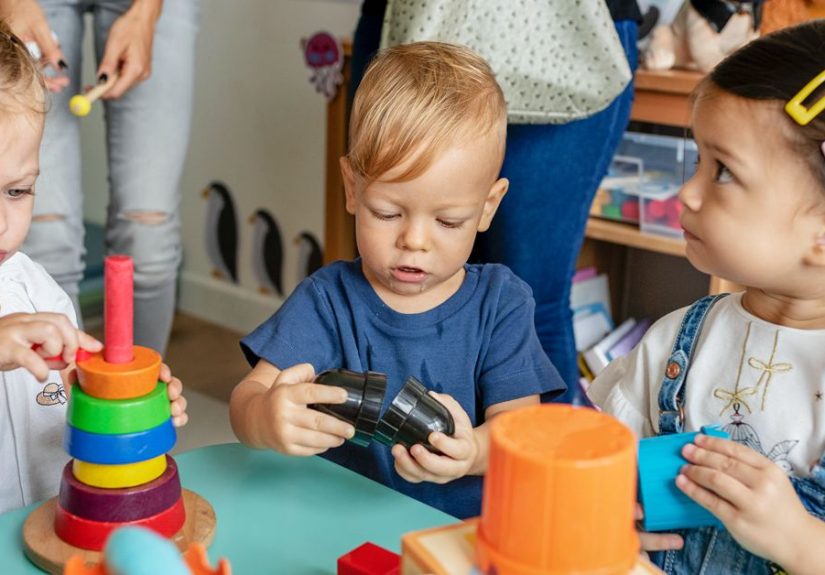
Associative play is a type of social play where children interact with each other while playing,
but they don’t fully organize their play around one shared goal or set of rules. They may:
- Use similar toys or materials in the same space
- Talk, comment, and ask questions during play
- Share supplies (sometimes generously, sometimes under protest)
- Borrow ideas, imitate actions, and loosely “link” their play
- Switch roles or activities quickly without a master plan
Think of it as a friendly neighborhood of play: everyone’s close, everyone’s chatting, and everyone’s building
something… just not necessarily the same thing.
Where associative play fits in the stages of play
Many early childhood experts describe play development using a sequence of social stages often attributed to
researcher Mildred Parten. Kids don’t march through these like a checklist, and they can move back and forth
depending on the situation, mood, sleep level, snack availability, and whether someone looked at their toy “wrong.”
Common social stages of play (simplified)
- Solitary play: playing alone, focused on one’s own activity
- Onlooker play: watching other kids play, maybe commenting, not joining
- Parallel play: playing alongside others with little direct interaction
- Associative play: interacting and sharing during play, but without a unified plan
- Cooperative play: organizing play around shared goals, roles, rules, and teamwork
Associative play is the “we’re talking and sharing” stage that often shows up before kids can consistently
collaborate with structure.
At what age does associative play start?
Most children begin engaging in associative play during the preschool years, commonly around
ages 3 to 4, with lots of growth through age 5. That said, development is not a perfectly timed
subway schedule. Some kids show it earlier, some later, and many will mix associative play with parallel or solitary
play depending on the setting.
What influences the timeline?
- Temperament: cautious kids may watch longer before joining
- Language skills: more language often makes social play easier (but not required to enjoy it)
- Experience: daycare, playgroups, siblings, and frequent peer time can boost opportunities
- Environment: open-ended materials and enough space help kids interact without competing
- Neurodiversity: children may socialize in different ways and on different timelines
The goal isn’t to “speed-run” play stages. The goal is to give kids time, space, and support to practice social
connection safely.
Examples of associative play (so you can spot it in the wild)
Associative play can look subtleespecially if you’re expecting teamwork. Here are clear, everyday examples:
1) Sandbox building, shared tools, separate plans
Two kids are in the sandbox. One is making a “castle.” The other is making a “volcano.” They’re using the same
bucket, chatting, swapping shovels, and occasionally adding a rock to each other’s creations. No shared blueprint,
but lots of connection.
2) Art table chatter and supply swapping
Kids are coloring. One declares, “This is my dinosaur!” Another says, “Mine is a rainbow dinosaur!” They trade
markers, comment on each other’s drawings, and borrow ideas (sometimes with the confidence of an uncredited
influencer). They’re interactingjust not producing a single group project.
3) Dress-up with shifting roles
Three kids put on costumes. One insists they’re a doctor. Another says they’re a firefighter. A third becomes a
“baby puppy” (naturally). They talk, pretend, and respond to each other, but the story changes every 45 seconds.
Still associative play.
4) Block play with commentary and “helping”
A child stacks blocks and a nearby child says, “Put the big one on top!” (questionable engineering advice). They
hand over a block, watch the tower wobble, and laugh together. That interactionsharing, talking, influencingis
the hallmark.
5) Pretend kitchen: same space, different scripts
One child “cooks soup.” Another is “selling ice cream.” They share pretend food, ask for plates, and talk across
their play. It’s a shared environment with social exchange, but not one unified game.
Associative play vs. parallel play vs. cooperative play
These stages can look alike at first glance, so here’s a practical breakdown.
Parallel play
- Kids play near each other
- They may use similar toys
- Interaction is limited (maybe a glance, maybe a brief comment)
- Each child stays in their own lane
Associative play
- Kids interact more consistently
- They share materials and ideas
- There’s conversation and back-and-forth
- Still no organized group goal or stable roles
Cooperative play
- Kids plan together (even if the plan is chaotic)
- They take roles and follow shared rules
- They work toward a common objective
- They negotiate and stick with a shared storyline longer
If parallel play is “side-by-side,” associative play is “connected side-by-side,” and cooperative play is “we are a
team (and someone is definitely the boss).”
Why associative play matters (benefits you can actually see)
Associative play is more than a cute playground moment. It helps children practice core skills they’ll use in
friendships, school, and lifelike communication, flexibility, and not melting down when someone touches the blue
crayon.
Key benefits of associative play
- Social skills practice: greeting, joining in, taking turns, sharing space, and reading social cues
-
Language growth: children narrate play, ask questions, respond, and learn new words through peer
interaction - Emotional regulation: small conflicts offer chances to cope, pause, and recover (with adult support)
- Perspective-taking: “Oh, you’re doing it differently” becomes a normal part of being with others
- Problem-solving: kids improvise solutions when materials are limited or ideas clash
- Confidence and belonging: children learn they can participate in a group without “getting it perfect”
- Early collaboration: even without a shared goal, kids practice influencing and responding to peers
This stage is especially powerful because it gives kids social “reps” without demanding full cooperation. It’s a
training wheels momentand training wheels are not a failure, they’re a feature.
How to encourage associative play (without turning into a play director)
The best support looks like setting the stage and then letting kids run the show. Here are practical ways to help:
1) Offer open-ended toys that invite sharing
Think blocks, play dough, toy animals, pretend food, dress-up clothes, crayons, stickers, ramps and cars, water
tables, and sand tools. These materials naturally encourage interaction without forcing one “right” way to play.
2) Use “parallel plus” strategies
If a child tends to play alone or beside others, try gentle bridges:
- Set two similar sets of materials close together
- Model a simple comment: “You’re making a road. I’m making a bridge!”
- Offer a low-pressure invitation: “Want a scoop?” or “Do you need a plate?”
3) Teach helpful phrases kids can borrow
Preschoolers often want to connect but don’t know what to say. Simple scripts help:
- “Can I play?”
- “Do you want to use this?”
- “Let’s take turns.”
- “When you’re done, can I have it?”
- “Stop. I don’t like that.”
4) “Sportscast” what you see (briefly)
Narrate play like a calm commentator, not a talk-show host:
“You handed her the shovel.” “He’s watching your tower.” “You both chose red blocks.”
This builds awareness and language without taking over.
5) Plan playdates that match energy levels
Two overly energetic kids in a tiny room can turn “associative play” into “competitive sprinting.” Choose:
- Shorter meetups (45–90 minutes can be plenty)
- Spaces with room to move
- Activities that don’t require constant sharing of one single coveted object
6) Expect conflictand coach it, don’t cancel it
Sharing doesn’t appear magically because you bought the educational wooden toy set. Kids learn social rules by
bumping into problems. When conflicts happen, try:
- Describe the problem: “You both want the truck.”
- Set a limit: “No hitting. Hitting hurts.”
- Offer choices: “Take turns, trade, or find another truck.”
- Support repair: “Can you ask again with words?”
What if my child doesn’t do associative play yet?
It can be completely normal for a child to prefer solitary or parallel play sometimeseven in preschool. Social
play is tiring. Kids also vary in temperament: some jump into group play; others warm up slowly.
Signs your child may just be a slow-to-warm observer
- They watch other kids closely
- They play near others comfortably
- They interact more with familiar peers or adults
- They show interest, even if they don’t join right away
When to consider chatting with a pediatrician or specialist
This isn’t about labelingit’s about support. Consider asking for guidance if you notice several of these
consistently over time:
- Little to no interest in peers across many settings as they approach kindergarten age
- Frequent, intense distress in social situations that doesn’t improve with support
- Significant communication delays that limit interaction
- Persistent aggression or inability to recover from minor conflicts
- Loss of previously learned social or language skills
Early support can be helpful in many situationsspeech and language services, social skills groups, occupational
therapy for regulation, or parent coachingdepending on what’s going on.
Associative play in classrooms: why teachers love it
In preschool and early childcare settings, associative play is often where friendships begin. Kids learn who shares
crayons, who tells funny stories, who builds the tallest tower, and who always declares, “This is my house and you
can’t come in,” before immediately inviting everyone inside.
Classroom-friendly setups that spark associative play
- Stations: art, blocks, sensory bins, dramatic play, science table
- Loose parts: buttons, cardboard tubes, fabric scraps, washable containers
- Collaborative surfaces: big paper rolls, train tables, water/sand tables
- Rotating props: themed items (grocery store, vet clinic, construction site)
These environments allow kids to interact, share, and imitatewithout demanding perfect teamwork.
Easy associative play ideas to try at home
You don’t need a Pinterest-perfect playroom. You need a few materials, a bit of space, and permission for play to
be mildly chaotic.
Low-prep ideas
- Side-by-side Play Dough Café: each child makes “food,” trades plates, comments, and shares tools
- Car wash station: toy cars + sponge + water bin; kids share tools and narrate their process
- Sticker story scene: large paper + stickers; kids build separate parts and talk about them
- Animal rescue: stuffed animals + bandaids + boxes; kids help each other “treat” animals
- Neighborhood blocks: each child builds a building; then they connect roads and trade ideas
Frequently asked questions
Is associative play the same as playing with friends?
It’s an early version of it. Kids are interacting and socially engaged, but they may not maintain a shared plan the
way older children do. It still countsand it’s important practice.
Do kids have to master associative play before cooperative play?
Many children develop cooperative play after they’ve had lots of associative play experiences, but development is
flexible. Kids can show cooperative moments one day and revert to parallel play the next. That’s normal.
Can older kids still do associative play?
Yes. Even school-age kids sometimes play in loosely connected waysthink kids on a playground doing their own
variations of the same game while chatting and borrowing equipment. The labels describe patterns, not strict ages.
Conclusion: why this “almost together” stage is a big deal
Associative play is where kids start practicing the social art of being with other people while still being
themselves. They learn how to enter a group, share space and materials, communicate ideas, handle small conflicts,
and try again. It’s not perfectly organized, and that’s exactly why it’s so valuable: real life isn’t perfectly
organized either.
If you want to support associative play, focus on the basicsopen-ended materials, low-pressure peer time, a few
useful phrases, and calm coaching when conflicts pop up. With time, those “side-by-side but connected” moments
become the foundation for deeper friendships and more cooperative play.
Real-Life Experiences: What Associative Play Looks Like (and Feels Like)
In real homes and classrooms, associative play rarely announces itself with a banner that says, “Hello, I am a
developmental milestone.” It shows up in small, ordinary scenesoften the ones adults almost dismiss because
it doesn’t look like organized teamwork. For example, a parent might notice two kids in the living room with
blocks. One child is building a “garage,” the other is building a “zoo,” and the only obvious overlap is the
occasional grab for the same long block. But then the chatter starts: “That’s the door!” “My lion needs a house!”
“Can I have that?” They’re negotiating materials, commenting on each other’s ideas, and borrowing inspiration
without ever agreeing on a shared plan. That’s associative play in its natural habitat.
Teachers often describe it as the moment the room gets louderbut also more connected. At the art table, children
may start by working independently. Then one child announces, “I’m making cupcakes,” and suddenly three others
are also making cupcakes, except theirs are “cupcakes for a dinosaur birthday” and “cupcakes that shoot lava.”
They trade markers and pretend sprinkles, peek at each other’s papers, and imitate little techniques (“How did you
do that swirl?”). No one assigns roles, and the “story” changes constantly, but social learning is happening in
real time: turn-taking, idea-sharing, and the gentle give-and-take of peer influence.
On playgrounds, associative play often looks like kids running in the same area with loosely shared themes.
A child might start hopping from step to step calling it “the river,” and another joins by declaring the slide
is “the waterfall.” Soon a third child arrives with a stick that is definitely a “fishing pole,” and everyone is
talking, laughing, and reacting to each othereven though each child is still inventing their own version of the
game. Adults sometimes worry because it isn’t a single coordinated activity, but kids are practicing the exact
skills they need for future group play: joining in, adapting, and staying socially engaged.
Playdates can highlight the messy beauty of this stage. Many caregivers report that the first 10 minutes can feel
awkward: one child clings, one child grabs toys, and both children insist on being the person who gets the “good”
truck. Then, almost without warning, they start orbiting each otherone rolls cars down a ramp, the other lines
them up, and they begin trading vehicles back and forth while narrating what’s happening. Conflicts still pop up,
but they also repair faster: “Okay, you can have it after me.” That shiftfrom isolated play to connected
interactionis often the clearest sign a child is practicing associative play, even if the whole thing still runs
on snack breaks and emotional weather reports.
If you’re watching for associative play, look less at whether kids are building the same castle and more at whether
they are building social connection: talking, sharing, imitating, negotiating, and responding. It’s the stage where
children learn, in a thousand tiny moments, that other kids are not just background characters. They’re potential
partnerssometimes annoying ones, sometimes hilarious ones, and often the beginning of a real friendship.