Table of Contents >> Show >> Hide
- What Is Facial Toner, Exactly?
- What Does Toner Do for Your Face? 5 Benefits
- What Toner Does Not Do
- How to Choose the Best Toner for Your Skin Type
- How to Use Toner in the Right Order
- Common Toner Mistakes That Can Backfire
- Do You Actually Need Toner?
- Real-World Experiences With Toner: What People Commonly Notice
- Final Takeaway
- SEO Tags
If you have ever stared at a bottle of toner and thought, “So… are you skincare, or are you just expensive water with confidence?” you are not alone. Toner is one of those products that has survived multiple skincare eras: the harsh, stingy, alcohol-heavy phase of the past, the K-beauty glow-up, and today’s ingredient-focused age where every bottle promises balance, brightness, and inner peace.
So what does toner actually do for your face? The honest answer is this: a good toner can be a helpful support product, but it is not magic, and it is definitely not mandatory. Modern toners are designed to do more than simply “clean up what your cleanser missed.” Depending on the formula, they can add hydration, gently exfoliate, reduce the look of excess oil, help skin feel more balanced after cleansing, and make the rest of your skincare routine go on more smoothly.
The catch? Not every toner is right for every face. The best toner for dry skin is usually very different from the best toner for oily or acne-prone skin. And if your skin is sensitive, rosacea-prone, or currently throwing a tiny dramatic tantrum, the wrong toner can make things worse instead of better.
Let’s break down what toner does, who may benefit from using it, and how to choose one without accidentally turning your face into a science experiment.
What Is Facial Toner, Exactly?
Facial toner is typically a lightweight liquid applied after cleansing and before serums or moisturizer. Think of it as the “between classes” period in your skincare routine. Cleanser has done the heavy lifting, but toner can help fine-tune what happens next.
Old-school toners were often basically liquid tough love: lots of alcohol, lots of astringent ingredients, and a finish that said, “Congratulations, your skin now feels like a paper towel.” Modern toners are much broader. Some are hydrating and soothing. Some are exfoliating. Some are formulated for oil control. Others are made to calm redness or support the skin barrier.
That means the word toner tells you less than the ingredient list does. A hydrating toner with glycerin and hyaluronic acid behaves very differently from an exfoliating toner with glycolic acid or salicylic acid.
What Does Toner Do for Your Face? 5 Benefits
1. It Helps Remove Leftover Dirt, Oil, and Makeup
One of the most practical toner benefits is that it can help pick up the traces your cleanser may leave behind. Even a good face wash does not always remove every bit of sunscreen, makeup, sweat, or extra oil, especially on long days when your face has been working overtime.
This does not mean toner should replace cleansing. Your cleanser is still the main event. But toner can act like a second pass, especially if you wear makeup, use heavy sunscreen, or have oily skin that tends to feel slick by the end of the day. In that sense, toner can leave your skin feeling fresher and cleaner without requiring a full second cleanse.
That said, “cleaner” should not mean stripped. If a toner leaves your face tight, squeaky, or weirdly offended, it is probably too harsh for your skin type.
2. It Can Add a Quick Layer of Hydration
This is where modern toner really redeemed itself. Many of today’s formulas are designed to add water and humectants back into the skin right after cleansing. If your face ever feels dry a minute after washing, a hydrating toner may help soften that post-cleanse slump.
Look for ingredients like glycerin, hyaluronic acid, panthenol, aloe, or polyglutamic acid. These ingredients help attract and hold water in the upper layers of skin, which can make your face feel bouncier, calmer, and less cranky. Hydrating toner is especially useful if you live in a dry climate, use acne treatments, or have skin that feels dehydrated but still somehow gets shiny. Yes, skin can absolutely be dramatic and do both.
Hydration also matters because many people confuse dry skin with “bad skin,” when really the issue is often a lack of water, not a lack of effort. A well-formulated toner can help bridge that gap.
3. It May Help Skin Feel More Balanced After Cleansing
Your skin naturally has a slightly acidic surface, often called the acid mantle. That acidic environment helps support barrier function and overall skin health. Some cleansers, especially harsher or higher-pH formulas, can temporarily disrupt that balance.
This is one reason certain toners are marketed for “pH balance.” The phrase gets overused in skincare marketing, but there is some logic behind it. A mild toner, especially one formulated with gentle acids, can help skin feel less thrown off after washing. In practical terms, that can translate to less dryness, less tightness, and a more comfortable starting point for the rest of your routine.
No, you do not need to obsess over pH like you are grading chemistry homework in your bathroom. But if your face feels weirdly stressed after cleansing, toner may help restore some calm.
4. It Can Deliver Targeted Ingredients for Specific Skin Concerns
This is one of the biggest reasons toner still matters in a modern skincare routine. Many toners are not just “liquid refreshers.” They are treatment products in a lightweight format.
For oily or acne-prone skin, a toner with salicylic acid may help unclog pores and reduce the buildup that can lead to breakouts. For dull or rough skin, a toner with glycolic acid or lactic acid can gently exfoliate and improve texture over time. For skin that looks shiny and irritated at once, niacinamide may help support the skin barrier while improving the look of excess oil and uneven tone. For thirsty skin, humectant-rich toners can help with softness and comfort.
In other words, toner can act like a delivery system. Instead of adding another heavy cream or serum, some people prefer a watery, easy-to-layer formula that addresses a specific concern without making skin feel coated.
The important part is choosing a toner that matches your actual concern, not the one with the prettiest bottle and the most emotionally manipulative word glow on the label.
5. It Can Help the Rest of Your Skincare Routine Go on Better
One underrated benefit of toner is that it can prep the skin for what comes next. When you apply certain products to slightly damp skin, they may spread more easily and feel more comfortable. Hydrating toners, in particular, can increase water content on the skin’s surface, which may help later products apply more smoothly.
This does not mean toner “forces” ingredients deeper into your skin like a tiny bouncer at a nightclub. But it can create a more receptive surface, especially for hydrating serums and moisturizers. That is one reason some dermatology experts describe toner as a supportive step rather than a core essential.
If your routine often feels sticky, patchy, or like products just sit on top of your skin and complain, toner may help improve the flow.
What Toner Does Not Do
Let’s clear up a few skincare myths before they start paying rent. Toner does not permanently shrink your pores. Pores do not have little muscles that can do push-ups. What toner can do is temporarily make pores look less noticeable by reducing surface oil, smoothing texture, or mildly exfoliating around them.
Toner also does not replace moisturizer, sunscreen, or prescription treatment if you have a medical skin condition. And if your skin is irritated, over-exfoliated, or reactive, adding toner will not necessarily “fix” the problem. In some cases, skipping toner is the smarter move.
How to Choose the Best Toner for Your Skin Type
For Dry or Dehydrated Skin
Look for a hydrating toner with ingredients like glycerin, hyaluronic acid, aloe, panthenol, or rice water derivatives. Avoid formulas heavy in denatured alcohol or strong fragrance. Your goal is comfort, softness, and water retention, not squeaky-clean minimalism.
For Oily or Acne-Prone Skin
An exfoliating toner with salicylic acid or a balancing toner with niacinamide may be useful. But do not assume harsher equals better. Over-drying oily skin can backfire by increasing irritation and making your routine harder to tolerate. If you are already using benzoyl peroxide, adapalene, tretinoin, or prescription acne treatments, keep toner gentle unless your dermatologist says otherwise.
For Sensitive or Rosacea-Prone Skin
This is where caution matters most. Many dermatologists recommend fragrance-free, alcohol-free skincare for sensitive skin, and some specifically advise skipping toners and astringents altogether if they sting or trigger redness. If you want to try toner anyway, choose a very simple hydrating formula and patch test first. Your skin should feel calmer, not challenged to a duel.
For Combination Skin
You may do well with a balanced toner that hydrates while lightly refining texture. Some people use a hydrating toner all over and save an exfoliating product for the oily areas only. Skincare does not have to be a one-bottle monarchy.
For Dull or Rough Skin
A toner with glycolic acid, lactic acid, or other gentle exfoliating acids may help improve texture and brightness over time. Start slowly, especially if you are new to acids, and do not pile it on with every other active ingredient in your cabinet just because your skin survived one Tuesday.
How to Use Toner in the Right Order
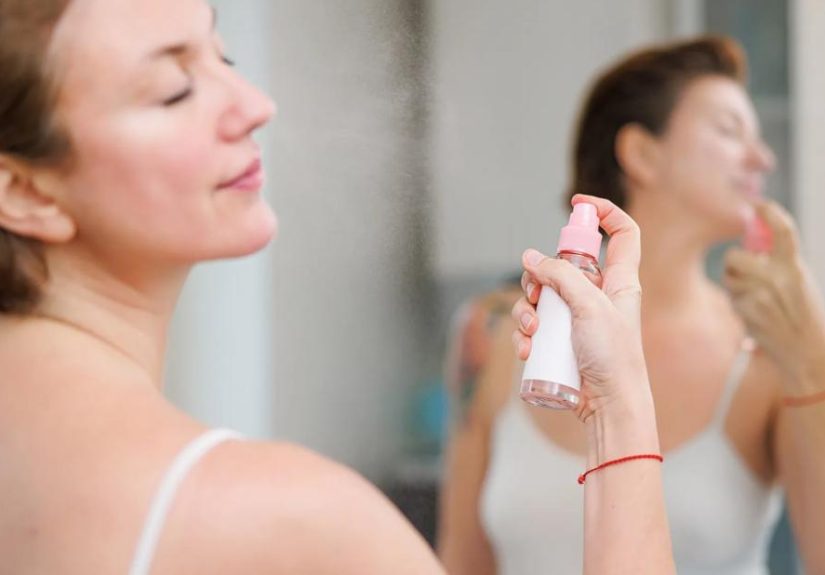
In most routines, toner comes after cleanser and before serum, moisturizer, and sunscreen. You can apply it with clean hands, a cotton pad, or by gently pressing it into the skin. Hands are often enough, and they waste less product.
If your toner is hydrating, you may use it once or twice daily depending on how your skin responds. If it is exfoliating, start a few times a week rather than diving in headfirst like you are auditioning for a skincare reality show. Overuse is one of the fastest ways to turn “glow” into “why is my face mad at me?”
Also, patch test new products. It is not glamorous, but neither is a week of avoidable irritation.
Common Toner Mistakes That Can Backfire
Using the Wrong Formula for Your Skin Type
The biggest mistake is assuming all toners do the same thing. They do not. An alcohol-heavy toner may feel satisfying on oily skin for five minutes and then leave it irritated later. An acid toner may be great for texture but awful if your barrier is already compromised.
Layering Too Many Active Ingredients
If your toner already contains glycolic acid, salicylic acid, or other exfoliants, be careful about pairing it with retinoids, strong exfoliating masks, or scrubs in the same routine. More is not more when your skin barrier files a complaint.
Using Toner to “Burn Off” Acne
If a toner stings dramatically, that is not proof it is working. It is often proof that your face would like a gentler plan. Acne-prone skin still needs barrier support and hydration, not punishment.
Believing Toner Is Required for Good Skin
It is not. A simple routine with a gentle cleanser, moisturizer, and daily sunscreen is often enough for healthy skin. Toner is an optional step that can be useful when it serves a purpose.
Do You Actually Need Toner?
For many people, no. You can have a perfectly good skincare routine without toner. But if your skin feels dry after cleansing, if you want a lightweight way to add targeted ingredients, or if you like the feel of a more layered routine, toner can be a genuinely useful addition.
The key is to stop thinking of toner as a universal rule and start thinking of it as a tool. Good skincare is not about owning the most products. It is about using the right ones consistently.
Real-World Experiences With Toner: What People Commonly Notice
One common experience with toner happens after someone switches from an old-school astringent to a modern hydrating formula. Before the switch, their face may feel “clean” for about ten minutes and then swing into tightness, redness, or flaky patches by lunch. After changing to a toner with humectants and no harsh alcohol, the difference is often less dramatic than a movie makeover, but more meaningful in daily life. Makeup sits better. Skin feels less papery. That annoying afternoon dryness around the nose or cheeks does not show up as quickly. In other words, nothing magical happens, but the face stops acting like it is personally offended by cleanser.
Another very relatable experience comes from people with oily or combination skin who discover that toner is not there to delete all oil from existence. Instead, the right formula helps their skin look more balanced. Many notice that a gentle toner with niacinamide or salicylic acid makes the T-zone look less shiny by midday and helps pores appear a little less obvious. The change is usually gradual. It is not “I used this once and now I am airbrushed.” It is more like “my forehead is no longer reflecting the office lights by 2 p.m.” That kind of modest, realistic improvement is actually how good skincare tends to work.
People dealing with dehydration often report one of the most surprising toner experiences: skin can feel both oily and thirsty at the same time. They may have assumed they needed stronger cleansing because their face looked shiny, when the real issue was a lack of water and an irritated barrier. After adding a hydrating toner, they often describe their skin as feeling calmer, softer, and less reactive. The face may still produce oil, but it does not feel as tight underneath. That is an important distinction because “less uncomfortable” is sometimes the first sign a product is doing something useful.
There is also the experience of learning that toner is not always a win. People with very sensitive or rosacea-prone skin often try a trendy exfoliating toner and quickly realize their face wanted peace, not performance. Increased stinging, more redness, and a hot, flushed feeling can show up fast. Oddly enough, that failed experiment can still be helpful because it teaches an important skincare truth: your best routine is not the most exciting one. For some people, the best toner is a very bland hydrating formula. For others, the best toner is none at all. That realization can save a lot of money and a lot of unnecessary irritation.
Finally, many people notice toner’s value not as a star product, but as a supporting character. Their routine just works better with it. Serum spreads more evenly. Moisturizer feels smoother. Skin looks fresher in the morning. The overall vibe becomes less “my products are fighting each other” and more “everyone is cooperating.” That may not sound flashy, but in real life, consistency beats drama. Skincare products that quietly make your routine easier are often the ones that earn a permanent place on the shelf.
Final Takeaway
So, what does toner do for your face? In the right formula, it can remove leftover residue, add hydration, help skin feel more balanced after cleansing, deliver useful active ingredients, and prep your face for the rest of your routine. Those are real benefits. But toner is still optional, and it only works well when the ingredients fit your skin type and skin concerns.
If your skin is dry, look for hydration. If it is oily or acne-prone, choose a formula that targets oil without wrecking your barrier. If your skin is sensitive, simplify first and treat toner as optional. The best toner is not the strongest one or the trendiest one. It is the one your skin can actually live with every day.
Because at the end of the day, good skincare should make your face feel better, not like it just survived a motivational speech from a lemon.