Table of Contents >> Show >> Hide
- Meet the Uninvited Guests (And Why They’re Obsessed With Your Home)
- The Two-Part “Sweet & Slick” Strategy
- What You’ll Need (Kitchen-Drawer Edition)
- How to Build a Vaseline & Sugar “Pitfall” Trap
- Upgrading to a Colony-Level Ant Solution (Without Going Full Mad Scientist)
- Where to Use Vaseline as a “Do Not Cross” Sign
- Vaseline in the Garden (Yes, Really)
- The Boring Stuff That Makes the Fun Stuff Work (IPM in Plain English)
- Troubleshooting: When Ants Ignore Your “Gourmet” Sugar Trap
- Safety Notes (Because “Natural” Doesn’t Mean “Snackable”)
- Conclusion: Keep It Simple, Keep It Consistent
- Real-World Experiences (The Stuff You Only Learn After You’ve Yelled “WHY?!” at a Countertop)
If you’ve ever watched a line of ants march across your counter like they’re late for a tiny business meeting, you already know the truth: pests do not ask permission. They just show up, eat your snacks, and leave you a mystery crumb trail like it’s a puzzle you didn’t consent to.
The good news: you don’t need to fumigate your life to make your home and garden a whole lot less inviting. With two humble household itemspetroleum jelly (hello, Vaseline) and sugaryou can build a surprisingly effective “sweet & slick” defense. One part blocks and traps, the other part lures. Together, they help you monitor pests, interrupt their routes, and (when used wisely) reduce numbers without turning your living room into a chemistry lab.
Meet the Uninvited Guests (And Why They’re Obsessed With Your Home)
Most common household pests aren’t evil geniuses. They’re hungry, thirsty, and opportunistic. Ants scout for quick energy (often sugary stuff), then recruit their friends using invisible scent trails. Tiny flying pests around plantslike fungus gnats, whiteflies, and winged aphidsgravitate toward certain colors and sticky surfaces. And many “garden problems” are actually teamwork: ants protect aphids and other honeydew-producing insects because honeydew is basically bug Gatorade.
Your goal isn’t to “eliminate every insect on Earth.” (That’s a villain origin story.) The goal is to make your space hard to access, boring to forage, and annoying to navigateso pests go bother someone else’s compost pile.
The Two-Part “Sweet & Slick” Strategy
Part 1: Vaseline as a Barrier (and Occasionally, a Trap)
Petroleum jelly is thick, slippery, and stickyan awkward combo for small crawling insects. Used in the right place, it can:
- Block entry points temporarily while you figure out where pests are coming from.
- Create a physical barrier that’s difficult for many ants and crawlers to cross.
- Act as a “sticky surface” for monitoring certain plant pests when applied to boards/cards/cups.
Important nuance: petroleum jelly is not a magic force field. It’s a tool. It works best when you use it as part of a bigger plan: clean-up, sealing gaps, and (if you’re targeting ants) baiting where it makes sense.
Part 2: Sugar as a Lure (And When to Make It Do More)
Sugar is the gossip of the pest world: it travels fast. Many ants, especially in kitchens and pantries, will happily follow a sweet lure. A simple sugar trap can help you:
- Confirm which pest you’re dealing with (and where they’re traveling).
- Draw pests away from sensitive areas like pet bowls or pantry shelves.
- Reduce activity by capturing some foragers.
If you want a sugar-based solution that can impact an ant colony (not just the ants doing the conga line on your counter), you typically need a slow-acting bait strategy. That can still be “low-drama,” but it does require extra care for kids, pets, and placement.
What You’ll Need (Kitchen-Drawer Edition)
- Petroleum jelly (Vaseline or similar)
- Granulated sugar (or honey/corn syrup if that’s what you have)
- Warm water
- Cotton balls or a small piece of sponge/paper towel (for holding liquid)
- A shallow lid or small container (yogurt lid, jar lid, ramekinwhatever you can rinse)
- Optional “upgrade” supplies: refillable bait station, boric acid/borax (only if you choose a bait approach), gloves, and a marker for labeling
How to Build a Vaseline & Sugar “Pitfall” Trap
This is the friendly, low-commitment version. It’s great for monitoring and minor invasionsespecially when you want to avoid sprays and keep things simple.
Step-by-step
- Mix a sweet lure. Stir 1–2 tablespoons of sugar into about 1/4 cup warm water until dissolved. You want it sweet, not syrupy enough to attract every dust bunny in the county.
- Soak your “wick.” Dip a cotton ball or small sponge piece into the sugar water, then place it in your lid or shallow container. This keeps the lure from evaporating too quickly.
- Add the Vaseline “nope ring.” Smear a thin band of petroleum jelly around the inner rim of the container (or around the outer edge if you’re using it as a barrier). The idea is to make the boundary unpleasant to cross.
- Place it along the trail. Put the trap where you’re seeing activity: under the sink, behind the trash can, near baseboards, or next to the suspected entry point. (Not on a food-prep surface. Ants don’t pay rent, but they also don’t need kitchen privileges.)
- Check and refresh. If ants find it, you’ll know quickly. Refresh the lure if it dries out, and replace the petroleum jelly band if it gets dusty or bridged with debris.
What this trap does well: it concentrates activity, helps you locate entry points, and can reduce the number of foragers. What it won’t do: reliably wipe out a colony by itself. For that, you’ll want the bait upgrade below.
Upgrading to a Colony-Level Ant Solution (Without Going Full Mad Scientist)
When ants are persistent, the most effective “low-spray” approach is typically baitingbecause foragers carry food back and share it. The trick is keeping the bait slow-acting so ants have time to deliver it to the colony, instead of dropping dramatically in your kitchen like they’re auditioning for a soap opera.
A practical, low-concentration sweet bait approach
University-based integrated pest management guidance often emphasizes that very low concentrations in sweet liquid baits can be effective, while stronger mixtures can become repellent or kill too fast. A commonly cited example ratio for a sweet boric-acid bait is roughly:
- 1/2 teaspoon boric acid + 9 teaspoons sugar dissolved into 1 cup hot water
This makes a sweet solution that’s attractive, but still “slow enough” to work as a bait when used correctly. Keep it in a refillable bait station or a container setup that limits access for kids and pets. And label it clearly so nobody mistakes it for a science fair lemonade.
Placement rules that actually matter
- Don’t spray near baits. Sprays and strong cleaners can repel ants and reduce bait pickup.
- Deny competing food. Wipe crumbs, rinse recyclables, store sweets tightly, and fix drips. Baits work best when they’re the most interesting option.
- Keep it moist. Liquid and gel baits tend to be accepted better when they don’t dry out.
- Be patient. Baiting is a slow burn. You may see more ants at firstbecause you’ve basically posted a “Free Buffet” sign. That’s not failure; it’s the point.
Where to Use Vaseline as a “Do Not Cross” Sign
Think of petroleum jelly as a temporary blocker while you do the real, permanent work: sealing and cleaning.
High-impact indoor spots
- Entry cracks and gaps: If you find a specific entry point, a small smear can help block it short-termuntil you can caulk or seal properly.
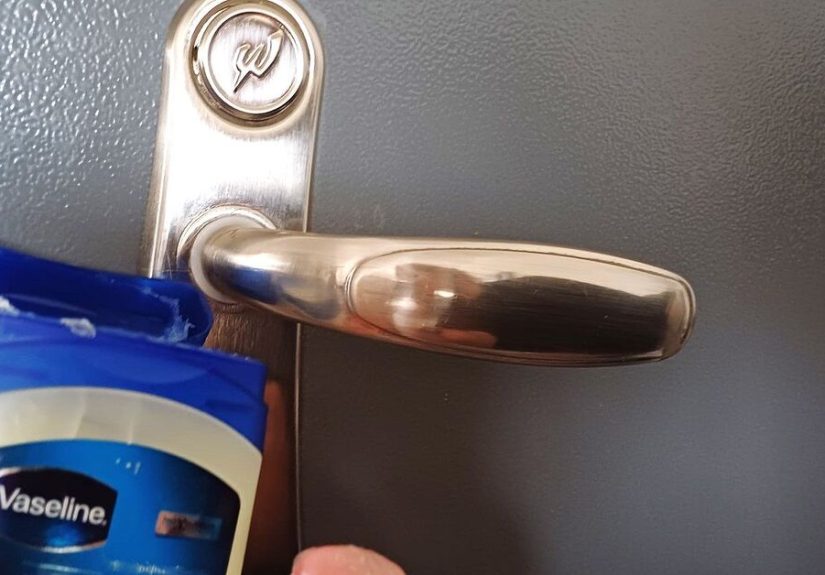
- Refrigerator seals: If ants are somehow getting past a seal, a light temporary coating on the edge can help exclude them (and can be wiped off after).
- Along a known trail: A thin “barrier line” can disrupt movement while you remove scent trails with soapy water.
Vaseline in the Garden (Yes, Really)
Outdoors, petroleum jelly is most useful for monitoring and barriersespecially when ants are protecting sap-suckers like aphids and scale insects.
1) Sticky barriers to stop ant “farming”
If ants are climbing a plant to harvest honeydew, they often defend those pests from beneficial predators. A sticky barrier can interrupt that relationship and let natural enemies do their job.
Key safety move: don’t smear sticky material directly on vulnerable bark or young stems. Use a wrap or tape barrier first, then apply the sticky layer to the wrap. This helps avoid plant damage and makes removal easier.
2) DIY yellow sticky traps for flying plant pests
Sticky traps are widely used for monitoring pests like whiteflies, fungus gnats, thrips, and winged aphids. You can make your own by coating a bright yellow card (or even a plastic cup/plate) with a thin layer of petroleum jelly. Place traps near the plant canopy and check them regularly.
Two pro tips:
- Apply thinly. Some homemade petroleum-jelly mixtures can drip in heat or allow insects to escape if applied too thick or too runny.
- Use traps early and remove them when pressure drops. Overusing sticky traps can catch beneficial insects too.
The Boring Stuff That Makes the Fun Stuff Work (IPM in Plain English)
If you do only traps, you’re basically playing whack-a-mole with extra steps. The “natural way” that works long-term is integrated pest management (IPM): prevention, monitoring, and targeted control.
Your IPM checklist
- Block entry: caulk cracks, weather-strip doors/windows, screen vents where appropriate.
- Remove water: fix leaks, dry sinks, don’t leave standing water in plant saucers.
- Remove food: store sugar, syrup, honey, and pet food tightly; rinse recyclables; wipe grease.
- Erase trails: vacuum lines of ants and wipe with warm soapy water to disrupt scent trails.
- Then bait/trap: once alternate food is minimized, your lure becomes the star of the show.
Troubleshooting: When Ants Ignore Your “Gourmet” Sugar Trap
Ants can be picky, seasonal, and frankly a little dramatic. If your trap gets ignored:
- Try a different lure. Some ants prefer sweets, others prefer greasy/protein foods depending on colony needs and season.
- Keep it fresh. Dry bait becomes sad bait. Refresh liquids and replace cotton wicks.
- Relocate. Put traps directly along the trail, not “near-ish.” Ants are tiny commuters; they like their routes.
- Stop competing snacks. If your counter has a crumb buffet, your bait has competition.
Safety Notes (Because “Natural” Doesn’t Mean “Snackable”)
- Petroleum jelly: generally low-risk in small amounts, but messy. Keep it off fabrics, and avoid smearing it directly on sensitive plant tissue.
- Sugar lures: can attract more insects if left out too longuse strategically and clean up after.
- If you use boric acid/borax: treat it like a pesticide. Use enclosed stations, place out of reach, label clearly, and wash hands after handling.
- Outdoor sticky bands: monitor frequently to reduce accidental catches of non-target wildlife or beneficial insects.
Conclusion: Keep It Simple, Keep It Consistent
The Vaseline & sugar trap approach isn’t about winning a dramatic one-day battle. It’s about turning your home and garden into an inconvenient place for pests to operate. Use petroleum jelly to block and disrupt routes, use sugar strategically to lure and monitor, and lean on the unglamorous heroescleaning, sealing, and moisture controlto prevent repeat invasions.
If you do it right, the next time ants try to launch a kitchen takeover, they’ll hit your slick barrier, wander into your decoy trap, and realize your house is no longer the all-you-can-eat resort they were promised. And honestly? That’s the kind of disappointment we can all get behind.
Real-World Experiences (The Stuff You Only Learn After You’ve Yelled “WHY?!” at a Countertop)
The first time I tried the Vaseline-and-sugar strategy, I made the classic beginner mistake: I set out a sweet lure while my kitchen still looked like a crime scene from “The Case of the Missing Cookie.” Crumbs near the toaster, a sticky spot on the floor I was pretending not to see, and a recycling bin full of “lightly rinsed” soda cans. I basically rolled out a red carpet and then wondered why the ants RSVP’d “Absolutely.”
Lesson one: if you want your sugar trap to be the main attraction, you have to retire the competing snack bars. Once I wiped down surfaces, rinsed the recyclables properly, and sealed the sugar container (which, in my defense, I thought the lid was “close enough”), the trap suddenly became the place to be. Within an hour, the trail tightened up like a zipper: fewer wanderers, more ants heading straight to the lure, andmost importantlyan obvious route back to the entry point I’d missed near a baseboard crack.
Lesson two: petroleum jelly is a fantastic temporary blocker, but it’s not a substitute for sealing. I smeared a small amount at the entry gap, felt like a genius for five minutes, and then watched a few ants attempt an end-run around it like they were training for a tiny marathon. That’s when I got serious: I marked the spot, cleaned the trail with warm soapy water, and later sealed the gap properly. The petroleum jelly bought me time; the seal did the long-term work.
Lesson three: for houseplants, sticky traps are a lifesaverbut you have to be a little strategic. I once placed a bright yellow, petroleum-jelly-coated card right where a gentle breeze from a fan could flick dust onto it. Within a day, my “sticky trap” looked like it had been breaded for frying. It still caught a few fungus gnats, but it also taught me to place traps closer to the plant canopy and away from dusty airflow. When I moved the trap and kept the top layer thin, it worked better and was less gross to replace.
Lesson four: outdoor sticky bands can be effective, but they demand responsibility. I tried a trunk band to interrupt ants that were clearly protecting aphids on a citrus plant. It helpedwithin a week, I noticed fewer ants “patrolling,” and natural predators seemed to get a better shot at the aphids. But I also learned to check the band frequently and keep it narrow, because sticky surfaces outdoors can catch more than you bargain for. Think of it like owning a canoe: fun, useful, but you don’t just leave it in the yard and hope for the best.
Lesson five (my favorite): sometimes the sneakiest ant route is the one you’d never suspectlike a refrigerator seal. When I spotted ants near the fridge, I assumed I’d spilled something sugary. Nope. They were exploiting a tiny gap and traveling along the edge like it was a secret tunnel. A light, temporary coating on the seal edge helped exclude them while I cleaned and figured out the bigger picture. It wasn’t glamorous, but it was weirdly satisfyinglike closing a tiny door on a tiny bad decision.
Put it all together and you get the real “natural way”: traps and barriers for immediate control, paired with the boring-but-powerful habits that keep pests from coming back. And if you ever feel dramatic about it, that’s normal. You’re not “overreacting.” You’re simply defending your home from freeloaders who have never once offered to do the dishes.