Table of Contents >> Show >> Hide
- What “Traditional Steel” Really Means (And Why It’s Confusing)
- The Anatomy of a Traditional Steel Paella Pan
- Why Steel Paella Pans Make Better Paella Than Deep Pans
- Choosing the Right Size: Don’t Buy a Pan Bigger Than Your Heat
- Heat Sources: How to Get Even Cooking at Home
- Seasoning a Traditional Steel Paella Pan (Yes, You Should)
- Cooking with a Traditional Steel Paella Pan: The Texture Playbook
- Cleaning and Maintenance: Keep It Rust-Free Without Babysitting It
- Rust, Sticky Spots, and Other Drama (Fixable, Promise)
- Buying Checklist: What to Look For in a Traditional Steel Paella Pan
- Real-World Experiences With a Traditional Steel Paella Pan (About )
- Conclusion
If paella is the party, the pan is the DJ. You can have the fanciest saffron, the cutest shrimp, and rice that cost more than your phone bill… but if your pan can’t spread heat and evaporate liquid the way paella demands, you’ll end up with “Spanish-ish rice bowl” instead of that iconic, crowd-pleasing socarrat (the crispy, toasty layer at the bottom that makes people fight politely with wooden spoons).
This guide breaks down what a traditional steel paella pan is, why it works, how to choose the right size, and how to care for it so it doesn’t turn into a rust-themed art project. And yesthere’s a “real-life experience” section at the end, because everyone’s first paella pan has a personality.
What “Traditional Steel” Really Means (And Why It’s Confusing)
When most cooks say “traditional steel paella pan,” they’re usually talking about a thin carbon steel pan (often labeled “polished steel”). It’s lightweight for its size, heats quickly, and develops a dark patina over time. You’ll also see the term pata negra (often a carbon steel pan with a darker finish) and sometimes “steel” used loosely to describe stainless steel paella pans, too.
Here’s the simple translation:
- Polished/Carbon Steel: Classic look, needs seasoning and drying, can rust if ignored.
- Stainless Steel: Lower maintenance, more rust-resistant, often a bit less “traditional” in vibe for many home cooksbut still legit cookware.
- Enameled Steel: Easy cleanup, less rust worry, great for beginners who want paella without a side quest.
So why do so many paella fans love carbon steel? Because paella is all about wide surface area, fast evaporation, and responsive heat control. A traditional steel pan is built to do exactly thatespecially when cooking over a broad heat source like a grill, charcoal, or a dedicated paella burner.
The Anatomy of a Traditional Steel Paella Pan
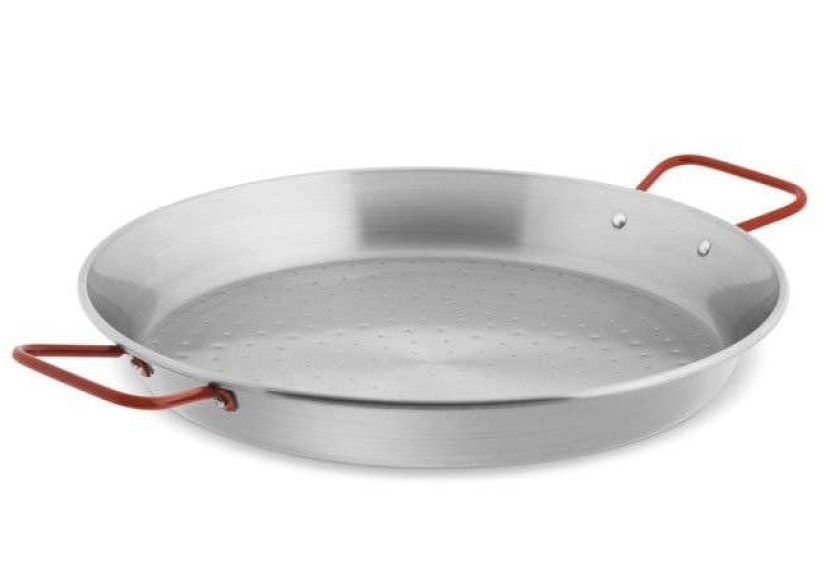
A traditional steel paella pan looks deceptively simple, but it’s basically engineered for rice texture:
- Wide and shallow shape: Keeps the rice in a thin layer so it cooks evenly (and can crisp).
- Gently sloped sides: Helps evaporation and makes it easier to move ingredients early on.
- Loop handles: Practical for lifting a large pan and rotating it for even heat.
- Dimpled or textured base (common): Often included to encourage more uniform heating across the bottom.
That “wide and shallow” part isn’t a design trend. It’s the whole point. Paella isn’t meant to be stirred into creaminess. It’s meant to cook as a thin blanket of rice that absorbs broth, finishes dry, and develops a toasted base.
Why Steel Paella Pans Make Better Paella Than Deep Pans
Paella is a moisture-management sport. The goal is for the rice to absorb flavorful liquid, then finish with the surface relatively dryso the bottom can brown. If you cook in a deep pot or high-sided pan, you trap steam and slow evaporation. The result is often softer rice, less separation of grains, and a sad absence of crispness.
A traditional steel paella pan speeds evaporation because:
- More liquid is exposed to air (big surface area).
- Heat spreads across a broad base (more consistent simmering).
- The rice layer stays shallow (more even absorption).
In other words: it’s not just a panit’s a texture machine. A slightly dramatic texture machine, but still.
Choosing the Right Size: Don’t Buy a Pan Bigger Than Your Heat
The most common mistake with a traditional steel paella pan is buying the biggest one you can afford and then trying to cook it on a single home burner. It’s like trying to toast a king-size tortilla on a candle. You can do it, but your patience will file a complaint.
Use this as a practical size guide for typical portions (assuming a thin, traditional rice layer):
| Pan Diameter | Best For | Typical Servings | Heat Source Notes |
|---|---|---|---|
| 12–13 inch | Weeknight paella | 2–4 | Most stovetops handle this well |
| 14–15 inch | Small gathering | 4–6 | May need rotating on some stoves |
| 16–18 inch | Party paella | 6–10 | Better on grill/paella burner |
| 20+ inch | Showstopper | 10–16+ | Ideally a dedicated paella burner |
Rule of thumb: Match the pan to your heat source first, your guest list second. If you want to feed 10 people on a stovetop, consider making two smaller paellas back-to-back. You’ll get better results and fewer “why is the middle raw?” questions.
Heat Sources: How to Get Even Cooking at Home
Gas Stovetop
Gas gives you responsive control, which is great for paella. But most burners are smaller than a paella pan, so you may need to rotate the pan every few minutes during simmering to distribute heat. For larger pans, using two burners (if your stove layout allows) can helpstill rotate for best results.
Electric Coil or Smooth-Top
Electric tends to heat slower and retain heat longer. That means you should:
- Preheat gradually so the pan warms evenly.
- Avoid extreme high heat early (it can scorch one area before the rest catches up).
- Rotate the pan if the burner is smaller than the base.
Induction
Carbon steel is magnetic, so it can work on inductionif the pan has a flat base and fits the induction zone. Many large paella pans are too wide for a typical induction element, which can cause a hot center and cooler edges. If induction is your main setup, consider a smaller pan designed with a flatter base.
Grill or Charcoal
Grills are paella-friendly because they provide broader heat coverage. Charcoal adds smokiness and lets you shift the pan to control hot spots. If you’re serious about outdoor paella, this is where a traditional steel pan really shines.
Paella Burner
A dedicated paella burner is the closest “authentic-style” option at home because it’s made to heat the whole base. If you love hosting and want big-pan paella regularly, this setup is the least stressful way to get consistent results.
Seasoning a Traditional Steel Paella Pan (Yes, You Should)
Most carbon steel paella pans arrive with a protective coating to prevent rust during shipping. Before your first cook, you’ll want to remove that layer and build a starter seasoning. Think of seasoning as “turning steel into a low-maintenance cooking surface with a better attitude.”
Step-by-Step Starter Seasoning
- Wash thoroughly: Use hot water and dish soap to remove the factory coating. (This is one of the rare moments when soap is your friend.)
- Optional vinegar simmer: Simmer water with a small splash of vinegar for a few minutes, then rinse. This can help remove stubborn residue and prep the surface.
- Dry immediately: Towel-dry, then place the pan over low heat to evaporate any remaining moisture.
- Oil lightly: Add a tiny amount of neutral, high-smoke-point oil (grapeseed, canola, vegetable). Wipe it over the interior (and lightly over the rim). You want a thin sheen, not puddles.
- Heat until it smokes: Heat until the oil polymerizes and the surface begins to darken. Ventilate your kitchen like you’re auditioning for a firefighter calendar.
- Repeat: Do 2–4 thin layers to build a starter patina.
Over time, the pan will darken and become more naturally nonstick. That’s normal. A gorgeous, well-used paella pan should look a little “seasoned-by-life.”
Cooking with a Traditional Steel Paella Pan: The Texture Playbook
You don’t need to memorize a hundred rules to make great paella, but you do need to respect a few principles that the pan is designed for.
1) Build flavor first (before the rice)
Use the pan like a wide sauté surface: brown proteins (chicken, rabbit, seafood added later), cook vegetables, and develop a flavorful baseoften a tomato-and-onion-forward sofrito. That wide steel surface helps you get browning instead of steaming.
2) Spread the rice evenlyand then stop stirring
Once you add rice and broth, distribute it into an even layer. After that: no stirring. Stirring releases starch and pushes you toward risotto territory. Paella wants separated grains with a dry finish.
3) Manage liquid like a pro
Because the pan is shallow, you can spot dry patches. If one area is drying too fast, spoon a little hot broth over it instead of stirring the rice around. Think “targeted hydration,” not “rice tornado.”
4) Chase socarrat with your senses
Near the end, when most liquid is absorbed, you can increase heat briefly to toast the bottom. Listen for a gentle crackle and watch for aroma changesfrom steamy saffron to nutty toastiness. Then pull it off the heat and let it rest a few minutes. The rice settles, the flavors meld, and the bottom crust becomes easier to lift in satisfying shards.
Cleaning and Maintenance: Keep It Rust-Free Without Babysitting It
A traditional steel paella pan doesn’t need complicated ritualsjust consistency.
After each cook
- Cool slightly: Don’t shock it with cold water while blazing hot.
- Wash gently: Warm water and a soft brush or sponge. Mild soap is okay occasionally, but avoid aggressive scrubbing that strips seasoning.
- Dry completely: Towel-dry, then heat the pan briefly to evaporate hidden moisture.
- Oil lightly: Wipe a whisper-thin layer of oil on the cooking surface before storing.
Don’t: put it in the dishwasher, leave it soaking, or store it wet. Steel pans are tough, but they’re not fans of long, damp naps.
What about tomatoes and acidic ingredients?
Paella often includes tomatoes in the base, and that’s fine for most seasoned pans because it’s not usually a long, acidic braise. The bigger issue is leaving acidic food sitting in the pan for hours after cooking. Serve, enjoy, then clean itfuture you will be grateful.
Rust, Sticky Spots, and Other Drama (Fixable, Promise)
Carbon steel can rust if moisture hangs around. The good news: rust usually looks scarier than it is.
If you spot rust
- Scrub with a non-soap abrasive like a scrub pad or steel wool until the rust is gone.
- Rinse, dry thoroughly over heat.
- Apply a thin oil layer and re-season the affected area (or the whole pan if it’s had a rough week).
If the pan feels sticky
Sticky seasoning is almost always caused by too much oil during seasoning. Strip the tacky layer with hot water and scrubbing, then re-season using much thinner coatswipe the oil like you’re trying to erase it, not paint it on.
Buying Checklist: What to Look For in a Traditional Steel Paella Pan
- Material: Carbon steel (polished) if you want the classic experience; stainless/enamel if you want lower maintenance.
- Thickness: Thin enough to respond quickly, sturdy enough not to warp easily.
- Handles: Strong loop handles for lifting and rotating.
- Base design: Subtle texture/dimples can help distribute heat.
- Heat compatibility: Match pan size to your stove, grill, or burner setup.
Real-World Experiences With a Traditional Steel Paella Pan (About )
Cookware guides can sound perfect on paper. Real life is more like: “Why is my pan turning orange?” and “Is my smoke alarm part of the recipe?” Here are common experiences home cooks report when they start using a traditional steel paella panplus what they learn.
The First-Rust Panic
Many people’s first experience with a carbon steel paella pan is spotting a little rust after the first wash. It usually happens when the pan air-dries “for just a minute” (which steel interprets as “please oxidize me”). The lesson: dry immediately, warm it over heat, then wipe with a tiny bit of oil. Once that habit is locked in, rust becomes a rare cameo instead of a recurring villain.
The “My Pan Is Bigger Than My Burner” Reality Check
A classic moment: someone buys a gorgeous 18-inch paella pan, puts it on a standard burner, and wonders why the center is racing while the edges are basically on a spa day. The fix is surprisingly simplerotate the pan periodically, or move the heat source (grill/charcoal/burner) to match the pan. Plenty of cooks also discover that making two smaller paellas often beats one giant “uneven adventure” on a stovetop.
The Socarrat Anxiety Spiral
Socarrat is the crunchy prize at the bottomand also the reason people hover like nervous helicopters at the end. Most cooks learn to use their senses: listen for a gentle crackle, smell for that nutty toastiness, and resist the urge to poke the rice. The best surprise? Socarrat doesn’t require violence. A short heat boost at the end, followed by rest time, usually does the trick without turning the bottom into charcoal.
The “Don’t Stir” Discipline Test
Stirring is comforting. Stirring feels like control. Paella is the opposite: it rewards restraint. Many cooks say the hardest part was walking away for a few minutes and trusting the pan. Once they do, the payoff is obviousdistinct grains, better texture, and a more even finish. The pan’s wide shape helps you see what’s happening, so you can adjust heat or add a splash of broth to dry spots without stirring the rice into mush.
The Cleanup Temptation
After a big dinner, the urge to “just soak it overnight” is strong. And that’s how steel pans get rusty. Seasoned paella-pan owners tend to adopt a simple rhythm: serve, scrape leftovers, rinse warm, dry over heat, oil lightly, done. It becomes a 3-minute habit that saves 30 minutes of rust-removal therapy later.
The First Big Win
Eventually, most cooks have a “this is it” moment: the rice is evenly cooked, the top is dry but tender, and the bottom lifts in golden-brown shards. That’s when the traditional steel paella pan stops feeling high-maintenance and starts feeling like a tool that’s genuinely on your sideespecially for gatherings, where serving straight from the pan turns dinner into a shared experience (and a polite competition for the crispiest bite).
Conclusion
A traditional steel paella pan isn’t just a piece of cookwareit’s the shortcut to what makes paella memorable: wide-surface flavor development, rice cooked in an even layer, and that signature crisp bottom. Choose a size your heat source can support, season it lightly, keep it dry, and don’t stir once the broth goes in. Do those things, and your pan will reward you with the kind of paella that makes people stop talking mid-bite (the best compliment in food).