Table of Contents >> Show >> Hide
- Why Dr. Seuss Keeps Becoming a Headline
- The Top 10 Times Dr. Suess Was Controversial
- 1) The WWII Cartoon That Painted Japanese Americans as a “Fifth Column”
- 2) The Broader Set of Wartime Cartoons Using Racist Stereotypes
- 3) Early “College Humor” Cartoons With Anti-Black and Anti-Semitic Stereotypes
- 4) And to Think That I Saw It on Mulberry Street and the “Chinese Man” Stereotype
- 5) If I Ran the Zoo and the “Exotic” Stereotypes Problem
- 6) The 2021 Decision to Stop Publishing Six Seuss Books
- 7) The “Melania Trump Book Donation” Rejection That Went Viral
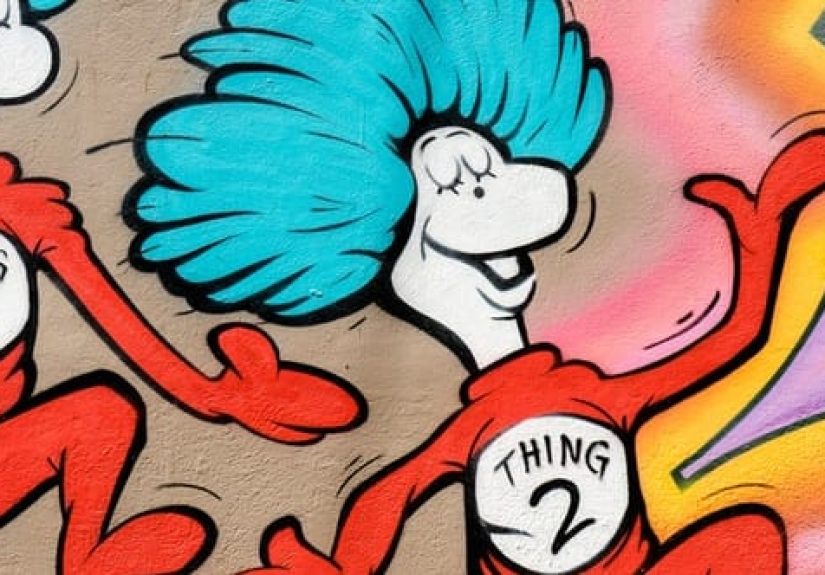
- 8) The Dr. Seuss Museum Mural Controversy in Springfield
- 9) Read Across America Shifts Away From Seuss Branding
- 10) The Lorax vs. the Logging Town (and the “Politics in Picture Books” Debate)
- What These Controversies Add Up To
- How to Talk About Dr. Seuss Controversies Without Turning It Into a Shouting Match
- FAQ
- Experiences Around “Top 10 Times Dr. Suess Was Controversial” (Extra Reading)
- Conclusion
Quick spelling note: the author’s pen name is usually spelled Dr. Seuss (Theodor Seuss Geisel). People still misspell it all the timehonestly, he’d probably rhyme about that and then give the typo a hat.
Dr. Seuss is one of those “your childhood lives here” creators: silly sounds, bendy creatures, and enough made-up words to power an entire Scrabble tournament. But if you’ve noticed his name popping up in argumentsabout racism, censorship, school celebrations, or old political artyou’re not imagining things. His legacy is a mix of beloved storytelling and real controversies that keep resurfacing as culture changes, archives get digitized, and institutions rethink what they promote to kids.
This article synthesizes reporting and research from reputable U.S. outlets and institutions (including major newsrooms, education publications, libraries, and museum/association resources) to map out the 10 biggest “Seuss got people talking” momentswith context, specifics, and what the debates usually miss.
Why Dr. Seuss Keeps Becoming a Headline
Two things can be true at once: Seuss wrote innovative, influential children’s books, and some of his work contains stereotypes and imagery that many readers now recognize as harmful. Add the fact that his career spanned eras with very different norms, and you get a legacy that’s constantly being re-litigatedespecially when schools, libraries, and publishers are deciding what to spotlight for children today.
Also, Seuss wasn’t “just” a children’s author. He was a prolific illustrator and political cartoonist with a long paper trail. When those earlier works became easier to access, the public conversation changed fast.[1]
The Top 10 Times Dr. Suess Was Controversial
-
1) The WWII Cartoon That Painted Japanese Americans as a “Fifth Column”
One of the most cited controversies is a World War II-era political cartoon published after Pearl Harbor that depicts Japanese Americans on the U.S. West Coast as potential saboteurslined up for explosives in a way that suggests treason. Historians and museums have pointed out how this kind of imagery fueled wartime hysteria and reinforced prejudice that helped justify the incarceration of Japanese Americans.[2]
Why it still hits hard: it isn’t just “old art.” It’s propaganda with real-world consequences, and it complicates the “Seuss equals warm fuzzies” story people grew up with. The controversy today often centers on whether institutions should display this work prominently, and if they do, whether they owe visitors context that explains the harm rather than treating it like quirky vintage satire.
-
2) The Broader Set of Wartime Cartoons Using Racist Stereotypes
That “fifth column” image isn’t a one-off. During the early 1940s, Geisel produced hundreds of editorial cartoons for the New York paper PM, many of them anti-fascist and sharply critical of bigotryyet some still relied on racist caricatures when portraying Japanese people. The tension is part of what makes the debate so heated: the same artist could be punching up at authoritarianism in one frame, then leaning on dehumanizing stereotypes in another.[1]
Modern readers tend to split into two camps: “judge the whole archive as a product of its time” versus “acknowledge the time period but don’t excuse racist imagery.” A more useful middle ground is to treat the cartoons as evidence of how propaganda workseven when created by someone capable of moral messaging elsewhere.
-
3) Early “College Humor” Cartoons With Anti-Black and Anti-Semitic Stereotypes
Scholarly work has documented that, as a student, Geisel published cartoons that included racist and anti-Semitic stereotypes in his college humor magazine. These materials are frequently referenced in later debates because they show that problematic imagery wasn’t confined to a single decade or a single bookthere’s a longer arc of offensive caricature in his output, especially early on.[3]
This controversy tends to flare up when people argue, “But he wrote books about equality later!” The point isn’t to deny later themes. It’s to be honest that “later themes” don’t erase earlier damage. When schools or libraries present Seuss as a pure symbol of childhood, these discoveries feel like a betrayalespecially for readers from communities mocked by those caricatures.
-
4) And to Think That I Saw It on Mulberry Street and the “Chinese Man” Stereotype
One of Seuss’s earliest children’s books includes an Asian character depicted through a familiar set of old stereotypes (costuming and exaggerated features). The book became a frequent example in discussions about racial caricature in classic children’s literature, and later reporting noted that earlier editions used even more offensive wording that was changed decades agowithout fully removing the underlying stereotype.[4]
The controversy here isn’t just “did Seuss write a stereotype?” It’s “what do adults do with a beloved classic that contains bias?” Some argue for keeping the book with guidance and conversation; others argue that the images are too normalized for kids and should not be promoted as a default read. Either way, Mulberry Street became one of the central titles cited in debates about Seuss and race.[4]
-
5) If I Ran the Zoo and the “Exotic” Stereotypes Problem
If I Ran the Zoo has been criticized for depicting Black people through colonial-style “exotic” tropestreating cultures as costumes and reducing people to stereotypes. The illustrations were widely discussed in education and publishing circles because children’s books don’t just entertain; they quietly teach kids what “normal” looks like and who gets to be a full person on the page.[4]
In debates, defenders sometimes say, “Kids don’t notice.” But kids absolutely notice patterns, even if they can’t name themwho gets to be the hero, who is background scenery, and who is drawn as a joke. The controversy around this book helped push larger conversations about representation in children’s publishing beyond “intent” and toward “impact.”
-
6) The 2021 Decision to Stop Publishing Six Seuss Books
In March 2021, Dr. Seuss Enterprises announced it would stop publishing and licensing six titles because of “hurtful and wrong” portrayals. The move was widely covered, immediately polarizing, and often mislabeled in public discourse as a government “ban.” It wasn’t: it was a rights-holder (the estate/company) choosing to discontinue certain books in its own catalog.[6]
Why it exploded anyway: Seuss had become more than an authorhe was a cultural mascot. So a catalog decision turned into a national argument about “cancel culture,” free speech, and who gets to decide what kids see. The more grounded takeaway is practical: publishers and estates make these calls all the time, but it’s rare for the subject to be a childhood icon with decades of school-time branding.
-
7) The “Melania Trump Book Donation” Rejection That Went Viral
In 2017, a Massachusetts school librarian publicly declined a donation of Dr. Seuss books connected to then–First Lady Melania Trump, arguing that some Seuss imagery contains racist stereotypes and that the gesture didn’t address deeper inequities in school resources. The exchange spread widely and became a flashpoint: some praised the librarian for calling out stereotypes in children’s classics; others framed it as disrespectful or overly political.[5]
This moment mattered because it moved the Seuss debate from academic and library circles into mainstream political conflict. It also showed how quickly “book talk” turns into “identity talk” in the U.S.especially when schools, public officials, and national symbols (like literacy celebrations) are involved.
-
8) The Dr. Seuss Museum Mural Controversy in Springfield
A museum dedicated to Seuss’s work replaced a mural derived from Mulberry Street after complaints that it included an offensive Asian stereotype. The change sparked its own backlash and support, essentially replaying the broader argument on a smaller stage: are we “erasing history,” or are we deciding what images deserve a prominent place in a family-focused space?[8]
One reason this got heated is that museums are not neutral storage closetsthey’re curated storytellers. Swapping a mural is a statement about what a museum believes visitors should see without needing a graduate seminar to process it. Critics of the swap often worry about sanitizing the past; supporters argue public spaces shouldn’t casually display stereotypes, especially when kids are the main audience.
-
9) Read Across America Shifts Away From Seuss Branding
For years, many Americans mentally linked Read Across America with Seuss’s birthday and the Cat in the Hat. But education leaders and literacy advocates increasingly emphasized promoting diverse books and authorsrather than centering one brand. The National Education Association ultimately ended its licensing relationship and phased out Seuss-centric branding for the national campaign.[9]
This controversy tends to get oversimplified as “teachers canceled Seuss.” What’s more accurate: a major literacy campaign chose to broaden representation and reduce dependency on a single commercial property. That decision became symbolic because it collided with nostalgiapeople don’t just remember Seuss books; they remember being read to. That’s an emotional argument, not just a policy one.
-
10) The Lorax vs. the Logging Town (and the “Politics in Picture Books” Debate)
Long before the 2021 headlines, Seuss books were already sparking challenges. A famous example: The Lorax drew criticism in a California logging community, with objections that it portrayed the timber industry unfairly. The dispute became a classic case study in how children’s books can collide with local economics and identityespecially when a story feels like it’s judging someone’s way of life.[10]
Unlike the racism-related controversies, this one is less about harmful depiction of a group and more about message and interpretation: is The Lorax anti-industry propaganda, or a fable about sustainability and consequences? The answer depends on where you live, what you do for work, and whether you read the Once-ler as “one bad actor” or “a stand-in for modern consumption.”
What These Controversies Add Up To
If you zoom out, the pattern is pretty clear:
- Some controversies are about content (stereotypes in books and cartoons).
- Some are about institutions (schools, museums, and literacy campaigns deciding what to feature).
- Some are about symbols (Seuss as “childhood,” and how people react when symbols get questioned).
The strongest conversations don’t try to “win” by pretending only one side has a point. They do two harder things: (1) tell the truth about the harm in certain images, and (2) recognize why people feel protective of the books that taught them to love reading.
How to Talk About Dr. Seuss Controversies Without Turning It Into a Shouting Match
Use the “three questions” rule
- What’s on the page? (Describe the image or message plainly.)
- Who might it hurt? (Consider impact, not just intent.)
- What’s the goal today? (Teach history? Celebrate reading? Choose inclusive books?)
Don’t confuse “not publishing” with “erasing”
A company discontinuing a title isn’t the same as wiping it from history. Libraries, archives, and scholars will still study these works. The question is whether certain books should be promoted as go-to classics for kids without context.
Remember: kids’ books are culture’s training wheels
Picture books are often the first “society lessons” kids receive. That’s why small images can cause big debates: they aren’t just artthey’re early maps of whose humanity is centered.
FAQ
Is Dr. Seuss “banned”?
No. The best-known recent change was a rights-holder deciding to stop publishing certain titles. Many Seuss books remain widely available in stores and libraries.
Should schools stop reading Dr. Seuss entirely?
Different communities make different choices. A common middle path is to keep widely loved Seuss titles that don’t rely on stereotypes, while expanding classroom reading lists to include diverse authors and newer classics.
Is it possible to appreciate Seuss and still criticize him?
Yes. Cultural maturity is basically “I can love the wordplay and still be honest about the parts that aged badly.” Two truths, one bookshelf.
Experiences Around “Top 10 Times Dr. Suess Was Controversial” (Extra Reading)
People’s experiences with Dr. Seuss controversies tend to follow a surprisingly similar emotional scriptespecially if Seuss was part of their childhood. First comes the nostalgia: memories of classrooms with paper Cat-in-the-Hat hats, parents doing goofy voices at bedtime, and that warm feeling of “books can be weird and fun.” For many readers, Seuss is less a person than a time machine. That’s why controversy can feel personal, like someone criticized your favorite childhood blanket.
Then comes the double-take moment, often triggered by seeing a specific image from an older title out of its original contextshared on social media, shown in a news segment, or discussed in a class. A lot of people describe a mental rewind: “Wait… how did I not notice that?” That reaction is common because kids often focus on rhythm and silliness, while adults can step back and recognize stereotypes, power dynamics, and who is treated as a joke. It’s not that readers were “bad” for not noticing as children; it’s that the brain you have at seven is not the same brain you have at seventeenor thirty-seven.
In libraries and classrooms, the experience is often more practical than ideological. Librarians talk about shelf space and collection curation: deciding what to buy, what to keep, and what to retire as communities change. Teachers talk about lesson planning: whether a book supports the values they’re trying to teach, and whether it helps all students feel seen. For educators, Seuss controversies can feel like a pop quiz with no perfect answer: if you keep a problematic title, you may need context; if you remove it, some families may accuse you of censorship. Either way, you’re suddenly managing adults’ emotions while trying to keep kids reading.
Many families experience the controversy as a conversation starter. A parent might be rereading a book from their childhood and realize the images don’t match the inclusive world they want for their kids. That can lead to a thoughtful “then vs. now” talk: explaining that older books sometimes reflect harmful ideas from their era, and that we can choose better stories today without pretending the past never happened. For teens, the experience can be even sharper: you’re old enough to analyze culture, but you still remember the comfort of childhood favorites. That tensioncomfort vs. critiqueis exactly where media literacy grows.
Finally, a lot of people come out of the Seuss debates with a broader experience that has nothing to do with one author: the realization that artifacts of the past are not automatically role models for the present. Dr. Seuss becomes a case study in how culture evolves. Some readers respond by deepening their reading listsfinding contemporary authors who deliver imagination without stereotypes. Others respond by learning how to read older classics critically, appreciating craft while naming harm. Either way, the most valuable “experience” isn’t outrage or defensiveness. It’s the skill of holding complexitybecause the world is full of beloved things that deserve a second look.
Conclusion
Dr. Seuss controversies don’t persist because Americans suddenly forgot how to enjoy rhymes. They persist because Seuss sits at the intersection of childhood, education, race, and cultural memory. When that intersection gets questioned, people react loudly.
The most useful approach is neither “Seuss is untouchable” nor “Seuss is trash.” It’s: read with eyes open. Keep what’s joyful and harmless, retire what’s hurtful, and use the messy parts as a chance to teach how culture changesand why that matters.