Table of Contents >> Show >> Hide
- Why Would a Rock Smell Like Rotten Eggs (or Oil, or Garlic)?
- How to “Smell-Test” Rocks Without Making Bad Life Choices
- Top 10 Rocks That Stink
- 1) Fetid Barite (“Stinkstone” Barite)
- 2) Petroliferous Limestone (a.k.a. “Stinkstone” Limestone)
- 3) Fetid Calcite (and Some Fetid Carbonate Rocks)
- 4) Native Sulfur
- 5) Sphalerite (Zinc Sulfide)
- 6) Pyrite (“Fool’s Gold”)Especially When It’s Decaying
- 7) Marcasite (Pyrite’s Temperamental Cousin)
- 8) Arsenopyrite
- 9) Phosphorite / Phosphate Rock (Especially Nodules)
- 10) Bituminous Shale / Oil Shale (and Other Organic-Rich Shales)
- Quick Field Guide: What the Smell Usually Means
- Conclusion
- Experiences: 5 Very Real Ways Smelly Rocks Sneak Into Your Life (And Your Backpack)
Rocks are supposed to be quiet, dependable, andmost importantlyodorless. And yet, every so often you crack one open and it hits you with a scent profile
that can only be described as “swampy breakfast burrito left in a hot car.” Welcome to the weird and wonderful world of smelly rocks and minerals.
The surprise is that a rock’s stink usually isn’t magicit’s chemistry. Some specimens trap sulfur-bearing gases, others hold tiny droplets of petroleum,
and some are packed with organic matter that’s been “cooking” underground for millions of years. Break, scratch, or rub them, and those trapped compounds
finally get their moment on stage… directly into your nose.
Why Would a Rock Smell Like Rotten Eggs (or Oil, or Garlic)?
Most “stinky rock” stories boil down to a few repeat offenders:
-
Hydrogen sulfide (H2S): The classic rotten-egg smell. It’s common in geothermal areas and can be released when certain rocks or minerals are scratched,
crushed, or otherwise annoyed. -
Elemental sulfur (S): Native sulfur can have a noticeable odor, but it’s not exactly the same as rotten eggs. People often mix them up because they travel in the same
“volcanic/gas” neighborhood. - Petroleum and bitumen: Some limestones and shales contain hydrocarbons. Freshly broken surfaces can smell like kerosene, asphalt, or crude oil.
- Organic-rich phosphate rocks: Certain phosphate nodules can smell like decayed organic matter when rubbed together.
- Arsenic-bearing minerals: A few minerals are famous for a sharp “garlic-like” odor when struck or heated (don’t heat themmore on that in the safety section).
How to “Smell-Test” Rocks Without Making Bad Life Choices
Before we get to the list: please don’t deep-inhale like you’re judging a wine competition. Some gases (especially hydrogen sulfide) can be harmful at higher concentrations,
and some minerals contain toxic elements (hello, arsenic). If you’re going to sniff at all:
- Only sniff briefly and from a distance, preferably outdoors or in a well-ventilated area.
- Don’t grind rocks into dust just to “improve the bouquet.” Dust is the enemy of lungs.
- Never heat specimens to “bring out the aroma.” That’s how you turn geology into a hazardous materials incident.
- Wash hands after handling rocks, especially sulfides and arsenic-bearing minerals.
- Keep kids and pets away from your stinky collection experiments.
Top 10 Rocks That Stink
1) Fetid Barite (“Stinkstone” Barite)
Smell: Rotten eggs, bold and unapologetic.
Why it stinks: This variety of barite is nicknamed “fetid” because scratching, rubbing, or knocking pieces together can release a strong sulfurous odoroften described as
hydrogen sulfide.
Where you’ll run into it: Fetid barite is famously associated with Pennsylvania “stink stones” in rock-collecting lore.
Collector tip: You usually need a fresh scratch (think: nail, metal file, or a quick rub on a streak plate) for the smell to show up.
2) Petroliferous Limestone (a.k.a. “Stinkstone” Limestone)
Smell: Petroleumkerosene, asphalt, or crude-oil vibes.
Why it stinks: Some limestones contain bitumen or other hydrocarbons. When freshly fractured, those compounds can volatilize enough to be noticeable.
Where you’ll run into it: Petroleum-odor limestones are documented in parts of the central U.S.; some beds are so “oily” that the smell is mentioned right alongside the rock description.
Collector tip: Fresh break matters. Weathered surfaces often lose the odor over time, like a perfume bottle left uncapped for a week.
3) Fetid Calcite (and Some Fetid Carbonate Rocks)
Smell: Hydrogen-sulfide-likesharp, sulfurous, and “please open a window.”
Why it stinks: Certain calcite can release hydrogen sulfide when scratched, struck, or pulverized. Research descriptions point to trapped gases and tiny cavities (“fluid inclusions”)
as the culprit: disturb the mineral, and the gas escapes.
Where you’ll run into it: Fetid calcite shows up in collections and carbonate regions where sulfur-bearing fluids interacted with carbonate minerals.
Collector tip: A light scratch can be enough. No need to go full construction crew with a sledgehammer.
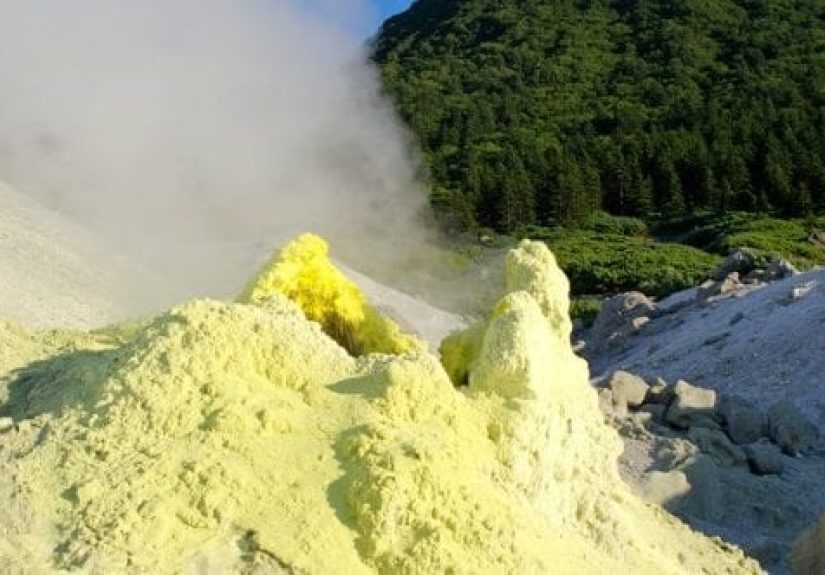
4) Native Sulfur
Smell: “Sulfur smell,” sometimes confused with rotten eggs.
Why it stinks: Native sulfur is elemental sulfur, while the classic rotten-egg odor is hydrogen sulfide gas. In natureespecially around volcanic and geothermal settingsyou often encounter both,
which is why the smells get lumped together in everyday speech.
Where you’ll run into it: Volcanic and geothermal areas can host native sulfur deposits, sulfur crusts, and sulfur-stained rock.
Collector tip: Sulfur is soft. If you’re handling it, be gentleand avoid rubbing your eyes afterward.
5) Sphalerite (Zinc Sulfide)
Smell: Sulfur / “matchstick” odor when scratched or streaked.
Why it stinks: As a sulfide mineral, sphalerite can release sulfurous odors when abraded (especially on a streak plate). The smell tends to be more noticeable with fresh powder or a vigorous scratch.
Where you’ll run into it: Common in lead-zinc mining districts across the U.S.
Collector tip: If you’re unsure you’ve got sphalerite, streak and specific gravity clues helpjust don’t turn the test into a dust storm.
6) Pyrite (“Fool’s Gold”)Especially When It’s Decaying
Smell: Sulfurous or acidic/sulfur-like odors in some cases (especially in deteriorating specimens).
Why it stinks: Pyrite can oxidize in humid conditionsa process known among collectors and museums as “pyrite decay” or “pyrite disease.” This can produce acidic byproducts and an unpleasant odor,
along with crumbly residue that damages specimens (and nearby items).
Where you’ll run into it: Anywhere pyrite is foundplus museum drawers where humidity control lost the fight.
Collector tip: Store pyrite dry. If a specimen starts crumbling or smelling “off,” isolate it and reduce humidity.
7) Marcasite (Pyrite’s Temperamental Cousin)
Smell: Sulfur smell can appear, particularly as it oxidizes.
Why it stinks: Marcasite (also iron sulfide) is notorious for instability compared with pyrite. Oxidation can produce unpleasant odors and deteriorationbad news for collectors, jewelry, and anyone
who keeps it in a damp basement.
Where you’ll run into it: Sedimentary environments and some coal-related settings; it also appears in “marcasite jewelry” discussions (often with name confusion in the trade).
Collector tip: If you’re collecting marcasite, think “low humidity” and “good airflow,” not “sealed damp box of regret.”
8) Arsenopyrite
Smell: Often described as garlic-like when struck, scratched, or heated.
Why it stinks: Arsenopyrite is an arsenic-bearing sulfide mineral. Disturbing it can release volatile compounds that people describe as “garlic.”
Where you’ll run into it: Hydrothermal veins and ore deposits; it’s widely known in mineral ID references.
Collector tip: This is a “look, don’t lick, don’t heat” specimen. Handle carefully, wash hands, and don’t create dust.
9) Phosphorite / Phosphate Rock (Especially Nodules)
Smell: Decayed organic matterswampy, fishy, or just plain “ew.”
Why it stinks: Some phosphate nodules contain or are associated with organic material. Historical geologic descriptions note that rubbing two fragments together can release an odor of decayed organic matter.
Where you’ll run into it: Phosphate-bearing sedimentary deposits across the U.S., including well-known Western phosphate regions and other sedimentary basins.
Collector tip: The “rub test” is the classic trigger. Do it outside and keep it briefyour nose doesn’t need a long meeting with ancient funk.
10) Bituminous Shale / Oil Shale (and Other Organic-Rich Shales)
Smell: Petroleum, tar, or oily odor on a fresh break.
Why it stinks: Organic-rich shales can contain hydrocarbons (or hydrocarbon-generating organic matter). Freshly broken surfaces may smell strongly of petroleumespecially in certain formations described in U.S. geologic reports.
Where you’ll run into it: Marine and lake-bed shale formations, including some coastal California units and other organic-rich shale basins.
Collector tip: If a black shale smells like oil when snapped, you’ve found a rock with a “past life” as a potential source rock.
Quick Field Guide: What the Smell Usually Means
- Rotten eggs: Often hydrogen sulfide (H2S)common with sulfides, “fetid” carbonates, and geothermal systems.
- Gasoline/kerosene/asphalt: Hydrocarbons in limestone or shale (petroliferous/bituminous rocks).
- Garlic: A red flag for arsenic-bearing minerals like arsenopyritehandle carefully.
- Swampy/decay: Organic material in sedimentary rocks (phosphorite nodules can do this).
Conclusion
“Stinky rocks” are a reminder that geology isn’t just something you seeit’s something you can accidentally smell from three feet away. Most of the time, the odor comes from sulfur compounds
(especially hydrogen sulfide) or hydrocarbons trapped inside the rock. With a little caution, your nose can be a surprisingly useful (and hilarious) clue in mineral identification.
Just remember: sniff lightly, stay ventilated, and never heat anything that could turn your hobby into a phone call with the words “hazmat” and “so… funny story.”
Experiences: 5 Very Real Ways Smelly Rocks Sneak Into Your Life (And Your Backpack)
The first time you meet a stinky rock, it’s rarely romantic. It’s usually something like this: you’re feeling outdoorsy, you’re carrying a bag of “cool finds,” and you’re convinced you’re one lucky
pebble away from starring in your own geology documentary. Then you split a rockcrackand your nose immediately files a complaint.
1) The “I swear it wasn’t me” car ride.
A classic scenario: you toss a few dark rocks into a backpack or bucket after a hike. The sun warms your car. Ten minutes later, you’re scanning the seats like a detective because something smells
faintly like petroleum… or eggs… or both. This is when organic-rich shale and petroliferous limestone do their best work. Fresh breaks release volatile compounds, and heat makes those compounds more
noticeable. The rock isn’t trying to embarrass you; it’s just very committed to authenticity.
2) The streak-plate surprise.
In a classroom or a home rock kit, you learn the streak test: rub the mineral on a porcelain plate to see the color of its powder. Harmless, right? Then someone streaks a sulfide mineral and you
watch the room’s facial expressions synchronize like a school of fish. Minerals like sphalerite can give off a sulfurous, matchstick-like odor when abraded. Suddenly, “diagnostic property” becomes
“group experience.” It’s science, but also a bonding exercise.
3) The “museum drawer of doom” (collector edition).
If you collect pyrite or marcasite, humidity can turn your display into a slow-motion plot twist. A specimen that looked perfect months ago can start dulling, cracking, and producing a slightly
sulfurous or acidic smell as oxidation ramps up. The odor is often the first clue that something chemical is happeningbefore the crumbly residue really announces itself. The lesson is simple:
rocks may be ancient, but storage conditions are very modern. Dry beats damp every time.
4) The geothermal boardwalk reality check.
If you’ve ever visited a geothermal area and thought, “Why does this beautiful landscape smell like a hard-boiled egg tragedy?”congratulations, you’ve met hydrogen sulfide in the wild. Places with
hot springs, fumaroles, and mudpots can release sulfur gases. It’s fascinating, photogenic, and a reminder to stay on the boardwalk and not lean into vents like you’re trying to hear the earth whisper secrets.
The earth does whisper. Sometimes it whispers “H2S.”
5) The “this rock smells like history” moment.
Some of the most memorable smelly rocks aren’t the ones that smell disgustingthey’re the ones that smell specific. A limestone that gives off an oily scent on a fresh fracture feels like a time capsule:
ancient organic matter, preserved, altered, and still recognizable to the human nose. A phosphorite nodule that smells like decay is basically an audiobook version of deep time, narrated by old organic material.
These moments make you appreciate that rocks aren’t sterile. They’re archives. And sometimes, those archives come with a scratch-and-sniff feature nobody asked for.
If you’re building your own “Top 10 Rocks That Stink” experiences, the best strategy is simple: stay curious, stay cautious, and keep a separate bag for anything that might turn your pocket into a
portable chemistry set. Your future self (and everyone in your car) will thank you.