Table of Contents >> Show >> Hide
- Why Removing Ice Properly Matters
- Step-by-Step: How to Remove Ice From Your Windshield Safely
- What You Should Never Do to Remove Ice from Your Windshield
- How to Prevent Ice on Your Windshield in the First Place
- Extra Winter Safety Tips While You’re Out There
- Real-World Experiences: What Drivers Learn After a Few Winters
- Conclusion: Make De-Icing a Safe Winter Habit
If you’ve ever walked out on a freezing morning, coffee in hand, only to find your windshield covered in a solid sheet of ice, you know the special kind of frustration we’re talking about. You’re already late, your fingers are numb, and that frosty layer is laughing at your plans.
The good news: you don’t need to risk cracking your glass, wrecking your wipers, or doing anything your insurance agent would side-eye. With a few safe, smart tricks used by winter pros (and backed by driver organizations and auto experts in the U.S.), you can remove ice from your windshield quickly and protect your car at the same time.
Let’s walk through how to de-ice your windshield the right way, what not to do, and how to keep ice from forming in the first place.
Why Removing Ice Properly Matters
Clearing ice isn’t just about convenience. It’s a safety and, in some states, a legal issue:
- Visibility: A partially scraped windshield or “peephole” in the ice seriously limits your field of vision and reaction time.
- Flying ice is dangerous: Snow and ice left on your roof or hood can slide onto your windshield or fly off and hit the car behind you at highway speeds.
- State laws: Several U.S. states can ticket you for driving with snow and ice on your car or for impaired visibility. Clearing your windshield properly can help you avoid a fine and an accident.
Bottom line: treating windshield ice removal as part of your regular winter safety routine is just as important as winter tires and slower speeds.
Step-by-Step: How to Remove Ice From Your Windshield Safely
Use this simple system on icy mornings. Think of it as your personal “no-drama de-icing” checklist.
1. Start Inside: Use the Defroster the Right Way
Your car’s climate system is your first helper, not a background extra.
- Start the engine and switch the controls to the front defroster.
- Set the temperature to warm, not “blast furnace.” Very hot air hitting very cold glass can contribute to stress on the windshield.
- Turn on the rear defroster if you have one so your rear window clears while you work on the front.
- Give it a couple of minutes to gently warm the interior side of the glass. This softens the bond between ice and windshield from the inside out.
While the defroster works, you can move on to the outside.
2. Brush Off Loose Snow First
If there’s a layer of snow on top of the ice, remove that before you attack the ice itself. Otherwise, you’ll just smear slush around and make your job harder.
- Use a soft-bristle snow brush (often combined with a scraper on the other end).
- Brush from the roof down: roof, windshield, hood, trunk, and lights.
- Don’t use a shovel or anything metal on the paint or glassscratches today, rust and cracks tomorrow.
3. Use a Proper Ice Scraper Not Whatever’s in the Cup Holder
There’s a reason auto supply stores sell specific tools for this job.
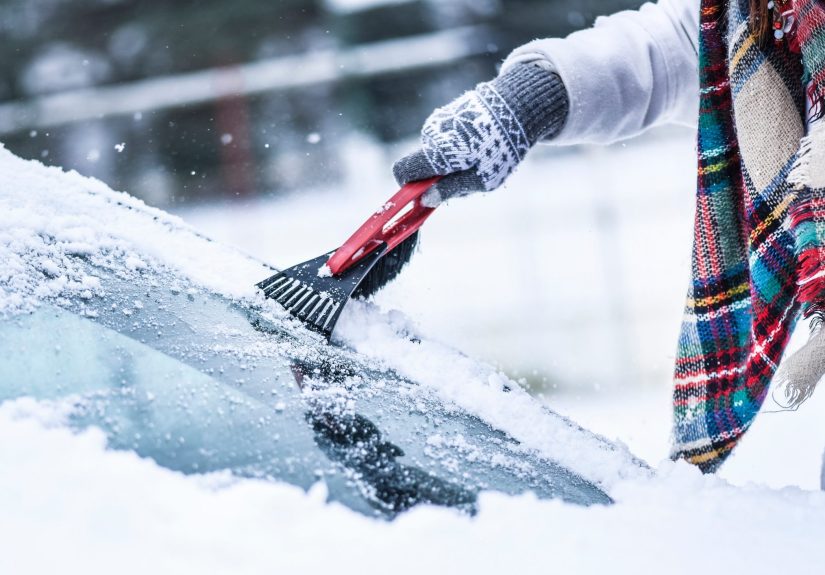
- Choose a plastic ice scraper with a flat scraping edge and a soft brush on the other end.
- Hold the scraper at a slight angle and use short, firm strokes rather than jabbing at the glass.
- Let the defroster do some of the work; ice will usually start to loosen from the edges and wiper area first.
Skip the credit card, metal spatula, or screwdriver. They may look handy, but they can gouge your windshield or damage your car’s weatherstripping and trim.
4. Add a De-Icing Spray for Stubborn Ice
On those mornings where the ice is extra thickor more like a frozen glazea de-icer can save time.
You have two basic options:
Store-Bought De-Icer Spray
- These products are designed to be safe for auto glass and wiper blades.
- Spray a light, even coat over the windshield, wait a minute or two, and then scrape.
- They’re handy to keep in the car (as long as you’re in a climate where the bottle won’t freeze solid).
DIY De-Icer Mix (Use With Care)
Many drivers swear by a homemade windshield de-icer. A common blend is:
- 2 parts rubbing alcohol (isopropyl alcohol) to 1 part water, optionally with a small squirt of dish soap.
Tips for using it safely:
- Mix it in a spray bottle and label it clearly.
- Spray lightly over the ice, let it sit for 30–60 seconds, then scrape.
- Avoid overspraying onto painted surfaces repeatedly. Occasional use is usually fine, but daily soaking isn’t ideal for your car’s finish.
If you’re not sure about DIY mixes, stick to a commercial de-icer they’re tested for automotive use.
5. Save Your Wipers for the Final Clean-Up
Windshield wipers are not snowplows.
- Never turn your wipers on while the blades are still frozen to the glass. You can damage the wiper motor, bend the arms, or tear the rubber.
- Instead, scrape most of the ice off first, then use the wipers to remove the last slush and to clear washer fluid or de-icer residue.
- Upgrade to winter wiper blades if you live in a snowy climate; they’re designed to resist ice buildup.
What You Should Never Do to Remove Ice from Your Windshield
Some “hacks” are more like “how to buy a new windshield in one easy step.” Avoid these common mistakes.
1. Don’t Pour Hot Water on a Frozen Windshield
It’s tempting: kettle, hot water, instant melt… and then, possibly, instant crack.
- The rapid temperature change can cause thermal shock, making existing chips spread or cracking otherwise healthy glass.
- Even very warm water can stress cold glass, especially on extremely frigid mornings.
If you must use water, only use cool or lukewarm water, and even then it’s better to rely on your defroster and scraper instead.
2. Don’t Use Metal Tools
Metal spatulas, paint scrapers, knives, and keys can scrape off more than ice:
- They can leave permanent scratches in the glass, which weaken the windshield and cause glare at night.
- They can damage the rubber trim and weather seals around the windshield.
Stick with plastic scrapers designed for automotive use.
3. Don’t “Peephole Drive”
Scraping a tiny hole in the ice and calling it good is a big no.
- Your peripheral vision is severely limited; you may not see pedestrians, cyclists, or cars coming from the side.
- Depending on where you live, it can also be a violation of traffic laws requiring unobstructed visibility.
Take the extra couple of minutes to clear the entire windshield, side windows, mirrors, and lights.
How to Prevent Ice on Your Windshield in the First Place
No ice is easier to remove than ice that never formed. A few simple habits can save you a lot of scraping time.
1. Park Smart
- Use a garage or carport whenever possible even an open-sided structure can reduce frost and ice buildup.
- If that’s not an option, park facing east so the morning sun hits your windshield first and helps soften the ice.
2. Use a Windshield Cover
A dedicated windshield cover or even a heavy towel, tarp, or sheet can act as a physical barrier between your glass and freezing moisture.
- Apply the cover in the evening when frost or freezing rain is in the forecast.
- Secure it with door closures, straps, magnets, or bungee cords so it doesn’t blow away.
- In the morning, just remove the cover and shake off the ice and snow.
3. Prep Your Car for Winter
Good prep reduces how often you’re fighting a thick ice layer.
- Fill your washer reservoir with winter-grade washer fluid with de-icer so it doesn’t freeze in the nozzles.
- Make sure your defroster works properly and your cabin air filter is clean for strong airflow.
- Replace worn wiper blades with winter or beam-style blades to keep the windshield clearer during storms.
4. Handle Viral “Hacks” with Caution
Social media loves winter tips: rubbing dish soap on glass, slicing onions on your windshield, magic sprays that last “for months.” Some may help reduce fogging or light frost, others may leave streaks, odors, or residue.
If you’re going to experiment, test on a small area first and avoid anything that could harm paint, rubber, or glass. And when in doubt, stick with methods recommended by auto and safety professionals.
Extra Winter Safety Tips While You’re Out There
You’re already bundled up in the cold with a scraper in handmake the most of the trip outside.
- Clear the entire vehicle: Windshield, rear window, side windows, mirrors, headlights, taillights, and the roof.
- Check your wiper blades: Make sure they’re not torn and that the arms move freely once they’re unfrozen.
- Keep a small winter kit in the car: Ice scraper/brush, gloves, small broom, flashlight, and a blanket or extra hat in case you get stuck.
- Drive like it’s icy even if it doesn’t look it: Bridges and overpasses can freeze first, and black ice is almost invisible.
Good visibility plus cautious driving is your best winter safety combo.
Real-World Experiences: What Drivers Learn After a Few Winters
Ask a group of drivers from cold-weather states about their windshield routine, and you’ll hear a mix of hard-earned lessons and “never again” stories. These shared experiences can help you build your own smart strategy for removing ice.
The “Learned the Hard Way” Stories
Many people’s first winter mistake is the hot-water trick. It looks logical: the ice melts instantly, and you’re on your way. Then a loud crack appears across the glass, or a tiny rock chip suddenly becomes a foot-long fracture.
Drivers who’ve gone through that once usually change their tune fast. They’ll tell you that the cost of a new windshield, plus recalibration for advanced driver-assistance systems (like lane-keeping cameras behind the glass), is far more expensive than spending a few extra minutes scraping.
Another classic story: using whatever’s nearby as a scraper. That might be a metal putty knife from the garage or a stiff store loyalty card. The outcome is almost always the samefine scratches in the glass that you don’t notice until the first night drive, when oncoming headlights scatter across your vision. The ice disappears, but the glare problem stays.
The “Two-Minute Routine” That Actually Works
Seasoned winter drivers often have a simple approach they repeat every cold morning:
- Start the car, turn on the defroster, and lock the doors (if local rules allow idling) so no one can just hop in.
- Brush the loose snow off the roof, windshield, hood, and lights.
- Spray a little de-icer on the thickest ice spots.
- Scrape in short strokes from one side to the other, clearing the full glass, not just a small circle.
They know that once this becomes routine, it doesn’t feel like a chorejust another small winter habit, like grabbing gloves on the way out the door.
Regional Differences: Dry Cold vs. Wet Cold
Drivers in places with dry, extremely cold winters (think interior northern states) often deal more with fine frost and thin, stubborn ice. For them, a good defroster and a sharp plastic scraper are usually enough. They’ll tell you that the right winter washer fluid is a game changer on very cold, sunny days when spray from the road constantly mists the windshield and freezes.
In wetter climates or areas that get a lot of freezing rain, the challenge is thicker, heavier ice that glues itself to the glass. People there are more likely to use windshield covers, park under any kind of overhang they can find, and rely on de-icer sprays to break the bond before scraping.
Little Habits that Pay Off Over Time
Talk to experienced winter drivers and you’ll hear about small habits that don’t sound like much but save hassle over the long run:
- Keeping the ice scraper and brush inside the vehicle instead of in the trunk, so they’re always reachable even if the trunk is frozen shut.
- Replacing wiper blades at the start of winter instead of waiting until the first storm exposes how bad they are.
- Carrying an extra pair of cheap gloves in the car so you never have to scrape bare-handed.
- Taking 60 extra seconds to clear the roof and hood, because they’ve seen snow slide down onto the windshield at the worst possible moment.
Drivers who’ve gone through many winters know that it’s rarely the big heroic actions that keep you safe; it’s these little routines repeated every frosty morning.
Why Patience Is Your Best De-Icing Tool
Almost every winter “disaster story” shares a common theme: someone was in a hurry. They skipped clearing a mirror, only scraped half the glass, or tried a risky shortcut to speed the process up. The results can range from a minor scare to a serious collision.
The most experienced drivers will tell you that the best tip for removing ice from your windshield is simple: plan for it. On nights when the forecast calls for freezing temperatures or winter storms, set your alarm a few minutes earlier, park smart, and have your tools ready. When you treat de-icing as a normal part of winter driving instead of an annoying surprise, you’re less likely to cut cornersand far more likely to arrive safely.
Conclusion: Make De-Icing a Safe Winter Habit
Removing ice from your windshield doesn’t have to be a stressful battle between you and frozen water. With a solid routineusing your defroster correctly, relying on proper tools, avoiding risky “hacks,” and preventing buildup when you canyou’ll turn those icy mornings into just another small winter task.
Give yourself a few extra minutes, keep a scraper and de-icer in the car, and treat full visibility as non-negotiable. Your windshield, your wallet, and everyone sharing the road with you will thank you.