Table of Contents >> Show >> Hide
- Quick Overview: What Is The Last Days on Mars?
- Reception Snapshot: Why People Don’t Agree on This Movie
- The Rankings: Where The Last Days on Mars Actually Shines
- The Rankings (Part 2): The Biggest Complaints, Ranked
- How It Ranks Among Mars Movies
- Opinions That Keep Coming Up (And Why They Make Sense)
- The Science Corner: Microbes, Mars, and Why Planetary Protection Exists
- Who Should Watch It? A Practical Viewing Guide
- Conclusion
- Bonus: Viewer Experiences (About )
Mars is already doing the absolute most: it’s freezing, it’s dusty, it has no breathable air, and it’s famously allergic to human comfort.
So naturally, in The Last Days on Mars (2013), the Red Planet decides to add one more item to the itinerary: “astronaut panic with a side of
microbial chaos.” If you’ve ever wondered what happens when a serious-looking science mission gets nudged into space-horror territory… this movie
is basically your answer, delivered with a straight face and a ticking clock.
This article breaks down where the film lands in the “Mars movie” universe, what critics and audiences tend to agree (and fight) about, and a set of
rankings you can use whether you love the movie, hate it, or just want to be the most informed person in the group chat. We’ll keep it spoiler-light
until we label otherwise, and we’ll keep the science talk grounded in realitybecause Mars is scary enough without pretending a single speck of dust
can do that much cardio.
Quick Overview: What Is The Last Days on Mars?
The Last Days on Mars is a sci-fi horror thriller directed by Ruairí Robinson, set during the final stretch of a human mission on Mars. The crew
is closepainfully closeto going home when a possible discovery drags them back into danger. The core hook is simple: the planet may not be dead,
and that “good news” arrives like a prank from the universe.
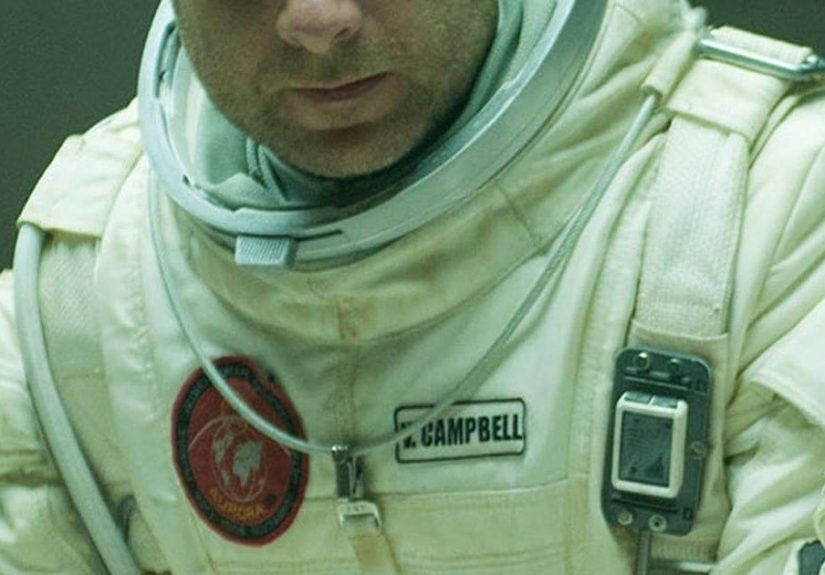
The cast is one of the movie’s biggest selling points: Liev Schreiber plays Vincent Campbell, with key roles for Elias Koteas (Charles Brunel),
Romola Garai (Rebecca Lane), and Olivia Williams (Kim Aldrich). The performances do a lot of heavy liftingespecially when the script is asking
people to make decisions that feel… let’s call them “optimistic for survival.”
Tonally, the film sits between grounded space procedural and classic contained horror. If your ideal vibe is “serious people in serious suits making
serious choices, until the seriousness breaks,” you’re in the right neighborhood.
Reception Snapshot: Why People Don’t Agree on This Movie
If you’ve heard wildly different takes on The Last Days on Mars, that’s not your imagination. The movie has a reputation for splitting viewers into
three camps:
- Camp A: “It’s tense, atmospheric, and better than its reputation.”
- Camp B: “It’s derivative, and the characters behave like they’re speedrunning bad decisions.”
- Camp C: “I like space horror. I will eat this like popcorn and ask no further questions.”
Critic aggregates reflect that tug-of-war: it’s not celebrated as prestige sci-fi, but it’s also not universally dismissed as unwatchable. The most
consistent compliment is about mood, design, and performances; the most consistent complaint is that the story leans heavily on familiar genre
beats and doesn’t always earn its big moments.
The Rankings: Where The Last Days on Mars Actually Shines
Rankings are subjective, but they’re also usefullike a flashlight on Mars. Below is a “strength ranking” that reflects the most common praise from
reviewers and the most noticeable elements on-screen.
Ranking #1: Best Elements of the Film (1 = strongest)
-
Atmosphere and tension.
The film understands isolation. Mars isn’t just a location; it’s a pressure cooker. The base corridors, the wide exterior emptiness, the sense that
rescue is close but not close enoughthose choices keep the movie moving even when the plot stumbles. -
A cast that sells stress.
Space movies live or die on “Do I believe these people are trapped together?” The acting helps you buy the fear, the exhaustion, and the simmering
conflict. Even when the dialogue turns a little “movie-ish,” the performances keep it human. -
A clean, readable setup.
There’s a straightforward premise (final hours, one last risky trip, something goes wrong) that makes the opening easy to follow. You don’t need a
PhD in fictional space agencies to understand what’s at stake. -
Production design that feels lived-in.
The gear, the base, the mission rhythmthere’s enough detail to make the station feel functional rather than fantasy. It’s not “shiny future,” it’s
“hard work in a hostile place.” -
A simple horror engine.
The threat escalates. The movie doesn’t get lost in ten subplots. It keeps returning to one question: “How do you survive long enough to leave?”
The Rankings (Part 2): The Biggest Complaints, Ranked
Now for the “why people groan” list. These aren’t nitpicks; they’re the issues that most often show up in negative reviews and heated comment sections.
Ranking #2: Most Common Problems (1 = most damaging)
-
It feels familiar.
Many critics frame the movie as a remix of better-known sci-fi horror (and sometimes a mashup of multiple classics). If you’re a genre veteran,
you may predict beats before they land. -
Questionable decision-making.
Horror thrives on characters making mistakes, but there’s a fine line between “human error under stress” and “why would trained professionals do
that?” This movie occasionally moonwalks over that line. -
Character depth is uneven.
Some crew members feel sharply drawn; others feel like they exist to fill out the roster and get picked off. When the film asks for emotional weight,
it doesn’t always have the character groundwork to support it. -
Science gets wobbly in the middle.
The core concept is a great horror hook, but the more you think about biology, contamination protocols, and how real missions handle samples, the
more the movie becomes “science-adjacent” rather than science-forward. -
Not enough weirdnessor not enough trashy fun.
This is the movie’s identity crisis: it wants to be serious, but the premise invites glorious B-movie chaos. Some viewers wish it leaned harder in
either direction.
How It Ranks Among Mars Movies
Mars has a surprisingly crowded film résumé. To keep this fair, this ranking is not “best Mars movie ever,” but rather:
how well each film delivers on its own promise.
Ranking #3: “Mars Survival + Suspense” Vibe Check
- The Martian (the gold standard for competence-porn survival, with humor and problem-solving)
- Mission to Mars (big-hearted, sometimes messy, but aims for wonder and emotion)
- The Last Days on Mars (strong mood, strong cast, divisive execution)
- Red Planet (action-forward survival with mixed reception)
- Ghosts of Mars (wild genre fun, but not subtleand not trying to be)
The key takeaway: The Last Days on Mars sits in a middle lane. It’s not the most scientifically celebrated Mars story, and it’s not the most
gleefully over-the-top. It’s the one you recommend to people who want “serious-ish space horror” and don’t mind familiar ingredients.
Opinions That Keep Coming Up (And Why They Make Sense)
Opinion: “It’s tense and watchable… until it isn’t.”
This is probably the most common balanced take. The first half works because it’s grounded: a crew, a base, a risky choice, and a sense of looming
consequence. When the threat becomes more overt, the movie has to compete with decades of horror expectations. If the escalation doesn’t feel
distinct enough, the tension can flatten into “here we go again.”
Opinion: “The cast deserved a sharper script.”
The performances are often better than the plot mechanics. That gap is why viewers can feel frustrated: the movie looks and sounds like it wants to be
a modern classic, but it sometimes plays like a very competent genre exercise that never fully becomes its own thing.
Opinion: “It’s a great ‘late-night streaming’ movie.”
For a lot of fans, this is the sweet spot. The movie’s pace and premise make it ideal for a low-effort watch where you still get atmosphere, stakes,
and a few “nope, absolutely not” moments. Not every film needs to be a masterpiece; some movies are just here to make your couch feel safer than Mars.
The Science Corner: Microbes, Mars, and Why Planetary Protection Exists
The film’s catalyst is the possibility of microbial life. In the real world, scientists take that possibility seriouslybut with much less “instant
outbreak” energy. Mars research focuses on whether the planet once had environments suitable for life, and whether any signs of ancient microbes might
be preserved in rocks.
In 2025, NASA’s Perseverance rover findings were discussed publicly in terms of potential biosignaturessignals that could have a biological origin,
but still need more data to rule out non-biological explanations. That cautious framing matters: science is slow on purpose, especially when the stakes
are “Did life ever exist beyond Earth?”
The other big reality check is planetary protection: the international effort to prevent biological cross-contamination between Earth and
other worlds. That includes:
- Forward contamination: keeping Earth microbes from hitchhiking to Mars and muddying scientific results.
- Backward contamination: ensuring any returned samples are handled with strict containment and review.
Movies often simplify these protocols because strict quarantine and layered containment don’t always translate into fast-paced horror. But the existence
of real planetary protection policies is exactly why “we found life, let’s bring it inside immediately” is treated with intense caution by real missions.
In other words: the film’s premise is fun horror logic, while real-world Mars science is built on careful controls, boring checklists, and people whose
job is basically “don’t accidentally invent the worst Tuesday in human history.”
Who Should Watch It? A Practical Viewing Guide
If you’ll probably like it:
- You enjoy contained thrillers in isolated settings (bases, stations, ships, etc.).
- You like “serious tone” sci-fi horror more than wink-at-the-camera camp.
- You’re in it for atmosphere, not a totally original plot.
If you might bounce off it:
- You need characters to behave with strict professional logic at all times.
- You’ve seen a lot of sci-fi horror and want something structurally fresh.
- You’re hoping for either deep philosophical sci-fi or full-on B-movie chaosthis sits in between.
Conclusion
The Last Days on Mars is best understood as a solid, moody Mars-set horror thriller with a talented cast and a premise that practically prints
tension. It’s also a film that carries the weight of its influencessometimes successfully, sometimes awkwardly. The rankings above point to the
clearest truth: it’s at its best when it leans into isolation and dread, and at its weakest when it asks you to ignore how professionals (and basic
biology) might respond to a crisis.
If you want a movie-night trip to Mars that isn’t trying to be a comfort watch, this one delivers a chilly ride. Just remember: on Mars, no one can
hear you scream… but your group chat definitely can.
Bonus: Viewer Experiences (About )
A big part of The Last Days on Mars is the way it plays differently depending on how you watch it and what you bring into the room. If you press
play at midnight with the lights low, the movie’s strengths show up early: the quiet hum of the base, the wide-open emptiness outside, and the
creeping sense that “home” is close enough to taste but still far enough to be useless. In that setting, the film’s atmosphere does what it’s supposed
to do: it makes Mars feel less like a landscape and more like an argument against human ambition.
Watch it with friends, though, and you’ll probably notice a second layer: the “decision commentary track” that turns on automatically. Someone will
become the designated Protocol Person (“Why are they doing that?”). Someone else will become the Genre Historian (“This is basically the part where it
turns into a classic sci-fi horror setup.”). And at least one person will become the Comfort Comedian who makes jokes the moment tension spikespartly
because that’s how people handle stress, and partly because space suits make everything look both serious and slightly ridiculous.
The movie is also a magnet for post-watch debate. Some viewers walk away appreciating that it tries to keep a straight face and doesn’t turn into
cartoon chaos. Others feel that the seriousness is exactly why the film is frustrating: the production and performances signal “smart sci-fi,” but the
plot sometimes behaves like it’s borrowing shortcuts from simpler monster movies. That gapbetween what the film looks like it wants to be and
what it doesis where most opinions are born.
Another common experience is the “Mars double feature effect.” If you’ve recently watched something like The Martian, where problem-solving is
king and procedures feel credible, The Last Days on Mars can feel more like a nightmare version of space explorationless about competence and
more about vulnerability. But if you come in already craving horror, the film can feel like a satisfying “what-if” that uses Mars as the ultimate
isolation chamber. It becomes less about whether every choice is perfect and more about whether the dread is effective.
Finally, there’s the weirdly fun experience of recognizing how much this movie is about human nature under pressure. Put a small group in a hostile
environment, add exhaustion, add ego, add the temptation of discovery, and you don’t need a villain speech to understand why things spiral. That’s why
some people rewatch it: not because it’s flawless, but because it captures a very specific fearthe fear that the most dangerous thing on Mars might be
the moment you stop thinking like a team.