Table of Contents >> Show >> Hide
- What Is Kumbh Mela, Really?
- A Temporary Megacity Built for Devotion (and Logistics)
- Crowd Psychology 101: The Myth of “Mob Mentality”
- Why Crowds at Pilgrimages Can Become Surprisingly Prosocial
- The Risks: Crowd Crush, Rumors, and Health Hazards
- So What Does Kumbh Mela Teach Us About Crowds Everywhere?
- Conclusion: The Crowd Is Not the VillainConfusion Is
- Experiences: A 500-Word Field Guide to What It Feels Like to Be Inside the Kumbh Crowd
If you’ve ever been in a packed subway car and thought, “Wow, humanity is a lot,” the Kumbh Mela is that feelingmultiplied until your brain starts buffering.
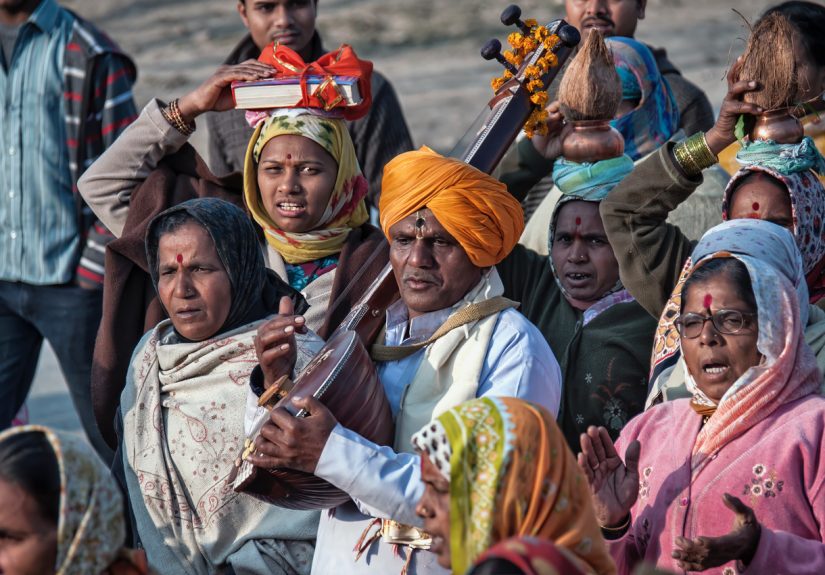
This Hindu pilgrimage festival in India is regularly described as the largest public gathering on Earth, with turnout that can climb into the hundreds of millions across the full event.
It’s a spiritual marathon, an urban-planning magic trick, andif you’re into social psychologya living, breathing lab where theories about crowds stop being abstract and start stepping on your toes (politely, usually).
But here’s the twist: crowds aren’t automatically chaos. The most dramatic stories we hearstampedes, “mob mentality,” and panicaren’t the whole picture.
In fact, modern research suggests that under the right conditions, crowds can be surprisingly cooperative, emotionally meaningful, and even mentally restorative.
The Kumbh Mela is a rare case where the crowd isn’t a side effect; it’s the point.
What Is Kumbh Mela, Really?
Kumbh Mela (literally “pitcher festival”) is rooted in Hindu mythology about a divine pitcher of nectar of immortality. The story goes that drops fell at four sites,
which became the four rotating locations for the festival: Prayagraj (Allahabad), Haridwar, Nashik, and Ujjain.
The central ritual is snana sacred bath in a holy riverbelieved by devotees to cleanse sin and support spiritual liberation.
Certain bathing dates, including highly ceremonial “royal” baths led by ascetic orders (akharas), draw especially intense surges of people.
The timing can sound like it was designed by someone who loves calendars a little too much:
a cycle of festivals rotates among the four cities, with especially large iterations at longer intervals.
Recent U.S. reporting and reference sources consistently describe the event’s scale as extraordinaryoften “the world’s largest religious gathering.”
A Temporary Megacity Built for Devotion (and Logistics)
One reason the Kumbh Mela fascinates people far outside India is that it forces a very practical question:
How do you host a city’s worth of humanstimes tenwithout the city?
At major Kumbh sites, authorities and organizers construct a massive temporary settlement: tent neighborhoods, roads, lighting,
sanitation systems, medical facilities, food distribution, and crowd-routing infrastructure. Then, when it’s over, much of it is dismantled.
U.S.-based coverage has framed this as an urban-planning marvela pop-up metropolis that functions (imperfectly, but often impressively) under extreme constraints.
The planning lessonsabout modular construction, wayfinding, sanitation, and scalable serviceshave been compared to what’s needed for disaster response and temporary shelters.
Why the numbers matter (but not in a “wow big number” way)
It’s easy to treat massive attendance estimates as trivia. Yet scale changes behavior.
When you expect “a lot of people,” you start scanning for norms: Where do I stand? How do we move? Who’s in charge? What do people like me do here?
That makes Kumbh Mela a high-stakes case study for one of social psychology’s biggest questions:
When individuals become a crowd, what do they becometogether?
Crowd Psychology 101: The Myth of “Mob Mentality”
Let’s retire a classic horror-movie line: “The crowd went crazy.”
Modern crowd psychology argues that crowds usually don’t become mindless; they become social.
People in crowds tend to follow shared identities and shared normssometimes peaceful, sometimes confrontational, but rarely random.
Even in emergencies, research has repeatedly found cooperation and mutual aid more often than Hollywood’s “everyone for themselves” storyline.
From deindividuation to social identity
Older theories emphasized deindividuationthe idea that anonymity in crowds reduces self-control and personal responsibility.
That can happen in certain contexts, especially when norms are unclear and accountability feels distant.
But newer approachesespecially the social identity perspectivesuggest something more nuanced:
people don’t lose identity; they often shift identity.
Instead of thinking “me,” they think “us,” and “us” comes with rules.
At the Kumbh Mela, “us” can be shaped by shared religion, shared ritual, shared hardship (heat, cold, long walks), shared symbolism, and shared intention
(the bath, the pilgrimage, the prayer). That shared identity can increase trust between strangers,
which changes what a giant crowd is capable offor better and, sometimes, for worse.
Collective effervescence: when a crowd feels bigger than the sum of its bodies
There’s a reason people travel huge distances for a moment they could technically recreate alone with a bucket of water and a motivational playlist.
A mass ritual can generate an emotional charge that feels like belonging made visible.
In social-psych terms, shared attention and shared emotion can amplify meaning:
chanting, synchronized movement, ritual timing, and the symbolism of place make it easier for people to feel connected to something larger than themselves.
Why Crowds at Pilgrimages Can Become Surprisingly Prosocial
A crowd isn’t automatically kind. But under conditions of shared identity, crowds can be more cooperative than outsiders expect.
Studies of mass gatherings and collective events have linked participation to strengthened social identification and, in some contexts,
better well-beingbecause belonging, purpose, and social support are not just “nice,” they’re psychologically protective.
Norms are the secret traffic lights
In everyday life, you rely on invisible rules: stand on the right side of the escalator, don’t cut in line, pretend you didn’t hear someone’s earbuds leaking audio.
At the Kumbh Mela, norms do even heavier lifting. Many people arrive already knowing what “respectful behavior” looks like in a sacred space:
how to approach bathing areas, how to navigate religious processions, how to give elders space, how to respond to volunteers or police directions.
The crowd becomes a moving classroom. Newcomers watch what seasoned pilgrims do.
And because the setting is explicitly moral and spiritual, the norm pressure can tilt toward patience, restraint, and mutual assistanceespecially within subgroups
(families, pilgrim cohorts, religious communities) and often extending beyond them.
The “good crowd” effect: shared identity can reduce panic
One of the most counterintuitive findings in modern crowd research is that in many crises,
people help strangersbecause strangers are no longer “strangers” in the moment; they are part of the same “we.”
That can mean sharing information, making room, lifting someone who fell, or coordinating movement rather than trampling.
The emotional tone of the groupcalm, urgent, reverentspreads fast.
The Risks: Crowd Crush, Rumors, and Health Hazards
Yes, crowds can be cooperative. And yes, crowds can be dangerousespecially when physical space and movement don’t match the number of bodies trying to occupy them.
The biggest risk at mass gatherings is often not “panic” but physics:
density, bottlenecks, and compressive forces that can make it difficult to breathe or move.
When movement becomes constrained, even calm people can be pushed into harm’s way.
Why “panic” is the wrong headline
The word “panic” implies irrationality. But many crowd disasters are better explained by constrained exits, unclear routing, poor communication,
or sudden surges triggered by timing (like auspicious bathing moments).
Social psychology and safety science both emphasize that treating a crowd as an enemy can backfire.
When authorities communicate clearly and respectfullyand when people feel they’re being helped rather than herdedcoordination improves.
Public health: mass gatherings are also “mass sharing” events
There’s another kind of density that matters: respiratory droplets and close contact.
Public health agencies warn that mass gatherings can increase exposure to infectious diseases (including vaccine-preventable illnesses),
especially when people travel long distances, share facilities, and spend extended time in close quarters.
The Kumbh Mela has been specifically discussed in the context of COVID-19 transmission during the pandemic era,
and it became a global example of how difficult it is to balance religious tradition, public health messaging, and real-world compliance
when an event is deeply meaningful to millions of people.
So What Does Kumbh Mela Teach Us About Crowds Everywhere?
You don’t need to attend a pilgrimage to benefit from what it reveals. Kumbh Mela is an extreme case, but the psychology scales down nicely:
concerts, sports games, protests, theme parks, big-box-store doorbusters (please don’t), and even crowded airports all run on the same social machinery.
Lesson 1: Crowds behave according to identity and norms
If you want safer crowds, don’t just manage bodiesmanage meaning.
Clear norms (“walk,” “don’t stop here,” “use this exit”), visible cues, and trusted messengers can reduce uncertainty.
At sacred events, religious leaders and trained volunteers can be as important as barriers and signage,
because people follow people they trustand they trust those who feel like “one of us.”
Lesson 2: Design matters as much as discipline
Crowd safety is not a vibes-based hobby; it’s a design problem.
Wide entry/exit points, one-way routes, staggered scheduling around peak rituals, real-time monitoring of density,
and rapid correction of bottlenecks all reduce the chance that a meaningful gathering becomes a tragic one.
Lesson 3: Crowds can improve well-beingwhen they’re safe
People often assume crowds are psychologically draining by default. Sometimes they are.
But collective events can also provide connection, purpose, and emotional upliftespecially in a society where loneliness is common and community is fragmented.
When a crowd feels orderly, respectful, and shared in purpose, it can be energizing rather than depleting.
Conclusion: The Crowd Is Not the VillainConfusion Is
The Kumbh Mela is a reminder that crowds are not merely large collections of individuals. They are social organisms shaped by identity, norms, environment, and leadership.
In the right conditions, a crowd can become a massive cooperative system that helps strangers move, wait, worship, and endure discomfort together.
In the wrong conditions, the same density can become dangerous, not because people are “crazy,” but because the system breaksroutes collapse, communication fails, space runs out.
If you want a single takeaway, take this:
crowd behavior is not random; it is patterned.
And once you understand the patternshared identity, shared emotion, shared normsyou stop fearing crowds as mysterious monsters
and start treating them like what they are: people, doing “people things,” at maximum volume.
Experiences: A 500-Word Field Guide to What It Feels Like to Be Inside the Kumbh Crowd
Picture the approach before you even reach the river: the slow thickening of humanity, like fog you can’t see through but can definitely bump into.
You’re walkingthen you’re flowingthen you’re part of a human current that has its own rhythm.
The first sensation isn’t fear; it’s orientation. Your brain starts asking quiet survival questions: Where is my group? Where is the open space? What’s the “right” direction?
You look for cues: a volunteer’s hand signal, a rope line, the way experienced pilgrims keep their pace steady instead of weaving.
Then comes the sound. Not one soundlayers. Chants, prayers, announcements, laughter, metal clinks from cooking stalls, the low roar that only exists when thousands of people
are talking at once. In smaller life moments, your mind can treat strangers as background. Here, strangers become foreground.
And weirdly, that can feel comforting. You notice micro-kindness: someone guiding an elderly person by the elbow, a family making space without being asked, a volunteer repeating
directions with the patience of a kindergarten teacher who has accepted that humans are basically tall toddlers.
As you get closer to a peak ritual time, the crowd becomes more synchronized. People’s faces shift from casual travel mode to intention mode.
This is one of the strongest psychological changes in collective events: shared purpose compresses attention.
You might feel your own emotions “catch” from the groupanticipation, reverence, even reliefbecause emotions are contagious when everyone is looking at the same thing
and interpreting it with similar meaning. That’s part of why pilgrims often describe the moment as bigger than themselves:
it’s not just personal faith; it’s faith made visible in millions of bodies doing the same act.
You also learn quickly that “being safe” in a huge crowd is partly social skill.
You keep your pace consistent, avoid sudden stops, and treat movement like traffic rather than a free-for-all.
You pay attention to pinch pointsnarrow gates, sharp turns, barriersand you respect the quiet authority of a line that’s actually working.
In the safest moments, the crowd feels like a coordinated organism: people yield, merge, pause, and move again without drama.
In riskier moments, you feel the physics: pressure from behind, reduced ability to choose your direction, the subtle alarm of not being able to step sideways.
That’s when good communication matters mostclear instructions, multiple routes, and calm voices that turn confusion back into coordination.
When you finally step awaywet hair, tired legs, maybe a little hungryyou may notice something unexpected: you don’t only remember the size.
You remember the togetherness. Even if you came as an individual, you leave with the imprint of a shared identitytemporary, intense, and oddly grounding.
That’s the social psychology punchline: crowds can overwhelm, but they can also connect.
Kumbh Mela doesn’t just show what crowds do at their worst; it shows what crowds can do at their most meaningfulwhen a lot of strangers agree, for a moment,
to be the same “we.”