Table of Contents >> Show >> Hide
- What Is Spray Foam Insulation, Exactly?
- Open-Cell Spray Foam: The Softer, Puffier Option
- Closed-Cell Spray Foam: The Dense, Hard-Working Heavyweight
- Open-Cell vs. Closed-Cell Spray Foam: The Main Differences
- A Quick Comparison Table
- When Open-Cell Spray Foam Makes Sense
- When Closed-Cell Spray Foam Is Worth the Premium
- Common Mistakes People Make When Choosing Spray Foam
- How to Choose the Right One for Your Home
- Real-World Experiences With Open-Cell and Closed-Cell Spray Foam
- Final Verdict
- SEO Tags
If you have ever asked three contractors whether open-cell or closed-cell spray foam is better, you probably got four opinions, one sales pitch, and at least one dramatic sigh. That is because spray foam is not a one-size-fits-all product. Both types can air-seal a home, improve comfort, and help reduce energy loss, but they behave very differently once they are in your walls, roofline, crawl space, or basement.
The short version is this: open-cell spray foam is lighter, softer, more vapor-open, and usually more budget-friendly. Closed-cell spray foam is denser, more rigid, more moisture-resistant, and delivers a higher R-value per inch. Neither one is “the best” in every situation. The right choice depends on where it is going, how much space you have, your climate, your moisture risks, and how much money you are willing to part with before your wallet starts whimpering.
In this guide, we will break down the real difference between open-cell and closed-cell spray foam in plain English, with practical examples, honest pros and cons, and enough building-science clarity to help you make a smart call without needing a PhD in insulation chemistry.
What Is Spray Foam Insulation, Exactly?
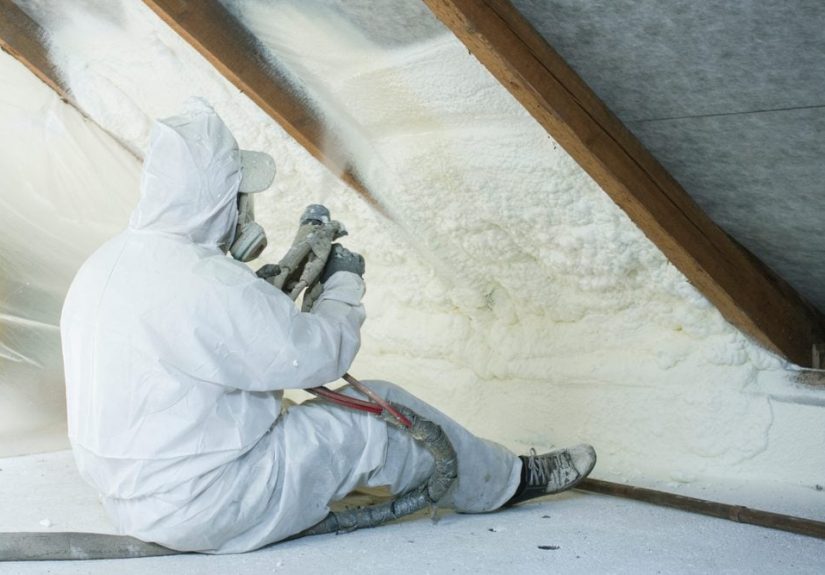
Spray foam insulation is a two-component material that expands after it is applied. Once installed correctly, it fills gaps, sticks to surfaces, and creates an insulating layer that also helps control air leakage. That last part matters more than many homeowners realize. A house can have a respectable insulation level on paper and still feel drafty, muggy, or uneven in temperature if air is slipping through cracks around framing, sheathing, plumbing penetrations, and roof connections.
That is why spray foam gets so much attention. It does more than slow heat transfer. It also helps create a tighter building envelope. But “spray foam” is not one product. It is a category, and the two main versions used in homes are open-cell spray foam and closed-cell spray foam.
Open-Cell Spray Foam: The Softer, Puffier Option
Open-cell spray foam has tiny cells that are not fully closed off from one another. The result is a lighter, softer foam with a spongy feel. Think angel-food cake, but for your wall cavity and much less delicious.
This type of foam expands a lot during application, which helps it fill irregular spaces. It is often chosen for wall cavities, rooflines, and other above-grade areas where you want strong air sealing without paying the premium for high-density foam.
Why homeowners and builders like open-cell foam
First, it is usually less expensive than closed-cell spray foam. Second, it can do a very good job of air sealing when installed properly. Third, because it remains more vapor-permeable, it can allow assemblies to dry inward in some designs. That feature can be useful in certain wall systems, especially when the rest of the assembly is designed with drying potential in mind.
Open-cell foam is also commonly praised for sound control. It is not magic soundproofing, and no, it will not erase your neighbor’s leaf blower from existence. Still, the softer structure can help reduce airborne sound transfer better than rigid foam in some interior applications.
Its biggest limitations
Open-cell foam has a lower R-value per inch than closed-cell foam, so it needs more thickness to reach the same thermal performance. It is also more vapor-open and less resistant to bulk moisture. That means it is usually not the first choice for below-grade areas, very damp locations, or assemblies where vapor control is critical and drying is limited.
In roof assemblies, especially in colder climates, open-cell spray foam requires more caution. It can work in many cases, but the roof design, climate zone, and vapor control strategy have to make sense together. This is where the “just spray it everywhere” approach becomes a very expensive hobby.
Closed-Cell Spray Foam: The Dense, Hard-Working Heavyweight
Closed-cell spray foam has cells that are mostly sealed and packed tightly together. It cures into a rigid, dense material with a much higher R-value per inch than open-cell foam. It also resists moisture far better and can add some structural stiffness to the assembly.
Because it packs more thermal performance into less space, closed-cell foam shines where cavity depth is limited. Rim joists, basement walls, crawl spaces, cantilevers, garage ceilings, and compact roof assemblies are all common use cases.
Why closed-cell foam gets so much love
The big headline is efficiency per inch. When space is tight, closed-cell foam can give you a lot of insulation value without requiring a deep cavity. It is also much better at controlling vapor movement, which makes it useful in damp environments or in assemblies that need a stronger moisture defense.
It also adheres firmly and cures rigidly, which can contribute to the overall stiffness of some building assemblies. That does not mean it turns your house into a bunker, but it is one reason builders often prefer it in demanding applications.
Its tradeoffs
Closed-cell foam costs more. Usually more by enough that your estimate suddenly feels personal. It also uses more material density, and product chemistry matters from an environmental standpoint. The good news is that newer low-global-warming-potential blowing-agent options have become increasingly important in the market, so it is smart to ask what blowing agent the installer is using rather than assuming all closed-cell foam is the same.
Closed-cell foam is also less forgiving in assemblies that need drying potential. In the wrong place, a highly vapor-resistant layer can trap moisture instead of managing it. Good insulation is helpful; good assembly design is non-negotiable.
Open-Cell vs. Closed-Cell Spray Foam: The Main Differences
1. R-value per inch
This is the difference most people hear about first. Open-cell foam typically lands around the mid-3s per inch, while closed-cell foam is often around the 6 to 7 range per inch. That means closed-cell can reach target R-values faster in shallow spaces. If you are insulating a 2×4 wall, roof rafter bay, or rim joist where depth is limited, that difference matters a lot.
2. Density and feel
Open-cell foam is light and soft. Closed-cell foam is dense and rigid. That is not just trivia for insulation nerds. Density affects durability, moisture behavior, and whether the foam can add some stiffness to the assembly.
3. Vapor permeability
Open-cell foam is more vapor-permeable. Closed-cell foam is much more vapor-resistant. This is one of the most important differences in the real world because moisture problems are rarely dramatic at first. They tend to arrive quietly, hide behind drywall, and then charge rent later.
4. Water resistance
Closed-cell foam performs better when moisture exposure is part of the risk profile. That makes it a common choice for crawl spaces, basements, masonry walls, rim joists, and other areas where dampness is more than a theoretical possibility.
5. Air sealing
Both open-cell and closed-cell spray foam can create an effective air seal when installed correctly. This is why both products are popular in high-performance homes. But the words “when installed correctly” are doing a lot of heavy lifting there. Gaps, voids, bad mixing, uneven thickness, and rushed trimming can wreck performance.
6. Sound control
Open-cell foam usually gets the edge in sound absorption because of its softer structure. That said, if your main goal is serious sound isolation between rooms or floors, insulation alone is not enough. Drywall layers, resilient channels, and assembly design often matter more.
7. Cost
Open-cell foam is generally the more affordable option. Closed-cell foam costs more because it is denser, uses more material, and delivers more R-value per inch. In some projects, the added cost is worth it. In others, it is overkill with a sales brochure.
A Quick Comparison Table
| Feature | Open-Cell Spray Foam | Closed-Cell Spray Foam |
|---|---|---|
| Texture | Soft, light, spongy | Dense, rigid, hard |
| R-value per inch | Lower | Higher |
| Vapor permeability | More vapor-open | Much more vapor-resistant |
| Water resistance | Lower | Higher |
| Air sealing | Very good | Very good |
| Sound absorption | Typically better | Typically less effective |
| Structural rigidity | Minimal | Can add stiffness |
| Cost | Usually lower | Usually higher |
When Open-Cell Spray Foam Makes Sense
Open-cell foam is often a strong choice for interior wall cavities, above-grade exterior walls, and many roofline applications in the right climate and assembly design. It is especially appealing when budget matters and you have enough depth to make up for the lower R-value per inch.
It also makes sense when you want strong air sealing and some sound control without paying top dollar for dense foam. Many homeowners choose it for attic rooflines in warmer or mixed climates, bonus rooms, and interior partitions where they want a quieter house and fewer drafts.
One underrated advantage is flexibility. In certain assemblies, open-cell foam allows drying toward the interior more readily than closed-cell foam. That does not excuse sloppy design, but it can be helpful when the wall or roof needs that drying path.
When Closed-Cell Spray Foam Is Worth the Premium
Closed-cell foam earns its keep when space is tight, moisture is a concern, or the assembly needs more than just insulation. Basements, crawl spaces, rim joists, cathedral ceilings with shallow rafters, metal buildings, garage ceilings, and below-grade or near-grade applications are where closed-cell usually looks strongest.
It is also often the safer bet for unvented roof assemblies in colder climates, where vapor control becomes more important and roof sheathing moisture risk is a bigger concern. If you are in a cold zone and trying to squeeze strong thermal performance into limited rafter depth, closed-cell foam is often the practical answer.
It can also work well in hybrid systems. For example, a project may use a thinner layer of closed-cell foam for air sealing and vapor control, then add fiberglass, cellulose, or another insulation to reach the final R-value more cost-effectively. That approach can reduce cost without giving up the benefits that matter most in the assembly.
Common Mistakes People Make When Choosing Spray Foam
Picking by price alone
The cheapest option is not always the smartest, and the most expensive option is not automatically the best. You are not buying bragging rights. You are buying performance in a specific part of a building.
Ignoring climate and moisture
Climate zone matters. Roof design matters. Interior humidity matters. Whether the assembly can dry matters. Spray foam decisions should be based on building science, not just contractor habit.
Assuming all installers are equal
Spray foam is highly sensitive to installation quality. Bad thickness, poor substrate conditions, off-ratio foam, hidden voids, and careless trimming can sabotage the job. A great product installed badly becomes a very expensive lesson.
Forgetting about health and re-entry guidance
During application and curing, spray foam is not a casual DIY craft project. Occupants generally should not be in the space during installation, and re-entry timing depends on the product and manufacturer guidance. A good contractor should explain ventilation, curing, and safety procedures clearly.
How to Choose the Right One for Your Home
If you are deciding between open-cell and closed-cell spray foam, ask these questions:
- How much cavity depth do I actually have?
- Is this area above grade, below grade, or moisture-prone?
- Does this assembly need to dry inward?
- Am I in a hot-humid, mixed, or cold climate?
- Is sound control a priority?
- What blowing agent is being used?
- Can the contractor explain the full assembly, not just the foam?
If the contractor can only say “we use this on everything,” that is not confidence. That is a red flag wearing work boots.
Real-World Experiences With Open-Cell and Closed-Cell Spray Foam
In real projects, the difference between open-cell and closed-cell spray foam usually becomes obvious after installation, not during the sales pitch. Homeowners who choose open-cell foam for above-grade wall cavities often report that the house feels less drafty almost immediately. Rooms that used to have that annoying “one corner is always colder” problem start feeling more even, and the HVAC system does not seem to run with the same frantic, caffeinated energy. In bonus rooms over garages or finished attic spaces, open-cell foam is often appreciated because it fills irregular framing well and can soften outside noise at least enough that the room feels calmer and less echo-prone.
That said, open-cell foam also teaches people that air sealing and moisture control are not the same thing. In humid regions, some homeowners love the comfort improvement but later learn that roofline assemblies still need careful design. Builders and building-science consultants often point out that open-cell foam can be a good fit in the right roof system, but it is not a permission slip to ignore indoor humidity, roof leaks, or vapor control. One repeated field lesson is simple: if the roof deck gets wet, no type of spray foam magically turns bad moisture into good moisture. Water still wins if details are wrong.
Closed-cell foam tends to create a different kind of experience. People notice it most in places where other insulation struggled. Rim joists, crawl spaces, basement walls, and shallow rafters are classic examples. In these areas, homeowners often say the space feels less damp, less musty, and more stable in temperature after closed-cell foam is installed. Contractors like it because it can solve multiple problems at once: insulation, air control, and a meaningful level of vapor resistance in one layer. On projects with limited depth, it is often the only realistic way to hit performance goals without redesigning framing.
Another common real-world pattern is the “hybrid wake-up call.” A homeowner starts by asking for all closed-cell foam everywhere, expecting maximum performance, then discovers the price and briefly loses the ability to blink. That is when hybrid systems enter the conversation. Many successful projects use closed-cell foam only where its specific strengths matter most, such as a thin layer in a roofline or at rim joists, then combine it with a second insulation type for the rest. In practice, that often delivers a smarter balance of cost and performance.
The biggest experience-based lesson of all, though, has less to do with foam type and more to do with workmanship. People who are thrilled with spray foam usually had a contractor who controlled thickness, surface prep, temperature conditions, ventilation, and cleanup. People who regret it often dealt with uneven application, gaps, odor concerns, or a crew that treated building science like optional reading. In other words, choosing between open-cell and closed-cell spray foam matters, but choosing the right installer matters just as much. The foam can be excellent, but the installation still decides whether the project feels like a smart upgrade or an expensive chemistry experiment.
Final Verdict
The difference between open-cell and closed-cell spray foam comes down to performance priorities. If you want a lower-cost option for above-grade applications, good air sealing, and better sound absorption, open-cell spray foam is often the better fit. If you need more R-value per inch, stronger moisture resistance, or insulation in tight or damp spaces, closed-cell spray foam usually earns the upgrade.
The best choice is not the one with the loudest marketing brochure. It is the one that fits the assembly, the climate, and the moisture strategy of the home. Pick the foam that matches the problem, hire an installer who can explain the system clearly, and your insulation will do what insulation is supposed to do: disappear into the background while your house quietly becomes more comfortable, more efficient, and less dramatic.