Table of Contents >> Show >> Hide
- What Is a Charachorder, Exactly?
- Why Chording Is a Speed Cheat Code (Without Actually Cheating)
- The “Banned From Competition” Moment (And What Really Happened)
- Why Traditional Typing Competitions Don’t Know What to Do With Charachorder
- So… Is Charachorder “Unfair”?
- How Typing Competitions Could Evolve (Without Melting Down)
- The Real Appeal: Productivity, Comfort, and Less Finger Acrobatics
- Who Should Consider a Charachorder (And Who Should Back Away Slowly)
- Which Charachorder Product Fits the “Too Fast” Idea?
- Conclusion: Too Fast for Competition, Right on Time for the Future
- Real-World Experiences: What It Feels Like When Your Keyboard Becomes a Shortcut Machine
- SEO Tags
Somewhere, a typing leaderboard is clutching its pearls.
The story goes like this: you sit down to “prove” your typing speed, you warm up, you crack your knuckles like you’re about to play a piano concerto, and thenbamyour score gets flagged as cheating. Not because you copied and pasted. Not because you ran a script. Not even because you bribed the universe. But because you used a Charachorder.
And that’s the point: the Charachorder isn’t just “a faster keyboard.” It’s closer to a different species of input. It’s like showing up to a footrace on a bicycle and arguing, very sincerely, that you are using your legs.
What Is a Charachorder, Exactly?
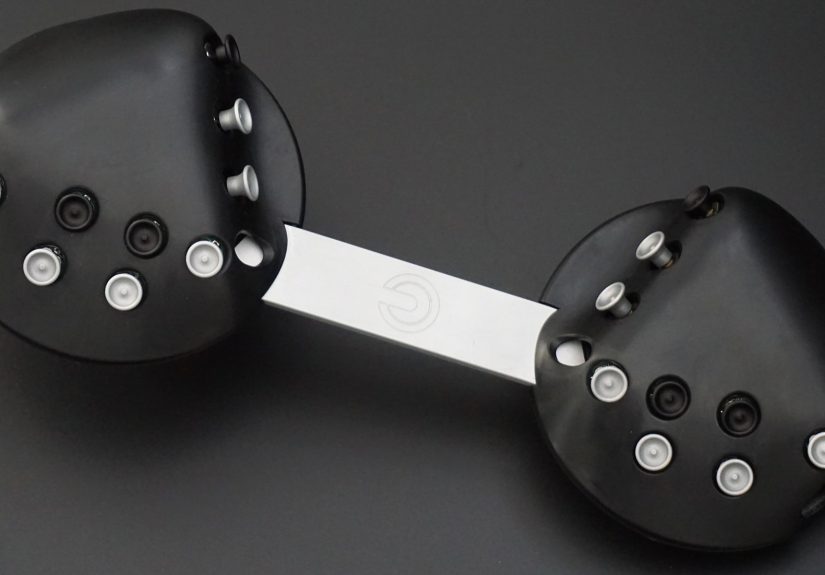
“Charachorder” refers to a family of typing devices built around a simple idea: your fingers shouldn’t have to travel across a big grid of keys to produce language. Instead, you combine inputschordsto output letters, chunks of letters, or even full words. That’s why the devices look unusual (and why photos of them instantly summon comments like “alien tech” and “is that a pair of rock-climbing holds?”).
The classic Charachorder design uses small multi-directional switchesthink tiny joysticks with tactile movementso a single switch can register different “press directions.” Stack enough of those under your fingers and thumbs, and you get a huge vocabulary of possible inputs without lifting your hands or reaching across the keyboard.
CharaChorder also sells products that make the concept more approachable:
- CharaChorder One / Two (CC2): The “full Charachorder experience” with multi-directional switches, heavy customization, and a learning curve that is… let’s call it “character-building.”
- CharaChorder Lite: A more familiar keyboard form factor that still supports chorded typing, allowing users to blend traditional typing with chording.
- CharaChorder X: A USB dongle that sits between your existing keyboard and your computer, adding chorded entry so you can keep your current keyboard and still experiment with chording.
If you’re thinking, “Wait, isn’t that stenography?” you’re not wrong. The difference is that Charachorder tries to reduce the barrier to entry: it aims to make chording feel less like learning a specialized profession and more like learning a new, efficient way to type everyday English.
Why Chording Is a Speed Cheat Code (Without Actually Cheating)
Traditional typing speed is limited by physics: how quickly your fingers can travel, how precisely they can hit individual keys, and how your brain coordinates sequential movements. That’s why even elite typists tend to cluster around a rangeimpressive, but still bounded by “one keypress, one character” most of the time.
Chording breaks the “one thing at a time” rule.
Instead of tapping T-H-E as three separate actions, you can press a chord that outputs “the” as one unit. Or press a chord that outputs “tion,” “ing,” or a whole word you use constantly. The result isn’t just faster typing; it’s fewer physical actions per word. In typing terms, you’re compressing language.
This is why the Charachorder feels “too fast” for competition: it changes what “typing” means. If a single chord outputs multiple characters, your measured words-per-minute can skyrocket, even if your fingers aren’t moving faster in the traditional sense. It’s not magicit’s input efficiency.
Speed vs. Throughput: The Weird Math of WPM
Most typing sites calculate WPM based on output characters over time. That works fine when everyone is using the same basic mechanism: pressing keys to output characters one-by-one. But chorded systems can output more text per physical action, which makes the scoreboard look like it’s been struck by lightning.
Imagine a competition where the rules say “fastest person wins,” but some competitors are allowed to write common phrases with a single gesture. The scoreboard would stop measuring hand speed and start measuring who has the best phrase library and muscle memory for chords.
That’s not necessarily badit’s just a different sport.
The “Banned From Competition” Moment (And What Really Happened)
The most famous flashpoint came from online typing platforms and leaderboards. Reports describe the Charachorder’s CEO posting extremely high speedshundreds of WPMand being flagged by at least one major typing site’s anti-cheat/leaderboard rules because the platform only allows “traditional keyboards” for its competitive rankings.
The important nuance: the Charachorder wasn’t “banned from typing” in general. It was effectively excluded from a specific kind of leaderboard competition because it doesn’t fit the category those rankings were designed to measure.
And honestly? That’s a reasonable stance for a site trying to keep results comparable. A leaderboard is only meaningful if competitors are playing the same game with the same constraints.
Why Traditional Typing Competitions Don’t Know What to Do With Charachorder
Typing competitionswhether formal events or online leaderboardsusually assume:
- One keystroke outputs one character (mostly).
- Everyone uses broadly similar hardware (QWERTY or close variants).
- Improvements come from practice, not from “compression.”
- Macros, text expansion, and automation are disallowed.
Charachorder attacks those assumptions like a caffeinated woodpecker.
1) The “Macro” Problem: When Is a Chord a Shortcut?
Many competitions treat anything that expands input into outputlike typing “brb” and auto-expanding to “be right back”as cheating. Charachorder blurs that line because chorded entry can represent entire words or phrases as single combined inputs.
So if the competition is “who can type the fastest using standard key-to-character mapping,” then chording that outputs whole words doesn’t belong on the same leaderboard.
2) The “Dictionary Advantage”: You’re Competing Against Your Own Optimization
Charachorder users can create custom chords for common words and personal vocabulary. That’s amazing for productivity. But in competition, it’s like allowing some players to bring their own customized sports equipmentthen acting surprised when the results aren’t comparable.
If one competitor has a chord for “accessibility,” “architecture,” and “antidisestablishmentarianism” (because they’re a chaos goblin), and another competitor doesn’t, the contest becomes partly about configuration.
3) The “Sustained Speed” Question: Clips vs. Real Work
Viral speed demonstrations can be tricky. A short, rehearsed phrase can hit a jaw-dropping WPM, while sustained, error-checked typing over minutes is the real test for most competitions. Chording systems can absolutely be fast, but “fast in a demo” and “fast in a 5-minute accuracy-heavy test” are different beasts.
The bigger point isn’t whether every 500+ WPM claim is sustainedit’s that the ceiling changes when the input method changes.
So… Is Charachorder “Unfair”?
Unfair is the wrong word. It’s incompatible with the standard measurement.
If your competition is about traditional typingfinger travel, accuracy, rhythm, and endurance on a standard keyboardthen a chorded device is a different category, just like:
- Comparing handwriting to voice dictation
- Comparing manual calculations to a calculator
- Comparing acoustic and electric instruments in the same judging rubric
None of those are “cheating.” They’re just different tools with different capabilities.
How Typing Competitions Could Evolve (Without Melting Down)
The funniest outcome would be pretending chorded typing doesn’t exist. The better outcome is creating sane categories.
Option A: Separate Divisions
This is the easiest fix: “Traditional Keyboard” vs. “Chorded / Steno-style Input.” Everyone keeps their sport, and nobody has to argue about whether a chord counts as a macro.
Option B: Standardized Chord Libraries
If you want a “fair” chorded competition, require a standardized dictionary/chord set for everyone. No personal expansions, no custom word shortcuts. That shifts the contest back to skill and mastery rather than who configured the cleverest shortcuts.
Option C: Measure Input Actions, Not Output Characters
This is nerdy, but effective: track physical input events and compare “actions per minute” alongside WPM. It’s like measuring both horsepower and fuel efficiencyyou get a clearer picture of what’s happening.
The Real Appeal: Productivity, Comfort, and Less Finger Acrobatics
Here’s the part that gets lost in leaderboard drama: most people don’t type for medals. They type for work, school, creative projects, and the never-ending email thread that refuses to die.
In that context, Charachorder’s promise is compelling:
- Less finger travel can mean less fatigue over long sessions.
- Ergonomic positioning can help some people reduce strain.
- Customization lets you build chords around the words you actually use.
- Hybrid use means you don’t have to abandon traditional typing overnight.
Reviews and hands-on impressions often praise the conceptespecially the “word piano” feeling of triggering whole words with chordswhile also warning about the learning curve and the time investment required to get good.
Who Should Consider a Charachorder (And Who Should Back Away Slowly)
It makes sense if you:
- Write a lot (developers, writers, students, researchers).
- Enjoy learning new input systems and tinkering with customization.
- Want to reduce repetitive strain by minimizing movement (results vary by person).
- Are curious about chorded typing but don’t want full stenography training.
It might not be for you if you:
- Need immediate plug-and-play speed without a learning phase.
- Hate configuring shortcuts, layouts, or software tools.
- Primarily care about online typing leaderboards and want apples-to-apples comparisons.
- Are easily frustrated by “I got worse before I got better.”
Which Charachorder Product Fits the “Too Fast” Idea?
If your focus is the “competition-breaking” side of chording, the differentiator is how deeply you want to commit:
- CharaChorder X: The easiest on-ramp. It lets you add chorded entry to an existing keyboard, which is great if you want to experiment without switching hardware.
- CharaChorder Lite: A bridge between normal typing and chording. Good if you want a familiar layout while gradually adding chord habits.
- CharaChorder One / Two: The “all-in” experience with specialized switches and maximum input density. Highest potential, highest commitment.
Pricing and availability change, but as listed on the company’s site, the X sits around the “impulse buy for keyboard nerds” range, while the Lite and the full devices climb into “this is my hobby now” territory. (Which, to be fair, is also how people talk about espresso machines.)
Conclusion: Too Fast for Competition, Right on Time for the Future
The Charachorder is “too fast for competition” in the same way a forklift is “too strong for arm wrestling.” It’s not that it breaks the rulesit changes the game.
Traditional typing competitions exist to measure mastery of a familiar input method. Charachorder exists to replace that method with something more efficient. Put them on the same leaderboard and you don’t get a fair contestyou get a category error.
But outside of leaderboards, the Charachorder idea is genuinely exciting. It asks a provocative question: what if typing didn’t have to be limited by a 19th-century layout designed to prevent mechanical jams? What if your hands could stay put, and language could be “played” instead of pecked out?
If you’re chasing a trophy on a classic typing site, you may need to stick to traditional keyboards. If you’re chasing a faster, more ergonomic way to get words out of your brain and onto the screen, Charachorder might be the weird, wonderful overpowered tool you didn’t know you wanted.
Real-World Experiences: What It Feels Like When Your Keyboard Becomes a Shortcut Machine
The most honest way to describe learning a Charachorder is this: you’re going to feel slow first. Not “I forgot my password” slowmore like “I temporarily replaced my hands with two polite hamsters” slow. And that’s normal, because you’re rewiring muscle memory.
Week 1: The “Why Did I Do This to Myself?” Phase
The first few days are usually about confusion, not speed. You’ll hit a chord, get the wrong output, and stare at the screen like it just betrayed you in public. The mental load is real: you’re trying to remember chords, remember standard shortcuts, and still write coherent sentences. If you’re used to typing without thinking, this feels like trying to walk while reciting the alphabet backwards.
A common early win is assigning chords to a few ultra-common words“the,” “and,” “to,” “of,” “you.” Once those start landing reliably, you get tiny sparks of “ohhh… I see the future.” You also discover a very practical truth: the best chords are the ones your hands can find without a meeting of the brain committee.
Week 2: The “Word Piano” Moment
Somewhere around the second weekassuming you practice even a littleyour fingers begin to anticipate words. You’ll type a sentence and realize you didn’t spell it letter-by-letter. You triggered it. That’s the “word piano” feeling reviewers talk about: language becomes a sequence of gestures instead of a parade of individual key taps.
This is also when you learn the difference between clever chords and usable chords. Clever chords look great in a configuration tool. Usable chords are the ones you can hit while half-thinking about lunch and still get the right word. Many people end up deleting “genius” chords they never actually remember, then keeping the ones that feel physically obvious.
Week 3: Speed Spikes, Then Accuracy Slaps You Back
Once you can reliably chord common words, speed can jump in bursts. It’s not always smooth; it’s more like you suddenly blast through a paragraph and then face-plant on a weird word like “unfortunately.” You’ll notice that speed and accuracy now depend on two skills: your chord mastery and your ability to recover quickly when the wrong chord fires.
A very real experience is “false friends”chords that are physically similar and produce different outputs. You’ll accidentally output “then” instead of “the,” or trigger a suffix chord when you meant a base word. Fixing that isn’t just practice; it’s also smart design: adjusting chord choices so your hands don’t confuse them under pressure.
Week 4: You Start Building a Personal Dictionary
By the end of a month, many users settle into a rhythm: traditional typing for uncommon words, chording for frequent words and phrases. That hybrid approach is powerful, because it doesn’t demand perfection. You can still “type normally” when you need to, and still benefit from chording when your brain wants to sprint.
This is also where you notice why competitions struggle to classify Charachorder. If you’ve built chords for your own vocabularyclient names, technical terms, repeated phrasesyou can produce real work output faster than a traditional typist who’s doing everything letter-by-letter. But if you take that same customized setup into a typing test, your score reflects not only your skill but also your personal chord library. It’s like showing up with a custom deck in a game that assumes everyone uses the same cards.
The biggest “aha” isn’t that you can get a flashy WPM number. It’s that your hands feel less frantic. When chording clicks, you’re not chasing keys across a keyboard. You’re triggering language from a stable home position. And for a lot of peopleespecially those who type for hoursthat comfort is the real victory, not the leaderboard screenshot.