Table of Contents >> Show >> Hide
- What Are “Outer Quads,” Exactly?
- How to Emphasize Outer Quads (Without Doing Anything Weird)
- The 11 Best Outer Quad Exercises
- 1) Cyclist Squat (Heels Elevated, Narrow Stance)
- 2) Hack Squat (Machine)
- 3) Leg Press (Low and Narrow Foot Placement)
- 4) Leg Extension (Controlled, Full Tension Reps)
- 5) Heel-Elevated Goblet Squat
- 6) Bulgarian Split Squat (Upright Torso Version)
- 7) Front-Foot Elevated Split Squat
- 8) Step-Ups (Higher Step, Slow Down)
- 9) Lateral Step-Down (Outer Quad + Knee Control)
- 10) Assisted Sissy Squat (Quad Isolation in a Closed Chain)
- 11) Reverse Nordic Curl (Eccentric Quad Strength)
- How to Program These for Outer Quad Growth
- Form & Knee-Friendly Tips (Because Knees Are Non-Refundable)
- Quick FAQ
- Real-World Experiences: What Outer Quad Training Actually Feels Like (and Why That Matters)
- Conclusion
If your “leg day” has been feeling like a group project where your glutes do all the work and your quads just show up to sign the attendance sheet, you’re not alone.
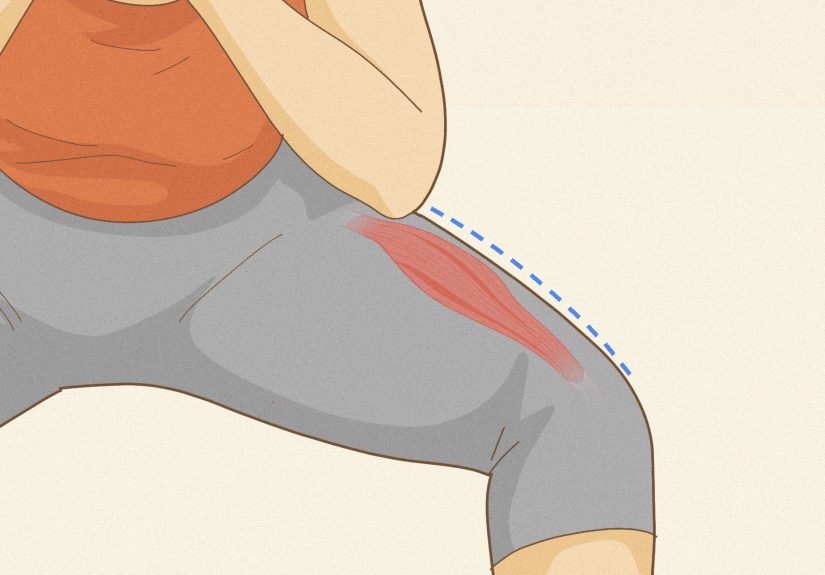
The outer quad area (mostly the vastus lateralis) can be tricky to “feel” on commandespecially if your squat turns into a hip-hinge festival.
The good news: you can absolutely bias training toward your outer quads with smarter exercise selection, clean technique, and a couple of simple setup tweaks.
This guide breaks down the 11 best exercises for outer quads, plus cues, mistakes to avoid, and programming ideas that don’t require you to sell your soul to the leg extension machine.
(Although… it helps if you at least say hi to it sometimes.)
What Are “Outer Quads,” Exactly?
Your quadriceps are four muscles on the front of the thigh: rectus femoris, vastus intermedius, vastus medialis (inner quad/“teardrop”), and
vastus lateralis (the outer quad). The vastus lateralis is a major knee extensormeaning it helps straighten your kneeand it also contributes to
strong, stable knee mechanics in many athletic movements.
Translation: if you want that “sweep” on the outside of your thighs (and more power for sprinting, jumping, stairs, and sports), you want a strong vastus lateralis.
But it’s not about a single magic angleit’s about loading the quads hard through meaningful knee bend and controlled knee extension.
How to Emphasize Outer Quads (Without Doing Anything Weird)
- Chase knee bend: deeper, controlled knee flexion usually increases quad demand (within your comfort and mobility).
- Stay more upright: a torso that’s too forward often shifts work toward hips/glutes.
- Use heel elevation when helpful: it can make it easier to keep knees traveling forward and load the quads.
- Own the eccentric: slower lowering = more quad tension and better control.
- Pick moves you can progress: the “best” exercise is the one you can load, repeat, and improve with good form.
The 11 Best Outer Quad Exercises
1) Cyclist Squat (Heels Elevated, Narrow Stance)
If quads had a theme park, the cyclist squat would be the roller coaster that makes them scream in all caps. With heels elevated and feet closer together,
your knees can travel forward more comfortably, biasing the quads.
How to do it:
- Place your heels on small plates or a wedge (1–2 inches is plenty).
- Stand with a narrow stance (about hip-width or slightly narrower), toes slightly out.
- Keep your torso tall and sit down between your heels, letting knees track over toes.
- Drive up through midfoot, keeping tension on quads.
Best for: outer quad bias + quad hypertrophy
Sets/Reps: 3–5 sets of 6–12 reps
Common mistake: turning it into a good morning (too much hip hinge).
2) Hack Squat (Machine)
The hack squat is like a squat with training wheelsexcept the wheels are made of steel and pain is optional (but likely). Because the machine supports your torso,
many people can hit deep knee bend with less technique chaos, making it a quad-builder.
How to do it:
- Place feet mid-to-low on the platform to increase knee bend (within comfort).
- Use a stance around shoulder-width or slightly narrower.
- Lower under control, pause briefly near the bottom, and drive up without bouncing.
Sets/Reps: 3–4 sets of 8–15 reps
Pro tip: Try a 2–3 second lower for extra quad time-under-tension.
3) Leg Press (Low and Narrow Foot Placement)
The leg press lets you load the quads heavily without needing perfect squat mobility. A lower foot placement generally increases knee bend,
and a narrower stance often shifts emphasis toward the quads (including the outer quad area).
How to do it:
- Set feet lower on the platform and closer together (not so close your knees cave in).
- Lower until you reach a depth you can control with neutral pelvis and stable knees.
- Press up smoothly; don’t lock out aggressivelykeep tension on quads.
Sets/Reps: 3–5 sets of 10–20 reps
Common mistake: going so deep your hips roll under and your lower back lifts.
4) Leg Extension (Controlled, Full Tension Reps)
Leg extensions are the most direct way to train knee extension. They’re also the easiest place to practice “feeling” your quadsbecause the quads are basically
the whole point of the exercise.
How to do it:
- Set the pad just above your ankles and align the machine pivot near your knee.
- Lift with control, squeeze at the top for 1 second, lower for 2–3 seconds.
- Stay smoothno kicking, no swinging your torso like you’re trying to start a lawnmower.
Optional tweak: Some people use a slight toe-in position to bias the outer quad feel. Keep it gentlecomfort and knee tracking come first.
Sets/Reps: 2–4 sets of 12–20 reps (great as a finisher)
5) Heel-Elevated Goblet Squat
Want quad emphasis without a barbell? Grab a dumbbell or kettlebell and use a heel wedge. The front-loaded position encourages an upright torso, and heel elevation
helps you access more knee bendhello, quads.
How to do it: Hold the weight at chest level, keep elbows tucked, squat down under control, and stand tall without leaning forward.
Sets/Reps: 3–4 sets of 8–15 reps
6) Bulgarian Split Squat (Upright Torso Version)
Split squats are sneaky: they look innocent and then your legs file a complaint with HR. Keeping the torso more upright and allowing the front knee to travel forward
increases quad loading.
How to do it:
- Back foot on a bench, front foot planted.
- Lower straight down, letting the front knee move forward in line with toes.
- Drive up through midfoot, keeping hips square.
Sets/Reps: 3–4 sets of 8–12 reps per side
Common mistake: taking too long a stance and turning it into a glute exercise.
7) Front-Foot Elevated Split Squat
Elevating the front foot increases range of motion and knee bendtwo things quads tend to love. This is also a great option if you don’t have a bench for Bulgarians.
How to do it: Front foot on a small platform, drop into a controlled split squat, keep the torso tall, and push up smoothly.
Sets/Reps: 3 sets of 10–15 reps per side
8) Step-Ups (Higher Step, Slow Down)
Step-ups can be a quad monster if you do them like a grown-up: stable torso, controlled knee tracking, and a slow, honest lower.
The descent is where your quads often work the hardest.
How to do it:
- Choose a step height that lets you keep control (start lower than your ego wants).
- Step up by pushing through the working leg; avoid bouncing off the back foot.
- Lower slowly (2–3 seconds).
Sets/Reps: 3–4 sets of 8–12 reps per side
9) Lateral Step-Down (Outer Quad + Knee Control)
This one is a sleeper. Lateral step-downs train the quads while challenging knee alignment and hip stabilityuseful if your knee likes to drift inward during squats.
How to do it:
- Stand on a low step on one leg.
- Tap the other heel to the floor by bending the stance knee.
- Keep the knee tracking in line with toes; push back up.
Sets/Reps: 2–4 sets of 8–15 reps per side
10) Assisted Sissy Squat (Quad Isolation in a Closed Chain)
Sissy squats sound like an insult from a cartoon villain, but they’re actually a legit quad-focused movement.
Done assisted (holding onto something), they can be a high-tension way to load quads through big knee travel while keeping balance.
How to do it:
- Hold a rack or sturdy support.
- Let knees travel forward while your torso stays relatively upright.
- Go only as deep as you can control without knee pain.
Sets/Reps: 2–3 sets of 8–15 reps
Note: Start conservativelythis one can make your quads sore in surprising places.
11) Reverse Nordic Curl (Eccentric Quad Strength)
Reverse Nordics train the quads in a lengthened position, emphasizing controlled knee extension under stretch.
They’re excellent for building robust quadsespecially when you progress slowly and respect your knees.
How to do it:
- Kneel tall with hips extended (glutes lightly squeezed).
- Keep a straight line from knees to shoulders as you lean back slowly.
- Use your quads to return, or push lightly with hands if needed.
Sets/Reps: 2–4 sets of 6–10 reps (slow tempo)
Progression idea: reduce hand assistance over time, or increase range gradually.
How to Program These for Outer Quad Growth
You don’t need all 11 exercises in one workout unless you’re training for a very specific event called “Walking Like a Baby Giraffe.”
Instead, pick a few staples, then rotate variations.
Option A: Gym-Based Outer Quad Workout (1–2x/week)
- Hack Squat 4 x 8–12
- Leg Press (low/narrow) 3 x 12–20
- Bulgarian Split Squat 3 x 8–12/side
- Leg Extension 3 x 15–20 (slow lower + squeeze)
Option B: Minimal-Equipment Outer Quad Workout (1–2x/week)
- Cyclist Squat (heels elevated) 4 x 6–12
- Step-Ups 3 x 8–12/side
- Lateral Step-Down 3 x 10–15/side
- Reverse Nordic 2–3 x 6–10
Progression Rules That Actually Work
- Add reps first (example: 8 → 12), then increase load.
- Keep 1–3 reps in reserve on most sets; push closer to failure on safer isolations (leg extensions).
- Use tempo (2–3 seconds down) when load jumps irritate your knees.
- Track performance weeklyouter quad growth is boring, consistent work, not a single “secret hack.”
Form & Knee-Friendly Tips (Because Knees Are Non-Refundable)
Quad-focused training often includes forward knee travel and deeper knee bend. For many healthy people, that’s normal and productiveas long as your knee tracks
smoothly in line with your toes and you progress sensibly.
- Knees track over toes: avoid the knee collapsing inward.
- Control range of motion: go as deep as you can while keeping the movement clean.
- Respect pain signals: discomfort from effort is fine; sharp or worsening joint pain is not.
- Build gradually: new angles (like sissy squats) deserve a slow intro.
If you have ongoing knee pain (like pain around the kneecap), consider reducing depth temporarily, prioritizing slow eccentrics, and getting guidance from a qualified clinician.
Strong quads can be knee-friendly, but the path there should be smartnot reckless.
Quick FAQ
Can I “isolate” the outer quad only?
Not perfectly. You can bias emphasis, but your quads work together. Think “outer quad focus,” not “outer quad only.”
How long until I see the outer quad “sweep”?
Most people notice strength changes in weeks and visible changes in a few monthsassuming consistent training, enough protein, and progressive overload.
Genetics also influence how dramatic the sweep looks.
Do I need toes-in leg extensions?
No. They’re optional. If they feel good and your knees track comfortably, you can experiment. If they feel weird or cranky, keep your feet neutral and focus on control and tension.
Real-World Experiences: What Outer Quad Training Actually Feels Like (and Why That Matters)
People usually discover “outer quad training” the same way they discover sunscreen: after they’ve ignored it for years and suddenly regret everything.
The first clue is often a weird mismatchstrong hips, decent squat numbers, but stairs still feel spicy, running downhill feels sketchy, or your knee feels “off” when you decelerate.
The outer quad (vastus lateralis) is a big player in controlling knee extension and helping your leg handle force when you bend and straighten the knee repeatedly.
Here’s what many lifters notice when they start prioritizing the outer quad:
- A new kind of burn: Cyclist squats and leg extensions can create a “front-and-outside thigh” pump that’s unmistakable. It’s not subtle. It’s a neon sign.
- Better knee confidence on single-leg work: After a few weeks of lateral step-downs and split squats, many people feel steadierespecially during the lowering phase.
- DOMS that shows up in unexpected places: Reverse Nordics and sissy squat variations can make your quads sore closer to the knee than you’re used to. That’s not automatically “good,” but it’s common when you train long ranges.
- Technique becomes the limiter before strength: With quad-biased squats, it’s normal for form to be the first thing that fails (knees caving, torso pitching, heels popping). That’s your cue to reduce load and earn cleaner reps.
Another common “experience” is discovering how much setup matters. Move your feet a little lower on a leg press, slow the lowering phase, and suddenly the exercise feels like it was redesigned
by someone who is personally offended by your comfort. That doesn’t mean you found a magic angleit means you found a position that lets your knees bend more and your quads stay loaded longer.
People also learn that outer quad focus isn’t just about picking the right moveit’s about executing the move in a way that keeps tension where you want it.
For example, step-ups can be a glute exercise if you launch off the back foot and wobble your way up. Do them with a clean push from the working leg and a slow, controlled descent,
and suddenly your quads are doing real work. Same exercise, totally different result.
Finally, a very real “experience” is realizing that knee-friendly training is usually boring in the best way. Warm up, start with controlled reps, progress gradually,
and stop treating every set like an audition for an action movie. When people do that, quad strength tends to climb, knees often feel more stable, and the outer quad starts to look
more definedbecause muscle that works hard and recovers well tends to… grow. Shocking, I know.
Conclusion
Building stronger outer quads isn’t about chasing gimmicksit’s about putting your quads in positions where they must work hard, then progressing over time.
Choose 3–5 exercises from this list, nail the basics (control, range, knee tracking), and let consistency do the heavy lifting. Your vastus lateralis will get the message.
Probably loudly.