Table of Contents >> Show >> Hide
- Who Is Susan Harris?
- What Makes a Susan Harris Show Unique?
- Complete List of TV Series Created by Susan Harris
- 1. Fay (1975–1976)
- 2. Loves Me, Loves Me Not (1977)
- 3. Soap (1977–1981)
- 4. Benson (1979–1986)
- 5. I’m a Big Girl Now (1980–1981)
- 6. It Takes Two (1982–1983)
- 7. Hail to the Chief (1985)
- 8. The Golden Girls (1985–1992)
- 9. Empty Nest (1988–1995)
- 10. Nurses (1991–1994)
- 11. Good & Evil (1991)
- 12. The Golden Palace (1992–1993)
- 13. The Secret Lives of Men (1998–1999)
- How Susan Harris Changed Television Comedy
- Where to Start With Susan Harris Shows
- Experiences and Reflections on Watching Susan Harris Shows
If you spent any time in front of a TV in the late ’70s, ’80s, or ’90s, you probably saw a familiar credit roll by: “Created by Susan Harris.” Long before “showrunner” became a buzzword, Harris was quietly reshaping American sitcoms with smart, subversive comedies about families, politics, faith, and four very opinionated women in a Miami ranch house.
This guide walks through the major Susan Harris shows, from cult favorite Soap to the endlessly rewatchable The Golden Girls, plus the spin-offs and short-lived experiments that prove just how daring she could be. Think of it as your crash course in one of television’s most important comedy creators.
Who Is Susan Harris?
Susan Harris (born Susan Spivak in 1940) is an American television writer and producer best known for creating Soap and The Golden Girls. Across roughly two decades, she created or co-created 13 network comedy seriesan astonishing run at a time when very few women were allowed to run rooms, let alone build entire TV universes.
Harris started as a freelance writer on shows like Then Came Bronson, Love, American Style, All in the Family, and Maude, where she wrote the famously controversial two-part “Maude’s Dilemma” abortion storyline. That taste for hot-button topics never really left. When she moved into creating her own sitcoms, she kept the jokes sharp but also used them to explore politics, gender roles, sexuality, aging, religion, and everyday hypocrisy.
Working through Witt/Thomas/Harris Productions with producer Paul Junger Witt (who later became her husband) and Tony Thomas, Harris helped define the tone of late-20th-century network comedy. Her shows earned Emmys, Golden Globes, and eventually a place for Harris herself in the Television Academy Hall of Fame, but maybe her biggest achievement is that many of her series still feel surprisingly modern today.
What Makes a Susan Harris Show Unique?
Before we dive into the full list of Susan Harris shows, it helps to know her signature moves. Once you’ve seen a few episodes, you start to recognize her fingerprints:
- Blending farce with real issues. Harris loved outrageous plotspossessions, alien abductions, political scandalsbut at the center there’s almost always a grounded emotional story. A joke about a priest in love, for example, also becomes a conversation about faith and human frailty.
- Sharp, character-driven dialogue. Whether it’s Benson’s dry one-liners, Dorothy Zbornak’s withering comebacks, or Blanche Devereaux’s Southern Belle dramatics, her characters sound like fully formed people, not joke machines.
- Focus on outsiders. Harris gravitated to people TV traditionally sidelined: older women, domestic workers, widowed parents, gay characters, neurotic neighbors, even a female President. If you didn’t quite fit the usual TV mold, you probably belonged in a Susan Harris script.
- Ensemble casts that actually feel like families. Harris’s shows thrive on group chemistry. She puts contrasting personalities in the same house, office, or governor’s mansion, then lets them bounce off one another until it feels like you’ve been hanging out with them for years.
Now let’s look at the actual series that carry that “Created by Susan Harris” credit.
Complete List of TV Series Created by Susan Harris
Between the mid-1970s and the late 1990s, Susan Harris created 13 comedy series for American network television. Some ran for a single season, others for nearly a decade. All of them show different sides of her sensibility.
1. Fay (1975–1976)
Network: NBC
Premise: Fay follows Fay Stewart, a newly divorced woman in her 40s, re-entering the dating world and workforce. Long before “divorce comedy” was a genre, Harris put a middle-aged woman front and center, dealing with romantic misfires and workplace frustrations with a mixture of vulnerability and bite.
The show only lasted 10 episodes, but you can already see classic Harris traits: a female lead who refuses to be cute or quiet to make people comfortable, and a willingness to address topics like ageism and sexism in prime time.
2. Loves Me, Loves Me Not (1977)
Network: CBS
Premise: A short-lived romantic comedy starring Susan Dey as Jane, a schoolteacher, and Kenneth Gilman as Dick, a reporter. The series tracks the very early, awkward stages of their relationshipessentially a “Will we or won’t we?” from the moment they meet.
The show only aired six episodes, but it was an early experiment in capturing the nervous, slightly messy reality of new love, rather than the smooth fantasy sitcom romance. Harris herself later joked that it was basically “See Dick. See Jane. See Dick and Jane fall in love,” but for completists, it’s an important stepping stone between Fay and the big swings to come.
3. Soap (1977–1981)
Network: ABC
Premise: A wild parody of daytime soap operas, Soap follows two related familiesthe wealthy Tates and the more down-to-earth Campbellsas they spiral through murder trials, affairs, kidnappings, cults, and yes, even alien encounters.
Soap might be Harris’s most daring series. It featured one of TV’s earliest recurring gay characters (Billy Crystal’s Jodie Dallas), satirized religion and politics, and turned network censors into full-time adversaries. Yet under all the chaos is a surprisingly tender portrait of a messy, loving extended family. For viewers who like their comedy fearless, this is essential Susan Harris viewing.
4. Benson (1979–1986)
Network: ABC
Premise: A spin-off of Soap, Benson takes the caustically witty butler Benson DuBois (Robert Guillaume) out of the Tate household and drops him into the Governor’s mansion. There, he moves from head of household affairs to state budget director and eventually lieutenant governor.
Harris uses the political setting mostly as a backdrop for workplace comedy and commentary on bureaucracy, but Benson himself is the real drawintelligent, unflappable, and often the only adult in the room. The series shows Harris’s knack for building an entirely new show around a breakout supporting character while keeping his voice intact.
5. I’m a Big Girl Now (1980–1981)
Network: ABC
Premise: Starring Diana Canova, this family sitcom centers on a recently divorced woman who moves back in with her dentist father while raising her young daughter. Think of it as a multigenerational house full of clashing expectations: traditional dad, newly single daughter, curious grandchild.
The show didn’t become a long-running hit, but it’s another entry in Harris’s ongoing fascination with divorce, starting over, and the complicated push-and-pull between independent adult children and the parents who still think they know best.
6. It Takes Two (1982–1983)
Network: ABC
Premise: A more modern twist on marriage, It Takes Two stars Richard Crenna and Patty Duke as a dual-career couple: he’s a surgeon, she’s a lawyer. Their demanding jobs and clashing worldviews constantly spill over into their home life with their teenage kids.
The series wrestles with questions that still feel current: Who does the emotional labor? What happens when both partners have high-stress careers? How do you parent when everyone’s exhausted? For a 1980s network sitcom, it’s surprisingly frankand, in classic Harris fashion, very funny about it.
7. Hail to the Chief (1985)
Network: ABC
Premise: Long before prestige dramas and Veep-style satire, Harris imagined a sitcom where the President of the United States is a woman. Patty Duke plays President Julia Mansfield, trying to juggle nuclear crises, scheming televangelists, Soviet plots, and her own chaotic family.
The show only ran for seven episodes, but it deserves a spot in TV history for sheer audacity: it treats a female President as a given and then worries about the jokes. Tonally, it’s a cousin to Soap, with ongoing storylines and deliberately over-the-top melodrama.
8. The Golden Girls (1985–1992)
Network: NBC
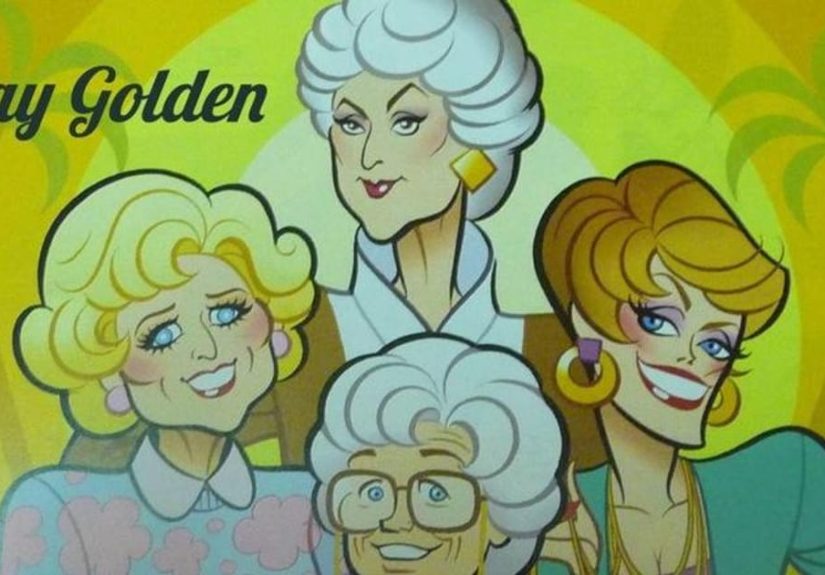
Premise: Do you really need a primer? The Golden Girls follows four older womenDorothy, Rose, Blanche, and Sophiasharing a house in Miami as they navigate friendship, dating, family drama, and the everyday indignities of aging.
This is Harris’s masterpiece and her most financially successful show. It broke ground simply by taking older women seriously as lead charactersand by letting them be sexual, opinionated, and very, very funny. Episodes tackle everything from age discrimination and grief to HIV stigma and LGBTQ+ rights, often years before other mainstream shows would go near those topics.
If you’re new to Susan Harris, this is the perfect starting point: it has her social conscience, her love of zingers, and an ensemble so good that even throwaway lines have become pop-culture quotes.
9. Empty Nest (1988–1995)
Network: NBC
Premise: A spin-off of The Golden Girls, Empty Nest centers on widowed pediatrician Harry Weston, whose adult daughters move back in with him, turning his quiet house in suburban Miami into a bustling, slightly neurotic family hub.
Where The Golden Girls is about chosen family, Empty Nest tackles biological family: grown kids boomeranging home, parents starting new chapters later in life, and the way grief and humor can live side by side. The tone is a bit gentler than some of Harris’s earlier work, but the emotional honesty and character-driven jokes remain.
10. Nurses (1991–1994)
Network: NBC
Premise: Set in the same Miami medical world as Empty Nest, Nurses follows a group of nurses working at a hospital, juggling demanding patients, bureaucratic nonsense, and their own complicated lives.
The series puts working women at the center again, highlighting both camaraderie and burnout. While it leans more into workplace comedy than heavy issue-of-the-week plots, it still sneaks in commentary on healthcare, class, and gender expectations inside the jokes.
11. Good & Evil (1991)
Network: ABC
Premise: A darker, more stylized soap-opera parody, Good & Evil pits two wildly different sisters against each other: one kind-hearted, one a ruthless cosmetics tycoon. Think of it as Harris remixing Soap with even more over-the-top villains and plotting.
The series was critically noticed but quickly canceled. Still, it’s a fun watch for fans who love Harris’s taste for heightened melodrama and morally complicated characters delivered with a wink.
12. The Golden Palace (1992–1993)
Network: CBS
Premise: A direct spin-off of The Golden Girls, this series sees Blanche, Rose, and Sophia buying and running a small Miami hotel after Dorothy marries and moves away. Suddenly, the trio are bosses, dealing with guests, staff, and the realities of running a business.
While it never hit the same heights as the original, The Golden Palace is still packed with witty banter and heartfelt moments. It’s particularly interesting as a “what happens next” answer for beloved characterssomething TV rarely attempted at the time.
13. The Secret Lives of Men (1998–1999)
Network: ABC
Premise: Harris’s final series shifts focus from women back to men: three recently divorced guys form a tight friendship as they attempt to rebuild their lives, rediscover dating, and figure out who they are without their marriages.
In some ways, it’s a gender-flipped echo of earlier Harris themesstarting over, facing vulnerability, questioning old assumptions about masculinity and success. It didn’t last long, but it underlines how consistently she returned to life after big transitions.
How Susan Harris Changed Television Comedy
Looking at the full list of Susan Harris shows, a few patterns pop outand they help explain why her work is still so influential.
- She made taboo topics funny without trivializing them. From abortion and mental health to LGBTQ+ representation and aging, Harris used jokes to open doors, not slam them shut. Her scripts rarely feel like lectures; instead, they make you laugh first and think a beat later.
- She gave older women the spotlight. The Golden Girls didn’t treat age as the punchline. It treated life experience, friendship, and second (or third) acts as vibrant stories worth telling. That approach helped clear the way for later shows featuring complex older characters.
- She trusted audiences to keep up. Shows like Soap, Hail to the Chief, and Good & Evil used ongoing serialization, callbacks, and layered satire years before “prestige TV” made that standard. Harris assumed viewers were smartand they rewarded her with loyalty.
Put simply, if you enjoy smart, character-driven comedies that actually have something to say, you’re already living in a TV landscape Susan Harris helped build.
Where to Start With Susan Harris Shows
If you’re ready to dive into Susan Harris’s TV universe, here’s a simple viewing roadmap:
- Begin with The Golden Girls. It’s the most accessible and widely available, and it shows the full power of Harris’s writing and character work.
- Go back to Soap and Benson. These give you a sense of how experimental she could beand how easily she moved from boundary-pushing satire to more conventional, but still sharp, workplace comedy.
- Explore the connected Miami shows. Empty Nest, Nurses, and The Golden Palace all live in the same loose TV universe as The Golden Girls, with crossovers and tonal similarities.
- Finish with the rarities. Once you’re hooked, track down Fay, Loves Me, Loves Me Not, I’m a Big Girl Now, It Takes Two, Hail to the Chief, Good & Evil, and The Secret Lives of Men to see her experimenting, pivoting, and occasionally swinging so hard she missedwhich is still more interesting than playing it safe.
However you approach them, Susan Harris shows offer a surprisingly cohesive body of work: a long, funny, fiercely humane conversation about what it means to grow up, grow older, fall in and out of love, and keep your sense of humor when the world absolutely refuses to behave.
Experiences and Reflections on Watching Susan Harris Shows
Part of what keeps Susan Harris shows alive isn’t just their place in TV history; it’s the way they feel when you actually sit down and watch them now. If you binge her work in orderor even just dip in and outyou start to notice a few recurring experiences.
1. You recognize people you know almost immediately. Within a few episodes, her characters stop feeling like sitcom types and start feeling like your relatives, coworkers, or neighbors. Everyone has a Rose who tells long, off-topic stories, a Dorothy who weaponizes sarcasm, a Benson who quietly runs the entire operation while everyone else panics. That familiarity is what makes the jokes land so hard: when Blanche brags or Sophia cuts through the nonsense, it feels like behavior you’ve seen in real life, just turned up a few notches.
2. The emotional whiplash is realin a good way. Harris is famous for using comedy to smuggle in heavier themes, and watching the shows back-to-back makes this especially clear. One minute you’re laughing at a ridiculous misunderstanding, the next minute a scene about illness, loneliness, or discrimination drops into the middle of the episode and you realize you’re unexpectedly moved.
For example, in The Golden Girls, a story about dating or cheesecake can suddenly pivot into a frank conversation about aging parents, financial insecurity, or fear of being alone. In Soap, a plot that starts as a parody of soap-opera melodrama can end as a surprisingly compassionate look at depression or identity. That emotional agility is part of the viewing experienceyou never quite know when a throwaway gag will give way to something deeper.
3. The “dated” jokes often reveal how far we’ve comeand how far we haven’t.
Like any older TV, some moments in Harris’s work reflect the time they were made. A few jokes land differently now, and some references feel very ’80s or ’90s. But that’s also what makes rewatching so interesting: you see early steps toward conversations we’re still having about gender, sexuality, and power.
When you watch Jodie Dallas on Soap or the LGBTQ+ storylines on The Golden Girls, you can feel TV trying to figure out how to talk openly about queer characters without burying them in stereotypes. The shows aren’t perfect by 2025 standards, but they were out in front compared with almost everything else on the air. Noticing where they succeedand where they stumblecan be a mini-masterclass in how representation evolves.
4. If you’re a writer or creative, Susan Harris is a stealth mentor.
Watching her shows with a writer’s eye, you start picking up structural tricks. Cold opens that establish a problem in three lines. Tag scenes that punch up a serious episode with a tiny after-joke. Bottle episodes that trap characters in one location so they’re forced to talk through issues instead of running away.
Even the spin-offs are instructive: Benson shows how to build a whole series around a side character without sanding off what made him special. Empty Nest demonstrates how to create a new show that shares a universe and tone with a hit without just copying it. The Golden Palace explores what happens when you uproot familiar characters into a totally new setting.
5. The comfort factor is off the charts.
Finally, there’s the simple experience of comfort. Harris’s dialogue is fast but warm, and her ensembles develop the kind of chemistry that makes you want to hang out with them. Whether you’re watching The Golden Girls over lunch, catching a random Benson rerun, or tracking down Soap as a late-night curiosity, her shows quickly become “background friends” in the best possible way.
That may be the most enduring Susan Harris experience of all: you come for the jokes, you stay for the people, and before you know it, you’ve found an entire TV universe you’re happy to revisit whenever life needs a little more sarcasm, solidarity, and cheesecake.
SEO JSON