Table of Contents >> Show >> Hide
- Table of Contents
- What Fans Noticed (And Why It Felt So Weird)
- Cable vs. Broadcast: The Rule Everyone Half-Remembers
- A Quick History of ‘South Park’ Censorship Shenanigans
- Why It’s Happening More Now
- 1) The audience has been trained by the internet (and streaming) to expect fewer bleeps
- 2) TV ratings and descriptors do a lot of the “warning” work
- 3) Platform deals blur the definition of a “default” version
- 4) Comedy Central’s brand is adult comedy, not family hour
- 5) The show itself is still topical and deliberately provocative
- How Uncensored Language Can “Slip” on TV
- Does Bleeping Change the Joke?
- Ratings, Warnings, and the “Please Don’t Email Us” Layer
- Fast FAQ: The Stuff People Argue About in Comment Sections
- Conclusion
- +: Fan Experiences When the Bleeps Disappear
- SEO Tags
If you grew up watching South Park with one hand on the remote and the other covering your little cousin’s ears, you probably
have a “bleep” sound permanently etched into your brain. That’s why a recent wave of viewers did a double-take: they flipped to
Comedy Central, caught a 10 p.m. airing, and heard uncensored F-bombs landing like they owned the place.
The resulting vibe online was equal parts confusion and delightlike discovering your strict high school principal is now a DJ at a Vegas
pool party. Was it a mistake? A policy change? Did someone spill coffee on the “BLEEP THIS” button? Let’s unpack what fans noticed, why
Comedy Central can legally “let it slide,” and why they often didn’tuntil now.
What Fans Noticed (And Why It Felt So Weird)
The spark for the latest round of surprise came from fans describing a Comedy Central airing that sounded noticeably less “edited for
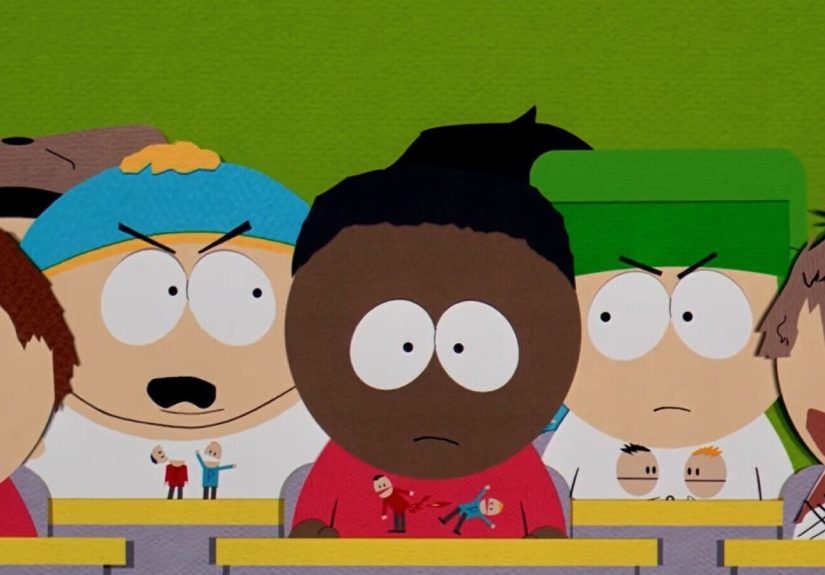
cable” than expected. One example frequently mentioned in the discussion was Season 27’s episode “Wok is Dead,” which aired in a 10 p.m.
slot and features repeated blunt phrasing that, when uncensored, is… not subtle. (This is South Park. Subtlety is not the brand.)
If you’ve watched the show across different platforms, you already know the experience can vary: the same episode might be bleep-heavy on
one channel, less edited on another, and practically feral on streaming. But for a lot of viewers, Comedy Central’s traditional vibe has been
“adult cartoon, but with a network’s hand hovering over the emergency brake.”
So when that hand wasn’t hoveringwhen the audio didn’t duck under a bleepfans understandably asked: When did this become normal?
The emotional math of a surprise F-bomb
The shock isn’t really about the word itself. Anyone who has ever opened a group chat knows profanity is thriving. The surprise is about
context: Comedy Central is a familiar container. Viewers have expectations shaped by years of “they’ll push the line… but not that line…
unless it’s after midnight… unless it’s a special… unless someone’s boss is on vacation.”
In other words, fans weren’t clutching pearls. They were clutching continuity.
Cable vs. Broadcast: The Rule Everyone Half-Remembers
Let’s clear up the biggest misconception: most people learned “TV rules” from the same place they learned “quick sand rules”movies, vibes,
and one very confident friend who is wrong about everything.
Broadcast TV has stricter federal indecency limits
In the U.S., over-the-air broadcast television operates under a regulatory structure that includes time-based restrictions for indecent or profane
content (often summarized as a “safe harbor” concept after late evening hours). That’s why broadcast networks historically treated certain words like
radioactive material unless it was late and the lawyers were asleep.
Cable is different because it’s subscription-based
Cable networks (like Comedy Central) aren’t governed by the same indecency/profanity restrictions that apply to broadcast stations. That does
not mean “anything goes” with no consequencesbut it does mean the “you’ll get fined for that word” logic people quote at each other is
often misplaced when the channel is cable.
Obscenity is its own category (and nobody wants that headache)
Another key nuance: “obscenity” is treated differently than indecency or profanity. The legal definition is narrower and tied to explicit sexual content
under established standards. Most of what adult comedies doespecially in animated satirelives in the realm of language and crudeness, not the legal
cliff edge that triggers obscenity concerns.
The bottom line: Comedy Central can air strong language in ways broadcast networks typically won’t, especially late at night. So if you’re
thinking, “Did the rules change?” the more accurate answer is: the rules were always messier than the public memory of them.
A Quick History of ‘South Park’ Censorship Shenanigans
If South Park were a person, it would be the kid who asked, “So… where exactly is the line?” and then immediately stepped over it with both feet
while making eye contact.
2001: The episode that turned profanity into a “concept”
Long before today’s “oops, that was uncensored” panic, South Park made censorship the entire joke. The classic example is the 2001 episode
“It Hits the Fan,” famous for repeating a single profane word so many times it became a running gag about society’s reaction to hearing it on television.
It wasn’t just shockit was satire about shock.
What people sometimes forget is that the show’s most notorious language moments were often engineered as commentary on standards, not just as a
middle finger to them. (Okay, sometimes it was also a middle finger. Two things can be true.)
2016: A notable “first” for an uncensored F-bomb in an early airing
Another frequently cited milestone is the Season 20 premiere “Oh, Jeez,” which was reported as the first time the series aired an uncensored F-bomb
during an early 10 p.m. showingfollowed by bleeps afterward. That detail matters because it highlights a reality of TV distribution: sometimes “uncensored”
happens in a limited way, in a specific feed, at a specific time, and not necessarily as a permanent “policy shift.”
The bigger point: ‘South Park’ has always negotiated with its container
Comedy Central is both a home and a filter. Over the years, what aired, what got bleeped, and what got pushed to later showings has reflected a tug-of-war
among creators, network standards, advertisers, affiliates, platform deals, and public blowback cycles.
So when fans hear more uncensored language now, it doesn’t come out of nowhere. It comes out of a long history of “how far can we go… on this platform… in this time slot… in this media era?”
Why It’s Happening More Now
1) The audience has been trained by the internet (and streaming) to expect fewer bleeps
In the early 2000s, bleeping was partly about avoiding complaints and partly about protecting advertisers from getting dragged into a culture-war
bonfire. Today, a huge chunk of the audience consumes comedy on platforms where language isn’t bleeped by default. Viewers don’t experience profanity as a
“broadcast event” anymore. It’s Tuesday.
2) TV ratings and descriptors do a lot of the “warning” work
The modern content advisory ecosystemTV-MA, language descriptors, on-screen icons, parental controlscreates a framework where a network can say,
“We told you what this was.” That’s not just a courtesy. It’s a strategy: the label becomes a shield, and the show becomes the show.
3) Platform deals blur the definition of a “default” version
When a show exists across linear cable, on-demand, network sites, and streaming services, the “real” version becomes a moving target. One platform may
host an uncensored cut. Another may host a broadcast-safe cut. And sometimes, through scheduling or asset selection, the wrong cut winds up in the wrong
slotcreating the illusion of a sudden new policy.
4) Comedy Central’s brand is adult comedy, not family hour
Comedy Central built its identity on adult-targeted comedystand-up, roasts, edgy scripted shows. Even when the network bleeps language, it’s rarely
because they’re trying to be PBS. It’s usually because of internal standards, advertiser comfort, or “don’t create a PR firestorm for no reason” calculus.
5) The show itself is still topical and deliberately provocative
Recent seasons continue to mash pop culture, politics, and outrage into one blender set to “puree.” For example, “Wok is Dead” (Season 27) tied a viral
collectible toy craze to a broader culture satirewhile also leaning into shock phrasing that becomes a recurring punchline.
How Uncensored Language Can “Slip” on TV
If you’re picturing a single person at Comedy Central dramatically deciding, “Tonight… we ride,” the truth is more boring and more plausible:
modern TV pipelines are built on versions, metadata, and automation.
Common (and realistic) ways it happens
- Wrong asset version: “Broadcast edit” vs. “uncensored” vs. “streaming master” can be separate files.
- Time-slot logic: The system may allow stronger content after a certain hour and swap versions accordingly.
- Regional feeds: East/West feeds and local distribution can create differences in what viewers hear.
- On-demand vs. linear mismatch: The cut used for VOD/TV Everywhere can differ from the live channel.
- Human error: Yes, sometimes it’s still “someone clicked the wrong thing.” Technology hasn’t killed that tradition.
The irony: the more TV becomes software, the more it behaves like softwareversion control problems and all.
Does Bleeping Change the Joke?
This is the part where fans split into two camps:
(1) “Uncensored is better because it’s honest,” and (2) “Bleeps are funnier because they weaponize imagination.”
Bleeps can be a punchline
In comedy, the bleep isn’t always censorshipit’s timing. A bleep can add rhythm, emphasize a reaction shot, or turn one line into a “fill in the blank”
game your brain completes with maximum chaos.
Uncensored language can feel more intense (or more normal)
When the bleep disappears, the line can land harderor sometimes flatter. Why? Because the forbidden fruit effect is gone. If a viewer is used to streaming
stand-up with zero bleeps, an uncensored F-word might barely register. If a viewer is used to cable edits, it can feel like the show suddenly got louder,
even if it didn’t get “more offensive” in any meaningful way.
‘South Park’ has used both modes as part of the satire
The show’s smartest language moments often aren’t about the wordthey’re about the audience’s relationship to the word. That’s why an uncensored airing
can feel like a “moment,” even when it’s just the show being the show inside a slightly different container.
Ratings, Warnings, and the “Please Don’t Email Us” Layer
If you’re wondering how networks justify stronger language without inviting a thousand complaints, a big part of the answer is the content rating system:
age-based ratings and descriptors (like language indicators), plus tools like the V-Chip and parental controls.
In practice, this creates a framework where a network can say, “This is TV-MA, it’s labeled, it’s late, and it’s aimed at adults.” Whether that feels
satisfying depends on your household and your tolerance for hearing a cartoon fourth-grader say something that would get a real fourth-grader grounded
until the sun burns out.
Why 10 p.m. matters culturally (even on cable)
Even though cable isn’t bound the same way broadcast is, the 10 p.m. hour still functions as a cultural signal: this is adult time. That time slot is part
of why a viewer can be startledbecause it marks the moment the network stops pretending it’s a “general audience” space.
Fast FAQ: The Stuff People Argue About in Comment Sections
Is Comedy Central “allowed” to air uncensored profanity?
Generally, yescable is not governed by the same indecency/profanity restrictions that apply to over-the-air broadcast television. Networks still self-regulate
based on standards, advertisers, and brand strategy, but the “automatic FCC fine” assumption doesn’t map cleanly onto cable.
So why did Comedy Central bleep it for so long?
Because “can” and “will” are different verbs. Even if something is legal, a network can decide it’s not worth the advertiser risk, the complaint volume, or
the PR headacheespecially in eras when organized pressure campaigns against TV content were more aggressive.
Is the uncensored version the “real” version?
On modern TV, there may be multiple “real” versions. The “real” version is sometimes whichever one you saw first, which is… not a legal definition, but it is
how fandom memory works.
Is this a permanent change?
It might be, or it might be inconsistent. TV distribution can be surprisingly patchy: different platforms, different cuts, different policies, different days.
That inconsistency is exactly why fans keep getting surprised.
Conclusion
The short version: Comedy Central “letting the F-bombs slide” isn’t a sudden collapse of civilization. It’s a collision of late-night cable reality,
shifting audience expectations, and a distribution ecosystem where the same episode can exist in multiple cuts across multiple platforms.
South Park has always played chicken with standardssometimes to make a point, sometimes to make you gasp-laugh, sometimes because it’s Tuesday and Trey
Parker woke up feeling spicy. What’s changing is less the show and more the world around it: streaming normalized uncensored language, ratings systems absorb
the warning burden, and cable networks feel less compelled to pretend they’re protecting your delicate ears from a cartoon.
So yes: Kyle’s mom may still be angry about something. But the bleeps? The bleeps are no longer guaranteed.
+: Fan Experiences When the Bleeps Disappear
There’s a very specific kind of fan experience that happens when a long-running show changes presentation rather than content. It’s not like a character
got recast or the animation style suddenly went full experimental art film. It’s subtlerand somehow it scrambles your brain more. That’s what the missing bleep
does. The joke may be identical, but your memory of how the show “sounds on TV” gets challenged in real time.
Many longtime viewers grew up with an unspoken routine: you knew South Park was explicit, but you also knew Comedy Central had a “TV version” that felt
like the show wearing a tie. Not a respectable tiemore like a tie you’d see on a guy doing karaoke at 1:17 a.m.but still, a tie. The bleeps were part of the
texture. They were a rhythmic percussion instrument. Sometimes they even made lines funnier because your brain filled in the blank with whatever curse word would
most horrify your imaginary middle school principal.
Then you watch a late-night airing and the tie is gone. Suddenly the show feels loudernot necessarily more vulgar, just more direct. For some fans, that’s a
thrill: it feels like catching a “real” version on cable without hunting for it online. For others, it’s disorienting because the bleeps were part of the nostalgic
soundscape. It’s like hearing a radio edit of a song for years and then discovering the album version has extra versesand those verses are mostly swearing at
the universe. You don’t feel offended; you feel like you’ve stepped into an alternate timeline where your TV is slightly less polite.
Another common fan experience is the “who’s in the room?” test. People don’t always watch TV alone. There’s the partner walking through the living room.
There’s the roommate who pretends not to listen but definitely listens. There’s the friend who visited and said, “Put something funny on,” and now you’re
suddenly performing a social experiment about boundaries. Bleeps provided a thin layer of plausible deniability. You could claim, “It’s bleeped! It’s fine!”
Uncensored language removes that cushion. Now you’re not just watching a cartoonyou’re curating an environment.
Fans also describe the “platform whiplash” experience: you watch an episode on one service where it’s unbleeped, catch a rerun where it’s bleeped,
then see a clip online where it’s unbleeped again. After a while, you start to question your own recall. Did that line always hit like that? Was the bleep
part of the joke? Did you imagine the bleep? Welcome to modern media consumption, where canon is a group project and everyone used a different textbook.
And finally, there’s the meta-experience that only South Park can deliver: the sense that the show wants you to notice. This series has built
entire storylines around cultural panic, standards battles, and the performative outrage machine. So when the bleeps vanish, fans naturally interpret it as part
of the commentaryeven if it’s just a different cut running in a different slot. Because with South Park, the line between “accident” and “bit” is always
blurry… and that blur is half the fun.