Table of Contents >> Show >> Hide
- Why Soup Can Be IBS-Friendly (When It’s Built the Right Way)
- IBS in One Minute (So the Soup Choices Make Sense)
- The IBS-Friendly Soup Formula
- Ingredients That Commonly Trigger IBS (AKA Soup’s Usual Suspects)
- 8 Soups That Can Help Manage IBS Symptoms
- 1) Chicken & Rice “Calm-Down” Soup
- 2) Carrot-Ginger Purée Soup
- 3) Zucchini & Basil Green Soup (Not a Detox, Just Delicious)
- 4) Potato & Chive Comfort Soup (Without the Onion Ambush)
- 5) Pumpkin or Butternut Squash Soup (Silky, Not Spicy)
- 6) Turkey Meatball & Quinoa Soup
- 7) Miso-Tofu Bok Choy Soup (Light, Savory, and Customizable)
- 8) Tomato & Basil Soup (With IBS-Safe Shortcuts)
- How to Personalize Soups for IBS-C vs. IBS-D
- IBS-Friendly Seasoning Without the Onion-and-Garlic Problem
- A Simple “Soup Strategy” for Real Life
- FAQ: Quick Answers About Soups and IBS
- Conclusion
- Experiences: What People Commonly Learn When Using Soup for IBS
If you live with IBS, you already know the truth: your gut has opinions. Loud ones. And it is not afraid to share them at inconvenient timeslike during meetings, road trips, or the exact moment you finally fall asleep. The good news is that food can be a powerful tool for symptom management, and soup is one of the gentlest, most customizable options in the “please don’t start a digestive rebellion” category.
This guide breaks down what makes a soup IBS-friendly, which ingredients tend to help (or hurt), and a lineup of soup ideas built around common IBS strategies like the low-FODMAP approach, soluble fiber support, lower fat, and easy-to-digest textures. No miracle claimsjust practical, comforting bowls you can actually work into real life.
Why Soup Can Be IBS-Friendly (When It’s Built the Right Way)
Soup isn’t automatically “safe” for IBSsome soups are basically onions, garlic, and regret in a bowl. But when you design it thoughtfully, soup has advantages that many IBS patients appreciate:
- Hydration support: Fluids matter, especially if diarrhea or constipation is part of your IBS picture.
- Gentler textures: Cooked vegetables and blended soups can be easier to tolerate than raw or crunchy foods.
- Portion control: A smaller bowl can function as a light meal when your gut wants “snack energy,” not “feast energy.”
- Customizable ingredients: You can swap proteins, carbs, fats, and seasonings to fit your personal triggers.
IBS in One Minute (So the Soup Choices Make Sense)
Irritable Bowel Syndrome (IBS) is a functional gut disordermeaning symptoms are very real, but standard tests often don’t show structural disease. Symptoms typically include abdominal pain, bloating, gas, and changes in bowel habits (constipation, diarrhea, or both).
IBS is famously individualized. Two people can eat the same “healthy” food and have wildly different outcomes. That’s why many clinicians recommend approaches like symptom tracking, gradual dietary changes, andwhen appropriatestructured plans such as a low-FODMAP trial with professional guidance.
The IBS-Friendly Soup Formula
Think of this as a build-your-bowl blueprint. The goal is comfort and consistencynot culinary acrobatics.
1) Start with a gut-calmer base
- Homemade broth (ideal because you control onion/garlic)
- Store-bought broth (choose options without onion/garlic; check labels carefully)
- Low-FODMAP shortcuts: Garlic-infused oil can add flavor without the same FODMAP load as garlic itself.
2) Choose a “safe-ish” carb, especially for IBS-D
- White rice (classic, soothing, and usually well tolerated)
- Potatoes (simple and comforting; keep fat moderate)
- Oats (often tolerated; adds gentle soluble fiberstart small)
- Quinoa (gluten-free option many people do well with)
3) Add protein that doesn’t pick fights
- Shredded chicken or turkey
- Egg ribbons (yes, like takeout soupwithout the mystery ingredients)
- Firm tofu (often better tolerated than softer soy products)
- Fish (mild varieties) if you tolerate it
4) Pick vegetables that tend to behave when cooked
Many people tolerate cooked vegetables better than raw. Great “starter” veggies include carrots, zucchini, spinach, tomatoes (in moderate amounts), and certain squashesespecially when blended.
5) Keep fat and heat on a short leash
High-fat meals and very spicy foods can be symptom triggers for some people. You don’t have to live on “sad food,” but creamy, greasy soups can backfire when IBS is flaring.
Ingredients That Commonly Trigger IBS (AKA Soup’s Usual Suspects)
Your triggers may differ, but these show up frequently in IBS guidance and in low-FODMAP education:
- Onion and garlic (including powders and “natural flavors” that are basically onion/garlic in a trench coat)
- Wheat-based thickeners (roux, some noodles, some dumplings)
- Regular dairy if lactose is an issue (cream, milk, soft cheeses)
- Beans and lentils unless you’ve tested tolerance (and portion size matters a lot)
- Sugar alcohols (some “keto” sweeteners can be gut chaos for sensitive people)
8 Soups That Can Help Manage IBS Symptoms
These are ideas, not medical prescriptions. Treat them like “templates” you can personalize based on your IBS type (IBS-C, IBS-D, mixed) and your known triggers.
1) Chicken & Rice “Calm-Down” Soup
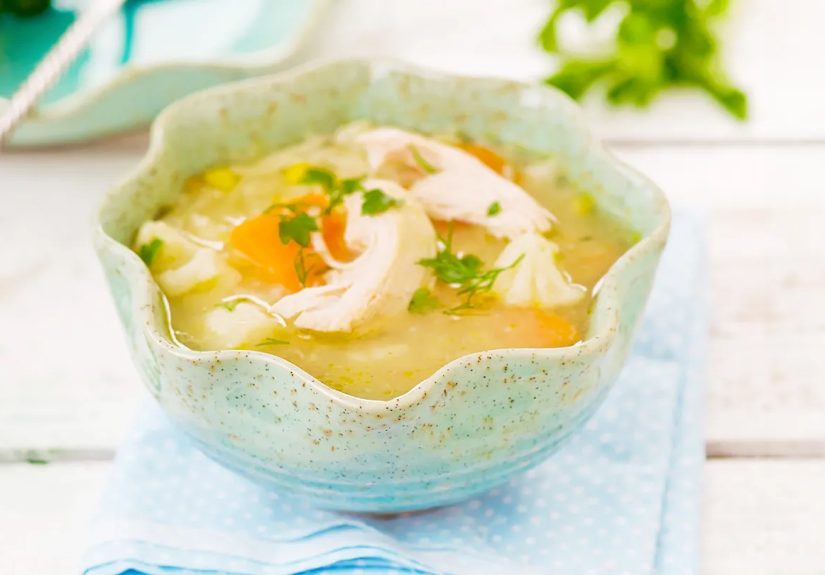
This is the soup equivalent of putting your gut in a cozy blanket and asking it nicely to stop panicking. Use a simple broth (check for onion/garlic), shredded chicken, white rice, carrots, and a handful of spinach. Season with salt, pepper, and chives or scallion greens (skip the white bulb).
Why it helps: Mild protein + easy carbs + cooked veg. Great for IBS-D days or anytime your appetite is shaky.
2) Carrot-Ginger Purée Soup
Carrots are often well tolerated when cooked, and blending creates a smooth texture that many people find easier on a sensitive gut. Simmer carrots with ginger, add broth, blend, and finish with a small swirl of lactose-free yogurt (optional) for creaminess.
Smart swap: Use garlic-infused oil for flavor if you miss the “savory base” of onion/garlic.
3) Zucchini & Basil Green Soup (Not a Detox, Just Delicious)
Zucchini tends to be a friendlier vegetable for many IBS folks when cooked. Sauté zucchini in a bit of garlic-infused oil, add broth, simmer, blend, and finish with basil. Keep the fat moderate and skip heavy cream.
Best for: People who want a lighter soup that still feels like real food.
4) Potato & Chive Comfort Soup (Without the Onion Ambush)
Traditional potato soups often start with onions and can be heavy on cream. The IBS-friendly approach: potatoes + broth + chives (or scallion greens), blended for thickness. If you want it creamy, use lactose-free milk or a small amount of lactose-free sour cream.
Why it helps: Simple ingredients, smooth texture, and easy-to-digest starchoften helpful during flares.
5) Pumpkin or Butternut Squash Soup (Silky, Not Spicy)
Squash soups can be soothing, especially when you keep the seasoning gentle. Roast squash for flavor, blend with broth, and use ginger or a pinch of cumin if you tolerate it. If you want richness, try lactose-free half-and-half or a small amount of coconut milk (some people tolerate it well; others don’ttest slowly).
IBS tip: Blended soups can reduce the “roughage factor” that sometimes irritates sensitive digestion.
6) Turkey Meatball & Quinoa Soup
If you’re tired of “sick day” soup and want something heartier, this is a great middle ground. Make small turkey meatballs (salt, pepper, herbs), simmer in broth with carrots and zucchini, and add cooked quinoa.
Why it helps: Balanced meal in a bowl without the high-fat heaviness of creamy soups.
7) Miso-Tofu Bok Choy Soup (Light, Savory, and Customizable)
Use a gluten-free miso (if needed), dissolve a small amount into warm broth, add firm tofu cubes and bok choy, and finish with ginger. Keep miso portions modest (it’s concentrated), and avoid adding garlic/onion.
Flavor hack: A squeeze of lemon and toasted sesame oil (a few drops) can add depth without a huge ingredient list.
8) Tomato & Basil Soup (With IBS-Safe Shortcuts)
Tomato soup can work if you skip the usual onion/garlic base and watch acidity. Use canned crushed tomatoes (check ingredients), simmer with broth, basil, and a pinch of sugar if you tolerate it. Blend smooth. Add lactose-free milk for a creamy style without lactose overload.
Who it fits: People who tolerate tomatoes well and want classic comfort food vibes.
How to Personalize Soups for IBS-C vs. IBS-D
If constipation is your main issue (IBS-C)
- Lean into soluble fiber gradually (oats, small portions of tolerated fruits/veg; consider clinician-guided psyllium).
- Hydrate with your soup and water on the side.
- Go easy on huge bowlssometimes smaller portions reduce bloating.
If diarrhea is your main issue (IBS-D)
- Keep it simple: rice-based soups, lean proteins, low-fat broths.
- Limit very fatty add-ins (heavy cream, lots of cheese, fried toppings).
- Be cautious with high-fiber “health soups” during flaresthey can be too much too soon.
IBS-Friendly Seasoning Without the Onion-and-Garlic Problem
Losing onion and garlic can feel like losing your personality. (It’s okay. We will rebuild you.) Try these instead:
- Chives or scallion green tops
- Garlic-infused oil (for aroma and depth)
- Ginger (fresh or frozen)
- Citrus (lemon/lime zest and juice)
- Herbs like basil, thyme, rosemary, dill
- Umami boosters like a small amount of miso or gluten-free tamari (if tolerated)
A Simple “Soup Strategy” for Real Life
If you want soup to actually help manage IBS symptoms, consistency beats perfection. Here’s an easy system:
- Make one safe broth per week (or find a verified store option without onion/garlic).
- Pick two soup templates: one ultra-mild (chicken & rice) and one “fun but safe” (carrot-ginger or squash).
- Freeze in single servings so you have emergency meals when your gut is dramatic.
- Track patterns: not just what you ate, but portion size, stress, sleep, and timing.
FAQ: Quick Answers About Soups and IBS
Are soups automatically low-FODMAP?
Nope. Many soups hide high-FODMAP ingredients in broth, stock, seasoning blends, and “natural flavors.” If you’re using low-FODMAP principles, label-reading matters.
Do blended soups help IBS?
They can. Many people tolerate smoother textures better, especially during flares. Blending also helps you include vegetables without the rough texture of raw salads or crunchy sides.
Should I do a low-FODMAP diet forever?
Typically, no. Most reputable guidance frames low-FODMAP as a short-term elimination followed by reintroduction to identify personal triggersideally with a qualified dietitian.
Conclusion
Soup won’t “cure” IBS, but it can absolutely make day-to-day symptom management easierespecially when you focus on gentle ingredients, lower fat, cooked (or blended) vegetables, and smart flavor swaps that avoid common triggers like onion and garlic. Start with one simple, reliable soup you tolerate well, then expand your rotation as you learn what your gut likes. And remember: the goal isn’t a perfect diet. It’s a calmer gut and a life that doesn’t revolve around scouting bathrooms like you’re on a survival show.
Experiences: What People Commonly Learn When Using Soup for IBS
Ask a room full of people with IBS about soup and you’ll get the same vibe you’d get asking a room full of cat owners about “the best vacuum.” Everyone has a strong opinion, at least one cautionary tale, and a strangely specific story that starts with, “Okay, so I trusted a restaurant broth one time…”
One of the most common experiences is realizing that soup’s biggest risk isn’t the vegetablesit’s the base. People often assume broth is just “meat + water + nice thoughts.” Then they read the ingredient label and find onion, garlic, onion powder, garlic powder, and something called “flavoring” that sounds like it was invented in a lab. When those hidden ingredients get swapped outby making broth at home or carefully choosing a store brandmany notice soups become dramatically more predictable. Predictable is a love language in IBS.
Another frequent lesson: texture matters more than expected. Lots of people report that the same vegetables that feel rough in a salad become much friendlier after they’ve been simmered and blended. Carrots, zucchini, and squash show up again and again in “safe rotation” lists because they can be cooked into soft, smooth soups that don’t demand a ton of digestive effort. The first time someone tries a blended carrot-ginger soup on a flare day and feels “okay” afterward, it can be a genuine emotional moment. Yes, food can be that dramatic. IBS makes it that dramatic.
Portion size is another classic “surprise villain.” Many people learn that an IBS-friendly recipe can still cause trouble if the bowl is basically a mixing bowl. Soup feels light, so it’s easy to overdo itespecially when you’re hungry and the soup is actually delicious. A common strategy is to start with a smaller serving, wait 15–20 minutes, and only then decide if a second helping is worth the risk. This isn’t about fear; it’s about gathering data. Your gut is running an experiment whether you asked it to or not.
Then there’s the “fat factor.” People often notice that the difference between “comforting” and “chaos” is sometimes just a heavy cream finish or a big handful of cheese. That doesn’t mean fat is bad; it means timing and dose matter. Many end up with a two-track system: lean, brothy soups for flare days, and slightly richer soups (still moderate) for stable days. It’s like having a casual outfit and a fancy outfitexcept the event is “existing peacefully.”
Finally, soup can become a confidence tool. When you have a few reliable recipeslike chicken & rice, potato & chive, or a smooth squash soupyou stop feeling like every meal is a gamble. People often describe a subtle shift: fewer last-minute “what can I eat?” panics, fewer skipped meals, and more willingness to experiment slowly with new foods. Soup helps because it’s forgiving: you can adjust salt, swap ingredients, blend it smoother, thin it out, or freeze it for later. In IBS life, flexibility is basically a superpower.
If you take one “experience-based” tip from all of this, let it be this: treat soup as a system, not a single recipe. Build a safe base, use repeatable ingredients, change one variable at a time, and keep notes on what your body does not what the internet says it should do. Your gut may be dramatic, but it’s also honest. And with a good soup rotation, you can negotiate a truce that tastes pretty great.