Table of Contents >> Show >> Hide
- The expert consensus in plain English
- Why winter pruning can work so well for Japanese maples
- But here’s the catch: “winter” has a best part
- What about sap bleeding? Will my Japanese maple “bleed out”?
- When winter pruning is a good idea
- When you should NOT prune in winter (or should keep it minimal)
- How to prune a Japanese maple in winter (step-by-step, expert-style)
- Winter pruning goals by maple type (upright vs laceleaf)
- Common winter pruning mistakes (and what to do instead)
- Aftercare: what to do once you’ve pruned
- Quick “Should I prune now?” checklist
- FAQs people always ask (because Japanese maples inspire feelings)
- Experience-based insights: what gardeners and arborists notice in the real world
- 1) Late winter pruning tends to feel calmerand look cleaner
- 2) The biggest regret is usually over-thinning the interior
- 3) “Small, annual edits” beat “one big rescue mission”
- 4) People are usually happier when they prune for structure, not symmetry
- 5) Winter pruning is easiest when you choose a single goal
- 6) The most reliable ‘oops’ moment: cutting the wrong branch first
Yessometimes. Winter can be an excellent time to prune a Japanese maple (Acer palmatum), but only if you pick the right part of winter and stick to the kind of pruning that Japanese maples actually like (hint: thoughtful “editing,” not a dramatic makeover). Done well, winter pruning helps you see the tree’s structure, reduce problems like crossing branches, and set up a cleaner, more graceful canopy for spring.
Done poorlylike hacking it back on a bitterly cold day or “topping” it into a sad green lollipopwinter pruning can trigger dieback, stress the tree, and expose sensitive bark to sunscald. In other words: the season isn’t the villain; the approach is.
The expert consensus in plain English
Across horticulture references, extension guidance, and arborist best practices, you’ll see a consistent theme: major shaping cuts are typically best during dormancy, often in late winter, while fine-tuning and size control can also be done in summer when you can judge density and leaf coverage. Meanwhile, fall is commonly discouraged because it can encourage tender growth and leave cuts vulnerable heading into cold weather.
So if you’re wondering, “Should I prune in winter?” the more useful question is: “What kind of pruning am I doing, and is my tree ready for it?”
Why winter pruning can work so well for Japanese maples
1) You can finally see the “bones”
Japanese maples are all about architecturelayers, movement, negative space, and that slightly mystical vibe that makes people whisper “zen” near your front steps. In winter, the leaves are gone, and the branch structure is visible. That makes it easier to spot:
- Crossing or rubbing branches
- Branches growing inward toward the trunk
- Multiple leaders competing at the top
- Low branches swallowing your walkway (or your dignity)
- Dead, damaged, or diseased wood
2) Dormancy reduces stress (and disease pressure)
When a deciduous tree is dormant, it’s not pouring energy into leaf production. That generally makes pruning less disruptive than cutting during a growth surge. It also tends to be a lower-pressure time for many insects and pathogens compared with warm, wet seasonsthough clean cuts and tool hygiene still matter.
3) Structural pruning is easier to do correctly
Japanese maples respond best to thinning cuts (removing a whole branch back to its origin or to a lateral branch) rather than heading cuts (chopping a branch midstream and leaving a stub). Winter visibility helps you choose thinning cuts that preserve the tree’s natural form instead of creating a bristly “hedge on a stick.”
But here’s the catch: “winter” has a best part
If winter pruning is a movie, early winter is the messy middle, mid-winter is the suspense, and late winter is the part where the hero finally makes a smart decision. Many experts prefer pruning after the harshest cold has passed but before buds fully breakoften late winter into very early spring, depending on your climate.
Why not prune during a deep freeze? Because extreme cold can make wood more brittle and can slow the tree’s ability to seal wounds. Plus, you’re more likely to rush the job because your face is trying to leave your body.
Why not wait until leaf-out? You canespecially for light pruningbut heavy structural work after growth starts can stress the tree, and pruning at the wrong time can create more sap flow (which is usually more annoying than dangerous, but still messy).
What about sap bleeding? Will my Japanese maple “bleed out”?
Maples can ooze sap when pruned in late winter or early spring. It looks dramatic, like your tree is auditioning for a soap opera, but horticulture and extension guidance commonly note that sap flow is typically not fatal and generally stops as the tree leafs out. The bigger concerns are cosmetic mess, potential bark irritation below the cut if bleeding is heavy, and making sure you’re pruning correctly in the first place.
If you want to minimize sap bleeding, some guidance suggests pruning either in late fall/early winter or in midsummer after leaves hardenthough timing varies by region and by the type of pruning you’re doing.
When winter pruning is a good idea
Consider winter pruning (especially late winter) if your goal is one or more of the following:
- Remove dead, damaged, or diseased wood (you can do this any time, but winter makes it easier to see)
- Reduce crossing branches that rub and create wounds
- Open the canopy for airflow and light penetration
- Improve structure (better branch spacing, fewer awkward forks)
- Shape gently by emphasizing the tree’s natural silhouette
When you should NOT prune in winter (or should keep it minimal)
Avoid winter pruning if…
- It’s extremely cold (especially during a hard freeze)
- Your tree is newly planted (first year is typically about establishment, not styling)
- You’re planning heavy reductions (large canopy removal can expose thin bark and trigger sunscald)
- The tree is stressed (drought stress, pest issues, significant dieback, root disturbance)
- You’re tempted to “top” it (this is not pruning; this is a misunderstanding with consequences)
Also, be cautious with pruning in late summer into fall. Cuts made too late can push growth at the wrong time, and the tree needs its leaves to store energy for winter.
How to prune a Japanese maple in winter (step-by-step, expert-style)
Think “bonsai mindset,” not “chainsaw energy.” You’re clarifying the structure, not rewriting the whole story.
Step 1: Start with the “3 D’s”
Remove branches that are dead, damaged, or diseased. This is the most universally supported pruning category, regardless of season.
Step 2: Fix friction and traffic jams
Look for branches that cross, rub, or grow inward. Choose the better-positioned branch to keep, and remove the other with a clean thinning cut.
Step 3: Thin for airflowdon’t scalp
Japanese maples often look best with layered branching and intentional “windows” of space. Thin small interior twigs that clutter the canopy, but keep enough branching to prevent sun from blasting previously shaded bark.
Step 4: Respect the branch collar
Make cuts just outside the branch collar (the slightly swollen area where branch meets trunk). Cutting too close damages tissue that helps the tree seal the wound; leaving a long stub slows healing and invites dieback. No need for wound paintmodern arborist guidance typically favors proper cuts over sealants.
Step 5: Use the 3-cut method for larger limbs
If you’re removing a heavier limb, avoid bark tearing by using the classic three-cut approach: an undercut, then a top cut to remove weight, then a final cut near the collar. If that sounds like a lot: it isand that’s why it prevents ugly damage.
Step 6: Keep the removal percentage reasonable
A common rule of thumb for ornamentals: don’t remove more than about one-third of the canopy in a season. For Japanese maples, many experts recommend even lighter annual pruningsmall, consistent edits rather than rare, drastic ones.
Winter pruning goals by maple type (upright vs laceleaf)
Upright Japanese maple
- Prioritize removing crossing branches and competing leaders
- Encourage layered branching, not “tufts” at the ends
- Keep a balanced canopy (don’t over-thin one side)
Weeping/laceleaf Japanese maple
- Thin gently to reveal cascading structure
- Remove interior clutter that blocks airflow
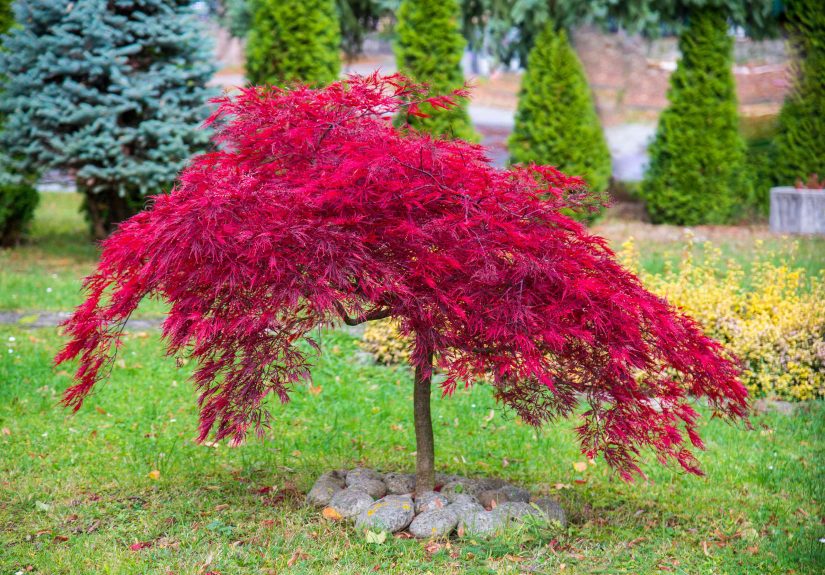
- Limit height reductionlaceleaf forms usually look best when allowed to drape naturally
Common winter pruning mistakes (and what to do instead)
Mistake: “I want it smaller, so I’ll just shorten every branch.”
Do instead: Use thinning cuts to remove select branches back to their origin. This preserves natural form and reduces the “broomstick” look that heading cuts can create.
Mistake: Removing too much interior growth at once
Do instead: Thin gradually over multiple seasons. This reduces stress and lowers the risk of sunscald on bark that’s been shaded for years.
Mistake: Pruning when tools are dull or dirty
Do instead: Use sharp, clean pruners. Wipe blades between suspect cuts, especially if disease is present. Clean cuts heal more effectively than crushed ones.
Mistake: Forgetting that roots exist
Do instead: If the tree has been drought-stressed, recently transplanted, or has root-zone disruption, postpone nonessential pruning. A stressed root system plus aggressive pruning is like asking someone to run a marathon during the flu.
Aftercare: what to do once you’ve pruned
- Mulch wisely: A thin mulch layer helps moderate soil moisture and temperature, but keep mulch off the trunk.
- Water if dry: Winter can still be drying, especially in windy or sunny sites. Water during dry spells if the ground isn’t frozen.
- Skip heavy fertilizer: Over-fertilizing can push growth that the tree can’t support. Japanese maples generally don’t need aggressive feeding.
- Watch sun exposure: If you thinned a lot, consider whether the trunk or major limbs are now exposed to harsh afternoon sun.
Quick “Should I prune now?” checklist
- Is the tree dormant (no leaves) and generally healthy? Good sign.
- Has the coldest part of winter passed in your area? Even better.
- Are you focusing on thinning cuts, not major size reduction? Perfect.
- Are you avoiding pruning during a hard freeze or wet weather? Smart.
- Are you removing less than ~30% of the canopy? Keep it classy.
FAQs people always ask (because Japanese maples inspire feelings)
Can I prune a Japanese maple in early winter?
You can do light cleanup after leaf drop, especially removing dead or broken wood. For bigger structural decisions, many experts prefer late winter so you avoid the harshest cold and still prune before spring growth.
Is summer pruning better than winter pruning?
Not betterdifferent. Summer pruning is great for light thinning and controlling vigor, because you can see leaf density and how shade falls. Winter pruning is great for structure because you can see the branching clearly. Many skilled gardeners use both: winter for structure, summer for touch-ups.
Will pruning cause disease?
Pruning doesn’t “cause” disease, but poor cuts, dirty tools, and pruning at high-risk times can increase the chance of problems. Clean, correctly placed cuts and good timing reduce risk.
Should I seal pruning cuts?
In most cases, no. Proper cuts outside the branch collar are the best “seal.” If you’re worried about a specific disease issue in your region, consult a local extension resource or certified arborist.
Experience-based insights: what gardeners and arborists notice in the real world
Beyond the official guidance, a lot of wisdom comes from what people repeatedly see happen in actual yardswhere the pruning window collides with busy schedules, surprise cold snaps, and that one neighbor who swears the tree “likes a haircut.” Here are patterns experienced growers and tree pros often describe when it comes to winter pruning Japanese maples.
1) Late winter pruning tends to feel calmerand look cleaner
Gardeners who prune in late winter often mention the same pleasant surprise: the tree’s structure is suddenly obvious. What looked like a “kind of lumpy” canopy in summer becomes a clear framework of main limbs, secondary branches, and finer twigs. People frequently find they prune lessnot morebecause the decisions become more precise. Instead of removing a handful of random branches, they remove two crossing limbs and suddenly the whole tree looks lighter, more layered, and more intentional.
2) The biggest regret is usually over-thinning the interior
A common experience is the urge to “open it up” until the canopy looks airy from every angle. That can backfire. Japanese maples have thin bark and can be sensitive to harsh sun, wind, and temperature swings. When too much interior growth is removed in one session, the trunk and main limbs may get more direct exposure than they’re used to. Gardeners sometimes notice bark looking stressed laterespecially on trees planted in brighter, hotter spots. The takeaway many people share: thin gradually over a couple of seasons, and stop sooner than you think you should.
3) “Small, annual edits” beat “one big rescue mission”
Arborists who get called to “fix” a Japanese maple often run into the same backstory: the tree wasn’t pruned for years, then someone tried to shrink it quickly. That’s when you see large cuts, big gaps in the canopy, and awkward regrowth. In contrast, gardeners who do a short winter session each yearten to twenty minutes, not an all-day eventtend to end up with trees that keep their natural grace. The maple stays within bounds without ever needing a drastic reduction, and the tree’s form gets better with age instead of more chaotic.
4) People are usually happier when they prune for structure, not symmetry
Japanese maples aren’t meant to look like perfectly matched “before and after” haircut photos. When gardeners chase symmetry, they often start making matching cuts on both sidesand that can create a stiff, unnatural look. The more satisfying approach, in most real yards, is pruning for flow: keeping a few strong lines, removing clutter, and letting the tree lean into its personality. Many experienced growers say they stand back every few cuts, view the tree from the sidewalk and the most-used window, and prune for the silhouette they actually live with.
5) Winter pruning is easiest when you choose a single goal
One practical lesson that comes up again and again: winter pruning sessions go best when you decide what “success” means before you start. For example, “remove crossing branches and dead wood,” or “raise the canopy six inches above the path,” or “reduce density near the trunk for airflow.” When people start with multiple goals (“thin it, shrink it, reshape it, make it match the photo I saw online”), they tend to take too much. Gardeners who pick one goal often finish with a tree that looks subtly improvedlike it had a good night’s sleeprather than obviously altered.
6) The most reliable ‘oops’ moment: cutting the wrong branch first
Many gardeners share a version of this story: they cut a branch that looked “in the way,” then realize it was the one providing a key line of movement. Winter visibility helps, but it also makes branches look equally important. A helpful habit experienced pruners adopt is the “trace test”: before cutting, they follow the branch back to its origin and ask, “What does the tree lose if I remove this?” If the answer is “its main character energy,” they reconsider.
In short: winter pruning can be a fantastic choice, especially in late winter, as long as you keep it gentle, structural, and respectful of the tree’s natural form. Japanese maples don’t need much pruningbut the little they do need benefits from patience, sharp tools, and the confidence to stop while you’re ahead.