Table of Contents >> Show >> Hide
- Why Geraniums Need Separating or Repotting
- Know Your Geranium: Pelargonium vs. Hardy Geranium
- Best Time to Separate and Repot Geraniums
- What You Need Before You Start
- How to Separate Common Potted Geraniums
- How to Divide Hardy Geraniums
- How to Repot Geraniums the Right Way
- Aftercare: Helping Geraniums Settle In
- Can You Save a Very Leggy Geranium?
- Common Mistakes to Avoid
- Real-World Experiences With Separating and Repotting Geraniums
- Conclusion
Geraniums are the kind of plants that make gardeners feel wildly competent. Give them sun, avoid drowning them, and they reward you with cheerful blooms that look like they showed up dressed for a party. But sooner or later, even the happiest geranium outgrows its pot, gets leggy, or turns into a crowded tangle of stems, roots, and gardening regret. That is when separating and repotting becomes less of an optional weekend hobby and more of a rescue mission.
There is one important twist before we dig in: the “geraniums” most people grow in pots and porch planters are usually Pelargoniums, not true hardy geraniums. That matters because common garden geraniums are usually refreshed by repotting, taking cuttings, or gently separating multiple rooted plants that were growing together. True hardy geraniums, also called cranesbills, can often be divided more traditionally by splitting the clump. Once you know which type you have, the rest gets much easier.
This guide covers both. We will walk through when to separate geraniums, how to repot them without drama, what tools and soil to use, and how to help them settle into their new homes without behaving like tiny leafy divas.
Why Geraniums Need Separating or Repotting
Geraniums do not ask for much, but they do appreciate a little real estate. When roots pack too tightly inside a container, water runs straight through, the plant wilts quickly, growth slows, and blooming can taper off. A rootbound plant may also produce lots of leaves but fewer flowers, which is basically the botanical version of showing up overdressed and forgetting the gift.
You may need to separate or repot your geranium if you notice any of these signs:
Common signs it is time
- Roots circling around the inside of the pot or poking from drainage holes
- Soil drying out unusually fast
- Frequent wilting, even with regular watering
- Stunted growth or reduced blooming
- A plant that looks top-heavy and too large for its container
- Several distinct rooted stems crowded into one pot
For common zonal or ivy geraniums, repotting is often enough. For hardy perennial geraniums, division can also rejuvenate an older plant and give you extra plants for borders, beds, or containers.
Know Your Geranium: Pelargonium vs. Hardy Geranium
Let us solve the identity crisis first. If your plant has the classic rounded leaves, bold flower clusters, and spends summer in pots, window boxes, or patio containers, it is probably a Pelargonium. These are often treated as annuals in many parts of the United States, though they are tender perennials. They are commonly propagated by stem cuttings, and they can be repotted into a larger container when crowded.
If your plant grows in a perennial border, has a looser, mounding habit, and is often called cranesbill, you likely have a true hardy geranium. These can often be divided in spring or fall by splitting the root mass into smaller sections.
So, if you were picturing yourself sawing a florist geranium in half like a pirate with a spade, pause. For many container geraniums, the gentler route is smarter.
Best Time to Separate and Repot Geraniums
The best time depends on the type of geranium and your climate, but generally speaking, active growth is your friend. Spring is ideal for most repotting jobs because the plant is gearing up for a growing season and can recover quickly. Early fall also works for indoor carryover plants or for repotting before overwintering.
Best timing by situation
- Common potted geraniums: Repot in spring, or in late summer to early fall before bringing indoors.
- Rooted cuttings: Pot up once roots are established and the cutting is stable.
- Hardy geraniums: Divide in spring or fall when temperatures are milder.
Avoid repotting during extreme heat, during drought stress, or when the plant is heavily blooming and already struggling. Geraniums are tough, but they still dislike being asked to move apartments during a heat wave.
What You Need Before You Start
- Clean hand pruners or a sharp knife
- A new pot with drainage holes
- Fresh, well-draining potting mix
- Perlite or coarse sand if you want to improve drainage further
- Gloves, if you prefer
- A watering can
- Optional: rooting hormone if you are taking cuttings
Choose a pot only one size larger than the current one unless you are splitting a crowded group into multiple smaller plants. Going too big can leave excess wet soil around the roots, which increases the risk of rot. Bigger is not always better. Sometimes bigger is just soggier.
How to Separate Common Potted Geraniums
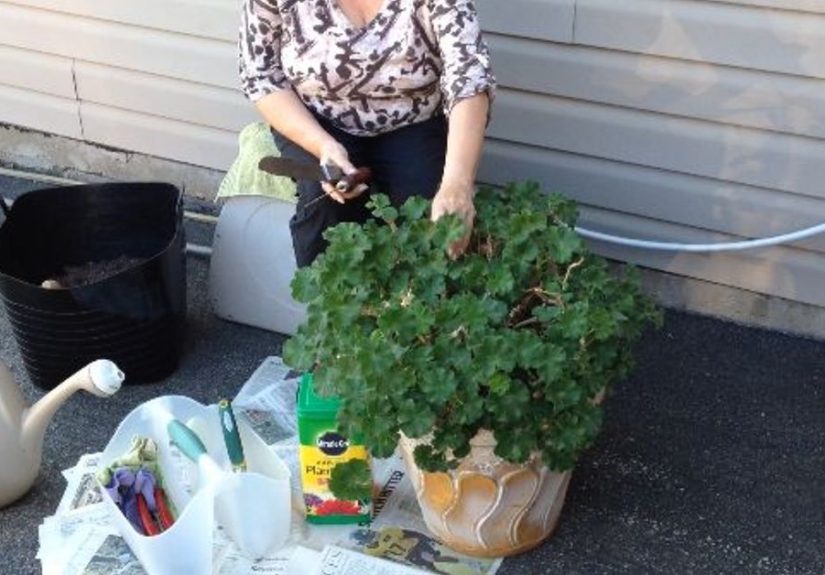
With common geraniums, “separating” usually means one of three things: teasing apart several rooted plants that were planted together, removing rooted side shoots, or trimming and repotting a crowded root ball. It does not always mean chopping one old plant into chunks.
Step 1: Water lightly first
A few hours before the job, water the plant enough to make the soil slightly moist, not muddy. This helps the root ball slide out more easily and reduces transplant stress.
Step 2: Remove the plant from its pot
Tip the container sideways and support the base of the plant. Tap or squeeze the pot if needed. Avoid yanking by the stems unless you enjoy apologizing to plants.
Step 3: Inspect the roots
Healthy roots should look firm and pale. Trim away mushy, dark, or foul-smelling roots. If roots are circling tightly, loosen the outside gently with your fingers. For a severely crowded root ball, make a few shallow vertical cuts on the sides to encourage fresh outward growth.
Step 4: Separate only where natural divisions exist
If multiple stems have their own root sections, gently tease them apart. If the mass will not separate cleanly, use a sterile knife to divide between rooted sections. Each section should keep a healthy stem, leaves, and a share of roots.
Step 5: Trim back leggy growth
If stems are long and sparse, cut them back by about one-third. This helps the plant focus on root recovery and encourages bushier regrowth.
How to Divide Hardy Geraniums
True hardy geraniums are much more division-friendly. If the clump has grown wide, thinned in the center, or started crowding neighboring plants, division can refresh it beautifully.
Simple division method
- Dig around the clump and lift it carefully.
- Shake or wash off some soil so you can see the crown and roots.
- Pull apart or cut the clump into sections.
- Make sure each piece has roots and several healthy shoots.
- Replant divisions immediately at the same depth.
- Water well and mulch lightly if planted outdoors.
Spring and fall are usually the safest times for this because temperatures are cooler and plants are less stressed.
How to Repot Geraniums the Right Way
Once your plant is separated, it is time for the move. Repotting is not complicated, but details matter.
Choose the right pot
Pick a container with drainage holes and go just one size up from the current pot for a single plant. For small nursery plants, move up gradually instead of dropping them into a giant decorative cauldron of damp soil.
Use the right soil mix
Geraniums like loose, airy, well-draining potting media. A quality potting mix works well on its own, but you can improve drainage with a little perlite or coarse sand. Avoid dense garden soil in containers because it compacts too easily.
Repot step by step
- Add fresh mix to the bottom of the new pot.
- Set the plant so the crown sits at the same depth as before.
- Fill around the roots with potting mix, firming gently.
- Leave a little space at the top for watering.
- Water thoroughly until excess drains from the bottom.
Do not bury the crown too deeply. That is one of the fastest ways to encourage stem rot, and geraniums are not fans of surprise underground living.
Aftercare: Helping Geraniums Settle In
The first two weeks after repotting are all about recovery. Your geranium does not need a pep talk, but it does need consistent care.
Light
Place repotted geraniums in bright light. Outdoor plants can have a day or two of gentle shade before returning to fuller sun. Indoor plants should get a bright window or supplemental light.
Water
Water thoroughly after repotting, then let the top inch or two of soil dry before watering again. Geraniums tolerate slightly dry conditions better than soggy roots.
Fertilizer
Wait about two weeks before feeding. After that, use a balanced fertilizer or a bloom-supporting fertilizer according to label directions. Too much fertilizer too soon can stress fresh roots.
Pinching and deadheading
Pinch stem tips to encourage branching, and remove spent blooms regularly. This keeps the plant compact and directs energy toward new flowers rather than seed production.
Can You Save a Very Leggy Geranium?
Absolutely. In fact, repotting is often the perfect moment to rescue a tired, stretched-out plant. If your geranium has long bare stems with a few leaves waving at the top like little green surrender flags, cut it back. Prune above leaf nodes, keep the healthiest stems, and consider taking cuttings from the trimmings.
Stem cuttings root readily in a loose medium under bright indirect light. Once rooted, they can be potted individually. This is one of the easiest ways to turn one worn-out plant into several fresh, full ones. It is frugal, satisfying, and just a bit smug in the best possible way.
Common Mistakes to Avoid
- Using a pot that is far too large
- Planting into heavy soil with poor drainage
- Keeping the soil constantly wet
- Separating stems that do not have enough roots to survive
- Skipping pruning on overgrown, leggy plants
- Moving a newly repotted geranium straight into harsh midday heat
- Confusing Pelargoniums with hardy cranesbills and dividing them too aggressively
Real-World Experiences With Separating and Repotting Geraniums
One of the most common experiences gardeners describe is surprise. A geranium that looked merely “a little crowded” from above can come out of the pot looking like it has been secretly knitting roots for months. The first time many people repot one, they discover a dense white ring of roots circling the pot, dry exhausted soil in the center, and a plant that was not needy at all, just badly housed. After repotting into fresh mix and trimming it back, the difference can be dramatic within a couple of weeks: greener leaves, sturdier stems, and a flush of buds that makes the plant look like it forgave everything.
Another familiar experience is the fear of cutting too much. Gardeners often hesitate when faced with a leggy geranium, especially one they have kept alive through summer storms, missed waterings, and the occasional bout of optimistic neglect. It feels wrong to prune a plant that already looks a little scruffy. But in practice, a thoughtful haircut is often exactly what helps. Once the overlong stems are shortened and the roots have room again, the plant usually responds with fuller growth instead of sulking. Geraniums are a good reminder that tidy does not equal cruel.
There is also the classic “I thought I had one plant” moment. You tip out the pot and realize there were actually two or three rooted stems growing together all along. This is where separating becomes especially rewarding. Instead of one overstuffed container, you suddenly have multiple plants to pot up, share with a neighbor, or tuck into other sunny spots. Many gardeners say this is the point where geranium growing becomes delightfully addictive. One plant becomes three, three become six, and before long your porch starts to look like a cheerful little flower parade.
Indoor overwintering brings its own set of experiences. A geranium moved inside for winter often becomes leggier from lower light, and that can feel discouraging at first. But many growers learn that spring repotting fixes a lot. Fresh soil, a slightly larger pot if needed, careful pruning, and stronger light can transform a winter-weary plant into a handsome summer performer again. Some gardeners even prefer to take cuttings from the overwintered plant, root them, and start over with younger plants that bloom more enthusiastically.
Perhaps the most useful real-world lesson is this: perfect timing matters less than gentle handling and good aftercare. Gardeners who succeed consistently are usually the ones who use clean tools, avoid oversizing the pot, keep drainage excellent, and resist the urge to overwater afterward. In other words, separating and repotting geraniums is not about performing a heroic botanical operation. It is about noticing what the plant needs, making smart small corrections, and trusting that geraniums are resilient enough to bounce back. And thankfully, they usually do.
Conclusion
Separating and repotting geraniums is one of the simplest ways to keep these old-fashioned favorites blooming beautifully. The trick is knowing what kind of geranium you have and matching the method to the plant. Common garden geraniums usually need careful repotting, occasional pruning, and sometimes separation of naturally rooted sections or fresh cuttings. Hardy geraniums can often be divided more directly in spring or fall.
Either way, the formula is simple: use a pot with drainage, give roots fresh airy soil, avoid overwatering, and do not be afraid to trim back tired growth. Your reward is a healthier plant, better flowering, and maybe even a few bonus geraniums for free. In gardening terms, that is basically winning.