Table of Contents >> Show >> Hide
- What Is Béarnaise Sauce?
- Why You’ll Love This Rich, Buttery Béarnaise Sauce Recipe
- Ingredients for Classic Béarnaise Sauce
- How to Make Rich, Buttery Béarnaise Sauce
- How to Tell When Béarnaise Sauce Is Perfect
- Béarnaise Sauce Troubleshooting (Because It Happens)
- Serving Ideas: What Goes With Béarnaise Sauce?
- Make-Ahead, Storage, and Reheating Tips
- Flavor Variations (Once You Nail the Classic)
- Common Mistakes to Avoid
- Quick FAQ About Béarnaise Sauce
- Conclusion
- Kitchen Experience Notes (500+ Words): What It’s Really Like Making Béarnaise at Home
If hollandaise is the elegant cousin who shows up in pearls, béarnaise is the one who arrives in pearls and a fabulous green scarf. It’s rich, buttery, silky, and unapologetically fancybut it’s also very doable at home when you know the rhythm: reduce, whisk, drizzle, and don’t panic.
This recipe gives you a classic-style béarnaise sauce with big tarragon flavor, a smooth emulsion, and enough troubleshooting tips to save dinner if the sauce gets moody. It’s perfect for steak, but also excellent on salmon, asparagus, roasted potatoes, and eggs (because breakfast deserves drama too).
What Is Béarnaise Sauce?
Béarnaise is a classic French emulsified sauce made from egg yolks, butter, and a flavorful reduction of vinegar, wine, shallots, black pepper, and tarragon. It’s often described as a “daughter sauce” of hollandaise, but the flavor profile is more herbaceous and aromatic thanks to the tarragon-shallot base.
In plain English: it’s a warm butter sauce with personality.
Why You’ll Love This Rich, Buttery Béarnaise Sauce Recipe
- Deep flavor: White wine, vinegar, shallot, and tarragon create a sharp, herby backbone that cuts through the butter.
- Silky texture: Slow emulsification makes it thick, glossy, and spoonable.
- Restaurant vibes at home: The kind of sauce that makes grilled steak taste like it has a reservation.
- Versatile: Works with steak, fish, chicken, eggs Benedict, and vegetables.
Ingredients for Classic Béarnaise Sauce
Yield: About 1 cup (4 to 6 servings)
For the tarragon-shallot reduction
- 1/4 cup dry white wine
- 1/4 cup white wine vinegar (or Champagne vinegar)
- 2 tablespoons finely minced shallot
- 1 teaspoon crushed black peppercorns (or coarsely cracked)
- 1 tablespoon chopped fresh tarragon stems/leaves (plus more for finishing)
For the sauce
- 3 large egg yolks
- 12 tablespoons (1 1/2 sticks) unsalted butter, melted and warm (not scorching hot)
- 1 to 2 teaspoons fresh lemon juice, to taste
- 1/4 teaspoon kosher salt, plus more to taste
- Pinch of cayenne pepper (optional, but classic)
- 1 to 2 tablespoons finely chopped fresh tarragon (for finishing)
- 1 teaspoon chopped chives or chervil (optional, for extra herb flavor)
Optional but smart
- Pasteurized eggs (recommended for lightly cooked sauces)
- Fine-mesh strainer (for a smoother reduction)
- Double boiler or heatproof bowl + saucepan
- Instant-read thermometer (helpful, not required)
How to Make Rich, Buttery Béarnaise Sauce
Step 1: Make the reduction (the flavor bomb)
In a small saucepan, combine the white wine, vinegar, shallot, black peppercorns, and 1 tablespoon tarragon. Bring to a gentle simmer over medium heat.
Let it cook until reduced to about 2 to 3 tablespoons of liquid. You want concentrated flavor, not a dry pan. Remove from heat and let it cool until warm or lukewarm. Strain if you want a smoother sauce, or keep the shallots for a more rustic texture.
Why this matters: Béarnaise gets its signature flavor from this reduction. If you rush it, your sauce may taste buttery but flat.
Step 2: Melt the butter
Melt the butter gently and keep it warm. For an extra polished result, you can skim off the foamy milk solids and pour off the clear butter (a quick clarified-butter shortcut). But regular melted butter works too if you add it slowly and whisk well.
Goal: Warm butter helps the emulsion form smoothly. Boiling-hot butter can scramble the yolks; cold butter can make the sauce seize.
Step 3: Start the yolks over gentle heat
Set up a double boiler (or place a heatproof stainless-steel bowl over a saucepan with barely simmering water). Make sure the bottom of the bowl does not touch the water.
Add the egg yolks to the bowl and whisk for 30 to 60 seconds until slightly thickened. Whisk in 1 to 2 tablespoons of the reduction (start small), plus a pinch of salt.
Continue whisking constantly over gentle heat until the yolks look pale, a little frothy, and thick enough to leave light trails from the whisk.
Step 4: Emulsify with the butter (slow and steady wins dinner)
Remove the bowl from direct heat if it looks too hot, then begin adding the warm melted butter in a very slow stream while whisking constantly.
Start with drops, then a thin drizzle once the sauce begins to thicken. Keep whisking the whole time. This is the moment where béarnaise becomes béarnaise: glossy, creamy, and thick enough to coat a spoon.
If the sauce gets too thick while you whisk, add a teaspoon of warm water or a few drops of lemon juice to loosen it.
Step 5: Finish and season
Stir in the remaining reduction to taste, the chopped fresh tarragon, lemon juice, cayenne (if using), and any optional chives or chervil. Taste and adjust salt.
You’re looking for balance: buttery richness, herbal brightness, and enough acidity to keep it from tasting heavy.
How to Tell When Béarnaise Sauce Is Perfect
- Texture: Thick, silky, and spoonablenot runny, not stiff like frosting.
- Appearance: Glossy and pale yellow with flecks of green tarragon.
- Taste: Rich butter first, then bright vinegar/lemon, then tarragon and shallot.
- Coating test: It should lightly coat the back of a spoon.
Béarnaise Sauce Troubleshooting (Because It Happens)
1) The sauce is too thin
Usually this means the emulsion hasn’t fully formed yet. Keep whisking gently over low heat for another minute or two. If needed, add butter more slowly.
2) The sauce is too thick
Whisk in 1 teaspoon warm water at a time until it loosens. A few drops of lemon juice also work and add brightness.
3) The sauce starts to break (oily/separated)
First, take it off the heat. Then whisk in a teaspoon or two of warm water. If it still looks split, start fresh with 1 egg yolk in a clean warm bowl and slowly whisk the broken sauce into it like you’re making a new emulsion.
Yes, it feels dramatic. Yes, it often works.
4) The yolks are scrambling
Your heat is too high. Move the bowl off the saucepan, whisk fast, and let it cool slightly before continuing. Béarnaise likes gentle heat, not chaos.
Serving Ideas: What Goes With Béarnaise Sauce?
Steak is the classic pairing, but this rich, buttery béarnaise sauce recipe is a multi-tasker. Try it with:
- Steak: Ribeye, filet mignon, strip steak, flank steak
- Seafood: Salmon, halibut, crab cakes, shrimp
- Vegetables: Asparagus, green beans, roasted potatoes, mushrooms, broccoli
- Brunch: Eggs Benedict, poached eggs, breakfast potatoes
- Chicken: Grilled chicken breast or roasted chicken thighs
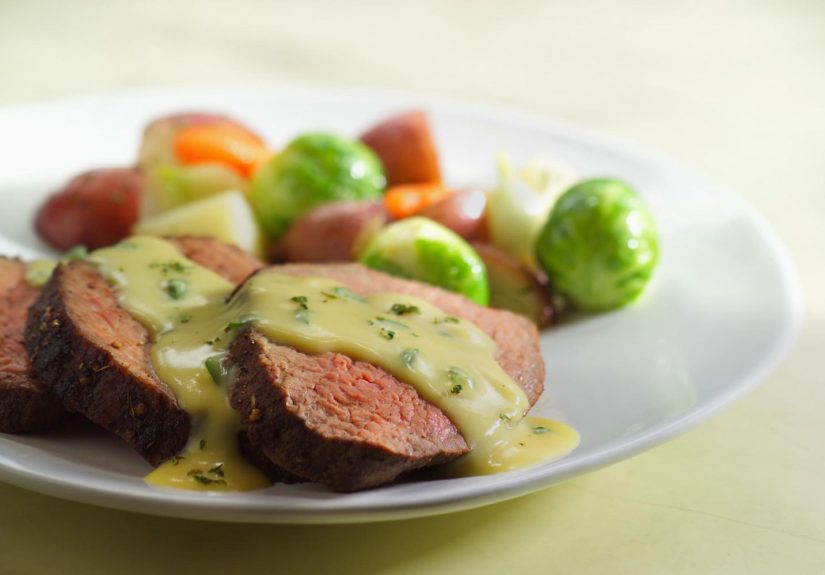
Specific example: Spoon béarnaise over a medium-rare steak and serve with roasted asparagus and crispy potatoes. Suddenly your kitchen sounds expensive.
Make-Ahead, Storage, and Reheating Tips
Can you make béarnaise ahead?
Béarnaise is best fresh, but you can hold it warm briefly (about 20 to 30 minutes) in a warm spot or over barely warm water. Avoid high heat, which can break the sauce.
Can you refrigerate it?
Yes, but the texture will firm up because of the butter. Store leftovers in an airtight container and refrigerate promptly. Reheat very gently over low heat while whisking, adding a few drops of water if needed to re-emulsify.
Food safety note (important)
Because béarnaise uses lightly cooked egg yolks, pasteurized eggs are a smart choiceespecially for anyone who is pregnant, older, immunocompromised, or cooking for high-risk guests. Also refrigerate egg-based sauces promptly rather than leaving them out for hours.
Flavor Variations (Once You Nail the Classic)
Sauce Choron-style twist
Stir in a little tomato paste or tomato purée for a rosy variation that’s excellent with steak and seafood.
Extra-herb béarnaise
Add chopped chives, parsley, or chervil for a greener, springy flavor.
Spicier béarnaise
Add a little extra cayenne or a tiny dab of Dijon mustard for a sharper edge.
Common Mistakes to Avoid
- Using high heat: This is the fastest path to scrambled yolks.
- Adding butter too quickly: The emulsion may separate.
- Skipping the reduction: You’ll lose the signature béarnaise flavor.
- Under-seasoning: Béarnaise needs salt and acid to balance the butter.
- Making it too far ahead: It’s a fresh sauce, not a “meal prep for Thursday” sauce.
Quick FAQ About Béarnaise Sauce
Is béarnaise the same as hollandaise?
Not exactly. Both are butter-and-egg-yolk emulsified sauces, but béarnaise includes a reduction with tarragon, shallots, and vinegar/wine, which gives it a more savory, herbal profile.
Can I make béarnaise in a blender?
Yes. Blender and immersion-blender methods can be faster and more forgiving if you stream in hot butter slowly. The stovetop method in this article is great for learning the classic texture and control.
Do I have to clarify the butter?
No. Clarified butter can make the sauce a bit cleaner and thicker, but regular melted butter works well for home cooks and still tastes fantastic.
Conclusion
A great béarnaise sauce is one of those recipes that feels like a culinary flex, but it’s really just technique plus patience. Once you learn the dancegentle heat, constant whisking, slow butteryou can make a rich, buttery béarnaise sauce recipe that tastes like it came from a steakhouse, minus the bill and the tiny water glasses.
Start with the classic version, serve it with something simple like steak or asparagus, and give yourself permission to whisk with confidence. If the sauce breaks, fix it. If it works on the first try, act casual.
Kitchen Experience Notes (500+ Words): What It’s Really Like Making Béarnaise at Home
Let’s talk about the real-life experience of making béarnaise sauce, because recipes often sound calm and graceful, while actual kitchens can feel like a live game show. The first thing many home cooks notice is that béarnaise is less about “difficult cooking” and more about attention. You’re not fighting complicated ingredients. You’re just guiding a warm emulsion and making sure it doesn’t get too hot, too cold, too fast, or too neglected.
In a typical home-cooking scenario, the most stressful moment is not the reductionit’s the butter drizzle. This is when people suddenly become aware of time in a very intense way. The sauce starts thin, and you wonder if you’ve made a terrible mistake. Then, after another minute of whisking, it thickens and turns glossy, and you feel like you just passed a secret chef exam. That “oh wow, it worked” moment is one of the best parts of learning béarnaise.
Another common experience: people underestimate how much flavor comes from the reduction. If you taste the sauce before adding enough reduction or lemon, it can seem rich but one-dimensionallike melted butter wearing a tuxedo. Once the vinegar, shallot, and tarragon are balanced properly, the whole thing wakes up. It becomes brighter, more aromatic, and far more “restaurant-style.” That’s why tasting at the end matters so much. A pinch more salt or a few drops of lemon juice can transform the sauce.
Texture surprises people too. Many expect béarnaise to be super thick like mayonnaise, but a good warm béarnaise is usually softer and more fluid. It should pour slowly and coat a spoon, not sit in a stiff mound. Home cooks sometimes keep whisking and heating because they think “thicker must be better,” and that’s when the sauce can overcook or split. The better approach is to stop once it’s silky, then adjust with warm water if needed.
If you’re making béarnaise for guests, the practical experience is often about timing. The sauce is happiest near serving time, so it helps to have your main dish mostly done before you start emulsifying. For example, if steak is resting and vegetables are already roasted, béarnaise becomes the final flourish instead of a stressful side mission. A lot of successful home cooks treat it like a finishing sauce, not something to make an hour early and forget on the stove.
There’s also a funny confidence curve with this recipe. The first time, you whisk like you’re defusing a bomb. The second time, you’re more relaxed. By the third time, you start saying things like, “I’ll just whip up a quick béarnaise,” which is how you know the sauce has changed you. It teaches heat control, patience, and how emulsions behaveskills that carry over to hollandaise, pan sauces, aioli, and even salad dressings.
Finally, one of the most rewarding experiences is seeing how little sauce you need to make a plate feel special. A spoonful over grilled asparagus can make a simple weeknight dinner feel luxurious. A few tablespoons over salmon can make the whole meal taste more polished. And yes, over steak it’s fantasticbut béarnaise is also a great reminder that technique can elevate everyday ingredients, not just expensive ones.
So if your first batch is a little too thick, a little too loose, or slightly over-enthusiastic on the tarragon, that still counts as a win. You made a classic French butter sauce at home. That’s not “just dinner.” That’s a cooking milestone with excellent flavor.