Table of Contents >> Show >> Hide
- What “Real-Time GDP Tracker” Actually Means
- Why 0.5% Growth Turned Heads
- What Data Pushed the Tracker Down?
- WaitDid GDP Really Grow Only 0.5%?
- Why Real-Time GDP Trackers Swing So Wildly
- How the Fed and Markets Read a 0.5% Nowcast
- How to Read Real-Time GDP Trackers Without Losing Your Mind
- Practical Takeaways for Businesses and Households
- Conclusion
- Extra: Field-Tested Experiences From Watching GDP Trackers in Real Time
If the U.S. economy had a dashboard, GDP would be the big speedometer in the middleexcept it’s always
running a few weeks behind, like a group chat friend who replies “LOL” to last month’s joke.
That delay is why “real-time” GDP trackers exist. They’re the impatient people of macroeconomics:
they look at incoming data (consumer spending, trade, housing, inventories, inflation, and a dozen other
beans in the bean counter jar) and try to estimate what GDP growth is right now, before the official
number drops.
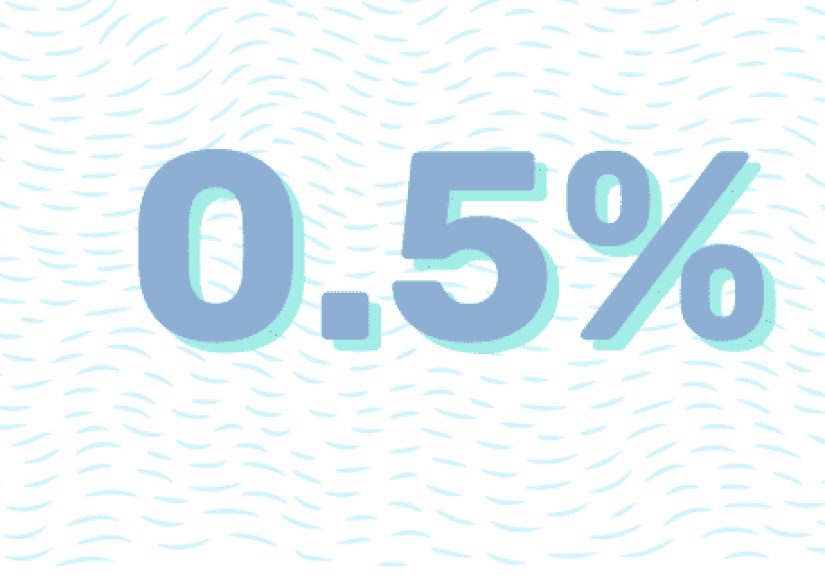
So when a real-time tracker flashed just 0.5% GDP growth, it wasn’t a cute little rounding error.
It was the economic equivalent of your phone battery hitting 2% while you’re still looking for the charger.
Not necessarily doombut definitely a reason to stop pretending you have “plenty of time.”
What “Real-Time GDP Tracker” Actually Means
Official U.S. GDP is published by the Bureau of Economic Analysis (BEA). It’s thorough, heavily sourced,
and revised multiple timesbecause measuring a $20+ trillion economy is less like stepping on a bathroom
scale and more like trying to weigh a moving parade.
Real-time trackers (often called nowcasts) try to bridge the gap. The most famous is the
Federal Reserve Bank of Atlanta’s GDPNow, which produces a running estimate of quarterly
real GDP growth and updates as new economic data arrive. The Atlanta Fed is clear about a key point:
GDPNow is a nowcastnot an official forecast, and not a promise. It’s a model-based estimate that can
swing fast when the data surprise.
Other respected nowcasting tools exist too, including the New York Fed Staff Nowcast (which publishes
probability ranges) and the St. Louis Fed’s Economic News Index (Real GDP Nowcast), which uses “data surprises”
from key releases to infer where GDP growth is heading within a quarter. If you’ve ever watched three weather apps
disagree about whether it’s “partly cloudy” or “the end times,” welcome to nowcasting.
Why 0.5% Growth Turned Heads
In October 2021, a headline-making moment arrived: Atlanta Fed GDPNow suggested third-quarter GDP growth
(July through September) could be just 0.5% at an annualized ratea sharp drop from much higher estimates earlier
in the quarter. In plain English: the model went from “we’re cruising” to “we might be crawling” in a matter of weeks.
This didn’t happen because the model woke up grumpy. It happened because the economy was absorbing multiple
hits at the same time:
- Inflation pressure: Consumer prices were rising rapidly; the CPI showed a 5.4% increase over the prior 12 months through September 2021.
- Supply chain disruptions: Businesses struggled to get inputs and inventory, slowing production and sales.
- Labor shortages: Hiring challenges constrained growth in many sectors.
- COVID-19 waves: The Delta variant added uncertainty and dampened some consumer activity.
The Federal Reserve’s Beige Book around that period described economic activity as growing at a modest-to-moderate pace,
while noting that supply chain disruptions, labor shortages, and Delta-related uncertainty were slowing momentum.
That’s not “recession,” but it’s also not “pedal-to-the-metal.”
What Data Pushed the Tracker Down?
Real-time GDP models react to fresh inputsespecially when those inputs feed directly into GDP components like
residential investment, consumer spending, inventories, and net exports.
Housing: A Loud Signal in a Quiet Room
One key release in that October 2021 stretch was new residential construction data.
Housing starts for September 2021 were reported at a seasonally adjusted annual rate of about 1.555 million,
slightly below the prior month’s revised estimate. Permits also moved lower versus August.
Housing is not the whole economy, but it’s a high-sensitivity sector. When housing cools, it can ripple into
construction employment, materials demand, household goods, and broader confidence. GDPNow noticed.
Inflation: The Growth Tax You Don’t Vote On
Inflation doesn’t directly subtract from real GDP the way a “minus” sign does, but it changes behavior.
When prices climb, households may pull back, shift spending from discretionary to essentials, or delay big-ticket
purchases. Businesses may face margin pressure or lose volume if they pass costs to consumers.
In late 2021, inflation was a major storyline, and the CPI report confirmed the pace was uncomfortably high.
WaitDid GDP Really Grow Only 0.5%?
Here’s where nowcasting gets humbleby design.
When the BEA released its advance estimate for Q3 2021, real GDP was reported as growing at a
2.0% annual rate.
So GDPNow’s 0.5% reading wasn’t the final truth. But it still mattered for two big reasons:
- Direction and momentum: Even if the exact number missed, the message was right: growth had cooled sharply from earlier, faster quarters.
-
Risk management: Policymakers, businesses, and investors don’t get the luxury of waiting for perfect information.
A suddenly low nowcast is an early warning flaresometimes a false alarm, sometimes a lifesaver.
Think of nowcasts like a smoke detector. You don’t complain it’s “not an official fire report.”
You check the kitchen.
Why Real-Time GDP Trackers Swing So Wildly
If you’ve ever wondered why GDP trackers can go from “hot economy” to “barely moving” with the drama of a reality show
reunion episode, here are the usual suspects.
1) GDP Has Volatile Components
GDP is not just “people buying stuff.” It’s a four-part combo meal: consumer spending, business investment,
government spending, and net exports (exports minus imports). Two of these are especially jumpy:
inventories and trade.
Inventories can flip a quarter from weak to strong if businesses stockpile.
Trade can do the same when imports surgebecause imports are subtracted in GDP accounting.
That’s why some quarters look terrible on paper even if domestic demand is okay.
2) “Annualized Rate” Confuses Everyone (Even Smart People)
GDPNow typically reports growth at a seasonally adjusted annual rate (SAAR). A 0.5% annualized rate is not
“half a percent for the year.” It’s “if this quarter’s pace continued for a full year.”
It’s a standard macro convention, but it’s not intuitiveso headlines can sound scarier (or sunnier) than reality.
3) Data Arrive in Chunks, Not Smooth Streams
Big releasesretail sales, durable goods, housing, inflation, tradedrop on set schedules. When a major report surprises
to the downside, a model can re-price the whole quarter quickly. The St. Louis Fed’s ENI nowcast is explicitly built around
the idea of “surprises” versus expectations, because surprises are what move the forecast.
4) Odd One-Off Distortions Happen
Sometimes the model isn’t “wrong” so much as it’s temporarily misled by unusual data.
For example, commentary around GDPNow in more recent cycles has highlighted how trade categories (like unusual import
surges that don’t map cleanly to underlying economic activity) can tug the estimate around until the model is adjusted
or more context arrives.
How the Fed and Markets Read a 0.5% Nowcast
A very low nowcast forces an uncomfortable conversation: are we looking at a temporary slowdown, or the beginning of something worse?
The answer matters because the Federal Reserve’s job is to balance maximum employment with stable prices.
In late 2021, the setup was especially tricky:
inflation was running hot, while parts of the economy were losing steam. That mix creates policy tension.
If the Fed tightens too fast, growth could stall. If it stays too loose, inflation can become entrenched.
This is why low growth signals during high inflation periods get so much attentionthey narrow the “easy” policy options.
For investors and businesses, the lesson is similar: treat low real-time GDP estimates as a prompt to stress-test assumptions.
Not panic. Stress-test.
How to Read Real-Time GDP Trackers Without Losing Your Mind
Step 1: Compare Trackers, Don’t Marry One
GDPNow, the New York Fed Staff Nowcast, and the St. Louis Fed ENI nowcast all use different methods.
If one looks extreme, check whether the others agree on the direction. When multiple tools point the same way,
the signal is stronger.
Step 2: Look Under the Hood (Components Matter)
Ask: what’s driving the moveconsumer spending, housing, inventories, or trade?
A drop driven by inventories can reverse quickly. A drop driven by weakening consumption can be more concerning.
The BEA’s GDP releases break down these components, which helps you interpret whether the economy is genuinely losing momentum
or just experiencing accounting turbulence.
Step 3: Treat It Like a “Live Estimate,” Not a Final Grade
Real-time models update constantly. The Atlanta Fed emphasizes GDPNow is a running estimate that changes with each new data release.
Schwab’s guidance on GDPNow-style measures makes a similar point: big swings can happen, and you shouldn’t read a single print as destiny.
Step 4: Watch the Data Calendar
If a nowcast drops sharply and major releases are still ahead (like personal consumption data or trade reports),
the next week can change the story. Nowcasts are most informative later in the quarter when more data are in.
Practical Takeaways for Businesses and Households
You don’t need a PhDor a Bloomberg terminalto use nowcasts intelligently.
Here’s what a “0.5% growth” moment can signal in practical terms:
- Expect choppier demand: If growth slows, consumers become pickier and price-sensitive.
- Plan for tighter margins: High inflation plus slower volume is a classic profit squeeze.
- Keep inventory flexible: When forecasts whipsaw, rigid inventory plans can become expensive mistakes.
- Don’t overreact to one number: Use it as a prompt to review scenarios, not as a trigger to freeze.
The point of real-time trackers isn’t to “beat” the BEA. It’s to help everyone else make better decisions
while the official number is still cooking.
Conclusion
A real-time tracker printing 0.5% GDP growth is a loud headline, but it’s also a useful reminder:
the economy can shift fast, and models can shift even faster. In the 2021 episode, the Atlanta Fed’s GDPNow estimate
slid dramatically as fresh data arrivedreflecting inflation pressure, supply constraints, labor shortages, and pandemic uncertainty.
The BEA’s later estimate showed growth was higher than 0.5%, but the broader message held: momentum had cooled.
If you want to use nowcasts well, do what good pilots do with turbulent skies: check multiple instruments,
understand what drives the readings, and keep your hands steady. The economy is complicatedbut you can still read the dashboard
without letting the dashboard read you.
Extra: Field-Tested Experiences From Watching GDP Trackers in Real Time
People who follow GDP nowcasts long enough tend to develop a few “battle scars”not the dramatic kind, just the practical kind
that make you better at interpreting the chaos. Here are some real-world, experience-based lessons that consistently show up
when a tracker suddenly screams “0.5% growth!”
1) The “Bad Number” Is Usually a Story About One Component
The first time someone sees a nowcast collapse, they often assume the whole economy just fell into a pothole.
But in practice, the biggest drops frequently trace back to one or two categoriestrade, inventories, or housing.
That’s why seasoned watchers immediately ask, “What moved?” before they ask, “How bad is it?”
It’s the difference between “sales are collapsing everywhere” and “imports spiked, which messes with net exports.”
Same headline, wildly different reality.
2) Release Days Feel Like Sports, But You Should Treat Them Like Weather
Economic data releases can become scoreboard watching: “Retail sales beat!” “Trade deficit widened!”
“GDPNow down!” That adrenaline is fun, but it’s not always useful.
A healthier habit is treating releases like weather updates: one cold day doesn’t cancel summer,
but a pattern of colder days tells you to grab a jacket.
The most effective analysts I’ve seen don’t obsess over a single printthey track whether multiple reports
are pointing in the same direction over several weeks.
3) The “Soft Data vs. Hard Data” Tug-of-War Is Constant
Real-time GDP trackers mostly feed on “hard” dataactual reported activity like construction, sales, and prices.
Meanwhile, surveys and sentiment (“soft” data) can be gloomy or euphoric for reasons that don’t always show up in spending
right away. When a nowcast drops to something like 0.5%, people often look for confirmation in mood data:
confidence, small business optimism, consumer expectations.
Experience suggests a simple rule: when both hard data and soft data deteriorate together, pay closer attention.
When they diverge, expect noiseand don’t be shocked by reversals.
4) Business Owners React Faster Than Headlines
A pattern that repeats across industries: long before official GDP confirms a slowdown, businesses start adjusting quietly.
A retailer tightens promotional spending. A manufacturer reduces overtime. A service firm delays hiring.
By the time a “0.5%” nowcast hits the news cycle, many operators have already felt the friction through lead times,
cancellations, or customers trading down.
That’s one reason nowcasts exist in the first place: the real economy moves daily, even if the official score is quarterly.
5) The Best Use of a Scary Nowcast Is a Calm Checklist
When growth signals get ugly, the most useful response isn’t doom-scrollingit’s a checklist:
Which costs are rising fastest? Which sales channels are most sensitive? Where is inventory fragile?
Do we have pricing power, or are we in a “coupon economy”?
Households do a version of the same thing: lock in essential budgets, review variable-rate debt exposure,
and avoid making big decisions based on one scary chart. Ironically, this calm, practical behavior is exactly what helps
an economy avoid worst-case outcomes.
The punchline is that real-time GDP trackers are less like fortune tellers and more like smoke alarms:
sometimes they’re triggered by burnt toast, sometimes by something seriousbut either way, the smart move is to
investigate with curiosity, not panic. When a tracker says “0.5%,” it’s not the final verdict.
It’s an invitation to pay attention, ask better questions, and make plans that work even if the next update surprises you.