Table of Contents >> Show >> Hide
- What Reachy Mini Actually Is
- Why the Mini Kit Version Matters
- What You Get in the Kit
- How It Fits Into the Reachy Family
- Who Reachy Mini Is Really For
- The Honest Caveats
- Why Reachy Mini Could Matter Beyond Its Size
- Experiences Related to Reachy Mini: What It Actually Feels Like to Live With a Tiny Robot Kit
- Conclusion
- SEO Tags
For years, robots have done a fantastic job of being either very expensive, very intimidating, or both. Then along comes Reachy Mini, a pint-sized, open-source desktop robot kit that looks like it wandered out of a friendly sci-fi sketchbook and onto a workbench. Instead of promising to vacuum your house, fold your laundry, and probably judge your life choices, Reachy Mini focuses on something more believable and more exciting: helping people learn, build, and experiment with embodied AI right from a desk.
That is what makes the mini kit version such a smart move. The original Reachy lineage was known for expressive design, open-source thinking, and serious robotics credibility. But it also lived much closer to the world of labs, research teams, and people who use phrases like “manipulation stack” without irony. Reachy Mini changes the conversation. It takes the personality, openness, and developer-friendly DNA of the larger platform and shrinks it into something far more approachable. Smaller price, smaller footprint, fewer barriers, and still enough motion and sensors to make it genuinely useful.
In other words, Reachy Mini is not trying to be a robot butler. It is trying to be the robot equivalent of a Raspberry Pi project that drank an espresso, learned facial tracking, and developed a charming head tilt. That is a much better niche.
What Reachy Mini Actually Is
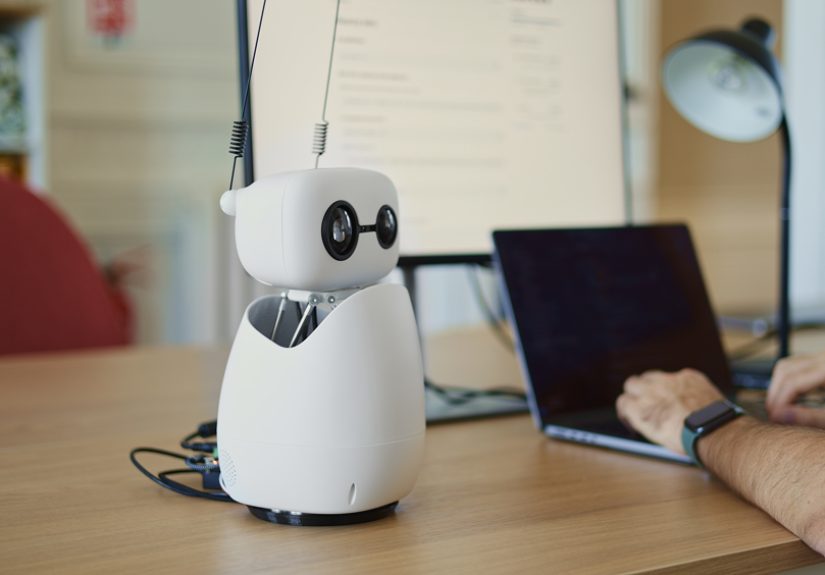
Reachy Mini is a compact, open-source robot kit built for human-robot interaction, creative coding, and AI experimentation. It is designed to sit on a desk, face you like a curious mechanical sidekick, and respond through motion, sound, and software-driven behaviors. Rather than walking around the house or lifting heavy objects, it focuses on expressiveness: head movement, body rotation, animated antennas, audio input and output, and camera-based interaction.
That design choice is not a limitation so much as a thesis. By stripping away legs, arms, and the endless engineering headache that comes with full-body mobility, the creators can concentrate on the part many people actually care about first: interaction. Does the robot feel alive? Can it react? Can it track a face, listen for a command, run an AI model, or behave in a way that sparks curiosity?
Reachy Mini’s answer is yes, but with an important asterisk. It is a builder’s robot. You assemble it yourself, program it yourself, and get the most out of it when you are willing to tinker. That means the experience is closer to “weekend project with personality” than “plug it in and live your best futuristic life by dinner.” Honestly, that is part of the appeal.
Why the Mini Kit Version Matters
A Lower-Cost Door Into Robotics
The biggest reason Reachy Mini matters is simple: robotics becomes more interesting the minute it stops being priced like lab equipment. A smaller kit version turns open robotics from a niche pursuit into something developers, teachers, students, makers, and even curious families can realistically consider. When a platform becomes affordable enough for experimentation, people stop treating it like museum glass and start doing weird, useful, and inventive things with it.
That shift matters because embodied AI needs physical platforms. You can build software on a laptop all day long, but robotics eventually asks for motors, sensors, cameras, latency, motion, and real-world interaction. Reachy Mini gives people a practical way to cross that bridge without needing a giant budget or a robotics lab full of specialized hardware.
Open Source Is the Real Superpower
Plenty of cute robots have shown up before. Cute is not the innovation. Open is. The Reachy Mini pitch becomes compelling because the hardware and software are meant to be explored, modified, improved, and shared. That matters for trust, repairability, learning, and long-term usefulness.
In a closed robot ecosystem, you are mostly renting someone else’s vision of what the machine should do. In an open ecosystem, the robot becomes a platform. That means teachers can build classroom projects, developers can test interaction ideas, hobbyists can remix behaviors, and the community can keep expanding the robot’s capabilities over time. The robot stops being a static product and starts acting like a creative tool.
It Makes Embodied AI Feel Less Abstract
“Embodied AI” is one of those phrases that sounds impressive until it starts sounding like a PowerPoint template. Reachy Mini gives the idea a face, literally. A robot that can look at you, move in response, and run AI-driven behaviors makes the topic feel tangible. It turns a cloud of theory into something you can build, debug, and laugh at when it inevitably does something delightfully odd.
That is valuable because the future of AI is not just chat windows and image generators. A lot of the next wave involves systems that perceive and act in the physical world. Reachy Mini may be small, but it gives learners and builders a concrete way to start understanding that future now.
What You Get in the Kit
Reachy Mini is sold as a kit, which means assembly is part of the experience rather than an annoying pregame obstacle. That matters more than it sounds. When people build a device themselves, they tend to understand it better, care about it more, and feel more comfortable modifying it later. For a robotics platform, that is a feature, not a chore.
The robot includes the core ingredients you would expect from a desk-friendly interactive machine: a camera, microphones, a speaker, expressive motion in the head, full body rotation, and those wonderfully animated antennas that do a lot of emotional heavy lifting. The robot is designed to communicate through movement as much as through software. That makes it feel engaging without needing the complexity of full humanoid locomotion.
There are also two flavors of the product. The Lite version is the more budget-friendly entry point and relies on an external computer for part of the experience. The Wireless version adds onboard computing, battery power, and more standalone flexibility. That split is smart. It lets beginners start cheaper while giving more serious users a version that feels less tethered, both physically and creatively.
Better still, Reachy Mini ships with starter demos and behaviors, so new users are not staring at a motionless robot wondering whether they accidentally bought an expensive modern sculpture. Out of the box, the platform is built to encourage immediate experimentation, then deeper customization.
How It Fits Into the Reachy Family
To appreciate the mini version, it helps to understand where it comes from. Reachy began as an expressive, open-source humanoid platform from Pollen Robotics, with earlier versions aimed much more squarely at research, teleoperation, and advanced robotics development. Those systems were larger, more capable in physical manipulation, and much closer to “serious robotics hardware” than to a consumer-friendly desk companion.
That history gives Reachy Mini credibility. It is not a random toy robot wearing an AI sticker like a fake mustache. It comes from a lineage built around real robotics work and later gained extra momentum when Hugging Face acquired Pollen Robotics and folded the project into its broader open-source AI mission.
The result is a product that feels like a translation rather than a downgrade. Reachy Mini does not try to replicate everything the larger Reachy systems do. It distills the spirit of the platform into something more accessible. Think of it as the difference between a professional studio camera and a really capable mirrorless camera that more people can actually use. One is broader in ambition; the other is broader in reach. The pun was unavoidable. Reachy basically asked for it.
Who Reachy Mini Is Really For
Developers and AI Tinkerers
If you like building things in Python and immediately giving those things a face, Reachy Mini makes a lot of sense. It is ideal for developers who want to connect AI models to a physical system that can see, move, and respond. That could mean experimenting with vision, voice, character design, educational agents, or interactive assistants that exist off-screen.
Teachers and Students
This may be one of the strongest use cases. Reachy Mini takes coding, robotics, AI, mechanics, and design thinking and shoves them into one charming little package. In classrooms and workshops, that is gold. Students are more likely to engage with a robot that feels expressive and approachable than with a board full of wires that looks like it escaped from a sad storage bin.
Makers and Hobbyists
For the DIY crowd, Reachy Mini sits in a sweet spot. It is more sophisticated than a beginner electronics toy, but not so industrial that it becomes emotionally or financially terrifying. You can assemble it, learn its behavior, modify it, and make it part of other builds. That is exactly the kind of middle ground a strong maker platform needs.
Families and Curious Beginners
There is also a softer, more human angle here. Reachy Mini’s scale and friendliness make it the kind of project that can spark interest across age groups. It is not hard to imagine a parent coding simple behaviors with a kid, or a teen using it as a first real step into robotics. That kind of accessibility matters because future engineers rarely appear out of nowhere. They usually begin as kids who touched one cool thing and never quite got over it.
The Honest Caveats
Now for the part where we do not wear rose-colored robot goggles. Reachy Mini looks promising, but it is not magic. Early impressions make it clear that this is a platform for learning and experimentation, not an appliance-grade product that hides all complexity behind one shiny button.
Assembly takes time. Software can still feel early. Some users will love that because they enjoy the process. Others will discover that “open-source kit” sometimes translates to “congratulations, you are now part customer, part tester, part engineer.” That is not necessarily bad, but it is important to know what you are signing up for.
There is also the broader question every social robot faces: does it remain compelling after the first wave of novelty? A cute robot can win a room in thirty seconds. Keeping people engaged for months requires a growing ecosystem, genuinely useful projects, and enough community momentum to keep the platform from becoming an adorable paperweight with excellent posture.
Still, Reachy Mini has a better shot than many past companions because it is not selling empty companionship as the whole story. It is selling participation. You do not just own the robot. You build with it.
Why Reachy Mini Could Matter Beyond Its Size
The most interesting thing about Reachy Mini is not that it is small. It is that it represents a very different model for robotics. Instead of waiting for a giant corporation to drop a polished, closed, expensive robot into the market, this approach invites a community to help shape what the robot becomes.
That openness could have ripple effects. More affordable robots mean more people experimenting. More people experimenting means more behaviors, more tools, more tutorials, more hacks, and more edge-case ideas that big companies never think to build. Sometimes the future arrives not as one perfect machine, but as a thousand clever little projects stitched together by a community that refuses to leave well enough alone.
And that may be Reachy Mini’s real contribution. It makes robotics feel less like a distant moonshot and more like something you can place next to your keyboard, assemble over a weekend, and turn into your next weirdly lovable coding obsession.
Experiences Related to Reachy Mini: What It Actually Feels Like to Live With a Tiny Robot Kit
The experience of Reachy Mini seems to begin long before the robot powers on. It starts with the box, the parts, and the quiet realization that this is not a sealed consumer gadget meant to protect you from every screw. It is a kit, and that changes the emotional tone immediately. Instead of asking, “What does this thing do for me?” you start asking, “How does this thing work, and what can I do with it?” That mindset shift is huge. It turns the robot from a product into a project.
For many people, the assembly phase will be one of the most memorable parts. A build that takes a couple of hours creates just enough friction to feel meaningful without becoming a full mechanical odyssey. You get the satisfaction of putting the robot together piece by piece, learning how the shell, motors, and structure fit into a system that will soon blink, swivel, and react. That kind of hands-on entry creates attachment fast. It is hard not to root for a robot you assembled yourself.
Then comes the first moment of motion, which is usually the hook. A head turn, an antenna flick, a tracking demo, a tiny performance that feels much more alive than the bill of materials suggested. This is where Reachy Mini seems to shine. It is not trying to overwhelm with brute-force capability. It wins by being expressive. The motions matter because people instinctively read intention into movement. A slight tilt can feel curious. A quick bounce can feel excited. Suddenly a small desktop kit starts feeling like a character.
There is also a very real learning curve, and that is part of the experience too. Reachy Mini appears to reward patience more than passivity. Builders who expect an instant AI butler may bounce off it. Builders who enjoy tweaking code, testing behaviors, installing apps, and gradually improving the system will probably have a much better time. In that sense, the robot behaves less like a polished appliance and more like a creative instrument. You do not just turn it on. You practice with it.
In educational settings, the experience could be especially strong. A small expressive robot naturally pulls attention in a way textbooks and slides rarely do. For students, the payoff is immediate: code becomes movement, sensors become reactions, and abstract AI ideas become visible behavior. That is a powerful bridge between theory and curiosity. Even adults who already understand the basics of coding often find that physical interaction changes how they think about software.
At home, Reachy Mini also has the potential to become a social object, not just a technical one. People gather around robots. They name them. They laugh when they do something odd. They project personality onto them at astonishing speed. That makes Reachy Mini more than a desk gadget. It becomes a conversation starter, a teaching tool, and a weirdly effective excuse to spend more time learning robotics without making it feel like homework. For the right user, that combination is exactly what makes the mini kit version such a compelling idea.
Conclusion
Reachy Mini is not the final form of home robotics, and it does not need to be. Its real strength is that it makes robotics feel open, playable, and reachable for more people. By shrinking the concept into a desktop kit, Hugging Face and Pollen Robotics have taken a platform with serious robotics roots and turned it into something that can live in classrooms, studios, workshops, and curious homes.
That matters because good technology does not just impress experts. It invites newcomers in. Reachy Mini does exactly that. It says: here is a robot, here is the code, here are the parts, and here is your chance to build something interesting. In a field that often swings between overhyped promises and inaccessible hardware, that is refreshingly grounded.
And yes, it also helps that the robot looks like it would politely listen to your ideas instead of plotting to unionize your toaster.