Table of Contents >> Show >> Hide
- Why Overnight Refrigerator Rolls Work So Well
- Overnight Refrigerator Rolls Recipe (Yield: 20–24 rolls)
- Timing Blueprint (So You Never Guess Again)
- Why Your Rolls Might Be Dense (And How to Fix Them)
- Food Safety for Overnight Dough
- Ingredient Upgrades and Smart Swaps
- Flavor Variations (Same Dough, New Personality)
- Make-Ahead and Freezer Strategies
- Serving Ideas: Because Rolls Deserve a Main Character Moment
- Frequently Asked Questions
- Conclusion
- 500-Word Experience Section: Real-World Notes from Baking Overnight Refrigerator Rolls
If dinner rolls had a superpower, it would be this: they make any meal feel like a holiday, even if dinner is just soup and a Tuesday mood. And if homemade rolls had a second superpower, it would be doing the hard work while you sleep. That’s exactly what this overnight refrigerator rolls recipe deliverssoft, fluffy, buttery rolls with a make-ahead schedule that saves your sanity and your oven space.
In this guide, you’ll get a full, practical recipe plus the “why” behind each step, so you can troubleshoot like a pro instead of crossing your fingers and staring at dough like it owes you money. We’ll cover yeast choices, timing, shaping, cold fermentation, food safety, baking strategy, and storage tricks so your rolls come out tender, golden, and pull-apart perfect. Whether you’re prepping for Thanksgiving, Sunday dinner, or a random carb celebration, this make-ahead dinner roll method keeps stress low and results high.
Why Overnight Refrigerator Rolls Work So Well
1) Better flavor with less effort
Cold fermentation slows yeast activity, which gives dough more time to develop flavor. Instead of a one-note “yeasty” taste, you get richer, deeper flavor with subtle sweetness and better balance. In plain English: they taste like you worked harder than you did.
2) Flexible timing for real life
Overnight dough means you mix one day, bake the next. That is pure kitchen freedom. You can prep after dinner, refrigerate, and then proof and bake when it fits your schedule. No frantic “everything must happen now” baking panic.
3) Softer texture in enriched dough
Rolls made with milk, butter, sugar, and eggs (an enriched dough) tend to stay softer and more tender than lean breads. Proper kneading plus a controlled rise helps build structure while keeping that fluffy, cloud-like crumb everyone wants.
Overnight Refrigerator Rolls Recipe (Yield: 20–24 rolls)
Ingredient List
- 1 cup whole milk (240 ml), warmed
- 1/2 cup water (120 ml), warmed
- 6 tablespoons unsalted butter (85 g), melted and slightly cooled
- 1/4 cup granulated sugar (50 g)
- 2 large eggs, room temperature
- 2 1/4 teaspoons instant yeast (1 packet, about 7 g)
- 4 1/2 to 5 cups all-purpose flour (540–600 g), as needed
- 2 teaspoons fine salt (10 g)
- 2 tablespoons butter, melted (for brushing after baking)
If using active dry yeast: dissolve it in the warm liquid first and let it foam for 5–10 minutes before mixing. If you use instant yeast, you can mix it directly with the flour.
Step-by-Step Instructions
Step 1: Build your dough
In a large mixing bowl (or stand mixer bowl), combine warm milk, warm water, sugar, melted butter, and eggs. Stir until smooth. Add yeast, then add about 4 1/2 cups flour and salt. Mix until a shaggy dough forms.
Step 2: Knead until smooth and elastic
Knead 8–10 minutes by mixer on low-medium or 10–12 minutes by hand. The dough should become smooth, soft, and slightly tackynot wet and sticky, not dry and stiff. Add extra flour 1 tablespoon at a time only if needed.
Texture check: pinch off a small piece and stretch it gently. If it stretches thin before tearing, gluten development is on track.
Step 3: Short first rise (optional but helpful)
Place dough in a lightly greased bowl, cover, and let it rise at room temperature for 30–45 minutes. This “head start” helps the overnight proof stay consistent, especially in colder kitchens.
Step 4: Shape your rolls
Turn dough onto a lightly floured surface and divide into 20–24 equal pieces. Shape each piece into a tight ball by pulling edges underneath and pinching the seam.
Step 5: Pan and chill overnight
Arrange dough balls in greased baking pans (for example, two 9×13 pans for smaller rolls or one large sheet pan for more spacing). Cover tightly with greased plastic wrap or a lid and refrigerate 8–16 hours.
Step 6: Morning proof
Remove pans from the fridge and let rolls rise at room temperature until noticeably puffy and touching, usually 60–120 minutes depending on room temperature.
Step 7: Bake
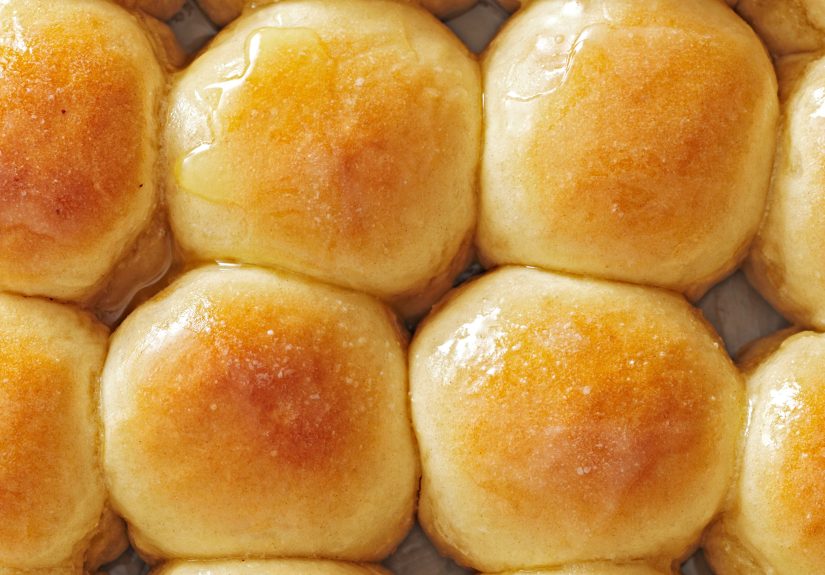
Preheat oven to 375°F (190°C). Bake for 18–24 minutes until tops are golden brown. If you use a thermometer, center rolls are typically done around 190°F (88°C).
Step 8: Finish with butter
Brush hot rolls with melted butter. This adds shine, flavor, and that “did these come from a bakery?” energy.
Timing Blueprint (So You Never Guess Again)
Night Before (about 45–70 minutes active)
- Mix + knead dough
- Optional 30–45 minute rise
- Shape and pan
- Refrigerate overnight
Next Day (about 2–3 hours total)
- Room-temp proof: 60–120 minutes
- Bake: 18–24 minutes
- Cool slightly and serve warm
Why Your Rolls Might Be Dense (And How to Fix Them)
Problem: Dough didn’t rise much in the fridge
That can be normalcold slows yeast. The real lift usually happens during the room-temp proof before baking. Give it time until the rolls are clearly puffy.
Problem: Rolls are heavy instead of fluffy
- Under-kneaded dough: knead until elastic and smooth.
- Too much flour: add gradually; aim for soft tacky dough.
- Under-proofed before baking: wait for visible puffiness, not just clock time.
Problem: Rolls taste too yeasty
Reduce yeast slightly next time and use a longer cold ferment. Slower fermentation often yields more balanced flavor.
Problem: Over-browned tops, pale sides
Try a lower oven rack position and confirm your oven temperature with an oven thermometer. Roll pans packed too tightly can also reduce side browning.
Food Safety for Overnight Dough
Keep the refrigerator at or below 40°F (4°C). That temperature keeps cold-held food safer and slows bacterial growth. If your fridge runs warm, dough can overproof and food safety margins shrink.
Also: avoid tasting raw dough. Raw flour and raw eggs can carry harmful bacteria. Wash hands, bowls, counters, and tools after dough handling.
Ingredient Upgrades and Smart Swaps
Flour choice
All-purpose flour works beautifully for soft dinner rolls. Bread flour can increase chew and structure due to higher protein. If you want ultra-pillowy, stick with all-purpose or a blend.
Milk and butter
Whole milk adds richness and tenderness. Butter gives flavor and softer crumb. You can substitute plant milk in many cases, but texture may be slightly less rich.
Sugar and honey
Sugar helps browning and supports yeast activity in enriched dough. You can swap part of the sugar for honey for warmer flavor notes.
Flavor Variations (Same Dough, New Personality)
1) Honey butter rolls
Add 2 tablespoons honey to the dough and brush with honey-butter after baking.
2) Garlic herb rolls
Mix 1 teaspoon garlic powder and 1 tablespoon chopped herbs into dough; finish with garlic butter.
3) Cloverleaf style
Divide each roll piece into 3 mini balls and place in muffin tins for classic pull-apart cloverleaf rolls.
4) Parker House style
Roll dough into ovals, brush with butter, fold, then chill and bake for iconic layered rolls.
Make-Ahead and Freezer Strategies
Option A: Refrigerate shaped rolls overnight (best for next-day baking)
This is the method in this recipeperfect for morning or holiday timing.
Option B: Freeze shaped unbaked rolls
Freeze after shaping, then thaw + rise before baking. Great when you want fresh rolls with less prep on serving day.
Option C: Freeze baked rolls
Cool completely, wrap airtight, freeze, then rewarm in a low oven. Handy for meal prep and busy weeks.
Serving Ideas: Because Rolls Deserve a Main Character Moment
- Holiday side with roast turkey, ham, or pot roast
- Soup partner for tomato basil, chicken noodle, or chowder
- Breakfast split roll with scrambled eggs and cheese
- Mini sandwich buns for sliders
- Late-night butter-and-jam snack that “accidentally” becomes two snacks
Frequently Asked Questions
Can I keep dough in the fridge longer than overnight?
For enriched roll dough, 8–16 hours is the sweet spot. Longer holds can work, but overproofing risk rises and texture may weaken.
Do I have to bring rolls fully to room temp before baking?
Not fully warmjust sufficiently proofed and puffy. Focus on dough appearance, not a strict timer.
Can I make these without a stand mixer?
Absolutely. Hand-kneading works great; it just takes a little more arm effort and maybe one extra podcast episode.
Can I use this for holiday meal prep?
Yes, this is one of the best make-ahead bread recipes for holiday cooking. You can prep the night before and bake close to serving time.
Conclusion
A good overnight refrigerator rolls recipe isn’t just about breadit’s about making life easier while still serving something that feels homemade, warm, and generous. This method gives you predictable timing, better flavor, and fluffy texture without dawn wake-up calls.
If you’ve ever said, “I’d make homemade rolls if I had more time,” this is your recipe. You don’t need a bakery schedule. You need a bowl, a fridge, and one night of patience. The next day, your kitchen smells incredible, your table looks like a celebration, and everyone suddenly becomes very interested in “just one more roll.”
500-Word Experience Section: Real-World Notes from Baking Overnight Refrigerator Rolls
The first time I switched from same-day dinner rolls to an overnight refrigerator method, I expected convenience but not a major difference in quality. I was wrong on both counts. The convenience was dramatic, yesbut the flavor jump was what surprised me most. The dough had that lightly developed, almost buttery complexity you usually associate with bakery bread. Nothing sour, nothing fancy, just fuller flavor that made plain butter taste even better. At the table, people couldn’t explain why the rolls tasted “more homemade” than usual. The answer was mostly time and temperature.
The second lesson came from timing psychology. Same-day rolls force you into a rigid timeline: mix now, rise now, shape now, bake now. If dinner moves, your dough gets cranky. Overnight rolls are the opposite. You do most of the work the night before when the kitchen is quiet, and in the morning you’re only managing the final proof and bake. That reduced stress changed how I cooked the rest of the meal. I was less rushed, less likely to over-salt something, and much less tempted to declare that frozen rolls were “totally fine this year.” (No judgment, frozen rolls have their place. But fresh is still fresh.)
Temperature became my third big learning. In winter, cold kitchens stretch proofing windows. In summer, everything speeds up. I stopped relying on the clock and started reading the dough: puffier volume, softer feel, slight jiggle when the pan moves. That one shift made results more consistent than any single ingredient tweak. I also learned to check fridge temperature with an appliance thermometer. If your refrigerator is too warm, overnight dough can overproof. Too cold, and it barely moves. A small dial saved several batches.
Family-style meals gave me the best test cases. For big gatherings, I shaped rolls into equal balls and packed them snug in pans so they rose into classic pull-apart edges. For weeknight dinners, I spaced them farther apart for more crust on each roll. Same dough, different personality. I also tested freezing methods: shaped and frozen for future baking, and fully baked then reheated. Both worked. Shaped-frozen gave the “freshest fresh” experience; baked-frozen was unbeatable for convenience when schedules got chaotic.
The funniest experience? Watching people “politely” take one roll, then quietly circle back for two more. Homemade rolls create instant optimism. Even a simple soup dinner feels upgraded. And because the dough is made ahead, you can actually enjoy that moment instead of juggling ten pans. Overnight refrigerator rolls turned into one of those repeat recipes that quietly solves multiple problems at once: better bread, easier timing, calmer cooking, happier table. That’s why this method stays in regular rotationespecially when I want food that feels generous without requiring a culinary marathon.