Table of Contents >> Show >> Hide
- Why “Send It to China” Became the Default Move
- What the Hackaday Success Story Actually Teaches
- Before You Click “Order”: The PCBA Data Pack You Actually Need
- The Hidden Gotchas That Break First Runs
- Turnkey vs. Consigned Parts: Pick Your Pain
- Quality Control Without Buying a Plane Ticket
- Lead Times, Shipping, and the Reality of Customs
- When PCB Assembly in China Is the Right Call
- When It Might Not Be (and What to Do Instead)
- Conclusion: The Repeatable Playbook
- Extra: of Real-World PCBA Experiences (So Your Next Order Hurts Less)
If you’ve ever ordered a bare PCB from a Chinese fab, you’ve seen the pop-up offer that feels like a late-night infomercial:
“Want assembly with that?” The pitch is irresistibleupload your Gerbers, toss in a bill of materials (BOM), and a week or two later
a box shows up full of boards that are not only fabricated, but also populated, reflowed, and ready to power on.
It’s the hardware equivalent of ordering a pizza and receiving a fully plated dinner.
But between “sounds amazing” and “my product ships,” there’s a whole universe of practical questions:
How do you prevent the assembler from swapping your carefully chosen voltage reference for the nearest look-alike?
What does “acceptable soldering” mean when your board is packed with fine-pitch parts?
And how do you get consistent results if you’re building ten boards today and a hundred next month?
A classic Hackaday post about one person’s smooth experience outsourcing PCB assembly to China is the perfect starting pointnot because it’s dramatic,
but because it’s almost boring in the best way. The story shows that success is possible, repeatable, and often less mysterious than people fear.
The trick is understanding what made it smooth… and what can make it go sideways.
Why “Send It to China” Became the Default Move
In the last decade, Chinese PCB fabrication got so fast and affordable that it stopped feeling like a gamble.
Assembly was the next logical add-on: the same vendors already had the supply chain, the machines, and the labor to place parts at scale.
For makers, startups, and engineers doing small production runs, that combination can be powerful: you can iterate quickly, reduce hand-soldering time,
and get a more “factory-like” build than a kitchen-table reflow setup.
The big idea is leverage. You’re borrowing a full SMT linestencil printer, pick-and-place, reflow oven, inspectionwithout buying any of it.
But leverage cuts both ways: the more you rely on someone else’s process, the more your documentation needs to be unambiguous.
Overseas assembly isn’t “set it and forget it.” It’s “set it and document it like your yield depends on it,” because it does.
What the Hackaday Success Story Actually Teaches
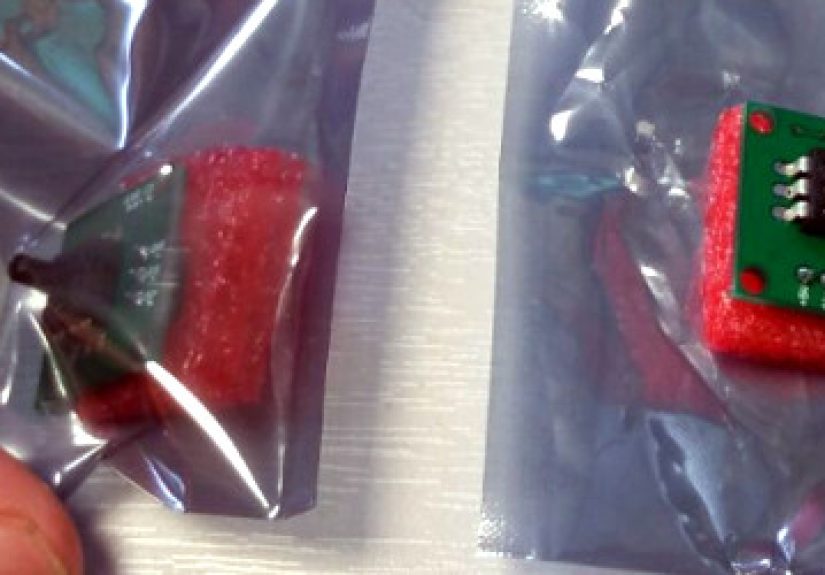
In the Hackaday story, the builder ordered a small runten tiny boardsand opted for full assembly through the same shop that fabricated the PCB.
The key detail isn’t the price; it’s the workflow. The author emphasized the BOM as the center of gravity:
correct packages, clear sourcing, and enough information that the assembler didn’t have to guess.
The result: assembled modules arrived and worked, with minimal drama.
In the comments, you see the other side of the coin: people describing headaches that mostly revolve around component sourcing,
substitutions, and communication delays across time zones. Put those together and you get the real lesson:
success is less about geography and more about reducing ambiguity.
When your design is simple, your parts are common, and your intent is clearly documented, overseas assembly can feel almost magical.
When your design contains one weird specialty part (a radio module, a niche sensor, an oddball connector), the magic can turn into a scavenger hunt.
Before You Click “Order”: The PCBA Data Pack You Actually Need
Think of PCB assembly as a translation problem. Your CAD files are the “novel,” and the factory needs a “shooting script.”
If you hand them a vague outline, they’ll fill in the blanksand you might not like their creative writing.
A clean assembly package usually includes the following.
1) Fabrication files: Gerbers (or, better, ODB++)
Gerbers describe copper, solder mask, silkscreen, drill data, and moreenough to fabricate the board.
For assembly, they help with context (pads, polarity markings, reference designators), but Gerbers alone do not reliably include placement intelligence.
Formats like ODB++ can bundle richer manufacturing data and reduce interpretation errors.
2) A BOM a human can read (and a buyer can act on)
Your BOM should do more than list “R1: 10k.” A solid BOM includes manufacturer part numbers (MPNs), package size, value,
tolerance (when it matters), and acceptable alternates. If you’re using turnkey assembly (the factory buys parts),
multiple approved sources and alternates can prevent delays when a part is out of stock.
A practical tip: mark parts as either “no substitutes” or “approved alternates OK”.
If you don’t say it explicitly, some assemblers will treat “equivalent” as fair game, especially for passives.
That’s fine for a 0.1µF decoupling capless fine for a precision reference or a crystal with tight load capacitance requirements.
3) Pick-and-place / centroid / CPL file (the robot’s map)
Pick-and-place machines need coordinates, rotation, side of board, and reference designators.
This is often called a centroid file, XY file, or CPL. If you only provide Gerbers, the assembler may have to recreate placement data,
which costs time, money, and introduces risk. Provide the file, and you’re paying for placementnot archaeology.
Also: origins matter. If your centroid file uses an origin that doesn’t match the fab’s expectation (board corner vs. panel origin),
you can get a surreal outcome where every component is “perfectly placed”… on the wrong part of the board.
Include a note that states the coordinate origin and units. Boring notes prevent exciting disasters.
4) Assembly drawing and notes (a.k.a. the “don’t guess” sheet)
An assembly drawing is your chance to communicate everything the files don’t scream loudly enough:
polarity for diodes and electrolytics, pin 1 indicators, connector orientation, special torque notes,
do-not-populate (DNP) options, and any hand-solder steps (like a through-hole header that needs to be installed after reflow).
5) Test instructions and programming requirements
If your board is more than a blinking LED demo, functional testing matters. Decide early:
Are you okay with “assembled per files” or do you need “assembled and verified”?
If you want programming (MCU firmware) or calibration, you’ll need fixtures, pogo-pin test pads, or at least a defined process.
The cheapest assembly is expensive if you discover defects only after you’ve shipped it to yourself and built a mountain of rework.
The Hidden Gotchas That Break First Runs
Most “overseas assembly horror stories” aren’t about soldering quality; they’re about assumptions.
Here are the repeat offenders.
Footprint vs. part mismatch
The BOM can be correct and the board can still fail if the footprint doesn’t match the package you thought you selected.
This happens with common traps like SOT-23 variants, QFN thermal pad sizes, and connectors whose pin pitch matches but body geometry doesn’t.
A simple practice helps: export a 3D view or at least print your assembly layer and visually check every “critical shape” part before ordering.
Rotation conventions and polarity
Rotation is not universal. Different CAD tools and assembly houses may interpret 0° differently depending on footprint orientation rules.
Your centroid file may say “90°,” but the machine may still need a different reference.
This is where an assembly drawing with clear pin 1 and polarity markings earns its keep.
When something is polarized or keyed, assume the factory will move fastbecause they willand design for clarity.
Substitutions that look harmless (until they’re not)
“Equivalent” can mean anything from “same MPN from a different authorized distributor” to “a part with the same value but wildly different behavior.”
For passives, substitutions are often fineuntil they change voltage rating, dielectric, ESR, or temperature coefficient in a way that matters.
For actives, substitutions can break RF performance, ADC noise, regulator stability, or power sequencing.
If a part is functionally sensitive, mark it “no substitute,” and consider providing an alternate MPN you actually approve.
Fine pitch and BGAs: inspection isn’t optional
If your design uses BGAs or very fine-pitch QFNs, visual inspection is limited.
Many assembly lines rely on AOI (automated optical inspection), and for hidden joints, X-ray is the tool that confirms
solder balls are present, aligned, and properly reflowed.
Even on small runs, ask what inspection is included and what can be provided as evidence (photos, AOI snapshots, or X-ray images when applicable).
Panelization, rails, fiducials, and “how does the machine hold this?”
Assembly equipment often expects tooling rails, fiducials, and consistent panel geometry.
Tiny irregular boards can be assembled, but the factory may need a panel or carrier.
If your board is small, add rails and fiducials in your design or coordinate panelization up front.
Otherwise, you may get an email asking for changes right when you thought you were done.
Solder paste layers and stencil realities
Your paste (cream) layer matters more than most first-timers expect. Too much paste can bridge pins.
Too little can cause weak joints or tombstoning on passives.
Stencil choices (thickness, aperture reductions, step stencils for mixed parts) can dramatically change yield.
Even if you’re not making your own stencil, understanding paste layers helps you communicate intelligently with the assembler.
Turnkey vs. Consigned Parts: Pick Your Pain
When assembling in China, you’ll typically choose between:
Turnkey (the factory buys the parts) and consigned (you ship parts to the factory).
Turnkey is convenient, but sourcing risk is realespecially for parts that are niche, constrained, or easily counterfeited.
Consigned builds give you control over authenticity and exact part selection, but add logistics, shipping cost, and time.
A practical hybrid approach for small runs:
let the factory source commodity passives (0603/0402 resistors and caps) and stock connectors,
while you consign the few “special” componentslike a GPS module, a calibrated sensor, or a microcontroller that must be genuine.
That reduces both substitution risk and paperwork overhead.
Quality Control Without Buying a Plane Ticket
You can’t stand at the end of the line with a clipboard, but you can still control quality by defining expectations.
Many problems vanish when you ask the right questions before the order is placed.
Ask for first-article confirmation
For a new design, request a first-article build confirmation: a small number of boards assembled first, with photos of top and bottom,
and a quick check that critical parts (polarized components, IC orientation, connectors) match the assembly drawing.
It’s the hardware equivalent of proofreading before printing 10,000 brochures.
Define workmanship standards in plain language
Industry standards (like IPC workmanship and soldering requirements) exist for a reason: they create a shared definition of “acceptable.”
You don’t need to write a legal contract in your email, but you can specify expectations such as:
clean joints, no bridging, correct polarity, no missing parts, and inspection for fine-pitch devices.
If the assembler offers different quality levels, choose one intentionally instead of assuming the default is “good enough.”
Functional test beats visual inspection
Visual inspection can catch missing parts and obvious defects, but it won’t catch a swapped resistor value in a gain-setting network,
or a firmware-dependent board that needs programming.
If you can design in a simple test modepads for power, UART, or a basic pass/fail LEDyou’ll save money in the long run.
A board that “looks perfect” can still be electrically wrong.
Lead Times, Shipping, and the Reality of Customs
The timeline for assembled boards is often dominated by parts availability, not soldering time.
If the BOM is mostly in-stock components, assembly can be quick. If one critical part is constrained, your schedule stretches.
Also consider production slowdowns around major holidays and factory shutdown periods.
For U.S.-bound shipments, customs classification and documentation can matter, especially as the product moves from “bare board” to “assembled module.”
At a minimum, make sure your shipper and supplier agree on the correct description and paperwork.
If you’re building anything regulated (defense-related, export-controlled, or containing restricted technology),
stop and confirm compliance before you upload files anywhere. Convenience is not a defense.
When PCB Assembly in China Is the Right Call
- Low-to-medium complexity boards with common components and clear documentation.
- Small production runs where hand assembly would take forever or introduce inconsistency.
- Fast iteration cycles where cost and speed matter more than onsite oversight.
- Projects with robust tolerance to minor part substitutions (or where you’ve explicitly controlled substitutions).
When It Might Not Be (and What to Do Instead)
- Highly sensitive designs where export controls, IP protection, or security requirements apply.
- Boards with multiple hard-to-source parts where substitutions could break performance.
- Products requiring strict traceability (medical, aerospace, regulated industrial applications) unless the assembler can provide it.
- Early prototypes that haven’t been validatedoften best assembled by you first, then outsourced once stable.
Alternatives aren’t binary. Many engineers prototype locally (or assemble a few by hand), then outsource overseas once the design is proven.
Others nearshore or use U.S. contract manufacturers when communication speed, compliance, or supply chain traceability matters more than unit cost.
The “best” choice depends on your risk tolerance and what failure costs you: time, money, reputation, or all three.
Conclusion: The Repeatable Playbook
The Hackaday story works as a reminder that overseas assembly can go smoothlyespecially when the design is intentionally simple,
the BOM is careful, and the documentation leaves no room for guesswork.
The most reliable path is not “find the perfect factory.” It’s “be the customer whose files are impossible to misread.”
If you want your next run to feel boring (in the good way), treat your assembly package like a product:
verify footprints, lock critical parts, provide alternates for everything else, include a clear pick-and-place file,
and supply an assembly drawing that shows polarity and orientation like you’re explaining it to a smart person who has never seen your board.
Because you are.
Extra: of Real-World PCBA Experiences (So Your Next Order Hurts Less)
The first time I outsourced PCB assembly, I expected the “hard part” to be soldering quality. It wasn’t. The hard part was realizing that factories
don’t operate on vibesthey operate on files. My first build was a tiny sensor board with a handful of passives, a regulator, and one small IC.
I thought: “This is simple. What could go wrong?” The answer was: everything that depends on an assumption.
Example #1: I listed a ceramic capacitor as “10µF, 0603” in the BOM and figured that was plenty. The assembler sourced itbut it was a different voltage rating
and a different dielectric behavior than what I used in my prototype. The board mostly worked, but the regulator had occasional start-up hiccups.
The fix wasn’t exotic engineering; it was writing a better BOM line: exact MPN, minimum voltage rating, and “no substitute” for that position.
Lesson learned: commodity parts are only commodity parts until they touch stability, timing, RF, or safety.
Example #2: rotation. My pick-and-place file was technically correct, but my footprint origin and the factory’s expectation didn’t match.
The assembler caught it before running the full batch because I asked for first-article photos. In the photo, a polarized IC was rotated 90 degrees
compared to my assembly drawing. That moment paid for the first-article step ten times over.
Since then, I always include an assembly drawing with pin 1 markers and I annotate the centroid file export settings:
units, origin, and whether rotation is based on the footprint’s local coordinate system.
Example #3: substitutions. A friend’s board used a specialty RF module, and the assembler couldn’t source it quickly. They offered a “compatible” replacement.
It fit the footprint. It even powered up. It also failed certification testing because the RF output and spurious emissions were different.
The friend ended up consigning the correct module for the next run and letting the factory source everything else.
That hybrid approachfactory sources passives, you supply the irreplaceable partshas become my default recommendation.
Example #4: communication lag. If you send one email a day across time zones, a simple question can burn a week.
I started sending a single, well-structured message that includes screenshots: the assembly drawing, a highlighted BOM with critical parts flagged,
and a note that explicitly states what can’t be substituted. When needed, I’ve also included a short table of “if out of stock, use these alternates.”
The tone matters too: clear, polite, and specific. Factories move fast when they don’t have to interpret.
Finally, the biggest “experience” lesson is emotional, not technical: treat your first outsourced assembly like a learning run.
Order a small quantity, build in test pads, and assume you’ll revise your documentation once you see how the assembler interprets your files.
When you do that, overseas PCBA stops being scary. It becomes a toolpowerful, cost-effective, and surprisingly predictable.
And the best part is when the box arrives and your boards power on immediately. That’s not luck. That’s paperwork.