Table of Contents >> Show >> Hide
- What Exactly Is ITER?
- Fusion vs. Fission (Quickly, Without a Textbook)
- How a Tokamak Works (A Donut With Trust Issues)
- ITER’s “Burning Plasma” Mission
- What the U.S. Gets Out of ITER (Besides Bragging Rights)
- The Hard Parts (AKA: Why Fusion Is Always “30 Years Away”)
- Schedule Reality Check: ITER’s Timeline Has Shifted
- How ITER Fits Into Today’s Fusion Landscape
- Specific Examples: What ITER Actually Tests That Smaller Devices Struggle With
- Is Fusion “Clean Energy” in the Real World?
- What Comes After ITER?
- 500-Word “Experiences” Section: What It’s Like Around ITER-Style Fusion Work
- Conclusion
ITER is the world’s biggest attempt to bottle a starwithout, you know, accidentally inventing a new kind of sunburn for the planet. Officially, it’s a massive international research project building a tokamak (a donut-shaped magnetic confinement device) to prove we can make and control a “burning plasma” that produces far more fusion power than the power used to heat it. If that sounds like a science fair project, it isexcept the volcano is 30 meters tall, weighs thousands of tons, and politely demands superconducting magnets chilled near absolute zero.
This article breaks down what ITER is, why it matters, how it works, what’s been hard about it (spoiler: everything), and how it fits into the broader fusion race now that private companies are sprinting and governments are… doing government things.
What Exactly Is ITER?
ITER stands for International Thermonuclear Experimental Reactor (and also gets marketed as “the way” in Latin, because scientists can’t resist a good acronym flex). The point isn’t to sell electricity to the gridITER is a research machine. Its job is to demonstrate, at an unprecedented scale, that magnetic confinement fusion can reach “burning plasma” conditions where the plasma largely heats itself.
ITER’s headline goal: Q = 10
Fusion folks love a metric called Q, the fusion “gain.” In ITER’s case, the famous target is about 500 megawatts of fusion power from ~50 megawatts of heating powera gain of 10. That would be a huge step beyond past tokamaks, because it would mean the plasma is dominated by self-heating from fusion products (mostly energetic alpha particles). Think of it like getting a campfire to keep itself roaring instead of constantly dumping lighter fluid on it.
Fusion vs. Fission (Quickly, Without a Textbook)
Fission splits heavy atoms (like uranium). Fusion combines light atoms (usually hydrogen isotopes) to form heavier ones. Fusion releases energy because the resulting nucleus is more tightly boundnature’s way of saying, “Congrats, you found a lower-energy arrangement.”
The most practical fusion reaction for near-term experiments is deuterium-tritium (D-T). It has the highest reaction rate at achievable temperatures (still outrageously hot) and produces lots of energy. The catch: it also produces a high-energy neutron that slams into the reactor walls, turning materials science into a contact sport.
How a Tokamak Works (A Donut With Trust Issues)
A tokamak confines plasma using magnetic fields. Plasma is a soup of charged particles, so magnets can steer itlike invisible rails for particles that really, really want to touch the walls and ruin your day.
Core tokamak ingredients
- Vacuum vessel: A giant chamber that holds the plasma and keeps impurities out.
- Superconducting magnets: Massive coils that create strong magnetic fields without melting the power grid (they’re cooled to cryogenic temperatures).
- Plasma current: A current driven through the plasma helps generate part of the confining magnetic field and also provides “ohmic” heating (like an electric heater, but for a star-soup donut).
- Auxiliary heating: Neutral beams and radiofrequency heating push temperatures toward ~150 million °C (give or take your favorite plasma instability).
- Divertor: A purpose-built “exhaust system” region where heat and particles are directed so you don’t sandblast the whole machine.
- Diagnostics: Hundreds of instruments to measure temperature, density, impurities, turbulence, and other things that keep plasma physicists awake at night.
So why does ITER have to be so huge?
Because fusion is picky. Bigger plasmas generally lose heat more slowly relative to their volume, and magnetic confinement improves with size. ITER is designed as a scale-up so the physics crosses into a regime where self-heating becomes dominantsomething smaller machines struggle to sustain for long.
ITER’s “Burning Plasma” Mission
A “burning plasma” is fusion’s version of finally getting the bike to stay upright without training wheels. In a burning plasma, alpha particles produced by fusion deposit their energy back into the plasma, keeping it hot. That changes the whole game: control strategies, stability issues, and heating balance all behave differently when the plasma becomes its own heater.
ITER aims to explore that regime with long pulses (hundreds of seconds) and meaningful power levelsconditions that more closely resemble what a future power plant would need.
What the U.S. Gets Out of ITER (Besides Bragging Rights)
The United States is one of ITER’s partners and contributes major hardware systems and funding. The value proposition is basically: pay a fraction, get full accessto data, technology, engineering lessons, and the operational know-how of running the largest burning plasma experiment ever built.
There’s also the industrial side: U.S. contracts and supply chains have been built around high-precision manufacturing, superconducting systems, vacuum and cryogenic components, and plasma heating hardware. Even if ITER’s schedule slips (more on that soon), those capabilities don’t vanishthey feed directly into domestic fusion R&D and private-sector efforts.
The Hard Parts (AKA: Why Fusion Is Always “30 Years Away”)
1) Keeping plasma stable is like balancing Jell-O on a treadmill
Plasma loves to wiggle, kink, ripple, and generally behave like a cat that has just noticed it’s being watched. Instabilities can dump energy into the walls fast. ITER’s control systems must react in real time to keep the plasma shaped, centered, and stablewhile it’s hotter than the core of the Sun.
2) Materials: neutrons don’t care about your feelings
D-T fusion produces fast neutrons that slam into the vessel and internal components. Over time, this damages materials, causes swelling and embrittlement, and activates components (making maintenance a remote-handling/robotics job). ITER helps test how components behave under intense heat loads and neutron environmentsvital knowledge for designing DEMO and beyond.
3) Tritium is rare, regulated, and annoying to handle
Tritium is radioactive and scarce. ITER will use it, process it, and study handling systems in realistic conditions. A future power plant must also breed tritium (usually in lithium-containing blankets), because the world’s tritium inventory isn’t enough for large-scale fusion rollout. ITER supports testing of breeding concepts and fuel-cycle technology in a way smaller experiments can’t fully replicate.
4) Engineering at ITER scale is basically “precision skyscraper building”
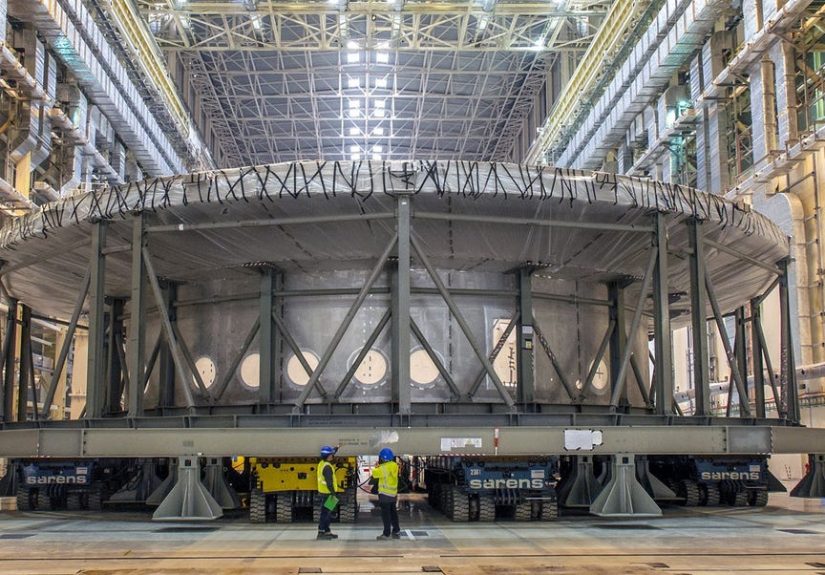
ITER is not a single factory project. It’s a mega-assembly of ultra-tight-tolerance components fabricated across many countries and shipped to one site to fit together perfectly. That’s hard even for IKEA. Now imagine your Allen key is a 1,000-ton crane and the instruction manual is a treaty.
Schedule Reality Check: ITER’s Timeline Has Shifted
ITER’s schedule has been revised multiple times. A widely cited earlier baseline targeted “first plasma” in 2025. But by the mid-2020s, public reporting and official updates pointed to a later start for initial operations and an even later date for full deuterium-tritium campaigns.
The key takeaway: ITER is still progressing, but it is also a first-of-a-kind megaproject, and megaprojects have a long history of being allergic to original timelines. The engineering lessons gained along the way are a major part of the return on investmentsometimes the major part.
How ITER Fits Into Today’s Fusion Landscape
Fusion isn’t a one-lane road anymore. While ITER is the flagship magnetic confinement experiment, several other paths are advancing in parallel:
Magnetic confinement (ITER’s lane)
This includes tokamaks, stellarators, and a growing ecosystem of privately funded magnetic approaches. ITER’s unique role is scale: it’s designed to reach burning plasma conditions at power-plant-relevant size, helping validate physics models and operating regimes.
Inertial confinement (the “laser-smash-a-pea” lane)
In the U.S., the National Ignition Facility (NIF) achieved a historic milestone by producing more fusion energy than the laser energy delivered to the target in a single shot“ignition” in the scientific sense. That’s different from building a power plant, but it proves that fusion burn is possible and pushes fuel/target physics forward.
So… are private companies “beating” ITER?
Private companies may hit certain milestones soonerespecially with newer magnet technology, modern manufacturing, and narrower design goals. But ITER is not trying to be a startup demo. It’s trying to answer the brutal, power-plant-adjacent questions: long pulses, burning plasma control, integrated systems, remote maintenance, and fuel-cycle realities. In other words, ITER is the world’s largest “find out” machine.
Specific Examples: What ITER Actually Tests That Smaller Devices Struggle With
Example 1: Long-pulse heat exhaust
It’s one thing to create fusion conditions for a moment. It’s another thing to run hundreds of seconds while handling extreme heat loads on the divertor and first wall. ITER’s design and operational planning focus heavily on heat exhaust, impurity control, and plasma-facing component survival.
Example 2: Integrated fueling and exhaust (“the plasma has lungs”)
ITER must inject fuel, maintain density and temperature profiles, and remove helium “ash” (fusion byproduct) so the plasma doesn’t choke itself. That’s not a side questit’s the whole game for sustained operation.
Example 3: Superconducting magnet operations at unprecedented scale
ITER’s magnet system is a monster: massive, superconducting, and tightly integrated with cryogenic infrastructure. Running it reliably is a cornerstone of future fusion plants, and the learning curves here are directly applicable to next-step machines.
Is Fusion “Clean Energy” in the Real World?
Fusion produces no combustion emissions and does not create the long-lived, high-level waste profile associated with conventional fission reactors. However, fusion is not “impact-free.” Neutron activation of materials creates waste that must be managed, and tritium handling demands rigorous safety systems. The honest framing is: fusion has the potential to be a very low-carbon, high-energy-density source with differentand often more manageablerisks than fission. But it still requires serious engineering, regulation, and transparency.
What Comes After ITER?
ITER is not the finish line. The big “after” is usually called DEMOa demonstration power plant intended to convert fusion heat into electricity and run in a more power-plant-like way. The path from ITER to DEMO involves major gaps: high-duty-cycle materials, tritium breeding at scale, efficient heat-to-electric conversion, maintainability, availability, and cost competitiveness.
If ITER proves burning plasma physics at scale, it doesn’t automatically guarantee cheap fusion electricitybut it removes one of the biggest scientific unknowns. That’s why ITER remains strategically important even in a world buzzing with private fusion announcements.
500-Word “Experiences” Section: What It’s Like Around ITER-Style Fusion Work
Fusion can feel abstract until you’re near the hardwareor even near the people who live and breathe it. Talk to engineers who’ve worked on superconducting coils, and you’ll hear a strange mix of pride and sleep deprivation. They’ll describe months spent chasing tiny manufacturing defects that would be irrelevant in most industries but become catastrophic when your component must survive enormous magnetic forces, extreme temperature gradients, and years of operation. In fusion, a “small” issue can mean a misalignment that a robotic maintenance system can’t reach later, or a weld that fails under thermal cycling. The vibe is less “move fast and break things” and more “move carefully or you will break the entire future.”
People who visit large fusion facilities (even smaller tokamaks than ITER) often remember the scale first. The machines are both industrial and oddly artisticpolished metal, thick cabling, giant power supplies, and diagnostic ports that look like sci-fi camera lenses. Then you learn the punchline: the plasma itself is invisible, and what you’re really seeing is a carefully engineered stage where the star performance happens inside a vacuum chamber you can’t open during the show. Visitors tend to ask, “Where’s the fire?” and scientists politely explain the fire is a magnetically confined plasma hotter than the Sun that would instantly ruin your day if it touched anything. It’s a very calm explanation for something so dramatic.
Another common “fusion experience” is the meeting culture. Because fusion sits at the intersection of physics, materials science, cryogenics, nuclear safety, robotics, and power engineering, the same conversation can jump from turbulence models to supply-chain lead times in five minutes. You’ll hear acronyms fly like confetti. Someone will say “divertor lifetime,” someone else will say “tritium accountancy,” and a third person will ask whether a diagnostic can survive neutron flux. It’s the kind of interdisciplinary chaos that makes fusion hardand also the reason the field builds unusually versatile scientists and engineers.
On the emotional side, fusion work tends to create a particular kind of optimism: stubborn, technical, and allergic to hype. The people closest to the machine often roll their eyes at oversold headlines, but they’ll also light up when a new magnet test succeeds, a component ships on schedule, or a plasma shot hits a record. Many describe progress as a chain of unglamorous winsimproved confinement here, a better wall coating there, a control algorithm that prevents a disruption. It’s not one cinematic breakthrough. It’s a long series of “we learned something real today,” repeated thousands of times, until the impossible starts looking… merely difficult.
And if you ask them what ITER means, the best answers usually aren’t about a single date on a calendar. They’re about proving that humanity can build and operate an integrated burning plasma system at a scale that mattersbecause once you can do that, the argument stops being “is fusion physically possible?” and becomes “how fast can we engineer it into something practical?” That’s when the future gets interesting.
Conclusion
ITER is the biggest, boldest fusion experiment ever attempted: a tokamak designed to reach burning plasma conditions and demonstrate high fusion gain. It’s not a power plant, and it doesn’t pretend to be. It’s a bridgebetween decades of plasma physics and the next era of fusion engineeringbuilt with superconducting magnets, international logistics, and a level of patience normally associated with growing redwoods.
Even with delays, ITER’s value is in the scientific and engineering reality it will force into the open: how plasmas behave when they self-heat, how materials and components survive, how integrated fuel cycles operate, and how a fusion device can be controlled, maintained, and improved. If fusion becomes part of the future energy mix, ITER will be one of the reasons we got therebecause somebody had to build the world’s first “burning plasma” megamachine and live to write the manual.