Table of Contents >> Show >> Hide
- So, what does “mezze” mean?
- Mezze is a mindset: why it’s central to Middle Eastern cooking
- What’s usually on a mezze table?
- Mezze vs. tapas vs. a charcuterie board
- Regional mezze: one idea, many accents
- How to build a mezze platter at home (without losing your mind)
- What to drink with mezze (and why it’s not just “wine, I guess”)
- Common mezze mistakes (and how to dodge them gracefully)
- Quick FAQ about mezze meaning
- Mezze in real life: what the experience feels like (and why people get obsessed)
- Conclusion
If you’ve ever sat down at a Middle Eastern restaurant and suddenly found yourself surrounded by little platesdips, salads, pickles, warm bread, something fried, something grilledyou’ve met mezze. It’s the culinary equivalent of “just one more episode”… except it’s chickpeas and eggplant and everyone’s happily trapped at the table.
This guide breaks down the mezze meaning (and why it matters), what typically belongs on a mezze table, how mezze differs from other “small plate” traditions, and how to build a mezze spread at home that feels generous without requiring an advanced degree in platter architecture.
So, what does “mezze” mean?
Mezze (also spelled meze, mezza, or mezé depending on language and region) refers to a collection of small dishes served togethersometimes as an appetizer course, sometimes as a light meal, and sometimes as the main event because nobody wants to stop the conversation to “move on to the entrée.”
In plain English: mezze is not one recipe. It’s a style of eating built around variety, sharing, and pacing. Think: “choose-your-own-adventure dinner,” but the plot twist is always “another piece of pita.”
Pronunciation and the mezze vs. meze spelling thing
In American English, you’ll commonly hear it pronounced like “MEH-zay”. The double “z” in “mezze” is a common spelling in English, while “meze” is also widely used, especially when referring to Turkish and Greek contexts. The key point: spelling changes; the vibe stays the same.
Where the word comes from (the fun etymology moment)
The word traveled. Linguistically, “meze/mezz(e)” is traced through Turkish and Modern Greek and ultimately back to a Persian root meaning “taste” or “snack.” Which is perfect, because mezze is basically a formal invitation to taste everything, repeatedly, with enthusiasm.
Mezze is a mindset: why it’s central to Middle Eastern cooking
In many Middle Eastern and Eastern Mediterranean food traditions, mezze is less about “starting a meal” and more about how people gather. Mezze matches the way real-life eating happens: people arrive at different times, talk over plates, refill bread, trade bites, and let the table slowly turn into a shared memory.
Hospitality, translated into plates
Mezze communicates hospitality without saying a word. A table with multiple small dishes signals: Stay a while. It also makes room for different diets and preferencesvegetarian, meat-forward, gluten-free (if you swap the bread), spicy lovers, “no cilantro please” folkswithout forcing anyone to order a completely separate universe.
Variety is the point (and also the strategy)
A good mezze spread balances:
- Creamy (hummus, labneh, baba ghanoush)
- Crunchy (fresh cucumbers, radishes, toasted pita)
- Tangy (pickles, lemony salads, briny olives)
- Herby (parsley-heavy tabbouleh, minty notes, za’atar)
- Warm (grilled skewers, baked pastries, spiced meatballs)
The end goal is not “a board that looks cute on the internet” (though that can happen). The goal is a table where every bite makes the next bite better.
What’s usually on a mezze table?
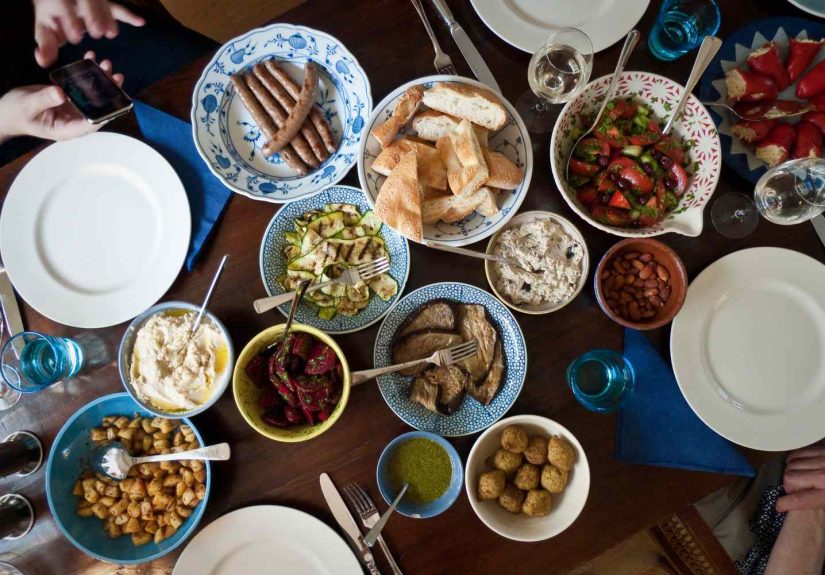
Mezze varies by region, season, and household, but most spreads include a mix of dips, salads, pickled items, breads, and at least one warm component. Here are the usual suspectswith specific examples so you can picture the table instead of staring into the void of vague food words.
Dips and spreads (a.k.a. “bread’s entire personality”)
- Hummus: chickpeas blended with tahini, lemon, and garlicoften topped with olive oil, spices, or pine nuts.
- Baba ghanoush: smoky eggplant dip typically blended with tahini, garlic, and lemon.
- Labneh: thick, tangy strained yogurtgreat with olive oil and za’atar.
- Muhammara: roasted red pepper and walnut spread that’s sweet, smoky, and a little spicy.
Salads and fresh bites (the bright, lemony reset button)
- Tabbouleh: parsley-forward salad with bulgur, tomatoes, lemon, and olive oil.
- Tomato-cucumber salad: crisp, simple, and essential when you’ve committed to dip life.
- Fattoush (often): chopped salad with toasted bread and a bright, tangy dressing.
Pickles, olives, and briny things (the flavor amplifiers)
A mezze spread often includes olives, pickled vegetables, and sometimes peppery or spicy bites that cut through richer dips. They’re the “plot twist” on the tableone salty bite and suddenly everything tastes more vivid.
Warm mezze (when the table gets serious)
Warm items can be as simple or elaborate as you want. Common categories include:
- Grilled meats: kebabs or kofta/kafta-style spiced meat.
- Stuffed grape leaves (dolmas/warak enab): sometimes served warm, sometimes room temp.
- Falafel: crispy chickpea fritters that disappear fast, so plan accordingly.
- Small pastries: like spinach pies or cheese-filled bites in some traditions.
Bread and “scoops” (utensils you can eat)
Mezze is often built around pita and other flatbreads. Bread turns dips into dinner and lets the table stay casual. If you’re hosting, warm the bread. People notice. They might not say anything, but they’ll noticeand they’ll keep “checking” the bread basket like it’s a stock portfolio.
Mezze vs. tapas vs. a charcuterie board
Mezze gets compared to tapas a lotand the comparison helps, but it’s not perfect.
- Tapas often refers to small Spanish dishes served as snacks or as a progressive meal.
- Charcuterie boards focus heavily on cured meats, cheeses, and accompaniments.
- Mezze is typically more dip-and-salad friendly, with a strong emphasis on bread, herbs, olive oil, lemon, and shared pacing.
The biggest difference is cultural: mezze is tied to a communal table rhythm. It’s not “here are snacks.” It’s “here’s a whole social eveningbring your stories.”
Regional mezze: one idea, many accents
“Middle Eastern mezze” is an umbrella phrase, and mezze changes depending on where you are. The conceptsmall, shareable dishesstays consistent, but the cast of characters rotates.
The Levant (Lebanon, Syria, Palestine, Jordan and neighbors)
Levantine-style mezze often leans into herbs, lemon, garlic, and tahini, with plenty of dips and salads. You’ll commonly see hummus, baba ghanoush, labneh, tabbouleh, and other vegetable-forward dishes. It can range from a handful of plates to a table that looks like it’s preparing for a very polite food festival.
Turkey: “meze” and the famous table culture
Turkish meze is often associated with evenings spent at a meyhane (tavern) and may be paired with rakı, an anise-flavored spirit. The meze spread can become the meal, with friends lingering over conversation, small plates, and refills of whatever makes the night feel longer in a good way.
A broader Mediterranean neighborhood
You’ll also find related traditions in Greek and other Eastern Mediterranean cuisines, where meze/mezedes can be served alongside drinks and shared plates. The boundaries are porousfood travels, names travel, and the table benefits.
How to build a mezze platter at home (without losing your mind)
The best part about mezze is that it’s naturally customizable. The second-best part is that mezze gives you permission to use store-bought items strategically and still look like you “curated” the meal. (Curated is a powerful word. Use it.)
The “3–3–3” mezze formula
For a balanced mezze spread, aim for:
- 3 creamy things (hummus + baba ghanoush + labneh)
- 3 crunchy/fresh things (cucumber, radishes, cherry tomatoes)
- 3 punchy extras (olives, pickles, stuffed grape leaves)
Add one warm item (falafel, skewers, spiced meatballs) if you want it to feel like dinnerand not “a very elaborate pre-game.”
Step-by-step: assemble like a pro
- Start with bowls for dips so nothing turns into a beige tidal wave.
- Place dips first, spaced around the platter, to anchor the layout.
- Add breads (warm pita triangles, chips, or flatbread) near dips.
- Fill gaps with fresh veg, olives, pickles, and small bites.
- Finish with “sparkle”: olive oil drizzle, a pinch of sumac, chopped herbs, sesame seeds, or pomegranate arils if you’re feeling fancy.
Three example mezze spreads (choose your own vibe)
1) The classic crowd-pleaser (party-friendly)
- Hummus + baba ghanoush + labneh
- Tabbouleh or a tomato-cucumber salad
- Olives + pickles + stuffed grape leaves
- Warm pita + crunchy vegetables
2) The “I cooked a little” dinner mezze
- Hummus + muhammara
- Fattoush-style chopped salad
- Grilled chicken or lamb skewers (or spiced meatballs)
- Olives and something pickled
- Warm flatbread
3) The mostly-store-bought “still looks stunning” board
- High-quality store hummus, feta, olives
- Jarred grape leaves
- Fresh cucumbers, cherry tomatoes, radishes
- Pita chips + a drizzle of olive oil and herbs to make it feel intentional
Shopping tips: what to prioritize
If you’re spending money anywhere, spend it on good olive oil, fresh herbs, and lemons. Those three ingredients make even basic mezze items taste brighter and more “restaurant-level” without extra effort.
What to drink with mezze (and why it’s not just “wine, I guess”)
Mezze is often served with or alongside beverages that match its slow, social pacing. Depending on region and preference, that might mean:
- Anise-flavored spirits like arak, ouzo, or rakı (often enjoyed slowly and socially)
- Wine (crisp whites and rosés tend to play nicely with lemon, herbs, and briny flavors)
- Mint tea for something refreshing and aromatic
- Turkish coffee after the meal, when the table shifts from “sharing plates” to “sharing opinions”
The mezze table isn’t about rushing; drinks follow the same logic: sip, snack, talk, repeat.
Common mezze mistakes (and how to dodge them gracefully)
Mistake #1: Everything is beige
Dips are delicious, but a mezze table with only dips is basically “smoothies, but make it savory.” Add color: tomatoes, radishes, herbs, pickles, roasted peppers, pomegranate.
Mistake #2: No acid, no crunch
Lemon and vinegar-y pickles keep mezze from tasting heavy. Crunchy vegetables keep it from feeling monotone. Without these, even great hummus can start tasting like a very polite nap.
Mistake #3: Bread is an afterthought
Warm bread changes everything. If you can’t warm it, at least keep it fresh and plentiful. Mezze without enough bread is like a concert without speakers: technically still there, emotionally confusing.
Mistake #4: Too much, too fast
Mezze is meant to unfold. Put out a core spread first, then add warm items as they’re ready. This keeps the table feeling abundant without turning your kitchen into a one-person production studio.
Quick FAQ about mezze meaning
Is mezze always Middle Eastern?
Mezze is strongly associated with the Middle East and Eastern Mediterranean, and closely related versions appear across neighboring regions. It’s best understood as a shared small-plate tradition with local variations.
Is mezze an appetizer or a meal?
It can be either. In some settings, it’s the opener; in others, mezze is the mealespecially when the spread is large and includes warm items.
What’s the difference between mezze and a mezze platter?
“Mezze” refers to the overall style and collection of dishes. A “mezze platter” is the practical, assembled versionwhat you put on the table (or board) to serve it.
Can mezze be vegetarian?
Absolutely. Many classic mezze items are plant-forward: dips, salads, pickles, and bread-based bites. You can add proteins if you want, but mezze doesn’t require them to feel satisfying.
Mezze in real life: what the experience feels like (and why people get obsessed)
A mezze night has a rhythm, and once you notice it, you’ll start craving it the way people crave a certain kind of musicnot because one song is “better,” but because the whole vibe makes you breathe differently.
First comes the arrival moment: the table looks almost too full for normal rules. Someone reaches for the bread before menus are even finished. Another person says, “Waitwhat’s that green one?” The answers don’t matter as much as the fact that the table has already become interactive. Mezze is food that invites participation. It’s not plated like a private diary; it’s laid out like a group chat.
Then comes the taste-and-trade phase. People start with their “safe” favoriteshummus, olives, cucumberthen get bolder. A smoky eggplant dip makes someone’s eyebrows go up like they just received good gossip. Something pickled hits the tongue and suddenly everyone’s dip tastes brighter. This is one of mezze’s secret powers: each plate changes how the next plate tastes, so the table feels dynamic even though you’re technically sitting still.
Mezze also creates a surprisingly cozy kind of sharing etiquette. You don’t need formal toasts or speeches. The hospitality is built in. Passing the plate is a small kindness that repeats all night long. It’s also wonderfully forgiving: if someone is late, the food waits. If someone is picky, they can build their own perfect bite without announcing it to the room like a TED Talk about dietary preferences.
Hosting mezze at home has its own pleasures. The kitchen stress drops because you’re not timing one “main dish” like it’s a high-stakes rocket launch. Instead, you’re assembling moments: a bowl of hummus topped with olive oil, a plate of tomatoes with salt, warm bread arriving mid-conversation like a hero walking into the scene. Guests tend to hover and helpbecause mezze is naturally collaborative. Someone slices cucumbers. Someone opens olives. Someone inevitably becomes the self-appointed “pita warmer.”
And then there’s the linger. Mezze encourages people to stay at the table long after the hunger part is solved. The spread turns into a social anchor. Plates empty slowly, refilled here and there, not in a frantic waymore like a steady, friendly tide. That’s why mezze means more than “small dishes.” It’s a way of eating that makes time feel generous.
Conclusion
The mezze meaning in Middle Eastern cooking goes far beyond “appetizers.” Mezze is a shared-table tradition built on variety, hospitality, and the joy of eating in community. Whether you’re ordering a full mezze spread at a restaurant or building a simple mezze platter at home with a few dips, fresh vegetables, olives, and warm bread, you’re participating in a style of dining designed to slow things downin the best possible way.
If you want mezze to feel authentic, focus less on perfection and more on balance: creamy and crunchy, bright and savory, fresh and warm. The table doesn’t need to be complicated. It just needs to invite people to reach in, share, and stay.