Table of Contents >> Show >> Hide
- What Is the Mediterranean Diet?
- Mediterranean Diet Food List
- Why So Many People Love the Mediterranean Diet
- Simple Tips for Starting the Mediterranean Diet
- Common Mistakes to Avoid
- 7-Day Mediterranean Diet Meal Plan
- How to Make the Mediterranean Diet Work on a Budget
- Real-Life Experiences With the Mediterranean Diet
- Final Thoughts
- SEO Tags
If your idea of “healthy eating” involves chewing sadly on a plain chicken breast while staring at a cupcake you can’t have, the Mediterranean diet is here to improve your mood and your plate. This eating pattern is less about rules, guilt, and food drama, and more about real meals built around vegetables, fruits, whole grains, beans, nuts, fish, and olive oil. In other words, it is a style of eating that actually looks like food people want to eat.
The Mediterranean diet is inspired by traditional eating habits in countries around the Mediterranean Sea, but you do not need to live on a cliffside in Greece to follow it. In practice, it means filling your meals with minimally processed plant foods, using extra virgin olive oil as your main fat, eating fish and seafood regularly, enjoying dairy, eggs, and poultry in moderate amounts, and treating red meat and sweets like occasional guests instead of permanent roommates.
Even better, this approach has staying power. It is flexible, family-friendly, and realistic enough for normal people with jobs, grocery budgets, and that one relative who thinks vegetables are a conspiracy. Here is how the Mediterranean diet works, what to eat, how to make it fit your life, and a simple 7-day meal plan to get started.
What Is the Mediterranean Diet?
The Mediterranean diet is a plant-forward eating pattern centered on overall food quality rather than strict calorie math or complicated macros. The foundation is simple: eat more vegetables, fruits, legumes, whole grains, nuts, seeds, herbs, and olive oil. Add fish and seafood regularly. Include yogurt, cheese, eggs, and poultry in moderate amounts. Keep red meat, processed foods, sugary drinks, and desserts to a minimum.
That is one reason the Mediterranean diet remains so popular: it does not feel like punishment. It is less “never eat bread again” and more “make bread whole grain, pair it with tomato salad, drizzle olive oil on top, and call it lunch.” Many versions also include lifestyle habits such as sharing meals, staying physically active, and enjoying food without turning dinner into a chemistry exam.
Mediterranean Diet Food List
Foods to Eat Often
- Vegetables: leafy greens, tomatoes, cucumbers, broccoli, eggplant, zucchini, peppers, onions, mushrooms, cauliflower, carrots
- Fruits: berries, apples, oranges, grapes, pears, peaches, melon, pomegranate
- Whole grains: oats, brown rice, quinoa, farro, barley, bulgur, whole-grain bread, whole-wheat pasta
- Legumes: chickpeas, lentils, black beans, cannellini beans, split peas
- Nuts and seeds: almonds, walnuts, pistachios, pumpkin seeds, chia seeds, sunflower seeds
- Healthy fats: extra virgin olive oil, olives, avocado
- Flavor boosters: garlic, basil, parsley, oregano, rosemary, mint, lemon, vinegar, spices
Foods to Eat in Moderate Amounts
- Fish and seafood: salmon, sardines, tuna, trout, cod, shrimp, mackerel
- Poultry: chicken and turkey
- Eggs: useful for quick breakfasts and budget-friendly meals
- Dairy: plain Greek yogurt, kefir, cottage cheese, feta, mozzarella, parmesan
Foods to Limit
- Red meat such as beef, pork, and lamb
- Processed meats like bacon, sausage, and deli meats
- Refined grains such as white bread, many crackers, and sugary cereals
- Sweets, pastries, candy, and desserts with lots of added sugar
- Sugary drinks and heavily processed snack foods
- Large amounts of butter, cream, and highly processed spreads
What About Drinks?
Water is the main character here. Coffee and tea can fit in just fine, ideally without turning into dessert in a cup. Wine is often mentioned in Mediterranean-style eating, but it is optional, not required. If you do not drink alcohol, there is absolutely no gold medal for starting now.
Why So Many People Love the Mediterranean Diet
The Mediterranean diet has earned a strong reputation because it is associated with a wide range of health benefits. Research has linked it with better heart health, healthier cholesterol levels, improved blood pressure, better blood sugar control, and support for long-term weight management. Some studies also suggest benefits for brain health and healthy aging.
Why does it work? It is not because one magical tomato conquers all disease. It works because the overall pattern is rich in fiber, unsaturated fats, antioxidants, vitamins, minerals, and minimally processed foods. Put simply, it gives your body more of what helps and less of what does not.
Another underrated benefit is sustainability. The Mediterranean diet is easier to keep up with than many trendy diets because it does not ban entire food groups or demand culinary acrobatics before 8 a.m. You can adapt it to different cultures, budgets, and cooking styles without losing the core principles.
Simple Tips for Starting the Mediterranean Diet
1. Build Meals Around Plants First
Instead of asking, “What meat am I making tonight?” try asking, “Which vegetables, beans, or whole grains are the base of dinner?” Then add fish, poultry, eggs, or dairy as supporting players. The vegetables should not be decorative confetti. Let them actually matter.
2. Switch Your Main Fat to Olive Oil
Use extra virgin olive oil for salad dressings, grain bowls, roasted vegetables, and many stovetop dishes. This is one of the simplest changes you can make, and it instantly nudges meals in a Mediterranean direction.
3. Choose Whole Grains More Often
Trade white bread for whole-grain bread, white rice for brown rice or farro, and sugary cereal for oatmeal. You do not need to swap everything overnight. Your pantry is not going anywhere.
4. Eat Seafood a Couple of Times a Week
Fish such as salmon, sardines, trout, and tuna are especially useful choices. If fresh seafood is expensive, canned tuna and sardines, frozen fish fillets, and shrimp can all help. Fancy fish is optional. Consistency is not.
5. Keep Convenient Staples on Hand
Canned beans, frozen vegetables, plain yogurt, eggs, oats, nuts, olive oil, and whole grains can save you from emergency takeout. Mediterranean eating gets a lot easier when your kitchen is stocked for real life and not just for your imaginary Sunday self.
6. Make Dessert Smaller and Fruit Bigger
You do not need to swear eternal revenge on cookies. But on most days, let fruit do more of the heavy lifting. Berries with yogurt, sliced pears with walnuts, or oranges after dinner can satisfy the sweet tooth without turning every meal into a sugar parade.
7. Think Lifestyle, Not Just a Menu
Walk after dinner. Cook more at home. Eat slowly. Share meals when you can. The Mediterranean diet is not just about ingredients; it is also about habits that make eating feel human again.
Common Mistakes to Avoid
Mistake one: assuming “Mediterranean” means unlimited pasta and wine. Nice try. The pattern still emphasizes balance, vegetables, legumes, and healthy fats.
Mistake two: replacing junk food with “healthy” junk food. Olive oil potato chips are still chips. Mediterranean-style eating works best when meals are built from minimally processed foods most of the time.
Mistake three: forgetting protein. Plant-forward does not mean protein-free. Beans, lentils, fish, yogurt, eggs, poultry, tofu, and nuts all help keep meals satisfying.
Mistake four: drowning everything in olive oil. Yes, olive oil is great. No, it is not a free-for-all. Healthy fats are still calorie-dense, so moderation matters.
7-Day Mediterranean Diet Meal Plan
This sample plan is meant to be practical, balanced, and easy to customize. Adjust portions for your energy needs, preferences, and health goals.
Day 1
Breakfast: Plain Greek yogurt with berries, walnuts, and a sprinkle of chia seeds
Lunch: Chickpea salad with cucumber, tomato, red onion, parsley, feta, and olive oil-lemon dressing
Dinner: Baked salmon with quinoa and roasted broccoli
Snack: Apple slices with almond butter
Day 2
Breakfast: Oatmeal topped with blueberries, cinnamon, and chopped pistachios
Lunch: Whole-grain wrap with hummus, turkey, spinach, shredded carrots, and sliced bell pepper
Dinner: Lentil soup, side salad, and a slice of whole-grain bread with olive oil
Snack: An orange and a small handful of almonds
Day 3
Breakfast: Vegetable omelet with spinach, mushrooms, and onions, plus whole-grain toast
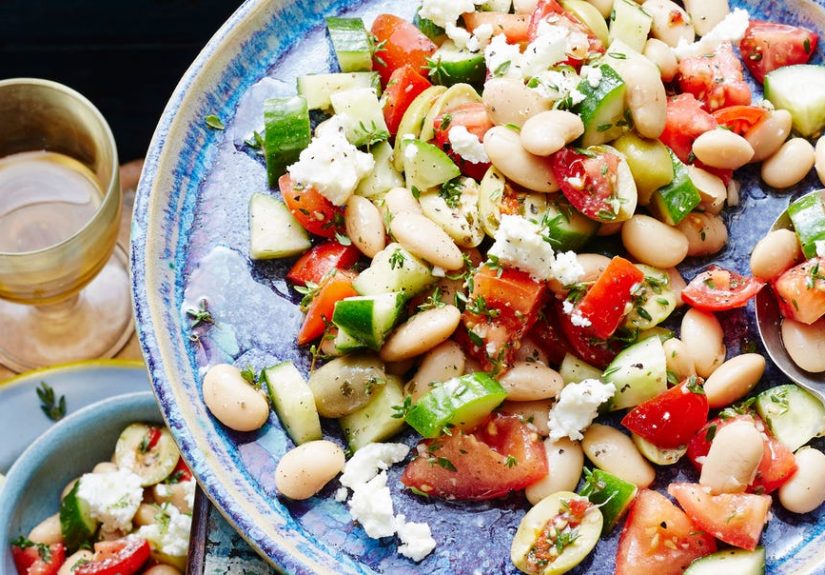
Lunch: Quinoa bowl with cucumbers, olives, cherry tomatoes, white beans, and tahini-lemon dressing
Dinner: Sheet-pan chicken with zucchini, red peppers, onions, and brown rice
Snack: Cucumber slices with tzatziki
Day 4
Breakfast: Overnight oats with plain yogurt, strawberries, and sunflower seeds
Lunch: Leftover lentil soup with a side of mixed greens and avocado
Dinner: Whole-wheat pasta with shrimp, garlic, spinach, tomatoes, and olive oil
Snack: Pear with a few walnuts
Day 5
Breakfast: Whole-grain toast with mashed avocado, white beans, lemon, and cracked pepper
Lunch: Farro bowl with roasted vegetables, chickpeas, arugula, and feta
Dinner: Baked cod with herbed potatoes and green beans
Snack: Plain yogurt with cinnamon
Day 6
Breakfast: Smoothie with spinach, frozen berries, plain yogurt, oats, and flaxseed
Lunch: Greek-style salad with romaine, cucumber, tomato, olives, chickpeas, and a side of whole-grain pita
Dinner: Chicken kebabs with brown rice, grilled vegetables, and a yogurt-herb sauce
Snack: Carrots and hummus
Day 7
Breakfast: Shakshuka with eggs poached in tomato-pepper sauce and a slice of whole-grain toast
Lunch: Leftover grain bowl topped with arugula, pumpkin seeds, and olive oil
Dinner: Stuffed bell peppers with lentils, tomatoes, herbs, and a little parmesan
Snack: Fresh berries with a square of dark chocolate
How to Make the Mediterranean Diet Work on a Budget
Healthy eating does not have to mean buying imported olives that sound like they have a trust fund. To keep costs reasonable, focus on basics. Use canned beans, frozen vegetables, store-brand oats, brown rice, eggs, and seasonal produce. Buy nuts in bulk when possible. Rotate less expensive seafood options like canned tuna, sardines, or frozen salmon portions. Build more meals around lentils, chickpeas, and beans, which are both budget-friendly and very Mediterranean.
Meal prep also helps. Cook a pot of grains, roast a tray of vegetables, mix a simple vinaigrette, and keep a container of beans in the fridge. Suddenly your weekday lunch looks a lot more intentional and a lot less like a desperate cracker situation.
Real-Life Experiences With the Mediterranean Diet
One of the most common experiences people describe when starting the Mediterranean diet is that it feels surprisingly normal. There is no dramatic “day one cleanse,” no suspicious powder, and no requirement to fear bananas. Instead, most people notice that their grocery cart starts looking more colorful. There are more tomatoes, greens, beans, yogurt, citrus, oats, nuts, and fish. The pantry becomes less about snack foods in shiny packaging and more about ingredients you can actually turn into dinner.
Another common experience is that meals become more satisfying, not less. A big salad topped with chickpeas, olives, feta, and olive oil feels very different from a sad diet salad that seems to apologize for existing. The fiber from vegetables, beans, and whole grains, plus the healthy fats from olive oil and nuts, often helps people feel fuller for longer. That means fewer random kitchen raids at 9 p.m. when a sleeve of cookies starts whispering your name.
Some people also notice an adjustment period, especially if their old routine was heavy on processed foods. If you suddenly go from very little fiber to a bean-and-vegetable festival, your digestive system may need a moment to compose itself. The fix is usually simple: increase fiber gradually, drink enough water, and do not treat lentils like a competitive sport on your first day.
Cooking more often is another real-life shift. Mediterranean-style eating tends to work best when you have a few easy meals you can repeat without getting bored. Think roasted vegetables with salmon, grain bowls with chickpeas, veggie omelets, yogurt with fruit and nuts, or lentil soup with whole-grain toast. Over time, many people say they stop chasing highly restrictive food rules and start building a reliable meal rhythm instead. That alone can feel like a huge relief.
There is also a mindset change. Because the Mediterranean diet is not built on extreme restriction, people often report feeling less guilt around food. A piece of cake at a birthday party does not “ruin everything.” A burger on vacation is not a moral failure. The emphasis is on overall patterns, not perfection. For many adults, that is the most refreshing part. The diet feels flexible enough to live with, which is exactly why it can last.
And yes, there are practical wins. Many people find leftovers improve, lunches get easier, and family meals become more adaptable. A Mediterranean-style dinner can be as simple as grilled chicken, roasted vegetables, brown rice, and fruit for dessert. Nobody at the table has to know they are participating in a “healthy eating pattern.” They just know dinner tastes good, which is honestly half the battle.
Final Thoughts
The Mediterranean diet is popular for a reason. It is balanced, flavorful, flexible, and backed by a strong body of research. It encourages you to eat more of the foods nutrition experts love to see on a plate and less of the foods that tend to crowd them out. Better yet, it does this without demanding a miserable lifestyle or turning dinner into a punishment.
If you want a healthier way to eat that still leaves room for pleasure, convenience, and common sense, the Mediterranean diet is a smart place to start. Fill your cart with plants, keep extra virgin olive oil nearby, let fish and beans show up more often, and remember that perfection is not the goal. Progress tastes better anyway.