Table of Contents >> Show >> Hide
- Life and Medicine in the Middle Ages: Stacked Against You
- The Heavy Hitters: Infectious Diseases Everyone Feared
- The Slow Burn: Nutritional and Chronic Medieval Illnesses
- Everyday Misery: Teeth, Childbirth, and Wounds
- Why Disease Spread So Easily in the Middle Ages
- What Treatment Looked Like (Spoiler: Not Great)
- If You Lived Back Then, What Would You Probably Have?
- Why Learning About Medieval Diseases Still Matters
- Conclusion: You Wouldn’t Last Long, But You’d Have Company
- Imagining Life Then: A Personal “What If?” Experience
Imagine waking up in a drafty wooden house, putting on the same wool tunic you’ve worn all year,
and your first thought isn’t, “Did I remember to charge my phone?” but, “Is that rash getting worse?”
Welcome to the Middle Ages, where medieval diseases were basically the unofficial
national sport and life expectancy had serious commitment issues.
Between contagious plagues, chronic infections, and vitamin deficiencies, staying healthy in a
medieval village was like playing “hard mode” in real life. Historical and medical research shows
a cocktail of problems: plague, leprosy, smallpox, tuberculosis, dysentery, malaria, nutritional
diseases like scurvy and rickets, and constant dental and childbirth complications.
So, if you were unlucky enough to have been born around the year 1300 instead of now, what exactly
might have been trying to kill you? Let’s time-travel (safely, from our screens) and walk through
the greatest hits of medieval illnessesand what your everyday life would have looked like under
the constant shadow of disease.
Life and Medicine in the Middle Ages: Stacked Against You
To understand medieval illnesses, you have to start with the environment:
- Crowded cities with poor sanitation and open sewers.
- Limited hygienebathing was rare, soap was a luxury, and clean water was not guaranteed.
- Close contact with animals (and their fleas, lice, and parasites).
- Lack of germ theorypeople blamed “bad air,” sin, or astrology instead of bacteria or viruses.
Medical knowledge was a mix of ancient Greek theory, religious belief, and guesswork. Treatments
involved bleeding, purging, herbal concoctions, and prayers. Surgery was brutal and risky. Antibiotics
didn’t exist, and even a small cut could turn into a major infection.
The Heavy Hitters: Infectious Diseases Everyone Feared
The Black Death (Bubonic Plague)
If you’ve heard of only one medieval disease, it’s probably the Black Death.
This bubonic plague pandemic swept across Europe in the mid-1300s, caused by the bacterium
Yersinia pestis and spread mainly by fleas on rats.
Between 1347 and 1351, the Black Death is estimated to have killed roughly 30–50% of Europe’s population.
Symptoms came on fast: fever, chills, vomiting, and the infamous
buboesswollen, painful lymph nodes that turned dark under the skin. Mortality could be as
high as 60% or more in some outbreaks.
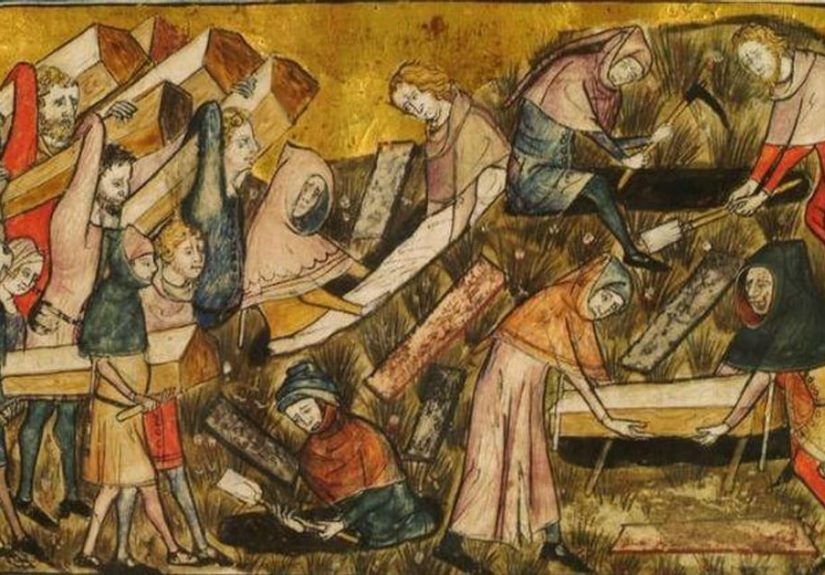
If you lived then, you could go to sleep in a “normal” town and wake up a week later in a place where
half your neighbors were gone, the streets were quieter, and mass graves were a grim new part of the
landscape.
Leprosy (Hansen’s Disease)
While plague was fast and dramatic, leprosy was slow, visible, and deeply feared.
Caused by Mycobacterium leprae, leprosy damages skin and nerves over years, leading to
numbness, skin lesions, deformities, and ulcers.
In medieval Europe, leprosy wasn’t just a disease; it was a social sentence. People with leprosy
were often viewed as “unclean,” morally suspect, or cursed. Many were forced into leper houses or
colonies on the edges of towns. They might have to wear special clothing or ring a bell to warn
others of their presence.
If you had persistent skin sores, numb fingers, or disfiguring lesions in the Middle Ages, you might
lose not only your health, but your home, your work, and most of your social connections.
Smallpox
Smallpox was another deadly and disfiguring staple of medieval life. Evidence suggests
smallpox reached Europe between the 5th and 7th centuries and caused frequent epidemics throughout the
Middle Ages.
Symptoms started like a flufever, fatigue, achesthen progressed to a blistering rash that covered
the body. Many people died; survivors were often left with deep scars and sometimes blindness.
In a world without vaccines, you’d see smallpox sweep through communities, leaving a visible mark on
the faces of the living and an invisible one on families who’d lost children and parents.
Tuberculosis (Consumption)
Tuberculosis (TB), then often called “consumption,” has been around for thousands of years.
In the medieval period, crowded living spaces and poor diet made it an everyday killer.
People with TB developed a chronic cough, chest pain, weight loss, fatigue, and sometimes coughing up
blood. It was a slow-burn diseaseless dramatic than plague, but devastating over time. In many
communities, TB quietly accounted for a huge share of deaths.
Dysentery and “The Bloody Flux”
Modern travelers complain about “food poisoning.” Medieval people had dysentery, often
called “the bloody flux.” Contaminated water, spoiled food, and human waste in the streets created
perfect conditions for intestinal infections.
Symptoms included severe diarrhea (sometimes bloody), fever, cramps, and dehydration. Without IV fluids
or modern care, many peopleespecially childrendied from what we’d now consider a treatable intestinal bug.
Malaria, Typhoid, and Other Fevers
In some regions, standing water and mosquitoes meant malaria was part of life. In others,
contaminated drinking water led to typhoid fever and other enteric infections.
To medieval people, many of these illnesses were simply “fevers” or “pestilence.” Fever, chills, weakness,
and confusion might hit suddenly. Survival depended on your age, your basic health, and pure luck.
The Slow Burn: Nutritional and Chronic Medieval Illnesses
Scurvy, Rickets, and Anemia
Not every medieval disease involved dramatic plagues. Many people suffered from long-term nutritional
problems. A lot of medieval diets were heavy on grains and light on fruits, vegetables, and protein.
-
Scurvy: Caused by vitamin C deficiency, scurvy leads to fatigue, bleeding gums,
joint pain, and slow wound healing. Evidence of scurvy and related nutritional disease has been found
in medieval skeletal remains. -
Rickets: Caused by vitamin D deficiency, rickets can lead to softened, bowed bones,
especially in children who get little sunlight or lack animal fats and fish in their diet. -
Anemia: Iron deficiency was common, especially in women of childbearing age who had
frequent pregnancies and blood loss.
If you were poor and living off thin porridge and stale bread, your body would show it in your bones,
muscles, and energy levels.
Ergotism: When Your Bread Tried to Kill You
One of the more unsettling medieval health problems was ergotism,
poisoning from rye contaminated with ergot fungus. People who ate this “cursed” grain could develop
burning pain in their limbs, hallucinations, convulsions, and even gangrene leading to loss of fingers,
toes, or whole limbs.
In some regions, outbreaks of ergotism were called “St. Anthony’s Fire,” and they could ravage entire
villages where a bad harvest forced people to eat contaminated bread.
Everyday Misery: Teeth, Childbirth, and Wounds
Dental Disaster
Medieval dentistry was, bluntly, not a thing. Archaeological studies show heavy wear, cavities,
abscesses, and tooth loss. People used their teeth as tools, had no fluoride, and had limited access
to effective dental care.
A severe tooth infection could spread, causing facial swelling, intense pain, and even death from
sepsis. Your “dentist” might be a barber-surgeon with forceps and no anesthesia.
Childbirth Complications and Puerperal Fever
For medieval women, childbirth was one of the biggest health risks. Without modern
prenatal care, antibiotics, or sterile technique, labor was dangerous.
Puerperal fever (postpartum infection) was commonbacteria entering the uterus during
or after birth caused high fever, pain, and often death. Many women died within days of delivering a
baby, leaving behind newborns who might not survive infancy.
Injuries and Infections
Farming, building, and warfare meant cuts, fractures, and burns were constant risks. Without clean bandages
and antibiotics, a deep cut or broken bone could easily get infected.
Bone infections (osteomyelitis), gangrene, and chronic pain left many people disabled. For peasants who
relied on physical labor to survive, an injury could be financially and physically catastrophic.
Why Disease Spread So Easily in the Middle Ages
Several factors made medieval diseases almost impossible to avoid:
- Poor sanitation: Human and animal waste polluted streets and waterways.
- Crowded housing: Families, animals, and vermin shared small spaces.
- Limited clean water: Wells and rivers could be easily contaminated.
- Trade and travel: Ships, caravans, and armies carried infectious diseases across continents.
- No concept of microbes: People didn’t understand how diseases spread, so effective prevention was rare.
Quarantine and isolation did start to appear, especially for leprosy and later for plague, but
these early efforts were inconsistent and based more on fear than on science.
What Treatment Looked Like (Spoiler: Not Great)
Medieval “healthcare” was a strange mix of religion, superstition, and partial observation. Depending
on your status and where you lived, you might see:
- Monastic infirmaries offering basic nursing, herbal remedies, and spiritual care.
- Physicians (for the wealthy) trained on ancient Greek and Arabic texts, focusing on balancing the “humors.”
- Barber-surgeons doing everything from bloodletting to amputations to tooth pulling.
- Wise women and herbalists using plants, poultices, and practical experience to ease pain and symptoms.
Common treatments included:
- Bloodletting to “balance” humors.
- Purgatives and emetics (laxatives and vomit-inducing mixtures).
- Herbal medicines like garlic, sage, chamomile, and yarrow.
- Religious remedies such as prayers, pilgrimages, and relics.
Sometimes, these remedies offered comfort or even mild benefits. Other times, they made things worseor
simply did nothing while the disease ran its course.
If You Lived Back Then, What Would You Probably Have?
Statistically, if you were an ordinary medieval villager:
- You’d likely suffer from chronic infectionsdental problems, intestinal parasites, untreated wounds.
- You might have nutritional deficiencies like anemia or early rickets or scurvy.
- You’d be at high risk for respiratory infections such as tuberculosis.
- You’d almost certainly live through at least one major epidemic in your lifetimeplague, smallpox, or a severe fever.
Even if you personally survived, your life would be shaped by disease: losing siblings in childhood,
parents in midlife, or friends to sudden outbreaks. Health was fragile, death was visible, and
“growing old” was more of a bonus than an expectation.
Why Learning About Medieval Diseases Still Matters
Medieval diseases might feel like distant history, but they still influence us today. Genetic studies
suggest that past plagues shaped the human immune system. Public health systems,
quarantine laws, and vaccination campaigns were all built, in part, as responses to centuries of
deadly epidemics.
Understanding just how dangerous everyday life used to be also highlights how much modern medicine,
sanitation, and vaccines have changed the game. Clean water, antibiotics, and hospital care aren’t
boringthey’re world-changing.
Conclusion: You Wouldn’t Last Long, But You’d Have Company
If you lived in medieval Europe, “staying healthy” wouldn’t be a personal wellness challengeit would
be a near-miracle. Between plague, leprosy, smallpox, tuberculosis, dysentery, malnutrition, and
childbirth risks, medieval diseases surrounded you from birth to death.
The upside? You’d have plenty of company. The downside? Pretty much everything else. But that contrast
makes modern lifeeven just basic dental care and safe tap waterfeel like a luxury vacation by comparison.
meta_title: Medieval Diseases: All The Afflictions You’d Face
meta_description: Discover the deadliest medieval diseasesfrom plague to leprosyand
what everyday life and health were really like back then.
sapo: Curious how long you’d last in the Middle Ages? From the Black Death wiping out
up to half of Europe’s population to slow-burn killers like leprosy, tuberculosis, and nutritional
deficiencies, medieval life was basically a crash course in how fragile the human body can be. This
in-depth guide breaks down the most common medieval diseases, how they spread, what “treatment”
looked like, and why a toothache or a dirty cut could be a death sentence. Read on to time-travel
into a world before vaccines and antibioticsand come away a lot more grateful for modern medicine.
keywords: medieval diseases, Black Death, leprosy, smallpox, medieval medicine, plague in Europe, life in the Middle Ages
Imagining Life Then: A Personal “What If?” Experience
To really feel what medieval illness meant, it helps to step into a pair of worn leather shoes for a
moment. So picture this: you’re not you, scrolling a screen in the 21st centuryyou’re a 25-year-old
villager in the late 1300s.
You wake up on a straw mattress that smells faintly of damp hay and smoke. Your joints ache more than
they should for someone your age. That’s not a gym injury; that’s years of hard labor, mild rickets
from poor nutrition, and an old back strain from lifting sacks of grain. You cough a little as you sit
up. You’ve had that cough all winter. Some mornings there’s a thread of blood in it, but you try not
to think too hard about that.
Breakfast is yesterday’s bread, a little too dark from rye that might not have been perfectly stored.
You don’t know anything about ergot fungus, but you do know that sometimes, people in your village
complain of burning in their limbs or strange visions after a bad harvest. A neighbor’s son lost most
of his foot last year. People whispered about punishment from God; nobody blamed the bread.
Your teeth throb dully as you chew. One molar is cracked; another is black around the edges. When the
pain flares, it shoots up into your ear and eye, making it hard to sleep. The local barber-surgeon
has offered to pull it for you, but you’ve seen his tools. You’re not ready for that yet. So you swish
some rough wine around your mouth, say a short prayer, and keep going.
Outside, the village feels…off. It’s quieter than it was last year. The house at the end of the lane
is empty; the family moved after losing two children in a sudden fever that swept through last summer.
You remember the day the priest read out the names after Mass, voice echoing in the small stone church.
People cried, but also looked around nervously, as if death might be contagious just from being in the room.
And then there’s the leper who sometimes appears on the road, wrapped in a cloak, ringing a small bell.
You’ve been told not to go near them. You don’t entirely understand what leprosy is, only that it makes
people’s faces and hands change, and that they’re sent away to live among their own kind. The sound of
that bell always makes you swallow hard and pull your cloak tighter, even in summer.
A few years ago, rumors of a terrible plague reached your villagestories of whole towns emptied, of
priests too afraid to bury the dead, of carts piled high with bodies. They say it killed half the people
in some cities. No one really knows the numbers, but the fear lingers like a shadow. Every time a new
fever appears, someone whispers, “What if it’s back?”
When someone in your family gets sick, you have options, but none of them feel certain. You can take
them to the priest for blessings and holy water. You can call on the old woman at the edge of town who
knows herbs: garlic for infections, willow bark for pain, chamomile to calm the stomach. You can try
bleeding to “rebalance the humors,” like the learned physician in the nearest city recommendsif you
can afford to see him at all.
Sometimes, people do get better. A fever breaks, a wound closes, a cough fades with spring. Those moments
feel almost miraculous. But other times, a small scratch on a dirty blade becomes red and swollen, then
black, and within a week the person is gone. You never hear the word “sepsis,” but you see its effect
over and over.
In this world, disease isn’t a rare disruptionit’s the background noise of life. You grow up expecting
siblings not to survive infancy, expecting women to die in childbirth, expecting sudden fevers to take
friends and neighbors with no clear explanation. You light candles for saints, you make promises to God,
you swallow bitter concoctions and hope they help. You don’t argue with the concept of mortality; you
live inside it every day.
Now snap back to your real life for a second. You can brush your teeth with fluoride toothpaste. You can
drink clean tap water. If you get a serious bacterial infection, you can receive antibiotics. If you’re
pregnant, you can have prenatal care, sterile delivery, and emergency surgery if needed. If you’re exposed
to smallpox (in theory), there’s a vaccine; if an outbreak of plague happens, we have drugs that work.
When you look at medieval diseases through that lens, modern “miracles” don’t look so miraculousthey look
like the result of centuries of hard lessons. Our ancestors paid for today’s public health systems with
their suffering. Remembering what they went through doesn’t just satisfy curiosity about the past;
it nudges us to appreciate how much safer, healthier, and longer our lives can be now.