Table of Contents >> Show >> Hide
Marburg multiple sclerosis is not the “usual” version of MS. It is the high-drama, no-time-for-small-talk variant: rare, aggressive, and often frighteningly fast. While classic relapsing-remitting multiple sclerosis may unfold over months or years, Marburg MS can accelerate over days to weeks, creating severe neurologic symptoms that demand urgent specialist care.
That speed is exactly what makes this form of multiple sclerosis so challenging. Doctors may have to sort through several possibilities at once, including brain tumors, abscesses, other inflammatory demyelinating diseases, and autoimmune disorders that can look similar on imaging. In other words, Marburg MS likes to arrive wearing a medical disguise.
Still, this diagnosis is not automatically hopeless. Historically, Marburg MS was linked with severe disability or death within weeks to months, especially before modern imaging and more aggressive rescue therapy became more common. Today, earlier MRI evaluation, faster escalation of treatment, ICU-level support when needed, and case-based use of stronger immunotherapies have improved outcomes for some people. The evidence is still limited, but the story is no longer one-note doom.
What Is Marburg Multiple Sclerosis?
Marburg multiple sclerosis, also called Marburg variant MS, fulminant MS, or malignant MS, is a rare and highly aggressive form of central nervous system demyelinating disease. Like other forms of multiple sclerosis, it involves immune-mediated damage to myelin, the protective coating around nerve fibers in the brain and spinal cord. When myelin is injured, nerve signals slow down, misfire, or stop altogether. That is how vision problems, weakness, numbness, balance issues, speech problems, and cognitive changes enter the picture.
What makes Marburg MS different is the pace and severity. The disease often presents with large, rapidly expanding inflammatory lesions in the brain, sometimes with swelling, mass effect, or features that resemble a tumor. In many published cases, the condition behaves as a monophasic attack, meaning one intense episode that causes dramatic neurologic decline. In other patients who survive the initial phase, later relapses may still occur.
Because it is so uncommon, Marburg MS has not been studied in large clinical trials the way more typical MS has. That means doctors often rely on a combination of general MS treatment principles, severe relapse management, and lessons learned from case reports and small reviews. It is not ideal, but it is the reality of treating a disease rare enough to keep neurologists humble.
Marburg Multiple Sclerosis Symptoms
The symptoms of Marburg MS depend on where the inflammation strikes, but the hallmark is rapid neurologic worsening. Instead of one mild symptom that lingers and politely requests attention, this variant tends to kick the door open.
Common symptoms
- Sudden or quickly worsening weakness in an arm, leg, or one entire side of the body
- Numbness, tingling, or altered sensation
- Vision changes, including blurred vision, double vision, or vision loss
- Difficulty walking, loss of balance, clumsiness, or falls
- Speech problems, word-finding trouble, or slurred speech
- Cognitive changes, poor concentration, confusion, or altered behavior
- Seizures in some cases
- Severe fatigue or rapidly increasing disability
- Bladder dysfunction or bowel symptoms, especially if spinal pathways are involved
Red-flag features that make doctors worry about Marburg MS
Marburg MS is more likely than standard MS to present with impaired consciousness, marked confusion, severe cognitive decline, seizures, or brainstem symptoms. If inflammation affects vital areas of the brainstem, a person can develop swallowing difficulty, breathing compromise, profound weakness, or decreased alertness. That is why many people with this condition are evaluated in the emergency department and may need hospitalization right away.
Another clue is the speed. Symptoms may worsen dramatically over a few days, and repeat MRI scans can show lesions enlarging or new lesions appearing in a short time. In a routine MS flare, that kind of rapid escalation is much less typical.
How Marburg MS Is Diagnosed
There is no single magic test that stamps a chart with “Yes, this is Marburg MS.” Diagnosis is built from the full clinical picture: symptoms, neurologic examination, MRI findings, cerebrospinal fluid analysis, blood tests, and a careful search for alternative explanations.
MRI is the star of the show
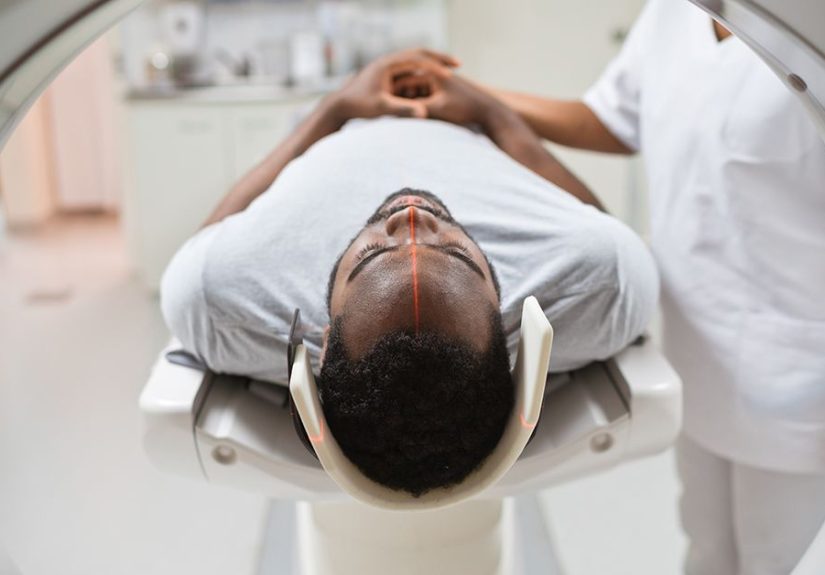
MRI of the brain and spinal cord is the most important early tool. In Marburg MS, imaging may reveal large demyelinating lesions in deep white matter, the corpus callosum, brainstem, or other central nervous system regions. These lesions can enhance with contrast, show surrounding edema, and sometimes create mass effect. That tumor-like appearance is why Marburg MS may initially be confused with glioma, abscess, acute disseminated encephalomyelitis, tumefactive demyelination, MOG antibody-associated disease, neuromyelitis optica spectrum disorder, or even vasculitis.
CSF and lab testing help narrow the field
A lumbar puncture may be used to examine cerebrospinal fluid, or CSF. In more typical MS, oligoclonal bands often support the diagnosis, but Marburg cases can be more complicated. Some patients have positive CSF findings, while others do not show the classic pattern. That means a negative oligoclonal band result does not end the discussion, but it does make it even more important to rule out mimics carefully.
Blood tests may be ordered to look for infections, autoimmune conditions, MOG antibodies, aquaporin-4 antibodies, vasculitis markers, and other clues that point away from MS. Doctors are not being dramatic here; they are trying to avoid treating the wrong disease with the wrong immune therapy, which is the medical version of bringing a blender to fix a leaky roof.
Sometimes biopsy is necessary
When MRI findings are especially tumor-like, or when the diagnosis remains uncertain despite imaging and lab work, a brain biopsy may be performed. That is not routine for ordinary MS, but in suspected Marburg MS it can be crucial. Biopsy may confirm active demyelination and exclude malignancy, infection, or other pathologies that require a completely different treatment approach.
Marburg Multiple Sclerosis Treatment
Treatment is usually urgent, aggressive, and highly individualized. Because the disease can worsen fast, neurologists often move quickly from first-line therapy to rescue treatment if improvement does not happen soon enough.
1. High-dose corticosteroids
The usual first step is high-dose intravenous corticosteroids, often methylprednisolone. Steroids aim to reduce inflammation, calm immune activity, and shorten the duration of an acute attack. This is standard practice for severe MS relapses in general, and it is typically the first treatment tried in Marburg MS as well.
Here is the catch: Marburg MS may respond poorly to steroids alone. That does not make steroid treatment pointless; it just means the care team often keeps a backup plan ready before the IV bag is even finished.
2. Plasma exchange (plasmapheresis)
If symptoms are severe or steroid response is inadequate, plasma exchange is often considered. This treatment removes plasma from the blood and replaces it, with the goal of clearing harmful circulating immune factors. In severe inflammatory demyelinating attacks, plasma exchange is a recognized second-line option after corticosteroids.
For Marburg MS specifically, plasma exchange has been used in many reported cases, though results vary. Some patients improve, while others need escalation beyond that. In short, it is an important rescue tool, but not a guaranteed plot twist.
3. More intensive immunotherapy
Because Marburg MS is so rare, there is no universally accepted “best” drug sequence once steroids and plasma exchange fall short. Published case reports and reviews describe the use of:
- Mitoxantrone
- Cyclophosphamide
- Intravenous immunoglobulin (IVIG)
- Alemtuzumab
- Anti-CD20 B-cell therapies such as rituximab or ocrelizumab
- In selected rescue situations, autologous stem cell transplant strategies
That list is not a menu for self-navigation. It reflects how specialists adapt to an unusually dangerous disease with evidence drawn largely from case reports, not large randomized trials. A 2026 systematic review of published Marburg MS cases found that nearly all patients received high-dose corticosteroids, and many also received plasma exchange, IVIG, cyclophosphamide, mitoxantrone, or B-cell-depleting therapy. The treatment order varied widely, which tells you two things: Marburg MS is medically serious, and neurologists are still learning in real time.
4. Supportive hospital care and rehabilitation
Acute treatment is only part of the story. Many patients also need supportive care such as seizure treatment, airway protection, swallowing evaluation, bladder management, prevention of blood clots, nutrition support, and inpatient rehabilitation. After the crisis phase, recovery may involve physical therapy, occupational therapy, speech therapy, neuropsychology, mobility devices, and symptom-targeted medication for pain, spasticity, bladder issues, mood changes, or fatigue.
Even when MRI improves, the nervous system may need time to catch up. Healing after a major inflammatory attack is often more marathon than sprint, even though the disease itself may have arrived like it chugged three energy drinks and skipped the warm-up.
Outlook and Prognosis
The outlook for Marburg multiple sclerosis is serious, but it is more nuanced today than older descriptions suggest. Historically, the disease was associated with severe disability or death within weeks to months, especially in untreated or treatment-resistant cases. Brainstem involvement, impaired consciousness, and rapidly expanding lesions are all concerning signs.
However, more recent reports show that some patients recover partially, and a smaller group can recover remarkably well with early aggressive therapy. In the 2026 systematic review of 23 synthesized cases, outcomes were mixed: some patients died, some stabilized with lasting deficits, and others improved substantially or had near-complete recovery. That is still a small evidence base, so nobody should oversell it, but it does support a more realistic message: Marburg MS is dangerous, not automatically hopeless.
Factors that may shape outlook
- How quickly diagnosis is considered
- How early aggressive treatment begins
- Whether vital structures such as the brainstem are involved
- How much disability is present at the worst point of the attack
- Whether the disease responds to steroids, plasma exchange, or rescue immunotherapy
- How well the person tolerates ICU care, rehabilitation, and long-term follow-up
For survivors, the future may include ongoing monitoring with MRI, long-term disease-modifying therapy, rehabilitation, and symptom management. Some patients remain stable for long periods. Others may have lingering weakness, vision changes, cognitive effects, fatigue, or mobility limitations. The course is unpredictable enough that sweeping promises should be avoided. In neurology, overconfidence is rarely a good accessory.
When to Seek Emergency Care
A person with suspected Marburg MS should seek urgent medical care for rapidly worsening weakness, sudden confusion, seizures, severe vision loss, loss of consciousness, or new trouble breathing or swallowing. These symptoms deserve emergency evaluation whether the cause turns out to be Marburg MS or something else entirely. Fast-moving neurologic disease is not the moment for home remedies and motivational quotes.
Final Thoughts
Marburg multiple sclerosis is one of the most aggressive forms of MS, marked by rapid symptom progression, large inflammatory lesions, and a high risk of severe disability if treatment is delayed. Symptoms may include weakness, vision loss, seizures, confusion, and brainstem-related deficits. Diagnosis often requires MRI, CSF testing, exclusion of other disorders, and occasionally biopsy when the disease mimics a tumor.
Treatment usually begins with high-dose IV steroids and may escalate to plasma exchange and other potent immunotherapies such as mitoxantrone, cyclophosphamide, IVIG, alemtuzumab, or anti-CD20 therapy in selected cases. Because evidence is based mostly on case reports and small reviews, treatment decisions are best made in experienced neurology centers.
The bottom line is simple: Marburg MS is rare, urgent, and medically complex, but earlier recognition and aggressive modern care have created more room for improvement than older descriptions once suggested. That is not a guarantee, but it is real progressand in a disease this fierce, real progress matters a lot.
Experiences Related to Marburg Multiple Sclerosis: The Human Side of a Fast-Moving Diagnosis
One of the hardest parts of Marburg multiple sclerosis is how violently it disrupts normal life. In more common forms of MS, people may spend months piecing together symptoms, specialist visits, and diagnostic clues. With Marburg MS, the experience is often the opposite. Someone may feel “off” one week, develop weakness or strange vision changes a few days later, and end up in the hospital before the family has even figured out how to pronounce “demyelination.” It can feel less like a diagnosis unfolding and more like a storm dropping through the ceiling.
For many patients and families, the earliest experience is confusion. The symptoms can look like several other emergencies at once: stroke, brain tumor, seizure disorder, infection, encephalitis, or autoimmune inflammation. That uncertainty is emotionally brutal. Loved ones may hear doctors discussing MRI lesions, spinal taps, biopsies, steroids, plasma exchange, and ICU monitoring in the same conversation. It is a lot. Nobody’s best listening skills show up after three hours of sleep in a waiting room with bad coffee and a phone battery hanging on by faith alone.
Once treatment starts, the emotional whiplash often continues. Some people improve quickly after high-dose steroids or rescue therapy. Others do not, and that can be terrifying. A family may begin a day hopeful because an MRI is done, then spiral by evening because there is still no clear answer. If plasma exchange or stronger immunotherapy is needed, the illness starts to feel very real, very fast. Many patients describe the experience as losing control of their body while also losing control of the timeline. Decisions happen quickly, and the stakes feel enormous.
Recovery, when it happens, can be physically and mentally exhausting. Improvement is not always smooth. A person may regain strength in one limb but still struggle with fatigue, speech, memory, balance, or emotional regulation. Small victories start to matter in a big way: sitting up without support, swallowing safely, taking a few steps in therapy, remembering a conversation clearly, or finally making it through a meal without feeling wiped out. Rehabilitation turns ordinary tasks into milestones. Getting dressed, walking to the bathroom, climbing stairs, or reading a page without losing focus can all become serious achievements.
There is also the long tail of uncertainty. Even after discharge, people often wonder what comes next. Will there be another attack? Will the MRI keep improving? Will work, driving, parenting, or school feel normal again? These are not dramatic questions. They are the everyday math of serious illness. Partners may shift into caregiver roles. Parents may become medication managers, appointment schedulers, and full-time encouragers. Patients themselves may grieve the sudden loss of independence while also trying to stay hopeful enough to keep going.
And yet, many experiences around Marburg MS also include resilience that surprises everyone involved. Patients learn unfamiliar medical language. Families become experts in MRI dates, symptom logs, and rehab routines. Care teams celebrate tiny gains that would look invisible from the outside. Some people improve much more than anyone expected in the first frightening days. Hope in this setting is rarely loud or sentimental. It is practical. It looks like showing up for therapy, asking better questions, adjusting treatment, and refusing to let one terrifying chapter write the whole story.
Educational note: This article is for general informational purposes only and is not a substitute for medical diagnosis, emergency evaluation, or treatment from a qualified neurologist.