Table of Contents >> Show >> Hide
- Why a Livestock Water Trough Makes a Surprisingly Perfect Coffee Table
- Choosing the Right Water Trough for Your Coffee Table
- Tools and Materials You’ll Need
- Step-by-Step: Turning a Water Trough into a Coffee Table
- Styling Your Livestock Water Trough Coffee Table
- Smart Safety and Maintenance Tips
- Fun Variations on the Trough Coffee Table Idea
- What It’s Really Like to Live With a Trough Coffee Table (Experience & Tips)
If you grew up thinking livestock water troughs were just for cows and horses, buckle up.
In the world of DIY and farmhouse decor, that galvanized stock tank is one makeover away
from becoming the quirkiest, most complimented coffee table in your living room. It’s
rustic, it’s practical, and it has a built-in “Wait… is that a trough?” conversation
starter built right in.
Inspired by viral Hometalk projects and countless farmhouse decor ideas, more and more
DIYers are grabbing old water troughs, adding wood tops, and turning them into stylish
storage coffee tables that look right at home in both country cottages and modern
industrial lofts. This guide walks you through everything you need to know: how to pick
the right trough, what tools and materials you’ll need, step-by-step building instructions,
styling tips, and what it’s really like to live with this statement piece every day.
Why a Livestock Water Trough Makes a Surprisingly Perfect Coffee Table
At first glance, a livestock water trough doesn’t exactly scream “designer furniture”.
But once you add a wooden top and give it a little love, it checks a lot of boxes that
traditional coffee tables don’t.
- Durable: Galvanized stock tanks are designed to sit outside in the elements and hold hundreds of gallons of water. Your TV remotes and magazines are nothing.
- Storage-friendly: With a hinged or removable top, the entire interior becomes hidden storage for blankets, toys, games, and off-season decor.
- Farmhouse-approved: The mix of metal and stained wood fits perfectly with farmhouse, rustic, industrial, and even eclectic boho interiors.
- Budget-conscious: A used trough from a farm sale or feed store can cost much less than a new designer table of the same size.
- One-of-a-kind: No two repurposed trough tables look exactly the same. Your finish, legs, and top make it unique to your home.
Choosing the Right Water Trough for Your Coffee Table
Before you start cutting boards and grabbing stain, you’ll need the star of the show:
the trough itself. Stock tanks come in different shapes, sizes, and materials, so a
little planning goes a long way.
1. Size and Shape
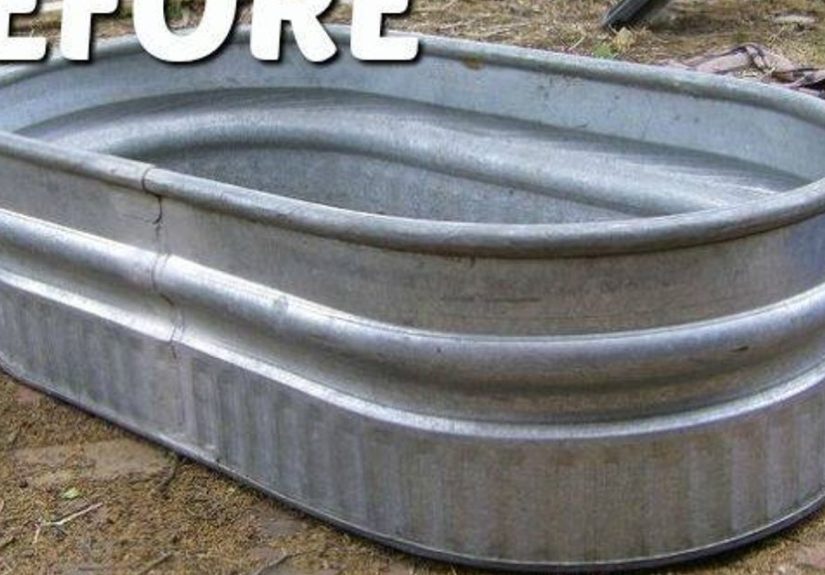
Most DIYers use an oval galvanized stock tank, often the kind you’d see in a
pasture or barn. Oval shapes soften the look, making the table easier to walk around in a
living room. For a standard sofa setup:
- Look for a trough around 2–4 feet long for small rooms or apartment living rooms.
- Go for 4–6 feet if you have a bigger sectional or a large open-concept space.
- Pay attention to height; you can keep the original height or add legs/risers to match your sofa.
2. Material and Condition
Galvanized steel is the classic choice. A little patina is good – it adds character –
but watch out for:
- Sharp edges: Check the rim and any seams and plan to sand or cover them.
- Rust holes: Surface rust can be sanded and sealed; deep corrosion might weaken the structure.
- Odor and residue: If it really did a full shift on the farm, scrub thoroughly and disinfect before bringing it inside.
3. New vs. Vintage
You can go either way:
- New stock tank: Available at farm supply or feed stores. Cleaner, easier to prep, and less mystery history.
- Vintage trough: Often cheaper and more charming, especially if you like a weathered, authentically rustic feel.
Tools and Materials You’ll Need
Exact supplies vary based on your design, but a typical livestock water trough coffee
table uses:
- Oval galvanized livestock water trough (stock tank)
- 1×4, 1×5, or pallet boards for the tabletop
- 2×3 or 2×4 lumber for an inner support frame or lid frame
- Wood screws (1 1/4″ and 2 1/2″ are common sizes)
- Hinges if you want a lift-up lid (simple T-hinges or piano hinges)
- Handles or pulls for the lid (optional but handy)
- Wood stain (classic farmhouse favorites are medium browns like Provincial or walnut) and clear sealer
- Sandpaper or a power sander
- Drill/driver with metal and wood bits
- Measuring tape, pencil, safety glasses, and work gloves
- Felt pads or a rug to protect your floors under the metal base
Step-by-Step: Turning a Water Trough into a Coffee Table
Every DIYer has their own twist, but most trough coffee tables follow the same basic
structure: clean, frame, top, then finish.
Step 1: Clean and Prep the Trough
Give the trough a serious spa day. Hose it out, scrub with a mild detergent, and rinse
thoroughly. If it was ever used for livestock or outdoor water, you may want to:
- Scrub with a diluted vinegar solution to cut through mineral deposits.
- Lightly sand any rust spots and wipe away dust.
- Seal the interior with a clear metal sealer if you’re worried about corrosion.
Step 2: Plan the Top
Decide if you want:
- A fixed top (just a solid surface, no storage access), or
- A hinged lid that opens for storage.
Measure the inside and outside lip of the tank carefully. Many DIYers build a simple
wooden frame that nestles just inside the rim, then screw the top boards onto that frame.
This keeps the lid centered and helps it sit securely without sliding.
Step 3: Build the Frame
Using 2×3 or 2×4 lumber:
- Cut pieces to match the interior length and width of the trough’s top opening.
- Assemble a rectangular frame with wood screws, checking for square corners.
- Test-fit the frame inside the lip; it should sit snugly but lift out easily.
If your trough is very rounded, you can slightly angle or trim the frame corners, or use
shorter sections to echo the curve rather than forcing a perfect rectangle.
Step 4: Add the Top Boards
Lay your boards across the frame, running lengthwise or widthwise depending on the look
you prefer:
- Leave a tiny gap between boards for expansion and a more relaxed, farmhouse feel.
- Overhang the sides slightly to mimic a traditional coffee table top.
- Mark and trim any boards that need to follow the curve of the trough.
When you like the layout, secure the boards to the frame with wood screws from above.
Countersink the screws slightly so they’ll sit below the surface once sanded.
Step 5: Add Hinges (Optional)
If you’re going for storage:
- Position the frame-and-top assembly on the trough.
- Place hinges along one long side, marking where they’ll attach to both the wood and the metal.
- Pre-drill pilot holes with the appropriate bit (wood or metal) to avoid splitting or warping.
- Install the hinges and test the opening motion carefully.
Add a handle or two on the front edge if the lid is heavy or if kids will be using itit
makes it much easier to open safely.
Step 6: Sand, Stain, and Seal
Sand the top thoroughly, starting with a medium grit and finishing with a fine grit for a
smooth surface. Then:
- Apply your chosen stain following the grain of the wood.
- Wipe back excess to reveal the wood texture and avoid a muddy look.
- Finish with a clear polyurethane or similar topcoat to protect against spills and coffee rings.
If you want to darken or age the metal, you can lightly scuff the galvanized surface and
use a metal-safe patina solution, or simply leave the natural finish for that classic
silvery farmhouse look.
Styling Your Livestock Water Trough Coffee Table
Once the table is built, the fun really begins. Styling is where this project proves it’s
not just a gimmickit’s actually incredibly versatile.
- Farmhouse cozy: Layer a neutral jute or chunky knit rug underneath, add a tray with mason jar flowers, a vintage book stack, and a small candle.
- Modern rustic: Pair with a leather sofa, black metal floor lamp, and minimalist decor like a single ceramic vase and a simple bowl.
- Kid-friendly: Use the inside for toy storage and keep the top clear except for a sturdy tray. Bonus: the metal sides are nearly indestructible.
- Seasonal switch-ups: Tuck seasonal decor inside and rotate the top styling for fall, winter holidays, or summer farmhouse vibes.
Because the table already makes such a statement, you don’t need a lot of decor on top.
A single tray and a few well-chosen accessories are usually enough.
Smart Safety and Maintenance Tips
A livestock water trough coffee table is sturdy, but you still want it to be safe and easy
to live with.
- Protect your floors: Add felt pads, rubber feet, or a rug underneath to prevent the metal base from scratching hardwood or tile.
- Check for sharp edges: File or sand sharp metal spots and cover any stubborn areas with edge trim.
- Mind the lid weight: Heavy solid wood tops may benefit from soft-close or safety hinges to prevent slamming.
- Clean gently: Dust the metal with a soft cloth and clean the wood top with a damp cloth and mild cleanserno harsh abrasives.
- Refresh the finish: Re-coat the wood every few years if the table sees a lot of use or sunlight.
Fun Variations on the Trough Coffee Table Idea
Once you fall in love with the idea of a trough as furniture, it’s hard to stop at one
project. You can:
- Add casters to the base for a rolling coffee table that’s easy to move for cleaning or game night.
- Use a shorter stock tank as a matching side table with a smaller wood top.
- Create an outdoor version with a weather-sealed wood top for patios or porches.
- Divide the inside with crates or baskets for ultra-organized storage.
If you’re feeling really ambitious, you can coordinate your trough coffee table with other
stock-tank projects in your home or yard, like planters, benches, or storage bins, for a
subtle “running theme” without feeling too matchy-matchy.
What It’s Really Like to Live With a Trough Coffee Table (Experience & Tips)
So what happens after the sawdust settles and the Instagram photos are posted? Living
with a livestock water trough coffee table is a mix of everyday practicality and
low-key delight.
First, let’s talk reactions. If you like furniture that flies under the radar, this is
not it. Nearly every guest will pause, squint, and ask, “Wait… is that a water trough?”
You get to smile and say yes, then flip open the lid to reveal extra blankets, puzzles,
or the kid’s toy chaos. It’s a perfect “ta-da” moment that also quietly solves your
storage problems.
Functionally, the most surprising part is how much the table helps keep the living room
tidy. Instead of random piles everywhere, you can toss throws, seasonal pillows, or
even board games inside the trough when you’re done. If you live in a small home, that
hidden storage can feel like you just unlocked a cheat code for clutter.
There are a few things you only discover with daily use. For example, if your wood top
is very smooth and glossy, decor and remotes can slide more easilyespecially if kids
are bouncing around on the sofa. To fix that, many people use a tray with a slightly
textured bottom or choose a satin finish on the wood rather than a high-gloss shine.
Another real-life insight: weight matters. A beautiful solid wood top looks amazing, but
if it’s too heavy, opening it every day to grab a blanket can feel like a mini workout.
If you’re worried about that, you can:
- Use thinner boards or lighter wood species.
- Split the lid into two smaller sections instead of one big piece.
- Add gas struts or soft-close hinges to help support the lid as it opens.
Kids and pets tend to love this table. Dogs often nap beside the cool metal sides, and
kids treat the interior like secret treasure storage. Just make sure your hinges are
safe, fingers can’t get pinched, and the lid isn’t heavy enough to slam down dangerously.
If your family is very young or very energetic, consider a completely lift-off lid
instead of hinged, so you can remove it during intense playtime.
From a design perspective, the table is a long-term win. It adapts easily as your style
evolves. Swap out a farmhouse rug for a modern geometric one, change your pillows, or
repaint the wallsthe metal and wood combo still works. That means you’re not stuck
with a trend piece that only looks right in one specific kind of room.
Over time, the materials age nicely. The wood top may pick up a few dings and scratches,
but on rustic pieces, those little imperfections tend to add charm rather than ruin the
look. The galvanized metal may dull slightly or deepen in patina, which often makes it
look even more authentic and interesting. If you ever decide you want a change, you can
always sand, re-stain, or paint the top without rebuilding the entire piece.
Perhaps the best part is the sense of story behind the table. Whether your trough came
from a family farm, a local feed store, or a quirky flea market, you’ve turned something
ordinary and utilitarian into a daily centerpiece. Every time you set down your coffee
mug or prop up your feet, you get a subtle reminder that design doesn’t have to be
expensive or complicated to be meaningfulit just has to fit the way you live.
If you’re on the fence about tackling this project, start by scouting for a trough and
imagining it in your space. Once you see how the curves echo your sofa and how much
storage that big metal shell can hold, you might never look at “farm equipment” the
same way again.